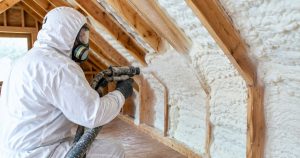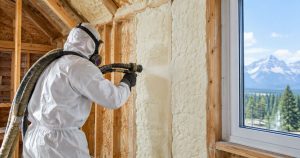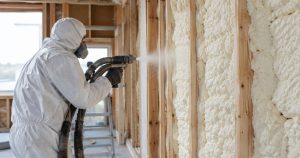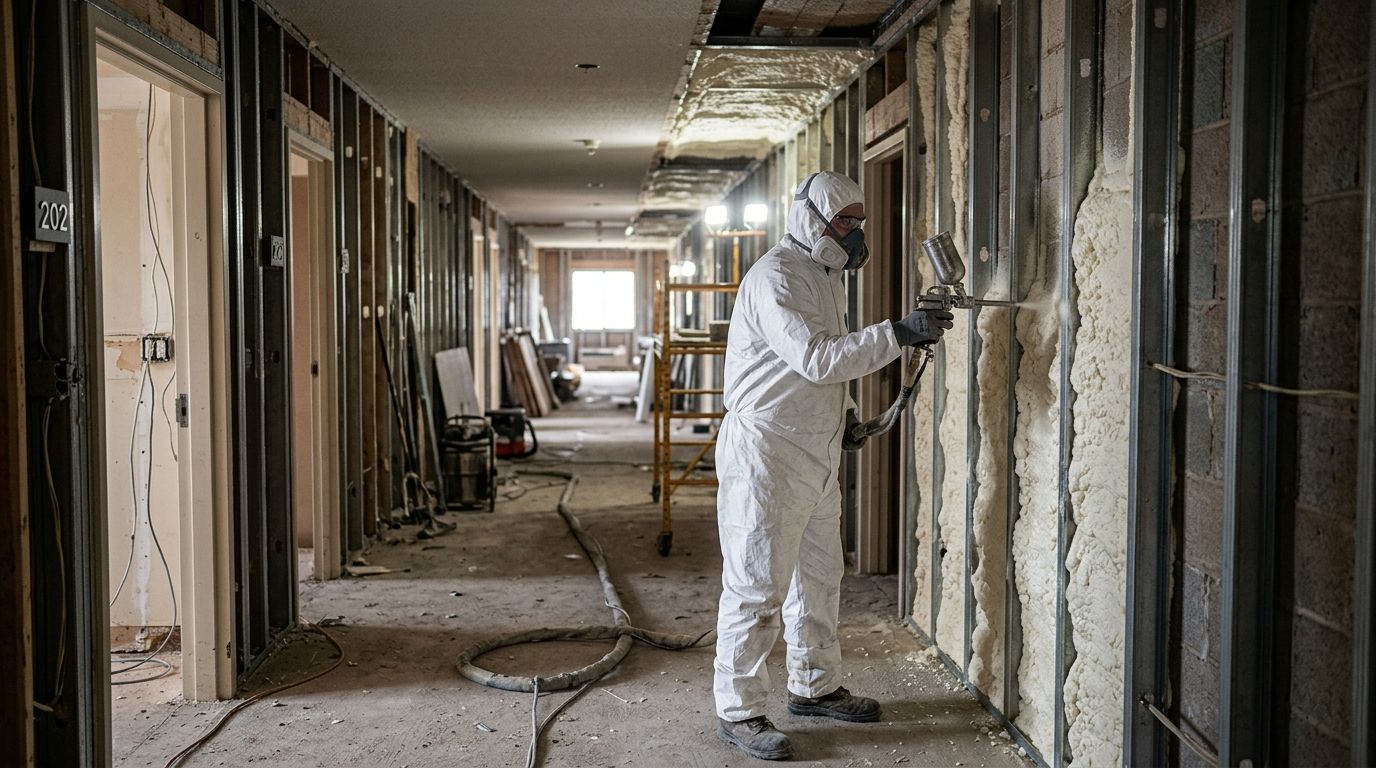
Spray foam insulation for hotels and motels seals guest rooms, mechanical rooms, and shared walls into a continuous air barrier so a property holds heat through an Alberta winter without running boilers around the clock. Hotels and motels carry a different insulation problem than a single-family home: dozens of individually conditioned rooms, 24/7 occupancy, shared HVAC loops, and noise transfer between paying guests who expect quiet. A gap that costs a homeowner a few dollars a month costs a 40-room property real revenue in comfort complaints and utility bills.
- Closed-cell spray foam insulation for hotels and motels cuts air leakage at exterior walls, rim joists, and mechanical rooms in one pass.
- Aztec Spray Systems phases installs around occupancy so rooms stay bookable during a retrofit.
- Alberta’s climate zone 7A calls for attic R-values around R-40 or higher; older motel roofs in Calgary and Okotoks often sit well below that.
- Spray foam adds a modest sound-dampening benefit between guest room walls but is not a standalone soundproofing fix.
- Guest complaints about drafty rooms or noisy neighbors usually trace back to the same gaps: rim joists, electrical penetrations, and shared wall cavities.
Why spray foam insulation matters for hotels and motels
A hotel or motel in Calgary, Okotoks, High River, or Lethbridge runs its HVAC system against constant thermal loss through exterior walls, attic space, and shared plumbing chases between rooms. Every unconditioned corridor, laundry room, or mechanical closet is a path for heat to escape in January and for humid air to creep in during a wet spring. Commercial properties with mixed-use spaces like hotels feel this more than a warehouse or office because guest comfort is the product being sold.
Guest satisfaction scores drop fast when a room runs cold near an exterior wall or when a compressor next door is audible through a shared cavity. Front desk staff hear about both. Spray foam insulation for hotels and motels addresses the air-sealing side of that equation directly, which batt insulation and blown-in cellulose cannot do on their own because they don't stop air movement through gaps.
Closed-cell spray foam is the right call for hotel exterior walls and attics in Alberta's climate zone 7A because it forms a continuous air and moisture barrier in a single application, unlike batt insulation that leaves seams at every stud bay.
Audit your building envelope room by room
Start with a walkthrough before any foam gets sprayed. A property manager can do this without a contractor on-site.
- Feel for drafts at outlet covers, baseboards, and window frames in three or four rooms on different floors
- Check attic access hatches and roofline for daylight gaps or visible frost in winter
- Note which rooms guests complain about most in comfort or noise
- Check mechanical rooms and laundry areas for uninsulated exterior walls
- Look at rim joists in any crawlspace or unfinished basement level for gaps around floor framing
Insulate exterior walls and rim joists
Exterior wall cavities and rim joists are the biggest air-leakage sources in most low-rise motel construction from the 1970s through the 1990s. These buildings were built to code standards far below what Alberta requires today.
- Retrofit wall cavities with closed-cell foam where walls are open during a renovation
- Foam rim joists in any accessible basement or crawlspace, a low-cost, high-impact fix
- Seal penetrations for plumbing and electrical runs through exterior walls
- Check corner units and end units first, since they have more exposed exterior wall area
- Prioritize north- and west-facing rooms, which take the worst of Alberta's prevailing winter wind
Seal and insulate the attic or roof deck
Most motel roofs built before 2000 carry insulation well under the R-40 target the National Building Code of Canada sets for Alberta's climate zone 7A. This is usually the single biggest energy-savings opportunity in the building.
- Measure existing attic insulation depth against the R-40+ target
- Air-seal top-plate penetrations, plumbing stacks, and light fixtures before adding insulation
- Spray foam the roof deck directly on properties with cathedral ceilings or no attic access
- Add ventilation baffles where soffit vents exist, so foam doesn't block airflow the roof needs
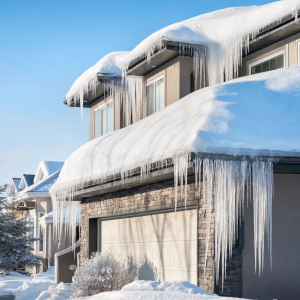
- Confirm ice-damming history on the property, since a properly sealed attic largely eliminates it
This is the point where a licensed contractor takes over from a DIY audit. Attic and roof-deck spray foam work in a commercial building needs proper ventilation planning and code-compliant thermal barriers, which is not a weekend project. Aztec Spray Systems handles this retrofit work across Calgary, Okotoks, High River, and Lethbridge on occupied commercial properties.
Insulate mechanical rooms and equipment closets
Boiler rooms, laundry facilities, and electrical closets in a hotel often sit against exterior walls with no insulation at all, because they were never treated as conditioned space in the original build.
- Foam exterior walls in boiler and mechanical rooms to cut standby heat loss
- Insulate laundry room exterior walls to reduce dryer-related humidity swings
- Seal gaps around ductwork and conduit runs where they pass through exterior walls
- Check electrical room temperature swings, since equipment lasts longer in a stable environment
Add soundproofing between guest room walls
Noise complaints between adjoining rooms are one of the top drivers of negative reviews for hotels and motels. Spray foam helps, but it is not a complete soundproofing solution on its own.
- Foam shared wall cavities during any renovation that opens the walls, which dampens airborne sound transfer
- Combine foam with resilient channel or mass-loaded vinyl for a bigger noise reduction than foam alone provides
- Seal electrical outlet boxes on shared walls, a common flanking path for sound
- Treat connecting doors and adjoining-room doors separately, since foam in the wall doesn't touch that leak path
For a deeper look at combining foam with other materials on shared walls, see soundproofing shared walls.
Address moisture control in high-humidity areas
Indoor pools, hot tubs, and laundry rooms push humid air into adjacent framing cavities. Closed-cell foam resists moisture intrusion far better than fiberglass batt, which can hold moisture and lose R-value over time.
- Foam exterior walls around indoor pool enclosures with closed-cell product specifically
- Check for staining or musty odor near laundry room exterior walls before starting any retrofit
- Ventilate pool areas properly even after insulating; foam controls air leakage, not humidity generation
Schedule work around occupancy
A hotel can't shut down for a two-week retrofit the way a vacant commercial building can. Phasing is the difference between a smooth job and a revenue hit.
- Retrofit unoccupied wings or off-season floors first
- Schedule mechanical room and attic work during low-occupancy weekdays
- Coordinate spray days with front desk so affected rooms are blocked from booking, not walked into by guests
- Confirm cure times with the contractor before rooms go back into rotation, since spray foam needs off-gassing time before re-occupancy
Get a hotel insulation quote
Phased retrofits for occupied properties in Calgary, Okotoks, High River, and Lethbridge.
Comparison table: insulation options for hotels and motels
| Option | Best for | Key limitation |
|---|---|---|
| Closed-cell spray foam | Exterior walls, rim joists, attics, high-humidity rooms | Higher upfront cost than batt insulation |
| Open-cell spray foam | Interior sound-dampening applications, less moisture exposure | Lower R-value per inch than closed-cell, absorbs moisture if exposed |
| Fiberglass batt | Budget retrofits on interior walls only | Leaves air gaps at seams, loses performance if compressed or wet |
| Blown-in cellulose | Existing attic top-ups with no structural access | Settles over time, needs re-topping every several years |
Closed-cell spray foam wins for exterior walls, attics, and mechanical rooms in Alberta's climate; batt and cellulose are acceptable stopgaps for interior-only work but leave more air leakage in place.
Common mistakes hotels and motels make with insulation
- Treating the attic as a one-time fix. Motel roofs sag, settle, and get disturbed by rooftop mechanical work; insulation depth should get rechecked every few years, not assumed permanent.
- Insulating guest rooms while ignoring mechanical rooms. A boiler room with an uninsulated exterior wall drags down the efficiency of the whole heating loop, even if every guest room is properly foamed.
- Expecting spray foam alone to fix a noise complaint. Foam reduces airborne sound transfer between walls; it does nothing for a connecting door or a shared HVAC duct carrying sound between rooms.
- Scheduling a full-property retrofit during peak season. Phasing by wing or floor keeps rooms bookable; a full shutdown during a busy month costs more in lost revenue than the insulation saves in a year.
- Skipping the code check on thermal barriers. Spray foam in occupied commercial buildings typically needs a code-compliant thermal barrier, like drywall, over exposed foam in habitable space; missing this step creates a fire code problem at inspection.
FAQ
What is spray foam insulation for hotels and motels?
It’s an air-sealing and thermal retrofit applied to exterior walls, attics, rim joists, and mechanical rooms in lodging properties to cut heat loss and reduce draft and noise complaints from guests. Closed-cell foam is the standard choice for exterior applications because it also resists moisture.
How much does spray foam insulation cost for a hotel or motel in Alberta?
Cost depends on square footage, number of rooms, existing insulation condition, and whether work happens in occupied or vacant space. Get a walkthrough quote from a licensed contractor rather than relying on a per-square-foot estimate that doesn’t account for your building’s specific conditions.
Can a hotel stay open during a spray foam retrofit?
Yes, when the work is phased by wing, floor, or off-season occupancy. Rooms scheduled for spray days need to be blocked from booking and given proper cure time before guests return.
Does spray foam insulation reduce noise between guest rooms?
It reduces airborne sound transfer through shared wall cavities, but it’s not a complete soundproofing fix on its own. Pair it with resilient channel or mass-loaded vinyl for a bigger noise reduction between adjoining rooms.
Is spray foam insulation fire-rated for commercial buildings in Alberta?
Exposed spray foam in habitable commercial space generally needs a code-compliant thermal barrier, like drywall, over it. A licensed contractor accounts for this during installation so the finished work passes inspection.
What R-value do hotels need for attic insulation in Calgary?
Alberta’s climate zone 7A calls for attic insulation around R-40 or higher under the National Building Code of Canada. Many motel roofs built before 2000 sit well below that and are strong candidates for a retrofit.
Are there rebates for spray foam insulation on commercial buildings in Alberta?
Rebate programs change year to year, so check current eligibility before budgeting a retrofit around a specific incentive. A contractor familiar with Alberta programs can confirm what applies to your property in 2026.
One last thing
The rim joist is the most overlooked insulation gap in older motel construction, and it's usually the cheapest fix on the list. A crew can foam an entire rim joist run in a basement or crawlspace in a fraction of the time it takes to redo a single attic, and the draft reduction at floor level is often the first thing guests notice after a retrofit, before they'd ever notice a wall or ceiling change.
Related guides
- How to cut HVAC costs in a commercial kitchen with spray foam
- How to reduce moisture and mold with spray foam insulation
- Spray foam insulation for restaurants and commercial kitchens