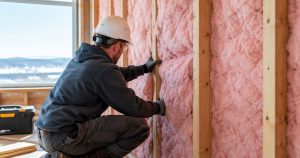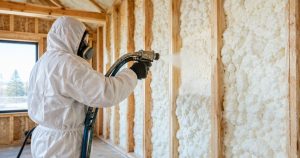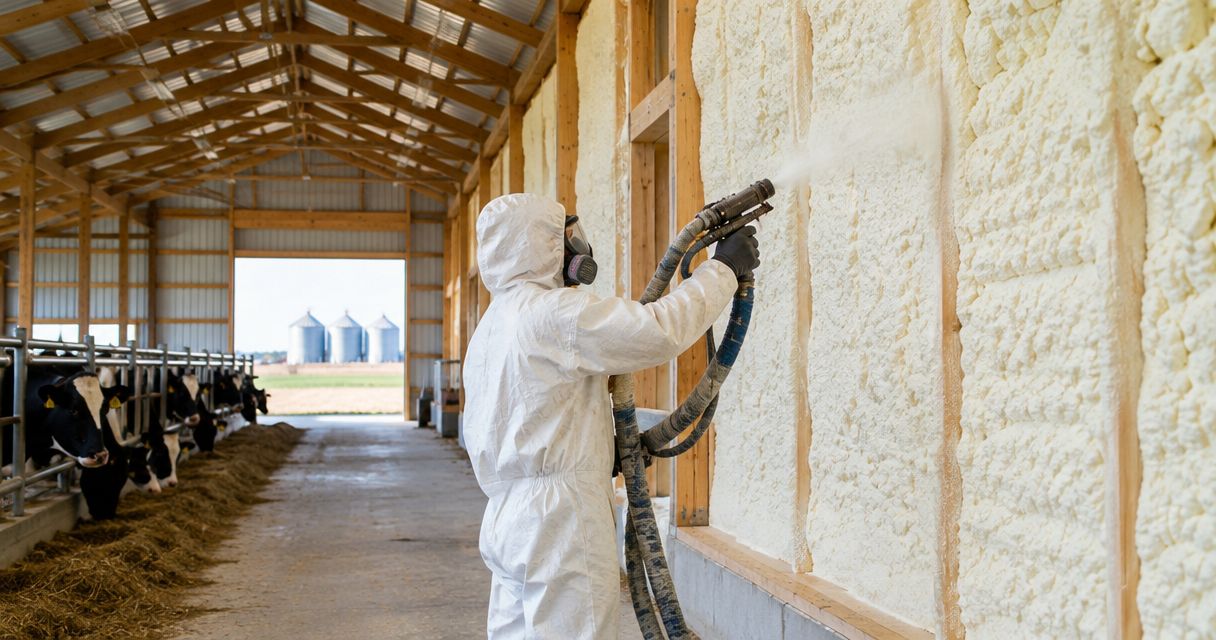
Best overall for conditioned farm workshops: closed-cell spray foam. Best for dry, framed interior cavities: open-cell spray foam. Best for exterior insulation during recladding: rigid board. Best for accessible wall cavities: mineral wool. This 2026 guide compares the assemblies to discuss with Aztec Spray Systems, including moisture control, fire protection and repair access.
- For agricultural building insulation Calgary projects, closed-cell spray foam is the default shortlist choice for conditioned workshops.
- Open-cell spray foam suits dry, framed cavities only when the assembly includes appropriate moisture control.
- Rigid board suits exterior recladding; mineral wool suits accessible cavities with a separate air barrier.
- Use an Aztec Spray Systems enquiry to discuss the complete assembly, not foam thickness alone.
Why this matters
A machinery workshop, livestock barn and unheated storage building need different insulation decisions. Heating schedules, indoor moisture and the condition of the roof determine whether an assembly works; the insulation material alone does not.
For agricultural building insulation Calgary owners should choose by building use before choosing by material. A heated workshop needs a continuous thermal enclosure. A livestock building also needs ventilation designed around animal moisture, while an unheated shed requires a clear reason for adding insulation at all.
For a 2026 project, start with the work you expect the building to support. Write down which rooms are heated, where moisture originates and which surfaces need washing or impact protection. That brief prevents a quote for insulation from becoming a substitute for an enclosure design.
What makes the best agricultural building insulation?
Judge each option against these criteria before comparing proposals:
- Thermal performance: Compare the specified product and installed thickness, including heat flow through framing.
- Air control: Identify the continuous air barrier and how it connects at doors, roof edges and penetrations.
- Moisture control: Separate rain leaks, condensation, indoor humidity and vapour diffusion; each needs an appropriate response.
- Fire protection: Specify required protective coverings and approved assemblies before installation.
- Repair access: Decide how you will reach wiring, inspect roof leaks and replace damaged cladding.
- Agricultural use: Account for washdown, animals, equipment impacts and the ventilation system.
A proposal that names an insulation but leaves these details unresolved is not ready for approval. Ask for an assembly description showing every layer from the exterior cladding to the interior finish.
Insulation options at a glance for 2026
| Option | Best for | Standout feature | Key limitation |
|---|---|---|---|
| Closed-cell spray foam | Conditioned agricultural workshops | High thermal resistance per unit of thickness and air control when correctly installed | Bonds to surfaces, complicating later access and removal |
| Open-cell spray foam | Dry, framed interior cavities | Expands into irregular cavities | Lower thermal resistance per unit of thickness; moisture design remains essential |
| Rigid board insulation | Exterior recladding projects | Can form a continuous insulation layer across framing | Joints, fasteners and transitions require detailed treatment |
| Mineral wool batts | Accessible framed wall cavities | Removable cavity insulation | Does not replace a separate continuous air barrier |
These are use-case rankings, not interchangeable specifications. The best option changes when the building changes from equipment storage to a heated work area, or when a roof replacement creates access that was previously unavailable.
1. Closed-cell spray foam: best for conditioned farm workshops
Closed-cell spray foam is a strong starting point when you want to heat a farm workshop and limit air movement through irregular parts of the enclosure. It adheres to suitable substrates and combines insulation with air-control functions when installed as a continuous, correctly specified layer.
Typical closed-cell polyurethane foam provides approximately R-6 per inch, although the selected product's published value governs the design. An inch equals 25.4 mm; ask contractors to show the specified thickness and thermal resistance together rather than quoting an unexplained depth.
Closed-cell spray foam pros:
- Provides more thermal resistance per unit of thickness than typical open-cell foam.
- Fits around irregular junctions where cutting boards creates numerous joints.
- Can contribute to a continuous air barrier when transitions are properly detailed.
- Offers a practical option where available cavity depth is restricted.
Closed-cell spray foam cons:
- Adhesion makes removal and access to concealed components difficult.
- Covering the underside of roof cladding can complicate leak inspection and future replacement.
- Requires product-specific installation conditions and an appropriate fire-protection strategy.
Do not specify direct application to metal roofing simply because the surface is accessible. First confirm the roof's condition, the proposed substrate, drying paths and the plan for eventual roof repairs. Insulation does not repair leaking fasteners or failed flashing.
Best for: A conditioned machinery workshop with a sound enclosure and a defined moisture-control plan.
Verdict: Buy for the assembly fit—not as a universal treatment for every farm building.
2. Open-cell spray foam: best for dry, framed interior cavities
Open-cell spray foam fills cavities with a less dense foam structure than closed-cell insulation. Its typical thermal resistance is approximately R-3.5 per inch, so achieving the same nominal thermal resistance generally requires more depth.
Open-cell foam belongs on the shortlist when the framing provides sufficient room and the assembly has a clear approach to vapour control and drying. It is not a direct substitute for closed-cell foam in a moisture-sensitive agricultural enclosure.
Open-cell spray foam pros:
- Fills irregular spaces within framed cavities.
- Can provide air-control functions at the product's specified thickness.
- Suits designs where cavity depth is available and the assembly accommodates its vapour behaviour.
Open-cell spray foam cons:
- Needs more thickness than typical closed-cell foam for equivalent nominal thermal resistance.
- Does not eliminate the need to assess vapour control in Calgary's heating climate.
- Bonded foam makes later cavity access more disruptive than removable batts.
A dry use today does not guarantee a dry use later. If you expect to introduce animals, wet cleaning or other moisture-producing activities, include that change in the design brief rather than relying on the building's current humidity conditions.
For a 2026 conversion, compare open-cell proposals against the intended future occupancy. The right question is whether the complete wall or roof can manage that use, not whether the foam fills the space.
Best for: Dry, framed interior cavities with sufficient depth and a specified moisture-control assembly.
Verdict: Hold until the assembly's vapour control and drying strategy are documented.
3. Rigid board: best for exterior recladding projects
Rigid board insulation creates an opportunity to insulate across structural framing rather than only between it. That matters because metal and wood framing provide heat-flow paths through an otherwise insulated enclosure.
Rigid board is a category, not a single material. Different board types have different thermal, moisture and fire characteristics, so a quote must identify the actual product and assembly rather than list only board thickness.
Rigid board insulation pros:
- Supports a continuous insulation layer across framing.
- Fits naturally into a planned exterior recladding scope.
- Allows deliberate detailing of insulation, drainage and cladding attachment.
Rigid board insulation cons:
- Requires careful treatment at joints, openings, corners and roof-to-wall transitions.
- Cladding attachment through insulation needs a suitable fastening design.
- Is less convenient around complex shapes than spray-applied insulation.
Exterior insulation changes more than wall thickness. Doors, flashings, roof edges and cladding supports must still connect correctly. Those details belong in the proposal before work begins, not as adjustments made after the boards arrive.
Do not assume taped board joints automatically provide every control layer the building needs. Identify which layer manages air, which sheds water and how both remain continuous at openings.
Best for: An agricultural building already scheduled for exterior recladding or a substantial enclosure upgrade.
Verdict: Buy when recladding provides the access to build a continuous exterior assembly.
4. Mineral wool: best for accessible framed wall cavities
Mineral wool batts provide cavity insulation without bonding the insulation to the surrounding structure. You can remove sections to inspect services or repair the wall, provided the interior lining and other assembly layers are also accessible.
Mineral wool does not stop air leakage on its own. A successful installation needs a separate, continuous air barrier and batts fitted around framing and services without gaps or compression.
Mineral wool pros:
- Allows removal and replacement within accessible cavities.
- Does not bond insulation directly to roof or wall cladding.
- Offers noncombustible insulation products, subject to the selected product's documentation.
Mineral wool cons:
- Does not provide the assembly's continuous air barrier.
- Leaves framing as a thermal bridge when insulation sits only between members.
- Requires close fitting around obstructions to avoid gaps.
A noncombustible insulation product does not make the entire wall fire-rated. Linings, framing, penetrations and the tested assembly still determine the wall's fire performance.
Choose this route when access matters and you can execute the separate control layers properly. It is a poor choice if the plan is simply to fill cavities while leaving uncontrolled air paths at the roof edge and service penetrations.
Best for: Framed walls where future inspection and service access are priorities.
Verdict: Buy for accessible walls; skip any proposal that omits the air barrier.
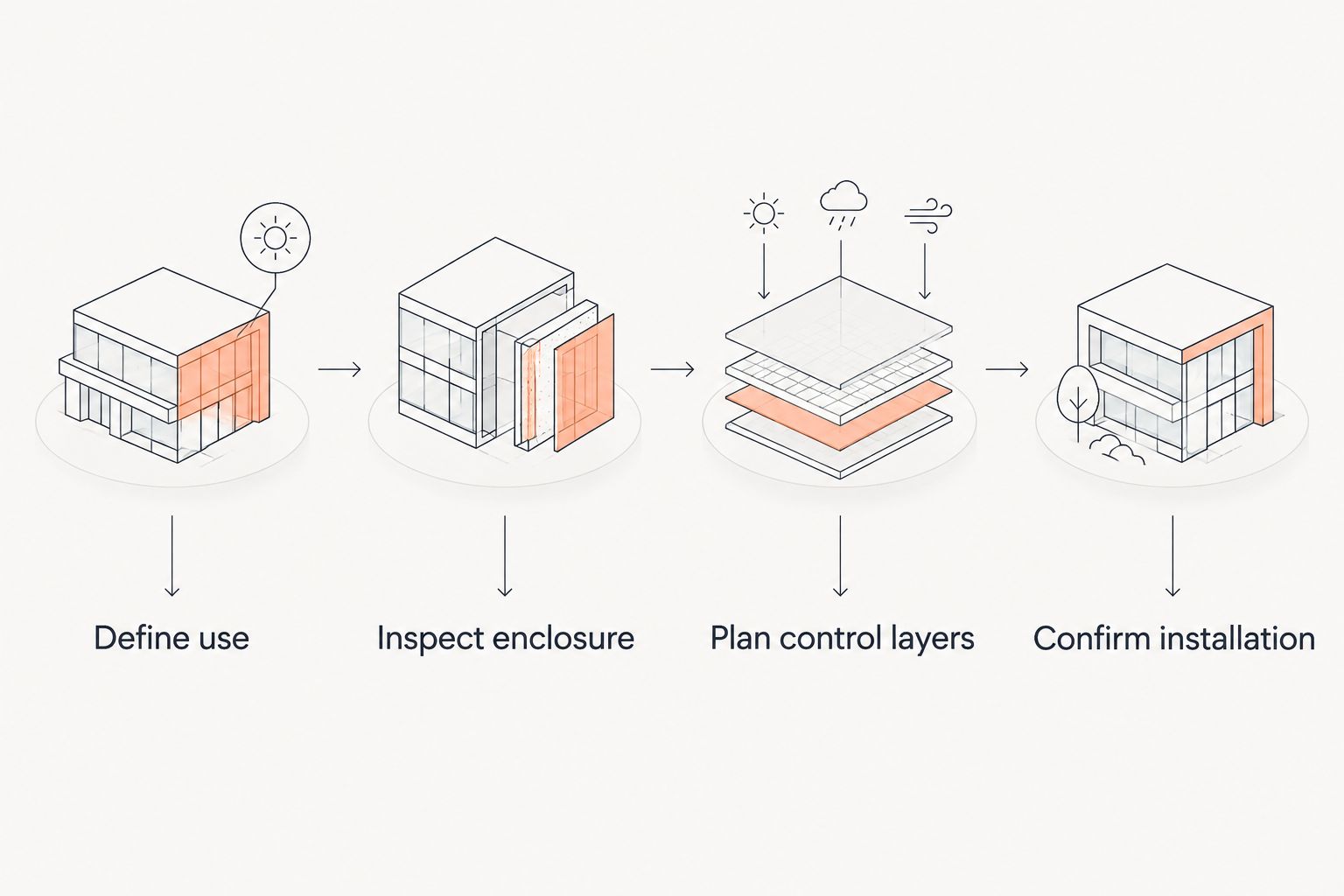
Check the assembly before accepting a quote
Use the same decision sequence for every 2026 proposal. A material comparison becomes useful only when each contractor is addressing the same building use and construction details.
- Define use: State the heated areas, activities and expected moisture sources.
- Inspect enclosure: Resolve roof leaks, damaged cladding and unsuitable substrates before insulation work.
- Plan control layers: Identify insulation, air control, vapour control, drainage and protective finishes.
- Confirm installation: Document the product, thickness, application conditions, inspection requirements and re-entry instructions.
For spray foam, request the product documentation and applicable installation-standard information. Also ask how the installer will verify thickness and handle areas that fail inspection. Keep those records with the building's maintenance documents.
When reviewing Aztec Spray Systems services, use this checklist to frame the enquiry. Describe the building and its intended use before asking which foam to install.
Discuss your agricultural building
Describe the building use, heating plan and moisture sources before choosing an insulation assembly.
How the options are ranked
This 2026 ranking prioritizes fit for the stated use case: thermal performance, air continuity, moisture control, fire protection and repair access. Closed-cell foam leads for conditioned workshops; exterior rigid board leads when recladding makes continuous insulation practical.
The ranking compares assembly characteristics, not contractor workmanship or individual products. Use the same criteria in an Aztec Spray Systems enquiry and in any competing proposal so you compare equivalent scopes.
Which insulation should you choose?
Choose closed-cell spray foam as the default shortlist option for a conditioned agricultural workshop. Confirm the substrate, roof-repair implications, ventilation and required protective covering before approving installation.
Choose open-cell foam only for a suitable dry, framed assembly. Choose rigid board when exterior work creates the opportunity for continuous insulation, and mineral wool when accessible cavities and separate air-control layers suit the project.
For livestock buildings, put ventilation and moisture management into the design brief first. Insulation reduces heat transfer; it does not remove moisture produced inside the building.
FAQ
What’s the best insulation for a heated farm workshop in Calgary?
Closed-cell spray foam is a strong default shortlist choice for a heated farm workshop. Confirm the substrate, continuous air-control details, moisture strategy and required protective covering before installation.
Is closed-cell spray foam better than open-cell foam for agricultural buildings?
Closed-cell foam offers more thermal resistance per unit of thickness than typical open-cell foam. The better assembly still depends on building use, available depth, moisture exposure and drying requirements.
Can I spray foam directly onto a metal barn roof?
Direct application requires an assembly-specific assessment before approval. Check roof condition, substrate suitability, moisture behaviour and how future leaks or roof replacement will be handled.
Will spray foam stop condensation in a livestock barn?
Spray foam alone is not a complete condensation-control strategy for a livestock barn. Indoor moisture, ventilation, air leakage and surface temperatures must be addressed together.
How thick should agricultural building insulation be?
Specify thickness from the selected product’s documented thermal performance and the building’s assembly requirements. A generic depth does not account for framing, air leakage or the intended indoor conditions.
Does spray foam need a protective covering?
The required protection depends on the foam product, assembly, occupancy and applicable code provisions. Confirm the approved covering or documented exception before leaving foam exposed.
What should I include when requesting an agricultural insulation quote?
Include building use, heated areas, moisture sources, roof condition and the proposed interior finish. Ask the contractor to identify the complete assembly, installation requirements and inspection records.
One last thing
Decide how you will repair the roof before deciding what to attach beneath it. Insulation that performs well thermally can still create an awkward maintenance problem when it bonds directly to components you later need to replace.
Before contacting Aztec Spray Systems, mark the roof areas, wiring routes and service connections that must remain inspectable. That access plan belongs beside the insulation specification, not in a maintenance discussion after installation.
Related guides