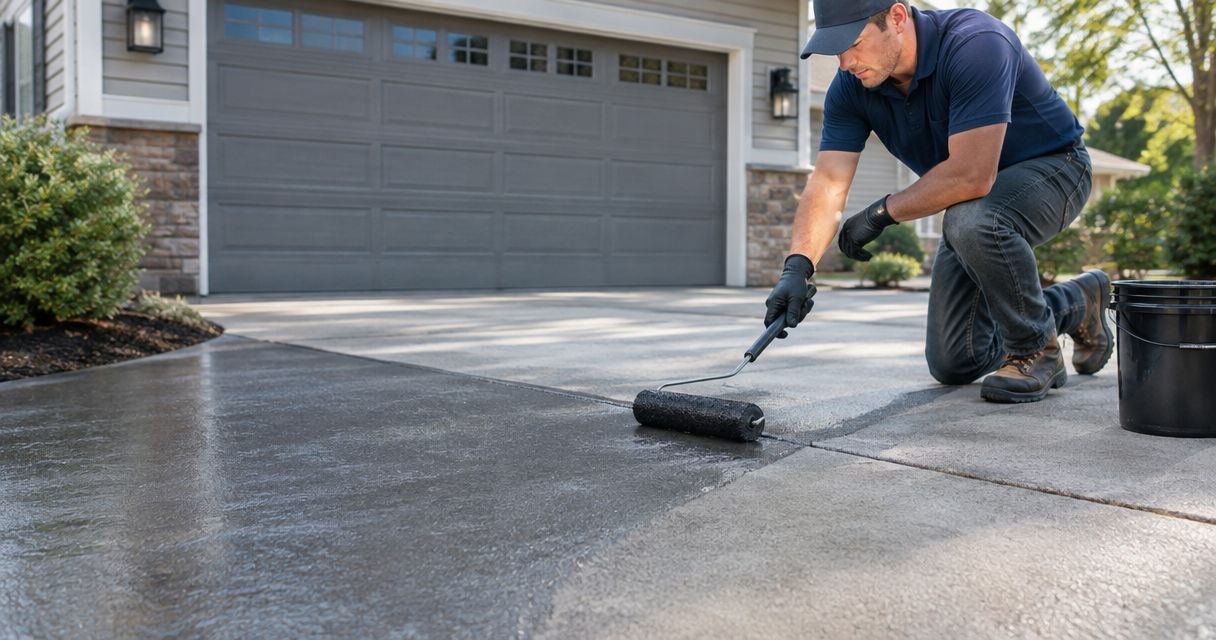
You can seal or paint a driveway after concrete lifting once the lifting contractor has released it for surface preparation, the injection-hole patches meet their coating requirements, and the concrete meets the finish manufacturer’s moisture and temperature limits. Permission to drive on the driveway is not permission to coat it: patch curing, surface preparation and coating compatibility determine the next step, not a universal waiting period.
- To seal driveway after concrete lifting, follow the patch material and coating instructions—not the traffic reopening time.
- Aztec Spray Systems provides concrete lifting for homeowners and commercial property owners in southern Alberta.
- Driveway sealer and concrete paint require different preparation; choose the finish before scheduling the work.
- Wait until patches, moisture conditions and the weather window satisfy the selected coating’s instructions.
How soon can you seal or paint a driveway after concrete lifting?
There is no single waiting period that applies to every lifted driveway. Concrete lifting retains the existing slab, but the work also leaves repaired injection holes. Those patches and the selected finish have their own requirements.
For a 2026 driveway project, ask for the patch material’s name and the coating’s current technical data sheet before choosing an application date. Aztec Spray Systems provides concrete lifting for Calgary homes and driveways; confirm the repair-specific instructions for your property before arranging the finishing work.
Use this sequence rather than counting days from the lifting appointment:
- Confirm the repair release. Ask when cleaning, surface preparation and coating are permitted—not just vehicle traffic.
- Identify the patch material. Obtain its curing and overcoating requirements, including any restrictions on penetrating sealers or paint.
- Choose the finish. Check that it is intended for exterior concrete driveways and compatible with the repaired surface.
- Prepare and check the concrete. Follow the finish manufacturer’s cleaning, surface-profile and moisture-testing instructions.
- Book a suitable weather window. Meet the application and curing conditions across the entire period the finish requires.
The application date is the first date when all those conditions are satisfied. A patch that looks dry does not, by itself, establish readiness.
Why this matters
Lifting and coating address different problems. Lifting corrects the position of a sunken slab; a sealer or paint treats the exposed surface. Finishing the surface does not replace an assessment of continued movement, damaged concrete or drainage problems.
Rushing the finish also puts attention on the wrong clock. The material beneath the slab, the patch at the surface and the coating above it do different jobs. Check the requirements of each material that affects the finished surface.
If your 2026 maintenance plan includes both repairs and painting, settle the sequence before either appointment. That gives the lifting contractor and coating installer a chance to identify incompatible materials or preparation requirements before work begins.
Sealing: best for retaining the concrete’s appearance
A penetrating concrete sealer is an option when you want to retain the concrete’s visible texture rather than cover it with an opaque finish. Select one specifically intended for the exposure and use of your driveway. The product instructions govern whether it can be applied over the patch material.
Benefit: a penetrating sealer does not depend on an opaque paint layer to change the surface’s appearance. Limitation: it does not hide injection-hole patches, old stains or colour differences. A repaired area can remain visible after sealing.
Do not treat every product labelled concrete sealer as interchangeable. Penetrating sealers and film-forming sealers behave differently, and an existing finish affects your preparation choices. Identify what is already on the driveway before applying another treatment.
Ask the manufacturer how to handle patched areas and any existing coating. If a test application is required, use a location that includes both original concrete and a repair so you can assess the difference.
Painting: best for an opaque colour change
Exterior concrete paint or a driveway-rated coating suits a project where an opaque colour change is the main goal. The product must expressly permit vehicle traffic and exterior exposure. A coating intended for a different concrete surface is not automatically suitable for a driveway.
Benefit: an opaque finish changes the colour of both the existing concrete and repaired areas. Limitation: it does not erase differences in texture, repair active movement or remove the need for maintenance. Adhesion depends on the condition and preparation of the surface beneath it.
Before painting, check the required surface profile, primer, patch compatibility and moisture conditions. Follow the complete coating system rather than combining a primer and topcoat solely because both mention concrete.
For a 2026 repaint, identify the existing finish as well. Applying a new coating over an unidentified layer creates a compatibility question that waiting longer after lifting does not resolve.
| Finish option | Best for | Main benefit | Main limitation | Readiness check |
|---|---|---|---|---|
| Penetrating sealer | Keeping the concrete’s visible texture | Treats the surface without an opaque colour layer | Patches and stains remain visible | Confirm absorption, moisture and patch compatibility |
| Film-forming sealer | A specified surface-film finish | Provides the appearance described by the selected product | Existing finishes and surface preparation affect adhesion | Confirm compatibility and preparation requirements |
| Driveway-rated paint | An opaque colour change | Covers colour differences with a pigmented finish | Does not correct movement or uneven texture | Confirm profile, primer, moisture and patch requirements |
Choose the finish first, then establish its preparation and waiting requirements. Choosing a date first reverses the decision.
Why the waiting period varies
The reason for waiting should be specific. Ask which requirement remains unmet instead of accepting a general instruction to leave the driveway alone for a while.
- Patch material: cement-based repair materials and other patching products have different curing and overcoating instructions. Identify the material actually used.
- Selected finish: penetrating sealers, film-forming sealers and paint do not share one preparation specification. Follow the selected product’s technical data sheet.
- Surface moisture: rain, washing and moisture within the concrete affect readiness. Use the moisture assessment required by the coating manufacturer.
- Temperature and weather: check the specified air and surface conditions, plus protection from rain, dew or freezing during the required curing period.
- Existing surface condition: old coatings, oil, loose concrete and cleaning residue affect preparation. Additional waiting does not remove contamination.
- Repair condition: loose patches, unresolved cracks or continuing movement need assessment before finishing. A coating is not a substitute for completing the repair.
These factors explain why a neighbour’s schedule is not a specification for your driveway. Even adjoining driveways can have different repair materials, existing finishes and exposure conditions.
How do you check whether the driveway is ready?
Work through the checks below with the lifting contractor and whoever will apply the finish. Keep the product instructions available so the decisions refer to the same requirements.
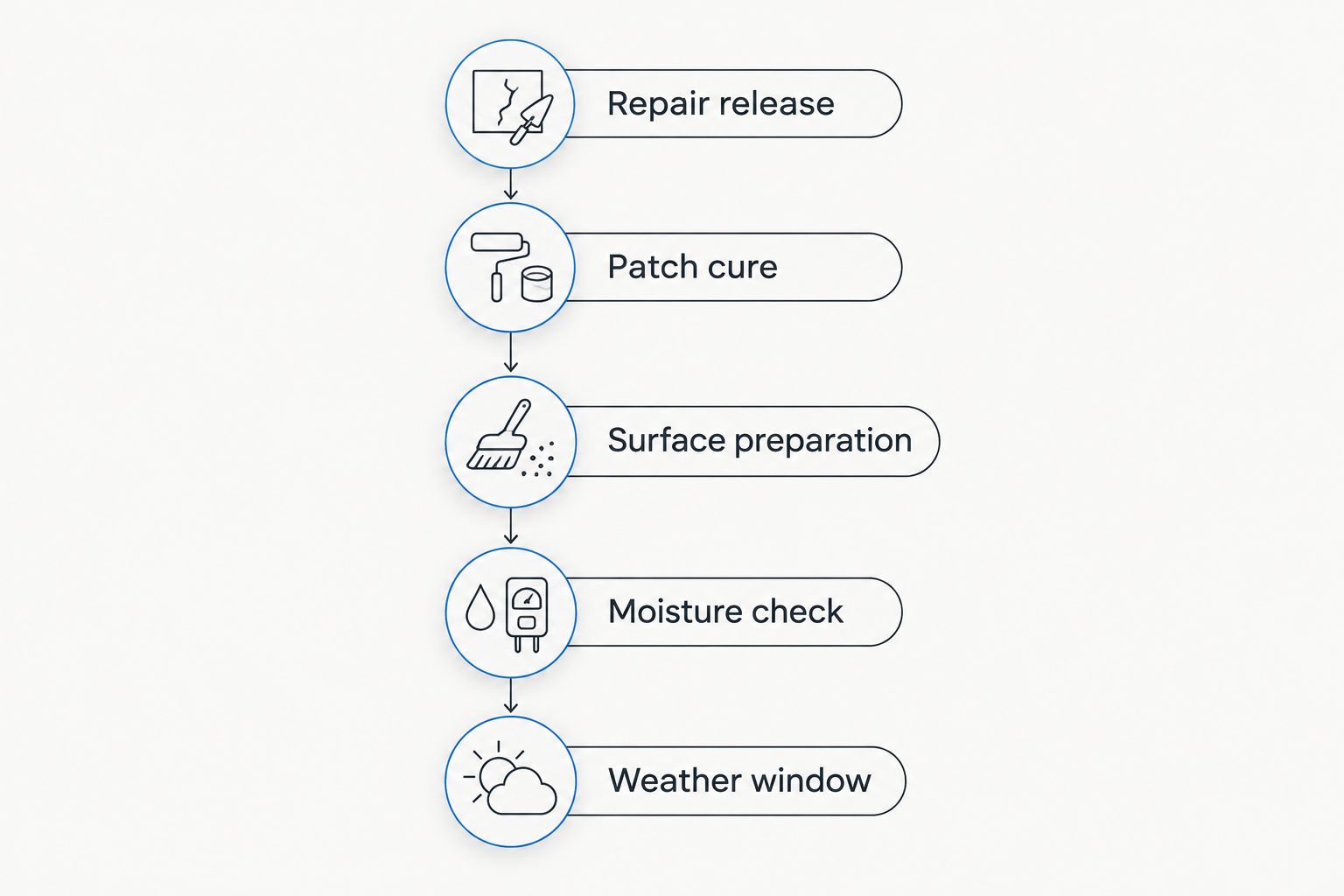
Repair release
Confirm that lifting is complete and ask whether anything remains to be repaired. Request separate instructions for walking, driving, washing, mechanical preparation and coating. Approval for one activity does not establish approval for the others.
Patch cure
Check the patch product’s overcoating requirements, not just whether the surface feels hard. Tell the coating supplier exactly what material fills the injection holes. Where the instructions do not establish compatibility, obtain clarification before proceeding.
Surface preparation
Inspect for oil, dust, loose material, previous coatings and cleaning residue. Follow the selected finish’s preparation method, including any specified surface profile. Do not assume that pressure washing alone supplies the preparation a paint system requires.
Moisture check
Use the moisture-checking method specified for the finish. Surface appearance alone does not establish that the concrete meets a coating’s moisture limits. Washing also introduces water, so include the required drying and checking stages in the schedule.
Weather window
Check the forecast against the product’s application and curing requirements. Use the specified concrete-surface conditions as well as air temperature. A suitable afternoon is not enough if overnight conditions fall outside the instructions.
Keep a record of the patch material, finish, preparation method and application conditions for your 2026 project. That information makes later maintenance decisions more precise than a note saying only that the driveway was sealed.
What should you ask the lifting contractor?
Tell the contractor about your intended finish before lifting begins. Ask what will fill the injection holes and whether that material has restrictions relevant to sealing or painting. Give the same information to the coating supplier.
Aztec Spray Systems is a concrete lifting contractor for homeowners and commercial property owners in Calgary, Okotoks, High River and Lethbridge. Its licensed and insured contractor status does not replace the selected finish’s technical instructions; repair guidance and coating guidance address different parts of the project.
Before booking the finishing work, get clear answers to these questions:
- What material will fill the injection holes?
- When is surface cleaning or preparation permitted?
- What curing or overcoating requirements apply to the patches?
- Are any cracks, joints or drainage concerns still awaiting attention?
- Who will confirm compatibility with the selected finish?
Keep unresolved repair work separate from cosmetic finishing. If the driveway still has loose patches or signs of movement, arrange an assessment instead of trying to cover the problem.
Can you seal the driveway as soon as you can drive on it?
Traffic readiness and coating readiness are different approvals. A contractor’s permission to park on the slab does not establish that patches are ready for coating or that the concrete meets the finish’s moisture requirements.
Keep the contractor’s reopening instructions and the finish manufacturer’s application instructions separate. Use both when scheduling the work.
Does lifting mean the whole driveway is new concrete?
Concrete lifting retains the existing slab rather than replacing the entire driveway. Do not automatically apply a new-slab schedule to the whole surface; identify the actual patches and any other newly placed repair material.
The existing slab still needs the cleaning, moisture checks and preparation required by the selected finish. Age alone does not establish suitability for painting.
Can sealer or paint hide the injection-hole patches?
Clear sealer does not provide opaque coverage, and paint does not remove texture differences. A pigmented finish changes colour, but the appearance of a repaired area also depends on its texture and preparation.
Agree on a realistic finish before coating the entire driveway. Use a manufacturer-approved test area where appropriate rather than assuming every patch will disappear.
FAQ
How soon can I seal driveway after concrete lifting?
Seal the driveway once the contractor permits surface preparation, the patches meet their overcoating requirements, and the concrete meets the sealer’s moisture and weather limits. There is no universal waiting period that replaces those checks.
Can I paint my driveway immediately after it has been lifted?
Do not assume immediate painting is permitted after lifting. Confirm patch compatibility, preparation requirements and moisture conditions using the selected driveway-rated coating’s instructions.
Is being able to park on the driveway enough to start sealing?
Permission to park does not establish readiness for sealing. Traffic reopening and coating application have different requirements, so obtain instructions for both.
Do I need to wait for the entire driveway to cure again?
Lifting does not turn the existing driveway into a newly poured slab. Check the curing and coating requirements of the injection-hole patches and any other fresh repair material.
Should I pressure wash the driveway before sealing it?
Use the cleaning method specified by the selected sealer or paint manufacturer. If washing is part of that method, allow the surface to meet the product’s drying and moisture requirements before application.
Can I use ordinary concrete paint on a driveway?
Use a coating expressly intended for exterior concrete driveways and vehicle traffic. Confirm its preparation, primer and patch-compatibility requirements before applying it.
Who should confirm when my lifted driveway is ready for coating?
The lifting contractor should confirm repair-specific restrictions, and the coating manufacturer’s instructions should establish application requirements. Share the patch material’s identity with the coating supplier so compatibility can be checked.
One last thing
The smallest repaired area can determine when the entire driveway is ready to coat. An otherwise suitable slab does not cancel the curing or compatibility requirements of its injection-hole patches.
For your 2026 project, give Aztec Spray Systems the intended finish information before concrete lifting and keep the patch details for the coating installer. Coordinate the materials first; set the finishing date second.
Related guides
- How does polyurethane concrete lifting work?
- Can you drive on a driveway right after concrete lifting?
- How does mudjacking compare to polyurethane concrete lifting?