Polyurethane concrete lifting is the stronger choice when you want smaller injection holes and less added weight beneath a sound, sunken slab; mudjacking uses a heavier slurry to fill voids and raise concrete. For your 2026 project, neither method fixes ongoing soil movement, drainage problems or badly deteriorated concrete, so the condition beneath the slab matters as much as the lifting material.
- Mudjacking vs polyurethane concrete lifting: polyurethane favours smaller holes and lower added weight; mudjacking uses pumped slurry.
- Neither concrete levelling method corrects ongoing erosion or makes badly deteriorated concrete structurally sound.
- Compare slab condition, drainage, injection details and reopening instructions before choosing a repair.
- Aztec Spray Systems provides concrete lifting for homeowners and commercial property owners in southern Alberta.
How does mudjacking compare to polyurethane concrete lifting?
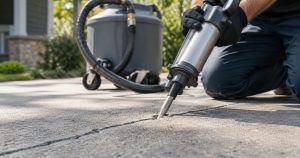
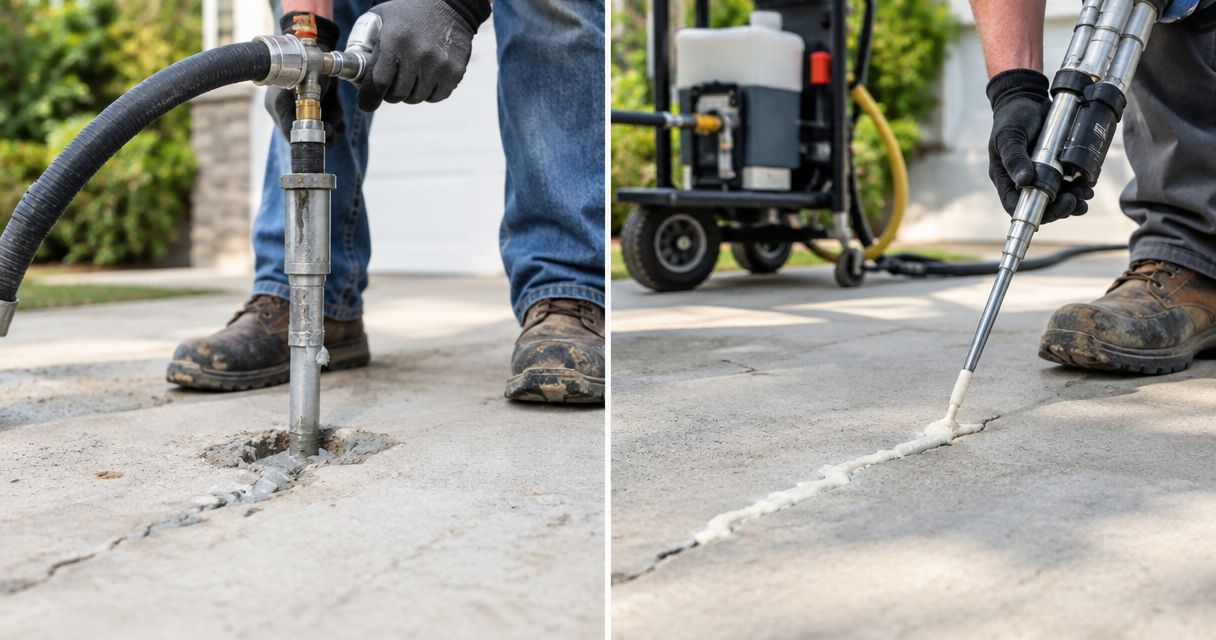
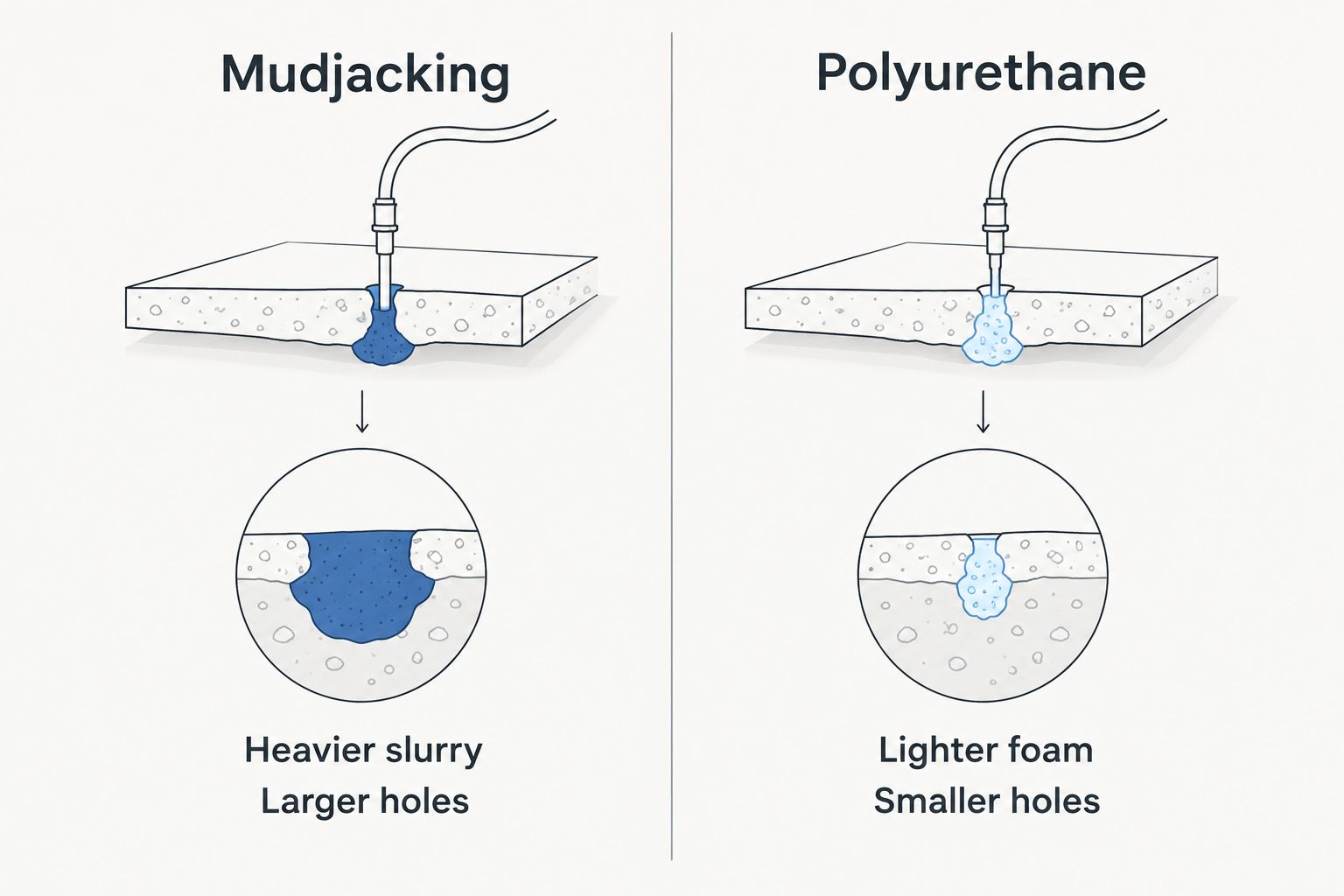
Mudjacking raises concrete by pumping a cementitious slurry beneath it. Polyurethane lifting injects a reactive material that expands into foam beneath the slab, filling voids and producing lift. Both methods work through drilled access holes and aim to preserve suitable existing concrete rather than remove it.
The guide to how polyurethane concrete lifting works explains the foam process in more detail. Use the comparison below to separate material differences from claims that require a site assessment.
| Decision factor | Mudjacking | Polyurethane concrete lifting |
|---|---|---|
| Lifting material | Pumped cementitious slurry | Expanding polyurethane foam |
| Added weight | Heavier material beneath the slab | Lighter material beneath the slab |
| Injection holes | Generally larger holes | Generally smaller holes |
| Surface appearance | Larger patches remain visible | Smaller patches remain visible |
| Return to use | Depends on the slurry and repair conditions | Rapid-curing formulations support a faster return, subject to instructions |
| Main advantage | Established slurry-based lifting process | Lower added weight and smaller access holes |
| Main limitation | Adds more weight and requires larger patches | Requires appropriate material selection and controlled injection |
| Best for | Sound slabs where larger holes and heavier fill are acceptable | Sound slabs where added weight, patch size and disruption matter |
Polyurethane wins on added weight and injection-hole size, not on a promise that every slab can be saved. Mudjacking remains an option when a contractor can explain why slurry suits the slab and supporting ground.
Why this matters
A level surface is only part of a successful concrete repair. Your driveway still needs to shed water, your garage door still needs clearance, and your walkway still needs safe transitions to neighbouring surfaces.
For a 2026 repair, judge the proposal by the finished result and the condition of the support below it. A material comparison alone does not establish whether lifting is appropriate, how much movement is achievable or what work remains afterward.
Ask the contractor to identify the likely cause of settlement before discussing injection material. If water continues washing soil from beneath a slab, filling the resulting void does not remove the source of the problem.
Polyurethane concrete lifting: best for lower added weight
Polyurethane lifting uses expanding foam to fill accessible voids and raise suitable concrete. Its lower weight is a useful distinction when you want to avoid adding a heavy mass beneath an already settled slab.
Smaller injection holes also matter on visible surfaces. Patches still exist, however, and their colour and texture do not necessarily match the surrounding concrete. Smaller holes mean less visible intervention, not an invisible repair.
Where polyurethane helps
Polyurethane is a strong candidate when the concrete remains serviceable and the repair priorities include limiting added weight, reducing patch size and managing disruption. Ask the contractor to connect those advantages to your actual slab rather than repeat a general product claim.
For example, a homeowner concerned about visible driveway patches has a different priority from a property manager coordinating pedestrian access. Both need a repair plan, but the decision criteria differ.
Where polyurethane falls short
Foam does not rebuild a crumbling slab or eliminate continuing soil movement. Material properties also vary by formulation, so a claim about one polyurethane system does not automatically apply to another.
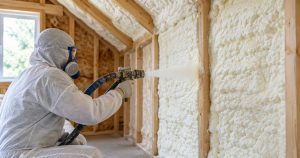
Ask what lifting material will be used and why it suits the conditions. Do not assume that foam used for concrete lifting is interchangeable with spray foam used for building insulation.
Mudjacking: best where heavier slurry is acceptable
Mudjacking fills space beneath concrete with a pumped slurry and uses injection pressure to lift the slab. It is an established approach for suitable settled concrete, but its heavier fill and larger drilled holes deserve explicit consideration.
The visible surface repair is part of the trade-off. If appearance matters, ask where holes will go and how the contractor will finish them before authorizing the work.
Where mudjacking helps
Mudjacking is an option when the slab remains intact enough to lift, the supporting conditions suit the method and larger patches are acceptable. The proposal should explain those conditions rather than treat all sunken concrete as equivalent.
A slurry-based method still requires careful control. Pumping material beneath a slab without monitoring movement risks creating an unwanted elevation or stressing the concrete.
Where mudjacking falls short
Mudjacking adds more weight beneath the slab than polyurethane foam. That difference does not prove that a repair will fail, but it is a relevant question where the ground has already settled.
Larger injection holes also leave larger repaired areas. If your decision depends on appearance or reopening arrangements, get those details in writing instead of assuming they match a foam proposal.
Why concrete lifting results vary
The same lifting material does not produce the same outcome on every property. Your 2026 assessment should address these factors before you choose between mudjacking and polyurethane:
- Slab condition: Intact concrete offers a different repair opportunity from concrete that is crumbling or broken into unstable pieces. Lifting changes elevation; it does not restore lost material.
- Supporting ground: Loose fill, voids and continuing settlement affect the support available beneath the repair. Ask whether the proposed work addresses a local void or a broader ground problem.
- Water movement: Runoff, leaking drainage and erosion can undermine support. Identify where water goes before and after the proposed lift.
- Required movement: The target elevation must account for adjacent slabs, steps, doors and drainage. Raising everything to one height is not always the correct objective.
- Access and obstacles: Equipment access, utilities and slab connections influence the injection plan. Confirm how the contractor will identify constraints before drilling.
- Material and installation: The selected formulation, injection locations and monitoring affect the work. A material name alone is not a repair specification.
Choose the repair plan that explains the cause, target elevation and remaining limitations. A confident promise without those details gives you less useful information than a clear, bounded scope.
How do you choose between mudjacking and foam?
Choose between mudjacking and polyurethane by confirming suitability first, then comparing the practical trade-offs. Use this sequence when reviewing a 2026 proposal:
- Check the concrete. Identify crumbling areas, displaced cracks and unstable sections. Ask which defects lifting will address and which will remain.
- Check the support. Ask what explains the settlement and whether water, loose fill or another issue needs separate attention. Do not substitute a material preference for this diagnosis.
- Set the target. Agree on the intended elevation and drainage direction. Include transitions at garage entrances, walkways and adjoining slabs.
- Compare the work. Review material, injection-hole locations, patching, access restrictions and cleanup. Compare equivalent scopes rather than differently described repairs.
- Confirm the handover. Get written instructions for walking, driving and other loading. Record any drainage, joint or crack work that remains your responsibility.
Photograph the slab and nearby transitions before work begins. These photos help you discuss the intended result and distinguish existing damage from changes observed during the repair.
Can you drive on concrete right after lifting?
Polyurethane concrete lifting often allows an earlier return to use than slurry-based lifting, but your contractor must confirm when your particular slab can carry vehicles. The formulation, site conditions and intended loading determine the instructions.
Do not treat a surface that feels firm underfoot as permission to park on it. Ask separately about pedestrian access, passenger vehicles and heavier equipment, and get the answer before arranging access for occupants or tenants.
Will either method stop the concrete from sinking again?
Neither mudjacking nor polyurethane guarantees that concrete will never settle again. Both restore support under suitable conditions, but neither prevents every future change in the underlying ground.
Ask what caused the original movement and what must change to reduce recurrence. Drainage corrections and management of water near the slab belong in that conversation, not as an afterthought once the surface looks level.
When is replacement better than concrete lifting?
Replacement deserves consideration when concrete is extensively deteriorated, badly fragmented or unsuitable for the required finished result. A slab that cannot remain serviceable after lifting is not a good candidate simply because injection is less disruptive than removal.
Structural concerns require appropriate assessment. Movement involving foundations, load-bearing elements or connected structural slabs should not be treated as an ordinary driveway-levelling decision.
Ask the contractor to explain why the existing concrete is worth preserving. A sound recommendation includes the reasons to decline lifting as well as the reasons to proceed.
Who should assess your southern Alberta slab?
Aztec Spray Systems is a fit for southern Alberta property owners seeking a licensed and insured concrete lifting contractor. The company provides concrete lifting services to homeowners and commercial property owners in Calgary, Okotoks, High River and Lethbridge.
When contacting Aztec Spray Systems, describe the affected surface, where it has moved and any drainage issues you have observed. Ask which lifting method is proposed for your property and why; do not assume the material from the company’s insulation services.
Aztec Spray Systems concrete lifting services are relevant to owners in those service areas, but suitability still depends on the individual slab. Request a clear explanation of repair limits, patching and return-to-use instructions before deciding.
FAQ
What’s the main difference between mudjacking and polyurethane concrete lifting?
Mudjacking pumps a heavier cementitious slurry beneath concrete, while polyurethane lifting uses expanding foam. Polyurethane generally needs smaller injection holes and adds less weight beneath the slab.
Is polyurethane concrete lifting better than mudjacking for a driveway?
Polyurethane is the stronger choice when smaller holes and lower added weight are your priorities. The driveway must still be suitable for lifting, and drainage or underlying ground problems need separate attention.
Does mudjacking leave bigger holes than foam lifting?
Mudjacking generally requires larger injection holes than polyurethane lifting. Both methods leave patched areas, and neither guarantees an exact colour or texture match with existing concrete.
Can foam lifting fix cracks in my concrete?
Foam lifting changes slab elevation and support; it does not automatically repair cracks. Ask whether crack sealing or other surface work is included or needs a separate scope.
Will polyurethane lifting fix water pooling beside my garage?
Polyurethane lifting can change a suitable slab’s elevation, but correcting pooling requires a workable drainage plan. The finished slope, surrounding surfaces and water source all need assessment.
How long does mudjacking or foam lifting last?
Neither method has a universal service life for every property. Ground stability, water movement, slab condition and installation determine how the repair performs over time.
Does Aztec Spray Systems provide concrete lifting in Calgary?
Aztec Spray Systems provides concrete lifting services in Calgary, Okotoks, High River and Lethbridge. The company serves homeowners and commercial property owners and is licensed and insured.
One last thing
The best finished slab is not always perfectly level. An exterior surface often needs a deliberate slope to direct water toward an appropriate outlet rather than toward a building.
Before approving your 2026 concrete lifting project, ask the contractor to show you the intended water path. That practical check tells you more about the proposed result than a promise to make everything flat.
Related guides
- How long does polyurethane concrete lifting last?
- Can you drive on a driveway right after concrete lifting?
- Concrete lifting for garage floors