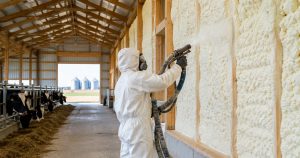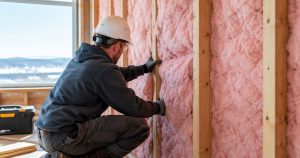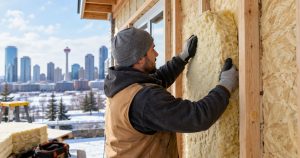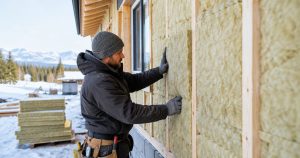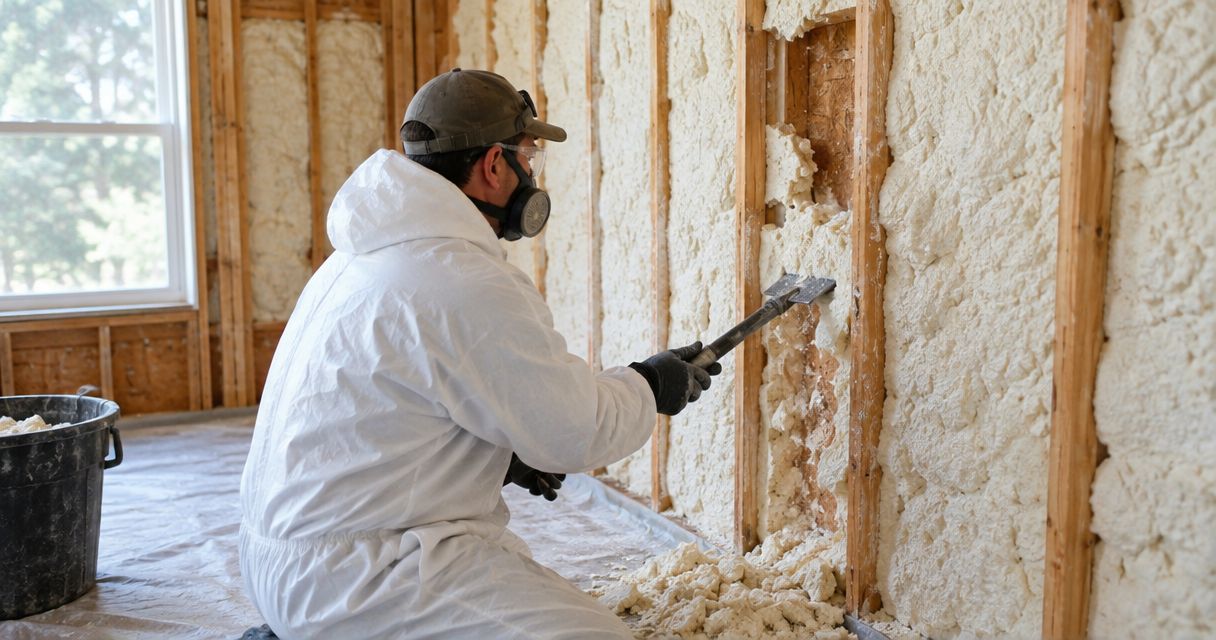
Yes, spray foam insulation can be removed once it is installed, but cured foam usually requires physical cutting and scraping rather than a simple solvent wash. Removing it can damage the surface underneath, so the right approach depends on why you need access, what the foam covers, and whether that surface must be preserved.
- Can spray foam insulation be removed? Yes: cured foam generally needs mechanical removal, not a solvent wash.
- Remove only the affected area when a localized repair allows surrounding insulation to stay intact.
- Inspect concealed wiring, moisture damage, and surface condition before choosing removal tools.
- Aztec Spray Systems provides spray foam and attic insulation services for homeowners and commercial property owners in southern Alberta.
Can spray foam insulation be removed once it's installed?
Installed spray foam is removable, but removal is not the same as reversing the installation. Once polyurethane foam cures, it forms a solid material bonded to the substrate—the wood, masonry, metal, or other surface receiving the foam. Cutting away the bulk does not necessarily leave that surface clean.
For local insulation planning, Aztec Spray Systems serves homeowners and commercial property owners in Calgary, Okotoks, High River, and Lethbridge. Confirm the scope of any proposed removal separately from replacement insulation work.
A professional removal plan follows this sequence:
- Identify the reason. Establish whether the problem is a leak, renovation access, damaged insulation, or suspected installation trouble.
- Inspect the assembly. Locate wiring, plumbing, framing, membranes, and other materials concealed by the foam.
- Define the boundary. Decide how much insulation must come out to expose and repair the affected area.
- Control the work. Establish containment, dust collection, ventilation, and task-appropriate protective equipment before cutting.
- Repair and restore. Inspect the exposed surface, complete repairs, and reinstate the insulation and required protective layers.
Removing foam before identifying the underlying problem risks unnecessary demolition. A small plumbing repair and a roof-deck replacement need very different removal boundaries.

Why this matters
Spray foam often performs more than an insulating role within a building assembly. Depending on the product and installation, it also contributes to air control and moisture management. Removing a section without restoring those functions leaves an incomplete repair.
For a 2026 renovation, specify the finished result rather than simply asking for foam removal. Your scope should explain what needs to become accessible, which surfaces must remain intact, and how the building enclosure will be restored afterward.
The goal is a sound, inspectable repair—not automatically a completely bare surface. Cosmetic cleanliness and readiness for reconstruction are different standards, and the contractor needs to know which one your project requires.
Open-cell and closed-cell foam: what changes during removal?
Both open-cell and closed-cell spray foam require mechanical removal after curing. Open-cell foam has a softer structure; closed-cell foam is denser and more rigid. Neither should be treated like loose-fill insulation that can simply be collected from an attic floor.
| Foam type | Removal characteristic | Practical advantage | Limitation | Best for |
|---|---|---|---|---|
| Open-cell foam | Softer material that can be cut away | Bulk removal is generally less resistant to cutting | Foam can remain attached to framing and irregular surfaces | A removal plan that accounts for soft material and concealed services |
| Closed-cell foam | Rigid material with strong adhesion | Controlled cutting can expose selected repair areas | Separating bonded foam can damage the substrate | A removal plan that prioritizes substrate protection and repair access |
These are material differences, not a diagnosis of your installation. Product formulation, thickness, access, and the condition of the receiving surface still affect the work.
Do not identify foam solely by colour. Ask for installation records, product documentation, or an assessment before deciding how to handle it. For a 2026 repair, retain those records with photographs of the exposed assembly.
Can you remove only part of the spray foam?
Partial removal is appropriate when the defect and repair access are localized. A contractor can define an opening around a pipe repair, damaged section, or renovation connection without automatically stripping the whole cavity.
The advantage is preservation: sound insulation outside the work area stays in place. The limitation is visibility. A narrow opening does not establish the condition of everything hidden beyond it.
Use these boundaries to guide the decision:
- Localized damage: Expose enough material to identify the full extent of the affected area.
- Service access: Allow room to complete and inspect the electrical or plumbing repair safely.
- Moisture investigation: Follow the source and extent of wetting rather than stopping at a visible stain.
- Reconstruction: Leave an edge and surface condition suitable for the specified replacement assembly.
Broader removal becomes relevant when the underlying surface needs replacement or the problem extends beyond the initial opening. The trade-off is greater access at the expense of more demolition and restoration.
Why spray foam removal difficulty varies
A removal plan depends on the physical assembly, not just the room's floor area. An accessible patch on masonry presents different constraints from foam bonded around roof framing and concealed wiring.
- Foam structure: Softer open-cell foam and rigid closed-cell foam respond differently to cutting and scraping.
- Substrate: Timber, roof sheathing, masonry, membranes, and finished surfaces tolerate different removal methods.
- Access: Restricted attic spaces and enclosed wall cavities limit visibility and tool movement.
- Concealed services: Wiring, pipes, and junctions require identification and protection before cutting.
- Condition: Moisture damage, deterioration, or suspect uncured material changes the investigation and handling requirements.
- Required finish: Exposing a repair location is different from preparing a surface for a new bonded product.
When comparing 2026 proposals, ask each contractor to describe these conditions explicitly. A proposal that says only “remove insulation” does not explain what happens to the surfaces beneath it.
Can a solvent dissolve cured spray foam?
Do not rely on a household solvent to remove cured building insulation. Cleaners intended for fresh polyurethane foam are not a substitute for removing a cured installation. A product's suitability depends on its instructions and the receiving surface.
Aggressive chemicals also introduce separate concerns: surface damage, vapours, compatibility, and waste handling. Applying a chemical without knowing what lies beneath the foam adds uncertainty rather than solving the removal problem.
Cutting and scraping are the usual starting points for cured material. The contractor should choose the tools and dust controls after inspecting the location—not default to uncontrolled sanding throughout an occupied building.
Never use a torch or open flame to remove polyurethane foam. Heat introduces fire and decomposition hazards; it is not a shortcut to a clean substrate.
What should happen before removal starts?
Preparation protects both the building and the people using it. Before a 2026 removal project begins, agree on the work boundary, access route, debris handling, and conditions for reopening the space.
Record the existing condition
Photograph the affected foam, adjacent framing, visible staining, and relevant installation labels before disturbing anything. Preserve product names and installation paperwork where available. Records help distinguish an existing defect from damage caused during access.
If an inspection first identified the concern, connect the proposed work to that finding. The guide to connecting a home inspection report to a spray foam repair addresses that planning step.
Establish containment
Define how workers will separate the work area from occupied rooms and prevent debris from spreading along the access route. Dust collection and cleaning belong in the scope, not as an assumption after demolition starts.
Task-appropriate eye, skin, and respiratory protection should follow the hazard assessment and product information. A generic instruction to wear a mask is not a complete exposure-control plan.
Check for other hazardous materials
Older assemblies can contain materials requiring assessment before disturbance. If vermiculite or suspect asbestos-containing material is present, stop and arrange appropriate assessment rather than mixing it into ordinary insulation debris.
This matters when evaluating attic insulation removal companies: the relevant scope must distinguish loose-fill collection from bonded-foam removal and identify how suspect materials will be handled. Those are different tasks even when they occur in the same attic.
Agree on the stopping point
Specify what happens if removal exposes deteriorated sheathing, damaged wiring, or more extensive moisture damage. The contractor should pause for the appropriate repair decision rather than conceal a newly exposed defect under replacement insulation.
Does removing spray foam damage wood or roof sheathing?
Removing spray foam can damage wood or roof sheathing because the foam bonds to the surface. Scraping can lift wood fibres, and cutting too deeply can damage the panel itself. Removal does not guarantee preservation of the original substrate.
Before work starts, distinguish salvage from replacement. If the sheathing already needs replacement, preserving every exposed fibre is not the project's objective. If it must remain, tool choice and the acceptable amount of residual foam require more careful agreement.
A residual film is not automatically a failed removal. Its acceptability depends on what follows: inspection, drying, fastening, coating, or installation of a replacement insulation system. Each has different surface requirements.
Ask the person responsible for the next construction step to confirm the required preparation. This prevents a removal crew from pursuing cosmetic cleanliness that damages an otherwise serviceable surface.
Should spray foam be removed because it smells?
A persistent or unusual odour warrants investigation, but smell alone does not establish the cause or the necessary removal boundary. Installation history, product information, ventilation conditions, and the condition of nearby materials all matter.
If you experience irritation or breathing symptoms, leave the affected space and seek appropriate medical advice. Do not cut into suspect material as a way to test whether it is responsible.
For a 2026 investigation, document when the odour occurs and what work preceded it. Ask for an assessment that distinguishes suspected installation problems from unrelated moisture, drainage, or other building issues.
Removal is a corrective action, not a diagnostic test. Establish the reason for it before disturbing material or committing to replacement.
How should you choose the next step?
Start with the defect, then choose the smallest removal scope that permits a complete repair. Keep sound insulation where the repair design allows it, but do not leave concealed damage simply to avoid opening another area.
Aztec Spray Systems is a local option for homeowners and commercial property owners seeking spray foam and attic insulation services in Calgary, Okotoks, High River, and Lethbridge. Its stated services do not establish a specialist removal or hazardous-material remediation scope; confirm those responsibilities before appointing anyone.
Your written plan should answer:
- What problem is the work intended to resolve?
- Which materials will be removed, retained, or replaced?
- Who handles concealed electrical, structural, or moisture-related repairs?
- What inspection is required before the assembly is closed?
- How will insulation, air sealing, and required protective coverings be restored?
Aztec Spray Systems provides spray foam insulation services; ask whether your specific removal and reconstruction requirements fall within the proposed work. Assign any specialist assessment separately when needed.
FAQ
Can spray foam insulation be removed after it has fully cured?
Yes, fully cured spray foam insulation can be removed mechanically. Cutting away the bulk and carefully scraping residual material are different stages, and neither guarantees an undamaged substrate.
Can I remove spray foam insulation myself?
Do not treat building-scale spray foam removal as routine DIY work. Concealed services, dust exposure, substrate damage, and possible hazardous materials require assessment before tools are selected.
Does acetone remove cured spray foam insulation?
Acetone is not a practical method for removing a cured building-insulation installation. Follow product-specific instructions and do not assume cleaners for fresh foam will remove hardened foam safely.
Do I have to remove all the foam to fix a roof leak?
No, a roof leak does not automatically require removal of all the foam. The removal boundary must allow the leak, affected materials, and necessary repairs to be fully assessed.
Can spray foam be replaced after removal?
Yes, replacement insulation can be installed after the underlying problem is repaired and the surface meets the replacement system’s requirements. Restore the assembly’s air-control and protective layers as part of the work.
Will removing spray foam get rid of mould?
Removing spray foam alone does not resolve mould or the moisture source supporting it. The affected assembly needs assessment, appropriate remediation, and correction of the water or humidity problem.
Can spray foam be removed without damaging roof sheathing?
Damage-free removal cannot be guaranteed because spray foam adheres to roof sheathing. Establish whether the sheathing must be preserved or replaced before choosing the removal method.
One last thing
Ask for photographs after removal and before replacement insulation covers the work. That is your opportunity to document the substrate, completed repairs, and concealed services—not after the cavity is closed again.
Keep those photographs with the removal scope and replacement product records. A finished wall hides both good repairs and unresolved defects equally well.
Related guides
- How to remove old attic insulation before a spray foam upgrade
- How to maintain spray foam insulation after installation
- Can you spray foam over old vermiculite insulation?