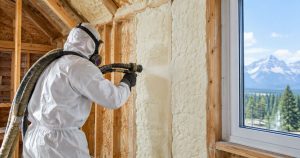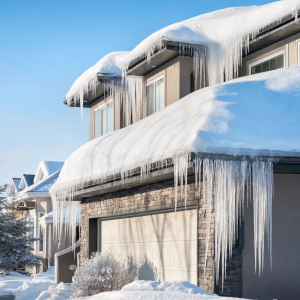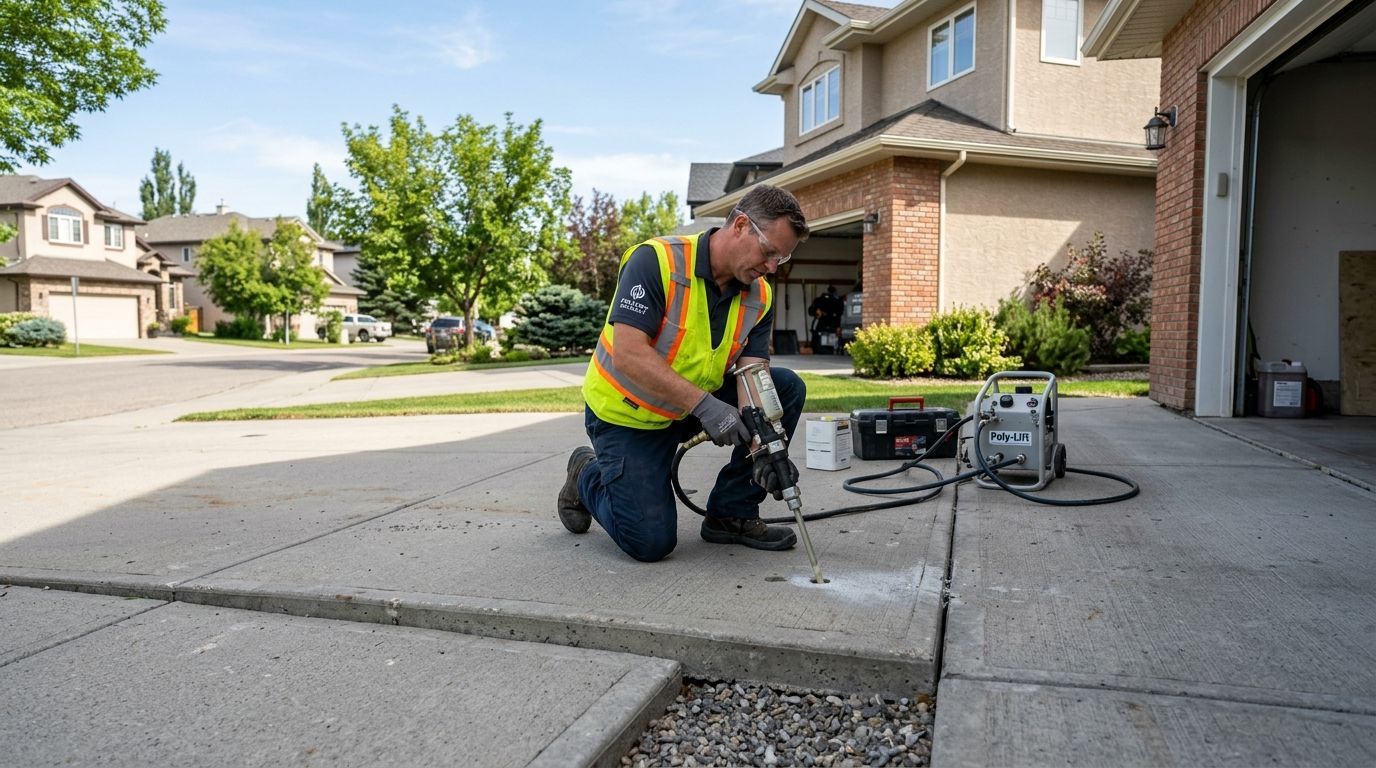
Calgary homeowners use concrete lifting to raise sunken driveways, garage floors, sidewalks, and patios back to level without tearing out the old slab. Calgary's clay-heavy soil and hard freeze-thaw cycles settle concrete faster than in most Canadian markets, which is why this fix matters more here than in milder climates.
The method that works for a slab depends on how it settled and how much void sits underneath it. A driveway with a shallow dip needs a different approach than a garage floor that dropped at one corner, and knowing the difference before you book a crew saves a repeat call next spring.
- Concrete lifting Calgary contractors use polyurethane foam injection to raise sunken slabs in hours, not days.
- Calgary’s clay soil and freeze-thaw cycles cause more driveway and garage floor settling than milder climates.
- Aztec Spray Systems handles concrete lifting for Calgary, Okotoks, High River, and Lethbridge properties.
- Foam lifting is walkable the same day; mudjacking needs longer cure time before it carries a load.
- A slab with structural cracking through the concrete needs replacement, not lifting – check for that first.
Why concrete lifting matters for Calgary homeowners
Calgary sits on expansive clay soil that swells when wet and shrinks when it dries, and every freeze-thaw cycle through an Alberta winter pushes that movement further under a slab. A driveway or garage floor poured on unstable base material settles unevenly instead of staying flat, and that unevenness only gets worse the longer it sits.
Homeowners in Okotoks and High River deal with the same soil behaviour, which is why the fix looks the same across the region even though the properties differ. If you are already noticing signs your garage floor needs concrete lifting, the earlier you address the void underneath, the less material it takes to correct it.
A settled driveway or patio is not just cosmetic. Water pools in the low spot, ice forms there first in winter, and the slab edge closest to the house can start pushing moisture toward the foundation. That is a separate problem from foundation settling you can catch early, but the two often show up on the same property in the same season.
How to handle concrete lifting for your Calgary property
Inspect your slab for the actual signs of settling
Start with a walk-around before you call anyone. Settling shows up in predictable spots, and knowing what you are looking at helps you describe the problem accurately when you book an assessment.
- A visible gap or step where the driveway meets the garage floor or front walk
- Water pooling in one corner of the patio or driveway after every rain
- Cracks that run in a straight line rather than a spiderweb pattern
- A slab section that rocks or flexes slightly when you park a vehicle on it
- Soil visible under the slab edge where it used to sit flush with the ground
Check what is underneath before assuming a fix
Not every dip is a void. Sometimes the slab is intact and the soil beneath it eroded from poor drainage; other times a genuine gap has opened and the concrete is bridging empty space.
- Look for erosion channels where downspouts or grading push water under the slab edge
- Tap the surface near the settled area and listen for a hollow sound versus a solid thud
- Note whether settling is isolated to one panel or spreads across multiple joints
- Check if the settled section sits near a mature tree, since root systems change soil density over years
- Rule out a plumbing leak if the drop is concentrated near a drain or cleanout
Compare your lifting options honestly
Polyurethane foam lifting and mudjacking both raise a slab, but they behave differently in Calgary's soil and neither is free of tradeoffs. A slab with cracking through the concrete itself, not just at a control joint, often is not a lifting candidate at all.
- Polyurethane foam expands to fill the void and lifts the slab with minimal added weight
- Mudjacking pumps a heavier cement-based slurry underneath, adding load to soil that is already unstable
- Full replacement is the right call when a slab has broken into separate pieces
- DIY leveling compounds only fix the surface and never touch the void causing the drop
- A licensed contractor should confirm which category your slab falls into before any work starts
Book an assessment before the ground freezes solid
Injection work needs soil that can still be worked, and Alberta ground freezes hard enough by late fall that lifting becomes impractical until spring thaw. Waiting means living with a bigger trip hazard through an entire winter.
- Schedule an assessment in late summer or early fall in 2026 while the ground is workable
- Ask whether your settling pattern is a same-season fix or needs monitoring first
- Confirm the contractor is licensed and insured to work in Calgary, Okotoks, and High River
- Get a written scope that names the exact slab sections being lifted
- Ask what happens if the injection ports reveal a larger void than expected
Prepare the site so the crew can work efficiently
A few minutes of prep on your end keeps the job moving and avoids delays on the day of the work.
- Clear vehicles, planters, and furniture off the affected slab
- Mark any known underground utilities or sprinkler lines near the injection area
- Note recent landscaping or grading changes that may have contributed to the settling
- Keep pets and kids away from the work zone while injection ports are drilled
Maintain the surface after lifting
Lifted concrete holds its new position well, but the soil conditions that caused the original settling are still present under the rest of the property.
- Redirect downspouts away from the base of driveways and patios
- Regrade low spots that funnel water toward the slab edge
- Seal visible cracks before winter so moisture cannot work into the joint
- Watch the same section through one full freeze-thaw cycle before calling it stable
Know when to call again versus when to wait
Most lifted slabs hold. A small amount of movement in year one is normal as the soil finishes compacting, but a repeat drop of the same magnitude within a year points to an unresolved drainage issue rather than a failed lift.
Comparing your concrete lifting options in Calgary
| Option | Best for | Cure time | Key limitation |
|---|---|---|---|
| Polyurethane foam lifting | Driveways, garage floors, and patios with moderate settling | Walkable within hours | Not suited to slabs with structural cracking |
| Mudjacking | Large slabs where a heavier fill material is acceptable | Longer cure before full load-bearing | Added weight stresses already-unstable clay soil |
| Full slab replacement | Slabs broken into pieces or cracked through the concrete | Standard cure for a new pour | Highest disruption – tear-out, disposal, fresh pour |
| DIY leveling compound | Cosmetic surface unevenness only | Per product instructions | Does not address the underlying void |
Polyurethane foam lifting is the right call for most Calgary driveway and garage floor settling – it cures faster and adds far less weight to soil that is already compromised. Mudjacking still has a place on large commercial slabs where foam volume climbs quickly, but on a residential driveway it is rarely the better trade.
“If the slab sounds hollow when you tap it, the problem is the void underneath, not the concrete on top.”
Get a concrete lifting assessment
Find out if your driveway or garage floor qualifies for lifting before the ground freezes.
Common mistakes Calgary homeowners make with concrete lifting
- Ignoring a hairline crack until the slab drops far enough to trip someone. The crack was the early warning, not the problem.
- Assuming a sunken driveway is normal settling without ever checking whether a void has opened underneath.
- Pouring fresh concrete over unstable soil instead of correcting the base first, which resets the clock on the same failure.
- Waiting until spring thaw to book, when contractor schedules across Calgary, Okotoks, and High River fill up fast the moment the ground softens.
- Choosing mudjacking by default without checking whether the added weight makes compaction worse on a clay-heavy lot.
FAQ
What is concrete lifting and how does it work?
Concrete lifting raises a sunken slab by injecting material underneath it to fill the void and push the concrete back to level. Polyurethane foam is the common method in 2026 because it avoids tearing out and repouring the existing slab.
Is concrete lifting a permanent fix in Calgary’s climate?
Lifted concrete typically holds through repeated freeze-thaw cycles once the soil below has re-compacted. Correcting drainage around the slab matters as much as the lift itself, since water moving under the concrete is what caused the original drop.
How long does concrete lifting take on a driveway?
Polyurethane foam lifting is usually walkable within hours of injection, far faster than mudjacking or a full slab replacement. Vehicle traffic can often resume the same day depending on the scope of the lift.
What is the difference between mudjacking and polyurethane foam lifting?
Mudjacking pumps a heavier cement-based slurry under the slab, while polyurethane foam expands and lifts with much less added weight. On Calgary clay soil the lighter foam puts less stress on ground that is already unstable.
Can concrete lifting fix a garage floor that dropped at one corner?
Yes, provided the concrete itself is not cracked through in multiple places. A garage floor that settled unevenly at one corner is one of the most common candidates for foam injection lifting.
Does a sunken patio need lifting or full replacement?
It depends on whether the slab is intact or has broken into separate pieces. An intact patio that settled as one unit is a lifting candidate; a patio with cracks running through the concrete usually needs replacement.
When should I call a professional instead of trying a DIY fix?
Any slab with a visible gap or a hollow sound underneath needs a professional assessment, because DIY leveling compounds only smooth the surface. Waiting past that point usually means a larger repair later.
Is concrete lifting available outside Calgary in Okotoks or High River?
Yes. The same clay soil and freeze-thaw conditions affect properties across Okotoks, High River, and Lethbridge, and the lifting process works the same way regardless of city.
One last thing
The soil under your slab keeps moving after a successful lift, which is why a lift without a drainage correction sometimes needs a follow-up years later. Fix where the water goes after a rain, and the concrete lifting you pay for in 2026 has a real chance of being the last time that section of driveway needs attention.
Related guides
- Concrete lifting for garage floors
- Concrete lifting for patios and pool decks
- Concrete lifting for High River properties