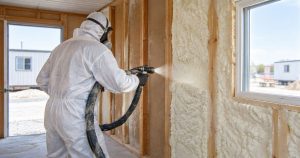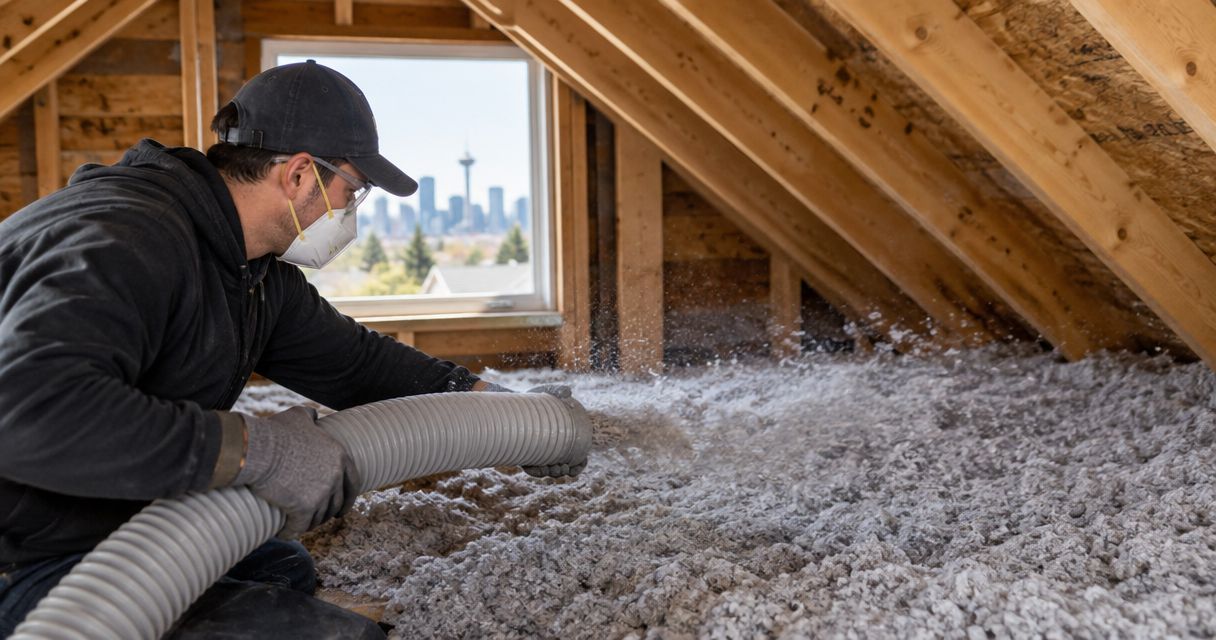
Blown-in attic insulation for older homes means filling open joist bays with loose-fill cellulose or fiberglass to raise a bungalow attic toward Alberta's current insulation target, without opening drywall or touching the roof deck. Calgary bungalows built before the 1980s typically sit at R-12 to R-20 in the attic, well under what a Prairie winter demands in 2026, and their low-slope roof lines, older wiring, and shallow eave clearance change how the job gets prepped compared to a newer two-storey.
- Blown-in attic insulation for older homes tops up bungalow attics without opening walls or ceilings.
- Pre-1980 Calgary bungalows often sit at R-12 to R-20; 2026 building code targets run far higher.
- Knob-and-tube wiring and shallow eave clearance change the prep work older bungalows need before blow-in.
- Aztec Spray Systems removes old insulation and air-seals attic bypasses before adding loose-fill in Calgary attics.
Why blown-in attic insulation matters for older Calgary bungalows
A bungalow attic with R-12 to R-20 loses heat through the roof every winter month, and the furnace runs longer to make up the difference. Natural Resources Canada's guidance for Calgary's climate zone points toward roughly R-50 in the attic, a level most bungalows built in the 1960s and 1970s were never framed to hold on the day they went up.
The fix isn't just piling on more loose-fill. Older bungalows carry knob-and-tube wiring, undersized soffit vents, and attic hatches that were never weatherstripped, and a blown-in attic insulation for Calgary homes job that skips those details ends up with even depth on paper and cold rooms in practice. Get the prep right first, and the insulation actually does its job through a Calgary winter in 2026.
How to plan blown-in attic insulation for an older bungalow
Inspect the current insulation depth and type
Start with a tape measure at the joists before deciding on anything else.
- Measure depth at three or four spots across the attic, not just near the hatch
- Check for wet, matted, or compressed sections that signal a past roof leak
- Identify whether the existing material is fiberglass batt, cellulose, or vermiculite
- Note any spots where soffit vents already look blocked
- Check for rodent or pest activity in the insulation before disturbing it
Air-seal the attic floor before adding more insulation
Depth means little if warm air keeps rising through gaps in the ceiling below.
- Seal ceiling penetrations around plumbing stacks, chimney chases, and pot lights
- Caulk the top plates where interior walls meet the attic floor
- Weatherstrip and seal the attic hatch itself
- Add gaskets or boxes around bathroom fan housings before insulating over them
- Cap any open chimney chase with fire-rated material, not loose-fill alone
“An attic can hit the target depth and still leak heat all winter if nobody sealed the gaps underneath it first.”
Clear a path around knob-and-tube wiring and older electrical
Older bungalows across Calgary still carry original wiring in the attic, and it changes how insulation gets installed. The homes with knob-and-tube wiring get a different prep pass than a newer build.
- Keep loose-fill clear of splice boxes and junction points
- Maintain the clearance around wiring called for under the electrical code
- Flag any exposed, frayed, or brittle wiring for an electrician before insulating over it
- Avoid compressing wiring runs under new insulation, which traps heat around the conductor
Remove or top up the existing insulation
A small top-up over sound, dry batt insulation is a DIY-friendly job: rent a blower from a hardware store, buy bagged loose-fill rated for the depth you need, and add it evenly across open bays. That's the manual route and it works for attics with no wiring conflicts, no wet spots, and easy hatch access.
Older bungalow attics rarely stay that simple. Where insulation is compressed, contaminated, or blocking vents, the faster path is having it pulled out and replaced in one pass. Aztec Spray Systems removes old, wet, or compressed insulation before adding new material, which avoids trapping moisture under a fresh layer of loose-fill.
Bring the attic up to Alberta's current R-value target
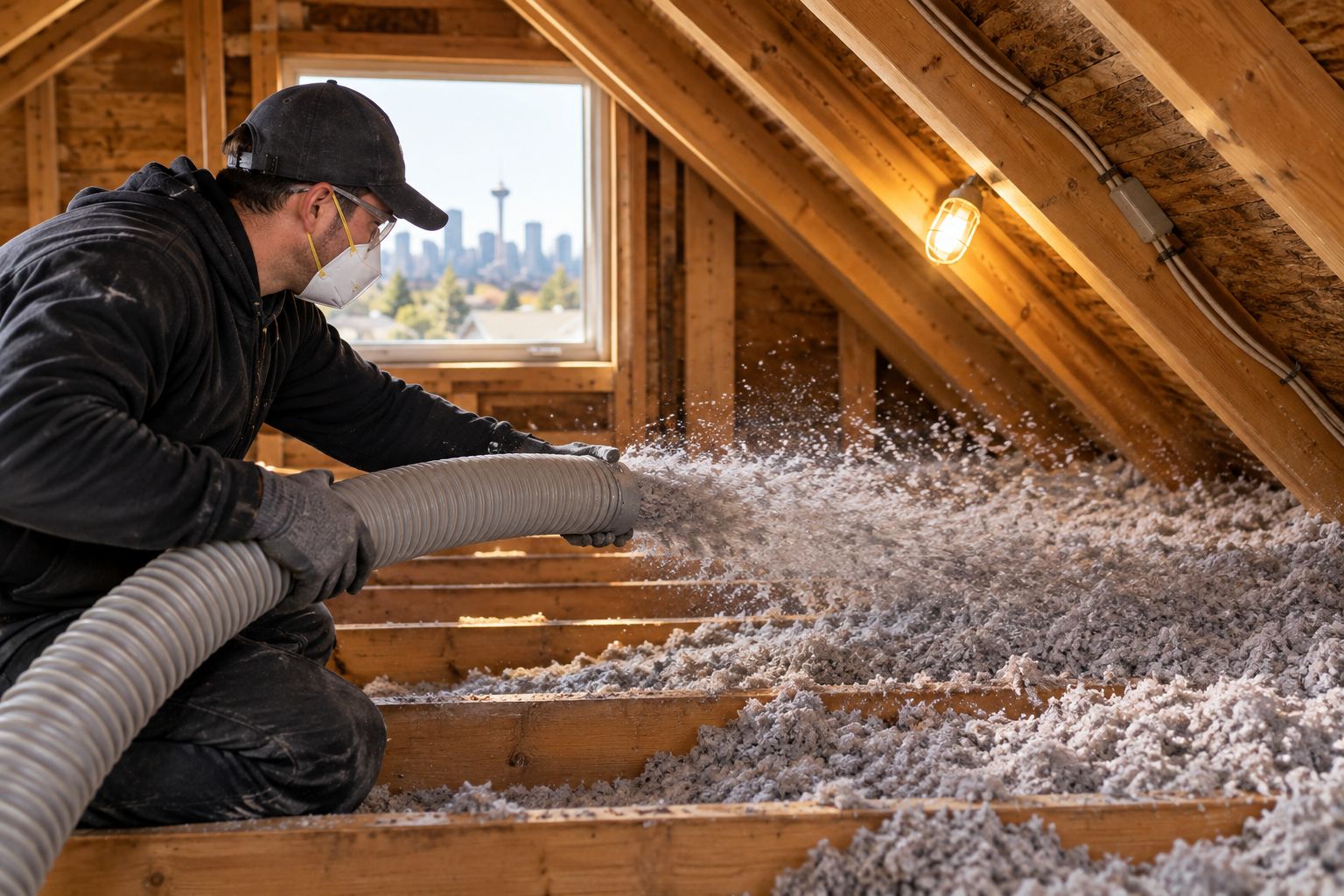
Once the floor is sealed and clear, the loose-fill goes in to a consistent depth.
- Use the density chart printed on the insulation bag to hit the target R-value at that depth
- Blow to a uniform depth across the whole attic floor, not just the center
- Avoid compressing material near the eaves where clearance is already tight
- Mark depth with rulers or gauges left standing so it can be checked later
Protect the soffit vents and roof edge
A bungalow with a shallow eave loses ventilation fast once loose-fill goes in.
- Install baffles at every soffit vent bay before insulation gets blown in
- Keep insulation roughly 2 inches below the roof deck at the eaves
- Check the ridge vent isn't blocked by insulation pushed up from below
- Confirm attic ventilation still meets the intake-to-exhaust ratio required by code
Check the attic hatch and any bonus room transitions
Many Calgary bungalows picked up a partial attic bonus room or an addition somewhere along the way, and that transition point is where heat escapes.
- Weatherstrip and add a cover over the attic hatch
- Insulate knee walls in any partial bonus room conversion
- Seal the rim joist where an addition meets the original bungalow footprint
- Re-check depth on both sides of any transition, not just the main attic
Confirm the finished depth meets code before closing the job
- Measure depth at several points, not just one, once the job is done
- Compare the finished level against Alberta's current attic insulation target
- Keep photos of the finished depth for resale disclosure down the road
- Ask for a written summary of what was removed and what was added
Comparing insulation options for older bungalow attics
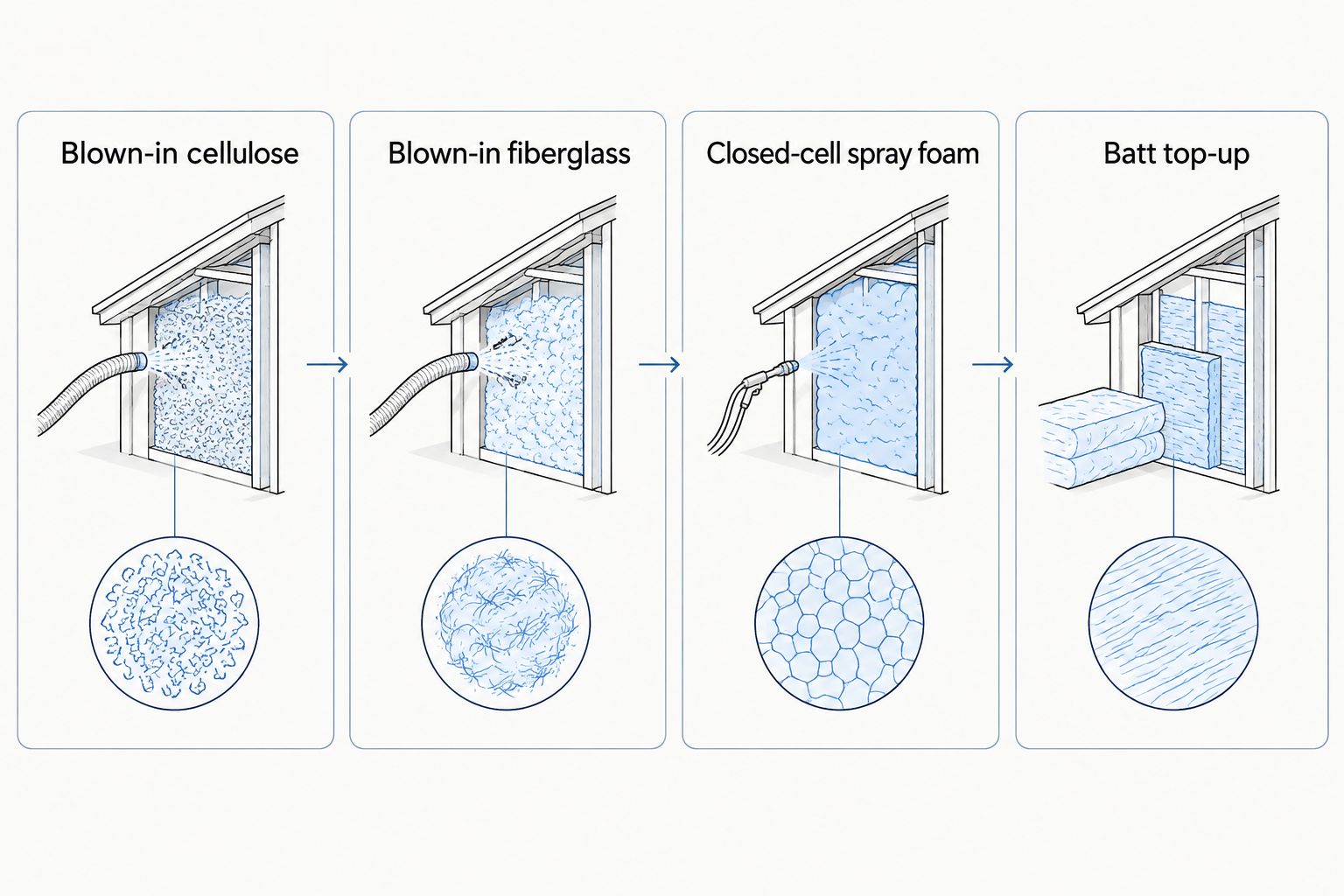
Not every bungalow attic needs the same material, and the right pick depends on what's already up there and how the attic is built.
| Option | Best for | Key limitation |
|---|---|---|
| Blown-in cellulose | Older bungalows needing an even top-up around joists and wiring | Settles over time and needs a depth check every few years |
| Blown-in fiberglass | Attics with moisture concerns, since it doesn't absorb water the way cellulose can | Lower density means more material needed for the same R-value |
| Closed-cell spray foam | Low-slope roof lines with tight clearance or ongoing ice-damming issues | Higher upfront job and not reversible once it's applied |
| Batt top-up (DIY) | Small, easily accessible attic sections with open, unobstructed framing | Hard to fit tightly around trusses, wiring, and irregular older framing |
| Leaving existing insulation as-is | Homeowners with no near-term sale or renovation plans | Heat loss and higher furnace runtime continue every winter |
Get your bungalow attic assessed
See where an older Calgary attic stands against current insulation targets.
Common mistakes on older Calgary bungalow attics
- Blowing insulation over knob-and-tube wiring without clearance. Many original bungalow wiring runs need airspace around them, and burying them under loose-fill is a fire code issue, not a cosmetic one.
- Burying soffit vents during a DIY top-up. Once intake airflow is blocked, warm air pools at the roof deck and drives ice damming along the eaves through a Calgary winter.
- Skipping air-sealing on 1960s and 1970s bungalows. Recessed lighting, un-capped chimney chases, and old plumbing stack penetrations leak warm air no matter how deep the insulation on top of them is.
- Not checking for vermiculite before disturbing old material. Vermiculite insulation needs to be identified and handled correctly before any removal or top-up work starts.
- Treating a converted attic bonus room like the rest of the attic. Knee walls and rim joists in these additions need their own sealing pass, not a blanket top-up across the whole floor.
FAQ
What is blown-in attic insulation for older homes?
It’s loose-fill cellulose or fiberglass blown into open attic joist bays to raise insulation levels without removing drywall or ceilings. Older bungalows usually need it because original attic insulation from the 1960s-1980s falls well short of current targets.
How much attic insulation do older Calgary bungalows need to meet code?
Natural Resources Canada’s guidance for Calgary’s climate points toward roughly R-50 in the attic. Most pre-1980 bungalows sit at R-12 to R-20 before any upgrade.
Is blown-in insulation safe over knob-and-tube wiring?
It can be, but only with the clearance required under the electrical code maintained around the wiring. Splice points and junction boxes need to stay clear, not buried under loose-fill.
Can you blow in insulation over old batts?
Yes, as long as the existing batts are dry and not compressed or contaminated. Wet or matted insulation should come out first rather than getting covered over.
Does blown-in attic insulation help with ice damming in Calgary?
It helps when it’s paired with air-sealing and clear soffit vents. Insulation depth alone without proper ventilation can make ice damming worse, not better.
Is spray foam better than blown-in insulation for older homes?
Closed-cell spray foam suits low-slope rooflines and tight clearance, but it’s not reversible and costs more upfront. Blown-in cellulose or fiberglass fits most standard bungalow attics with easier future access.
How long does blown-in attic insulation take in a bungalow?
Timing depends on attic size, how much old material needs removing, and how much air-sealing prep the ceiling below needs. A straightforward top-up moves faster than a full removal-and-replace job.
Do Alberta rebates cover blown-in attic insulation upgrades?
Rebate programs change and have specific eligibility rules, so check current program details before assuming coverage. Confirm eligibility before scheduling the work, not after.
One last thing
The step homeowners skip most often on an older Calgary bungalow isn't the insulation depth, it's the air-sealing pass underneath it. Two attics can hit the exact same R-value in 2026 and still perform completely differently through a Calgary winter, depending on how many gaps got sealed before the loose-fill ever went in.
Related guides