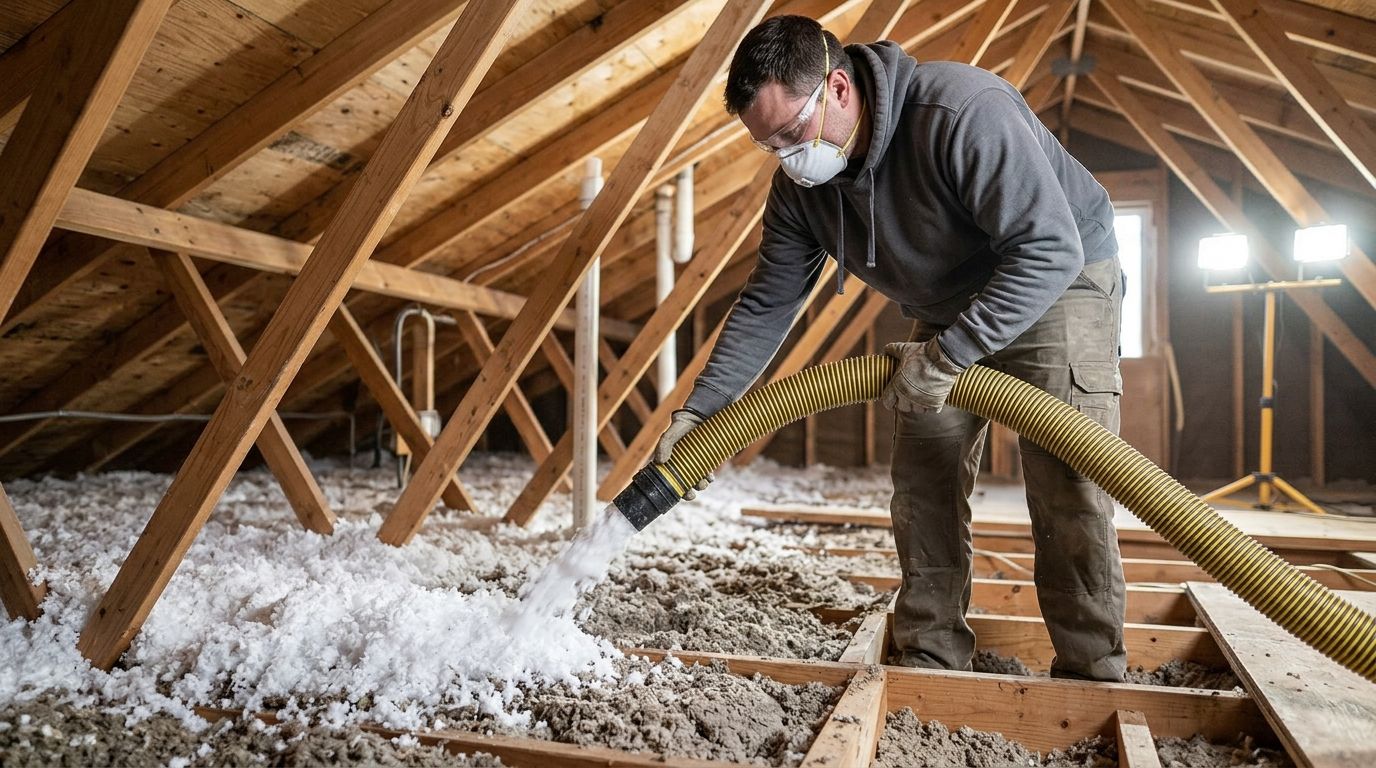
Topping up attic insulation with blown-in product means adding fresh fiberglass or cellulose over what's already up there to reach Alberta's recommended attic rating of R-50, sometimes R-60 for maximum efficiency. The part most homeowners miss: topping up over air leaks or crushed insulation wastes the new material, so sealing and fluffing come before the blower ever gets loaded.
- Topping up attic insulation means blowing fresh fiberglass or cellulose over existing material to hit Alberta’s R-50 to R-60 target.
- Fiberglass needs roughly 20 inches of total depth to reach R-50; cellulose needs closer to 14 inches at about R-3.5 per inch.
- Air-seal top plates, pot lights, and the attic hatch first, or the new R-value gets undercut by leaks nobody blew insulation over correctly.
- Matching the new product to what’s already there keeps the coverage math simple; mixing types is fine but changes your depth calculation.
- Aztec Spray Systems tops up attics across Calgary, Okotoks, High River, and Lethbridge for homes that need more than a weekend DIY fix.
Why this matters
Most Calgary and Okotoks homes built before the 2000s were insulated to R-20 or R-28, six to eight inches of old fiberglass batt that's since settled, shifted, or gotten crushed by stored boxes. That gap between R-28 and today's R-50 recommendation is exactly what a blown-in top-up closes, and it's usually cheaper than tearing everything out and starting over.
Before buying a bag of insulation, test whether your attic insulation meets Alberta's building code. A quick depth check tells you how many inches you're short and which product makes sense to add.
How to top up attic insulation with blown-in product
Here's the sequence that gets a top-up done right instead of just done fast:
- Measure current depth. Push a ruler straight down to the joist in five or six spots across the attic and average the reading.
- Air-seal first. Caulk or foam around top plates, plumbing stacks, wiring penetrations, and the attic hatch. This step matters more than the insulation itself for stopping heat loss.
- Install baffles at the eaves. Cardboard or foam baffles keep soffit vents clear so the new insulation doesn't choke off attic airflow.
- Rake old insulation level. Fluff any compressed batts or settled loose-fill so the new material sits on an even base instead of pooling in low spots.
- Load the blower and set depth guides. Rental machines from most Calgary hardware stores come with a coverage chart matched to the bag's R-value; set your depth stakes before you start.
- Blow to target depth, checking as you go. Walk the attic in a grid pattern, keeping the hose moving so you don't dump uneven piles.
- Recheck depth in the same five or six spots you measured at the start, and top off any thin areas near the edges.
If that list already sounds like more time in a 40°C attic than you want to spend, remove old attic insulation instead of topping it up when the existing material is wet, moldy, or full of rodent activity — topping up over damaged insulation just traps the problem.
Blown-in fiberglass: about R-2.2 to R-2.7 per inch
Fiberglass loose-fill is the lighter, less dusty option and it doesn't settle much after installation, which makes coverage math predictable. Reaching Alberta's R-50 target takes roughly 20 inches of total depth, so if you're starting from 8 inches of existing batt, you're adding about 12 inches of new material.
Best for: homeowners who want a cleaner install and don't mind slightly deeper piles to hit the same R-value. Verdict: Buy if your attic has the vertical clearance for 20 inches without burying the hatch or blocking soffit vents.
Blown-in cellulose: about R-3.2 to R-3.8 per inch
Cellulose is treated recycled paper, denser per inch than fiberglass, so it reaches the same R-value in less depth — around 14 inches for R-50. It settles more over the first year, typically 15-20%, which is why installers overfill slightly to account for compression.
Best for: attics with limited depth clearance around HVAC ducts or low-slope roof edges. Verdict: Buy when depth is tight; Hold if your attic already has fiberglass and you want a simpler like-for-like top-up instead of mixing products.
Why attic insulation needs vary
Not every attic needs the same depth of new material, even at the same target R-value:
- Existing insulation type and condition — settled cellulose needs less added depth than crushed fiberglass batt to hit the same R-value.
- Home age and air sealing quality — older homes with more penetrations lose more heat regardless of how much insulation sits on top.
- Roof slope and attic depth near the eaves — low-slope roofs limit how much material fits near the perimeter without blocking ventilation.
- Ventilation baffle placement — soffit vents blocked by insulation cause moisture buildup even when the R-value looks fine on paper.
- Rebate program requirements — some Alberta insulation rebate programs specify a minimum post-retrofit R-value, which can push the target above R-50.
- Attic access obstructions — stored items, ductwork, and knob-and-tube wiring all change how evenly a blower can distribute material.
Get an attic insulation quote
Aztec Spray Systems tops up attics across Calgary, Okotoks, High River, and Lethbridge.
How many inches of attic insulation do I need in Calgary?
Calgary attics need roughly 20 inches of fiberglass or 14 inches of cellulose to reach the R-50 target Alberta's climate calls for. Homes aiming for R-60 performance need proportionally more depth of either product.
Can I add blown-in insulation over old fiberglass batts?
Yes, blown-in cellulose or fiberglass can go directly over existing batts as long as the batts aren't wet, moldy, or compressed into a solid mat. Rake the old material flat first so the blower distributes evenly instead of piling on top of ridges.
How much attic insulation is too much?
There's no real ceiling on R-value itself, but insulation piled higher than the attic hatch frame or over soffit vents causes problems regardless of R-value. Keep baffles clear and leave the hatch area low enough to close properly.
See how the total project pencils out on blown-in attic insulation cost in Calgary before deciding between a rental blower and a contractor crew.
FAQ
How much does it cost to top up attic insulation in Calgary?
Cost depends on how many inches you’re adding and which product you choose; fiberglass and cellulose price differently per bag and per square foot covered. A local quote is the only reliable way to pin down a number for 2026 material pricing.
Is blown-in fiberglass or cellulose better for a top-up?
Cellulose reaches R-50 in about 14 inches versus roughly 20 inches for fiberglass, making it the better pick for attics with limited depth clearance. Fiberglass costs less to move through a rental blower and doesn’t settle as much over time.
Do I need to air-seal before topping up attic insulation?
Yes, air-sealing top plates, pot lights, and the attic hatch before adding insulation stops the new material from sitting on top of active air leaks. Skipping this step is the most common reason a top-up doesn’t lower heating bills as expected.
Can I mix cellulose and fiberglass in the same attic?
Yes, mixing cellulose and fiberglass in the same attic is fine structurally, but you need to recalculate depth using each product’s R-value per inch. Rake the existing layer flat first so the new material distributes evenly.
What R-value does Alberta recommend for attic insulation in 2026?
Alberta’s building code sets attic insulation targets around R-50, with R-60 recommended for maximum efficiency in this climate zone. Homes under R-40 are generally considered under-insulated for the region.
How do I know if my attic insulation has settled?
Measure depth with a ruler in five or six spots; loose-fill fiberglass that’s settled below its rated coverage chart depth, or cellulose that’s compressed and uneven, both signal it’s time to top up. A flashlight check for daylight through the soffit also flags gaps.
Should I remove old insulation before topping up?
Only remove old insulation if it’s wet, moldy, or contaminated with rodent activity; otherwise topping up over cleaned, raked-flat existing material works fine. Removal adds cost and time that a straightforward top-up doesn’t require.
Can I rent a blower and do the top-up myself?
Yes, most Calgary hardware stores rent blowers free with bag purchase, and a single-story attic top-up is a realistic weekend DIY project for a homeowner comfortable working in tight, hot spaces. Full R-50 jobs on larger or oddly-shaped attics often go faster with a contractor crew.
One last thing
The depth chart printed on the insulation bag assumes a completely flat, obstruction-free attic floor — real attics rarely are. Ductwork, chimney chases, and recessed lighting all eat into coverage, so plan on buying 10-15% more material than the chart's square-footage math suggests, or you'll be making a second trip to the store mid-project.
Related guides