Knob-and-tube wiring and spray foam insulation can coexist, but only if the wiring gets addressed first — cover live knob-and-tube conductors the wrong way and you trade a drafty attic for a fire hazard.
- Knob and tube wiring insulation is only safe after an electrician confirms the circuits are de-energized, rerouted, or replaced.
- Alberta building and electrical codes restrict covering live knob-and-tube conductors with any insulation type, including spray foam.
- Open-cell foam over rewired attic circuits is the safe pick for most older Calgary and Okotoks homes in 2026.
- Foaming over untouched, live knob-and-tube wiring is a Skip — no exceptions, no shortcuts.
Why this matters
Homes built before the 1950s across Calgary, Okotoks, High River, and Lethbridge often still carry original knob-and-tube circuits somewhere in the attic or wall cavities. That wiring was designed to shed heat into open air. Bury it under spray foam or batt insulation and the conductors can run hotter than they were ever rated for, which is exactly why electrical codes treat this combination differently than a standard insulation job.
The insulation itself isn't the problem. The sequencing is. Get the wiring assessment done first, and knob and tube wiring insulation becomes a straightforward upgrade instead of a liability.
Who this is for
This guide is for owners of pre-1960 homes in Calgary, Okotoks, High River, or Lethbridge who still have some original knob-and-tube circuits in the attic, walls, or crawlspace and are planning an insulation upgrade. If you've already had the home fully rewired, most of the cautions below don't apply to you — you're free to insulate like any other property. If you're not sure what's behind your drywall, that uncertainty is the whole reason to read the next section before booking anyone. Aztec Spray Systems runs into this exact scenario often in spray foam insulation for older Calgary homes, where century homes and 1940s bungalows mix updated circuits with untouched original wiring in the same attic.
What to look for in knob and tube wiring insulation
An electrical assessment before anything gets foamed
No insulation contractor should start spraying until an electrician has mapped which circuits are still live knob-and-tube and which have already been replaced. This single step determines whether you're doing a full rewire, a partial reroute, or a straightforward foam job. Skipping it is the single most common reason insulation projects on older Alberta homes get flagged during resale inspections.
Code compliance, not just insulation performance
Electrical code provisions across Alberta restrict covering active knob-and-tube conductors with thermal insulation because the wiring loses its ability to dissipate heat. This isn't a gray area a contractor can talk around — it's a documented fire-safety rule, and any crew proposing to foam over live KT wiring without addressing it first should be turned away.
Insurance requirements tied to the wiring, not the foam
Many Alberta home insurers already require knob-and-tube wiring to be updated or removed before renewing coverage on older homes, independent of any insulation work. If a rewire is coming regardless, it makes sense to schedule it right before the insulation crew arrives rather than as two disconnected projects months apart.
Access for future inspection
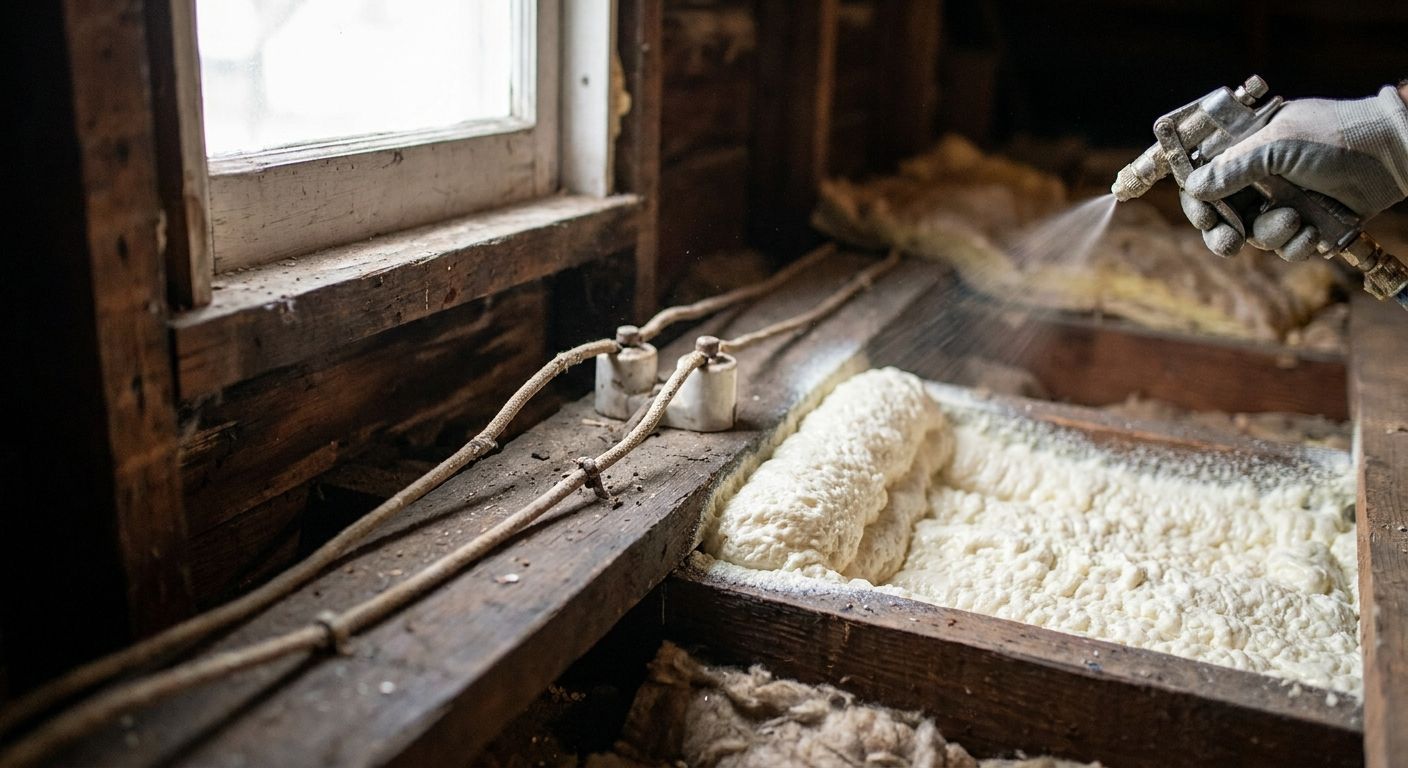
Open-cell foam and loose-fill leave attic wiring more visible and serviceable than dense-packed closed-cell foam sprayed directly around junction points. For a home where some circuits are staying knob-and-tube a while longer (fully de-energized or capped, but still physically present), keeping that wiring inspectable matters more than squeezing out an extra point of R-value.
R-value targets that still make sense for the climate
Natural Resources Canada recommends attic insulation in the R-50 to R-60 range for cold climates like Alberta's. That target doesn't change because a home has knob-and-tube wiring — it just means the sequencing (wiring first, insulation second) has to be right before you chase that number.
A contractor who works with your electrician, not around them
The insulation crew and the electrician need to agree on what's been de-energized, capped, or removed before a single canister gets fired. A contractor who can't tell you this coordination has happened is not ready to insulate your attic.
Top picks for homes with knob-and-tube wiring
The non-negotiable first move: full electrical assessment
Before any foam goes in, get a licensed electrician to trace every knob-and-tube run in the attic and walls. The concrete number that matters here isn't a spec sheet — it's a yes-or-no per circuit: live or dead. Homes where every KT circuit is already de-energized or removed can move straight to insulation. Verdict: Buy — this step costs you time up front and saves you a failed inspection later.
The safe pick: open-cell foam after rerouting attic circuits
Once an electrician has rerouted or capped the attic-level knob-and-tube runs, open-cell spray foam is a solid, breathable choice for the attic deck. It fills irregular cavities around trusses well and doesn't trap moisture the way older insulation methods sometimes did. For homes following the general approach in how to insulate an older home without gutting the walls, this is usually the first area addressed. Verdict: Buy.
The quick win: rim joists and basement while the attic rewire is scheduled
If the attic electrical work needs a few more weeks to schedule, basement rim joists and crawlspace sealing rarely intersect with knob-and-tube runs and can proceed independently. This lets you start capturing energy savings without waiting on the electrician's calendar. See spray foam insulation for basement rim joists for how that piece works on its own timeline. Verdict: Consider — good sequencing move, not a substitute for the attic work.
The wildcard: bundling insulation with a panel upgrade
Homeowners doing a full electrical panel upgrade in 2026 sometimes bundle the knob-and-tube removal into that same project, then schedule insulation immediately after. It's a bigger single invoice, but it collapses two disruptive projects into one and avoids re-opening the same attic twice. Verdict: Consider — makes sense mainly if the panel upgrade was already on your list.
The one to skip: foam over untouched, live knob-and-tube wiring
No hook needed here — this is simply not an option. Spraying foam directly over active knob-and-tube conductors without an electrical assessment violates code and creates a real fire risk by trapping heat the wiring was never designed to hold. Any contractor who offers to do this without mentioning the wiring at all should lose the job. Verdict: Skip.
Get your attic assessed before you insulate
Aztec Spray Systems checks wiring compatibility before quoting any older-home insulation job.
What to avoid
- DIY spray foam kits over any attic with unknown wiring. These kits don't come with an electrical assessment, and the person applying them usually can't tell live knob-and-tube from a dead run by looking at it.
- Dense-pack closed-cell foam jammed tight against junction boxes and splices. Even on de-energized circuits, a contractor should leave clearance around connection points rather than encasing them solid.
- Treating the insurance renewal and the insulation quote as unrelated conversations. If your insurer is already asking about knob-and-tube wiring, that conversation should happen before you sign an insulation contract, not after.
Comparison at a glance
| Approach | Electrical work required | Foam type | Best for | Verdict |
|---|---|---|---|---|
| Rewire first, then insulate | Full knob-and-tube replacement or de-energizing | Open or closed-cell | Homes already facing insurance or resale deadlines | Buy |
| Attic-only foam after reroute | Partial — attic circuits only | Open-cell | Owners staging the project in phases | Buy |
| Rim joist and basement seal first | None immediate | Closed-cell | Homeowners waiting on an electrician's schedule | Consider |
| Foam over live, unaltered KT wiring | None — violates code | N/A | No one | Skip |
FAQ
Can you spray foam insulation over knob-and-tube wiring?
Not while the wiring is live — electrical code restricts covering active knob-and-tube conductors with insulation because they need open air to dissipate heat. Once a circuit is de-energized, capped, or replaced, spray foam can go over that section safely.
Does home insurance require removing knob-and-tube wiring before insulating?
Many Alberta insurers already require knob-and-tube upgrades for coverage renewal, separate from any insulation work. Check your policy renewal terms before scheduling insulation, since the two issues often surface at the same time.
What’s the safest insulation type for a home with knob-and-tube wiring?
Open-cell spray foam applied after an electrician has rerouted or de-energized the attic circuits is the safest common approach in 2026. The choice of foam matters less than confirming the wiring status first.
Do I need an electrician before insulating an older Calgary home?
Yes, if any part of the home still has original knob-and-tube wiring. An electrician needs to map live versus dead circuits before an insulation contractor can safely plan the job.
Is open-cell or closed-cell foam better for older homes with knob-and-tube wiring?
Open-cell foam is generally preferred where wiring access and inspection matter, since it’s less dense and easier to work around junction points. Closed-cell still works well in areas confirmed clear of knob-and-tube runs, like basement rim joists.
What R-value should an Alberta attic have?
Natural Resources Canada recommends R-50 to R-60 for attics in cold climates like Alberta’s. That target applies once the wiring situation is resolved, not before.
Can spray foam cause a fire if there’s old wiring underneath?
Insulation over live knob-and-tube wiring can trap heat the conductors were never rated to hold, which raises fire risk. That risk goes away once the wiring is de-energized, rerouted, or replaced before insulating.
One last thing
The knob-and-tube conversation almost never ends at the attic — homeowners who get one section rewired for insulation purposes usually find at least one more run in a wall cavity or crawlspace during the same inspection. Budget for that second surprise instead of being caught off guard by it in 2026.
Related guides
- Best spray foam insulation contractor for Calgary homeowners
- How to prepare your home for spray foam insulation day