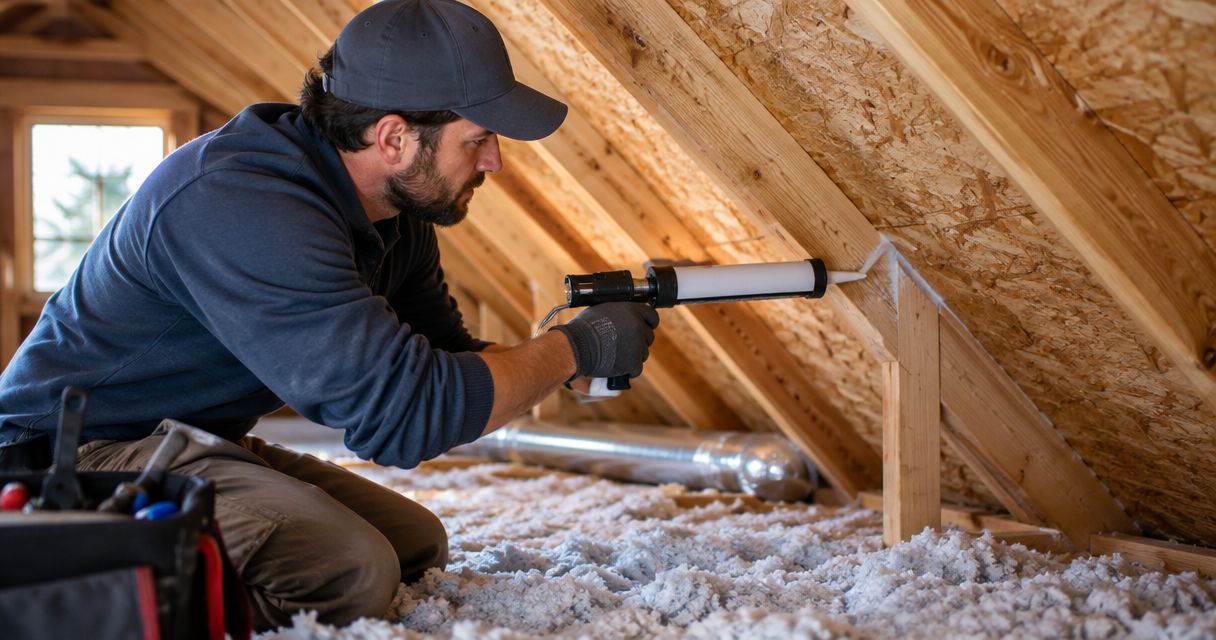
Air sealing an attic means closing every gap where warm indoor air can leak into the attic space — top plates, wiring holes, plumbing stacks, recessed lights, and the attic hatch — with caulk, canned spray foam, or fire-rated sealant before a single bag of insulation goes down. Skip this step and the insulation sitting on top of unsealed gaps still lets warm, moist air rise into the attic, which cuts real-world R-value and can cause frost or mold on the underside of the roof deck by midwinter.
- Air sealing an attic means closing top-plate, wiring, and plumbing gaps with caulk or spray foam before insulation goes in.
- Skipping air sealing lets warm air bypass even R-50 insulation, causing frost and ice damming on Calgary-area homes.
- The attic hatch, recessed lights, and chimney chase are the three most-missed leak points on Alberta attics.
- Aztec Spray Systems air seals and insulates attics across Calgary, Okotoks, High River, and Lethbridge.
Why this matters
Alberta's building code sets a minimum attic insulation level around R-50 for most Calgary-area homes, but that number only holds up if the air underneath it stops moving. Warm, moist household air rises naturally through electrical boxes, plumbing stacks, and gaps around the attic hatch, and once it hits a cold attic in a Calgary January it either pushes straight through the insulation — killing the R-value you paid for — or condenses on the roof sheathing and sets up frost. Aztec Spray Systems air seals attics across Calgary, Okotoks, High River, and Lethbridge before installing spray foam or blown-in insulation, because sealing first is what actually stops the heat loss the insulation gets credit for.
An attic that's insulated but not sealed will test fine on paper — the R-value label is real — and still perform poorly on the utility bill. That gap between rated performance and actual performance is almost always an air sealing problem, not an insulation problem.
How do you air seal an attic before adding insulation?
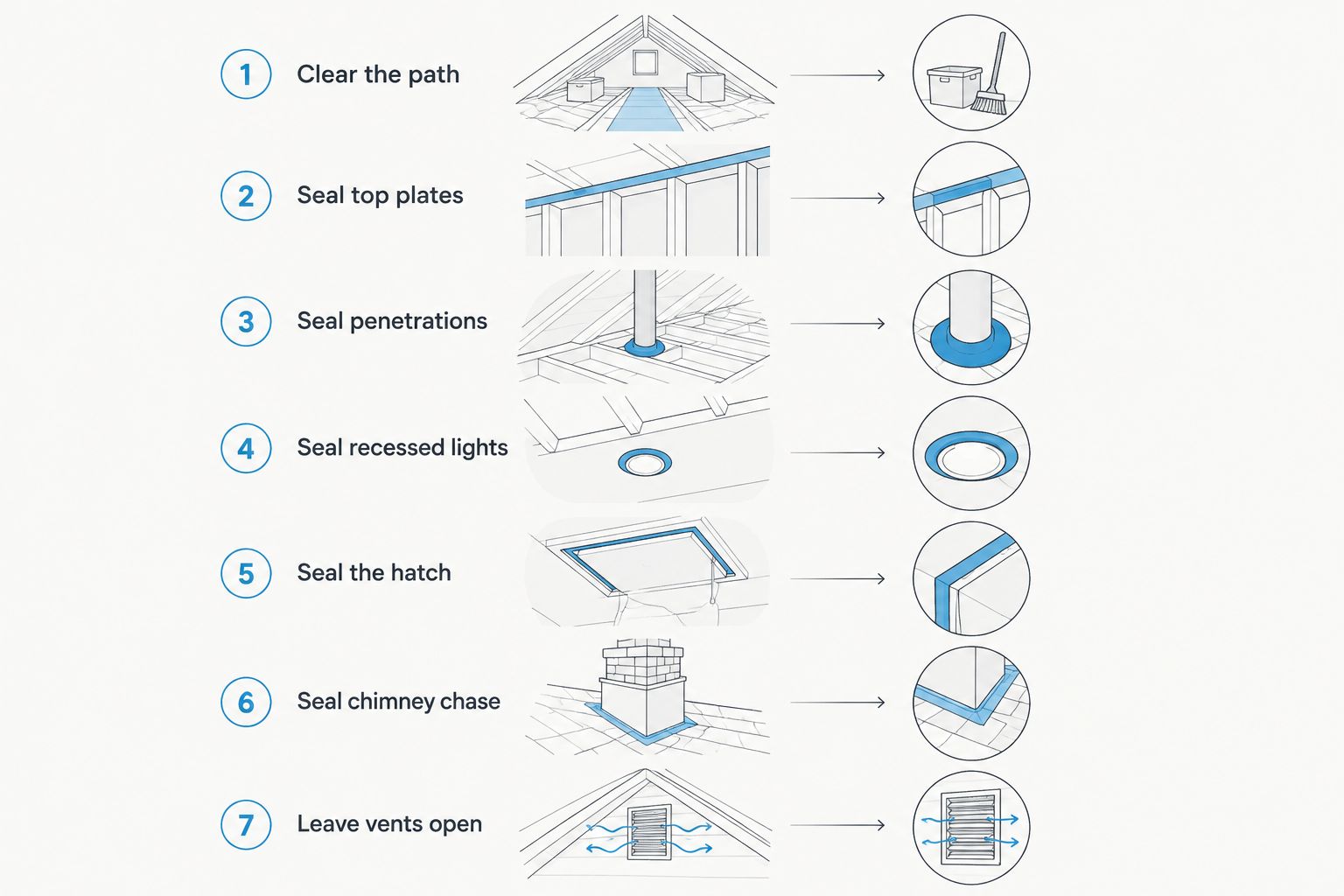
Air sealing an attic before insulation follows the same order on almost every Calgary-area home, whether it's getting spray foam or blown-in product. Work top to bottom, seal every gap you can reach, and don't cover anything back up until it's sealed.
- Clear the path. Pull back any existing loose-fill insulation over the top plates, wiring, and hatch area so every gap is visible and reachable. This is the step most DIY jobs skip, and it's why most DIY air sealing misses leaks.
- Seal the top plates. Run a bead of caulk or canned spray foam along every spot where interior wall framing meets the attic floor — this is usually the single longest run of gaps in the attic.
- Seal penetrations. Plumbing stacks, bath fan ducts, and electrical wiring holes take canned spray foam for gaps under about 3 inches; anything wider needs a rigid backer material before foam goes over it.
- Handle recessed lights carefully. Only IC-rated (insulation contact rated) light housings can be foamed or insulated over directly. Older, non-IC fixtures need a fire-rated cover installed first — this matters for both fire code and insurance.
- Seal the attic hatch. Weatherstrip the hatch frame the same way you'd weatherstrip an exterior door, then add a foam gasket to the lid itself so it seals shut under its own weight.
- Seal the chimney chase with fire-rated caulking only. Never pack combustible spray foam directly against a flue — keep the code-required clearance and use a rated sealant instead.
- Leave the soffit vents open. Air sealing closes leaks in the ceiling plane, not the roof's intake vents. Blocking soffit ventilation causes the exact frost and ice-damming problem air sealing is supposed to prevent.
Why attic air leakage varies from house to house
No two attics leak the same amount, and the difference usually comes down to a handful of factors:
- Home age — older homes with balloon-framed walls or knob-and-tube wiring have more open chases running straight into the attic.
- Number of penetrations — attics with more recessed lights, bath fans, and plumbing stacks simply have more leak points to seal.
- Attic hatch design — a plain plywood lid without weatherstripping leaks far more than a gasketed, insulated hatch cover.
- Prior insulation work — attics that were topped up without pulling the old material back often have top plates buried and never sealed underneath.
- Renovation history — additions, bonus rooms above garages, and basement suite conversions each cut new penetrations through the ceiling plane.
Do you need to air seal before adding blown-in insulation?
Yes — air sealing always happens before blown-in or spray foam insulation, never after. Once loose-fill product covers the top plates and wiring penetrations, you can't reach the gaps without pulling the insulation back out, so sealing has to happen at the start of the job. If you're planning to claim an Alberta rebate on the insulation upgrade itself, note that spray foam insulation rebate rules generally expect the air sealing step to be documented as part of the completed job, not treated as optional prep work.
Can you use spray foam to air seal an attic yourself?
Canned spray foam handles small gaps around wiring and plumbing without much trouble. A full attic air seal on an Alberta home ahead of a 2026 insulation upgrade is a longer job than most homeowners expect — it means working around live wiring, vent stacks, and fire-rated clearances near chimneys, all in a hot, cramped space. Most homeowners hire a licensed contractor for the full seal-and-insulate job and save the DIY foam gun for small touch-ups afterward. Aztec Spray Systems handles both the air sealing and the insulation install as one job, which is the more common approach on Calgary-area attics with multiple penetrations.
Get your attic sealed and insulated
See what a full attic air seal and blown-in upgrade runs in 2026.
FAQ
What’s the best way to air seal an attic before insulating?
The best approach seals top plates, wiring and plumbing penetrations, recessed lights, the attic hatch, and the chimney chase before any insulation goes down. Working in that order means every gap stays visible and reachable while you seal it.
Is caulk or spray foam better for sealing attic gaps?
Caulk works for gaps under about a quarter inch, while canned spray foam handles gaps up to roughly 3 inches. Anything wider than that needs a rigid backer before foam goes over it.
Can you air seal an attic yourself in Alberta?
Small touch-ups around wiring and plumbing are DIY-friendly with canned foam. A full attic air seal before a 2026 insulation job is longer and more technical, which is why most Calgary-area homeowners hire a licensed contractor for the complete job.
Does air sealing an attic stop ice damming?
Air sealing reduces ice damming by stopping warm indoor air from reaching the underside of the roof deck. It has to be paired with clear soffit ventilation and adequate insulation depth to fully solve the problem.
How long does it take to air seal an attic before insulation goes in?
A full attic air seal typically takes a few hours to a full day depending on the number of penetrations, the attic’s age, and how much existing insulation has to be pulled back first.
Do recessed lights need to be sealed before insulating?
Yes, but only IC-rated recessed light housings can be sealed and covered directly. Older non-IC fixtures need a fire-rated cover installed first to meet fire code.
What happens if you skip air sealing and just add insulation?
Skipping air sealing lets warm air bypass the insulation through unsealed gaps, which cuts real-world R-value performance and can cause frost or mold on the roof deck by midwinter. The insulation still tests fine on paper, but the utility bill won’t reflect it.
One last thing
The attic hatch is the easiest leak to miss because it looks solid — a plain plywood lid without a foam gasket leaks warm air like an uninsulated door left ajar. If you only fix one thing before an insulation upgrade in 2026, weatherstrip and gasket the hatch — it's a five-minute job that gets skipped on almost every attic Aztec Spray Systems inspects before a spray foam or blown-in job.
Related guides
- How to remove old attic insulation before a spray foam upgrade
- How to top up attic insulation with blown-in product
- How to test if your attic insulation meets Alberta building code