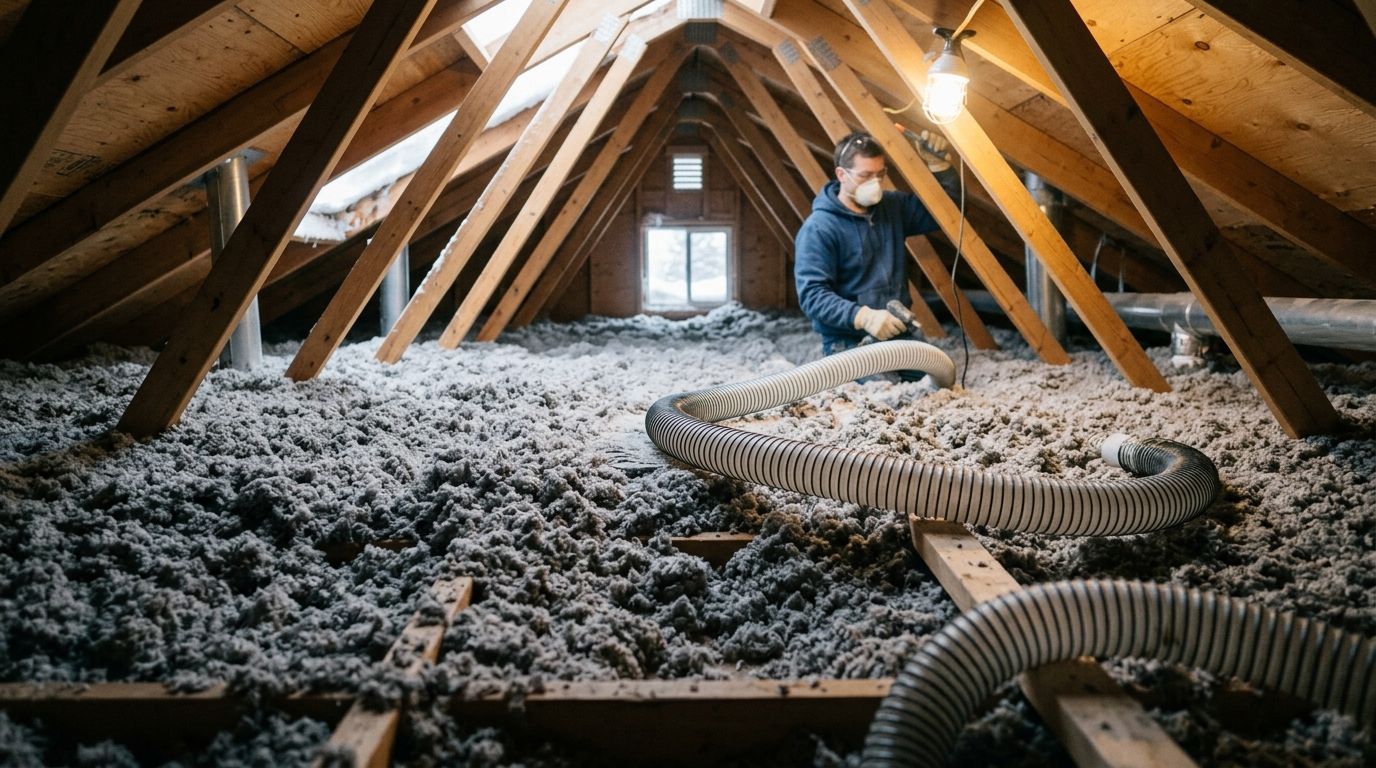
Blown-in attic insulation for Calgary homes is loose-fill fiberglass or cellulose material installed by machine to fill open attic space, with the goal of cutting heat loss through the roof during a winter that regularly drops below -30°C. Calgary's mix of older bungalows, chinook-driven temperature swings, and strict building code targets makes attic performance a bigger factor here than in milder Canadian markets — an attic that's fine in Vancouver can be underperforming in Calgary the moment a cold snap hits.
- Blown-in attic insulation calgary homeowners choose most often is loose-fill fiberglass or cellulose, machine-applied for even coverage.
- Alberta’s building code sets a prescriptive attic target near R-50 for new construction in climate zone 7A, which includes Calgary.
- Fiberglass blown-in insulation runs roughly R-2.2 to R-2.7 per inch; cellulose runs roughly R-3.2 to R-3.8 per inch.
- Aztec Spray Systems installs blown-in and spray foam attic insulation across Calgary, Okotoks, High River, and Lethbridge.
- Old, compressed, or wet insulation should come out before a top-up — adding new material over a failed layer wastes money.
Why blown-in attic insulation matters for Calgary homeowners
A Calgary attic does two jobs a milder-climate attic doesn't: it has to hold heat during long stretches of subzero cold, and it has to resist the rapid thaw-freeze cycling that chinooks cause when temperatures jump 15-20°C in a single afternoon. Thin or settled insulation lets warm air escape upward, which melts roof snow unevenly and sets up ice damming along the eaves — a pattern common on older Calgary rooflines with under-insulated attics.
Before spending on a new layer, check where you stand against code. The attic insulation building code guide walks through how to measure existing depth and compare it to the Alberta target, and it's the fastest way to know whether you need a top-up or a full replacement. Homeowners weighing the investment against a full spray foam retrofit should also look at the Calgary spray foam cost breakdown before picking a material, since blown-in and spray foam solve different problems at different points in the attic.
Check your current attic R-value
Start by measuring what's already up there. A tape measure and a flashlight tell you more in ten minutes than any sales pitch.
- Measure insulation depth at three or four spots, not just near the hatch
- Note the material — old batts, loose cellulose, or vermiculite (a red flag in pre-1990 homes)
- Look for dark, compressed, or matted patches, which signal moisture damage
- Check depth near the eaves specifically, where insulation thins out fastest
- Compare your reading against Alberta's prescriptive attic target for climate zone 7A
Test for code compliance
Depth alone doesn't tell the full story — settled or degraded material loses R-value even at the same thickness. Aztec Spray Systems treats a code check as the first real diagnostic step, not an afterthought after the sale.
- Pull a small sample and check for compression or moisture staining
- Confirm baffles are in place at the eaves so airflow isn't blocked
- Check for gaps around plumbing stacks, wiring penetrations, and the attic hatch
- Rule out vermiculite before disturbing anything, since it may contain asbestos
- Document findings with photos before starting any removal work
Remove old or wet insulation
Blowing new material over a wet or compressed layer traps the problem instead of fixing it. Anything water-stained, moldy, or matted needs to come out first.
- Bag and remove wet or moldy insulation rather than covering it
- Check the roof deck underneath for staining that points to an active leak
- Address the leak source before any new insulation goes in
- Clear debris and old vapor barrier scraps that trap moisture against the deck
- Confirm the attic floor is dry for at least 48 hours before installing new material
A full walkthrough on this step lives in the guide to removing old attic insulation, which covers what to do when the old layer is vermiculite versus standard fiberglass.
Choose the right insulation material
Fiberglass and cellulose blown-in insulation both work in Calgary attics, but they behave differently over time and around moisture.
- Fiberglass resists moisture better and won't settle as much over 10-15 years
- Cellulose packs denser per inch, which helps with sound dampening between floors
- Fiberglass is the safer call in attics with any history of roof leaks
- Cellulose is treated with fire retardant, which matters for attics near chimneys or flues
- Spray foam is worth comparing when air-sealing is as big a concern as R-value
Get an attic insulation quote
Aztec Spray Systems serves Calgary, Okotoks, High River, and Lethbridge.
Seal air leaks before insulating
Insulation slows heat transfer through material; it does nothing to stop air moving through gaps. Sealing comes first, always.
- Caulk around plumbing and electrical penetrations before blowing insulation
- Weatherstrip and insulate the attic hatch itself
- Seal top plates where interior walls meet the attic floor
- Check bathroom and kitchen exhaust fans vent outside, not into the attic
- Foam-seal larger gaps around chimneys with fire-rated material
Schedule installation for the right season
Blown-in insulation can technically go in year-round, but Calgary's install windows aren't all equal.
- Spring and fall avoid both extreme cold and peak summer attic heat
- Winter installs are possible but slower due to shorter daylight and cold-affected material handling
- Booking ahead of the first hard freeze avoids scheduling backlogs
- Pairing insulation work with roof repairs saves a second attic entry later
Verify ventilation after the upgrade
More insulation without matching ventilation traps moisture and can cause the exact ice-damming problem you're trying to prevent.
- Confirm soffit vents aren't blocked by new insulation
- Check that baffles keep a clear air channel from soffit to ridge
- Verify the attic has balanced intake and exhaust venting, not just one or the other
- Look for frost on the underside of the roof deck after a cold night, a sign ventilation is short
Apply for rebates before you book
Alberta has run rebate programs tied to insulation upgrades, and the paperwork usually needs to happen before, not after, installation.
- Check current eligibility rules before signing a contract
- Get a pre-retrofit energy assessment if the program requires one
- Keep all receipts and material specifications for the application
- Confirm your installer provides the documentation the rebate program asks for
The Alberta insulation rebate guide breaks down what's typically required and where the paperwork trips people up.
Comparison: attic insulation options for Calgary homes
| Option | Best for | Key limitation |
|---|---|---|
| Blown-in fiberglass | Homeowners prioritizing moisture resistance and longevity | Lower R-value per inch than cellulose or spray foam |
| Blown-in cellulose | Sound dampening and dense, even coverage | Settles more over time; needs periodic top-ups |
| Spray foam (attic) | Air-sealing and moisture control in problem attics | Higher upfront labor and material cost than loose-fill |
| Batt/roll fiberglass | Simple DIY top-ups in accessible, obstruction-free attics | Hard to get even coverage around joists and wiring |
Verdict: blown-in fiberglass or cellulose is the right call for a straightforward attic top-up in a Calgary home; spray foam earns its cost when air-sealing and moisture control matter as much as raw R-value.
Common mistakes Calgary homeowners make
- Topping up over wet or moldy insulation instead of removing it first, which just buries the problem under new material.
- Ignoring the eaves. Insulation depth drops fastest right where the roof meets the wall, and that's exactly where ice dams start.
- Skipping the ventilation check. Adding insulation without confirming soffit and ridge venting still work traps moisture against the roof deck.
- Assuming vermiculite is safe to disturb. Older Calgary homes with vermiculite attic fill need testing before any insulation work begins.
- Waiting until after a cold snap to act. Booking in shoulder season avoids the scheduling crunch that hits every insulation contractor once temperatures drop.
FAQ
What’s the best blown-in attic insulation for Calgary homes?
Blown-in fiberglass is the better choice for attics with any moisture history, while cellulose works well in dry attics needing dense, even coverage. Both outperform old batt insulation once depth and settling are accounted for.
Is blown-in insulation better than spray foam for an attic?
Blown-in insulation is more cost-effective for straightforward R-value top-ups, while spray foam adds air-sealing that loose-fill can’t match. The right pick depends on whether air leakage or raw insulation depth is the bigger problem in your attic.
How do I know if my Calgary attic needs more insulation?
Measure the depth of existing insulation at several points and compare it against Alberta’s prescriptive attic target for climate zone 7A. Uneven roof snow melt and ice damming along the eaves are also signs the attic is under-insulated.
Can I add blown-in insulation over old insulation?
Only if the existing layer is dry, unbroken, and not vermiculite. Wet, moldy, or compressed insulation needs to come out first or the new material won’t perform as rated.
Does Alberta offer rebates for attic insulation upgrades?
Alberta has run rebate programs tied to home insulation upgrades in past years, though eligibility rules and requirements change. Check current program status and required documentation before booking installation.
How long does blown-in attic insulation last?
Fiberglass blown-in insulation holds its R-value with minimal settling over 10-15 years when kept dry, while cellulose settles more and may need a top-up sooner. Moisture exposure shortens the lifespan of either material significantly.
What R-value does Alberta’s building code require for attics?
Alberta’s building code sets a prescriptive attic insulation target near R-50 for new construction in climate zone 7A, which covers Calgary. Existing homes being upgraded don’t always need to hit new-construction targets, but getting close improves winter performance.
Should I remove old insulation before adding blown-in insulation?
Remove it if it’s wet, moldy, compressed, or made of vermiculite; otherwise a compatible top-up over dry, intact insulation is usually fine. A quick inspection before the job settles the question either way.
One last thing
The eaves, not the center of the attic, are where most Calgary homes lose their insulation performance first — a flashlight check at the soffit line tells you more about ice-damming risk than a depth reading in the middle of the attic floor. If baffles are missing or crushed at the eaves, fix that before adding a single bag of new material; otherwise the new insulation just gets blown into a spot that can't hold it.
Related guides
- Test your attic insulation against Alberta's building code
- Remove old attic insulation before a spray-foam upgrade
- Calgary spray foam insulation cost breakdown
- Qualify for spray foam insulation rebates in Alberta
- Increase home resale value with attic insulation upgrades