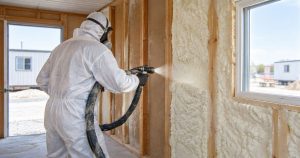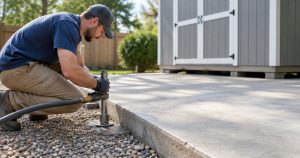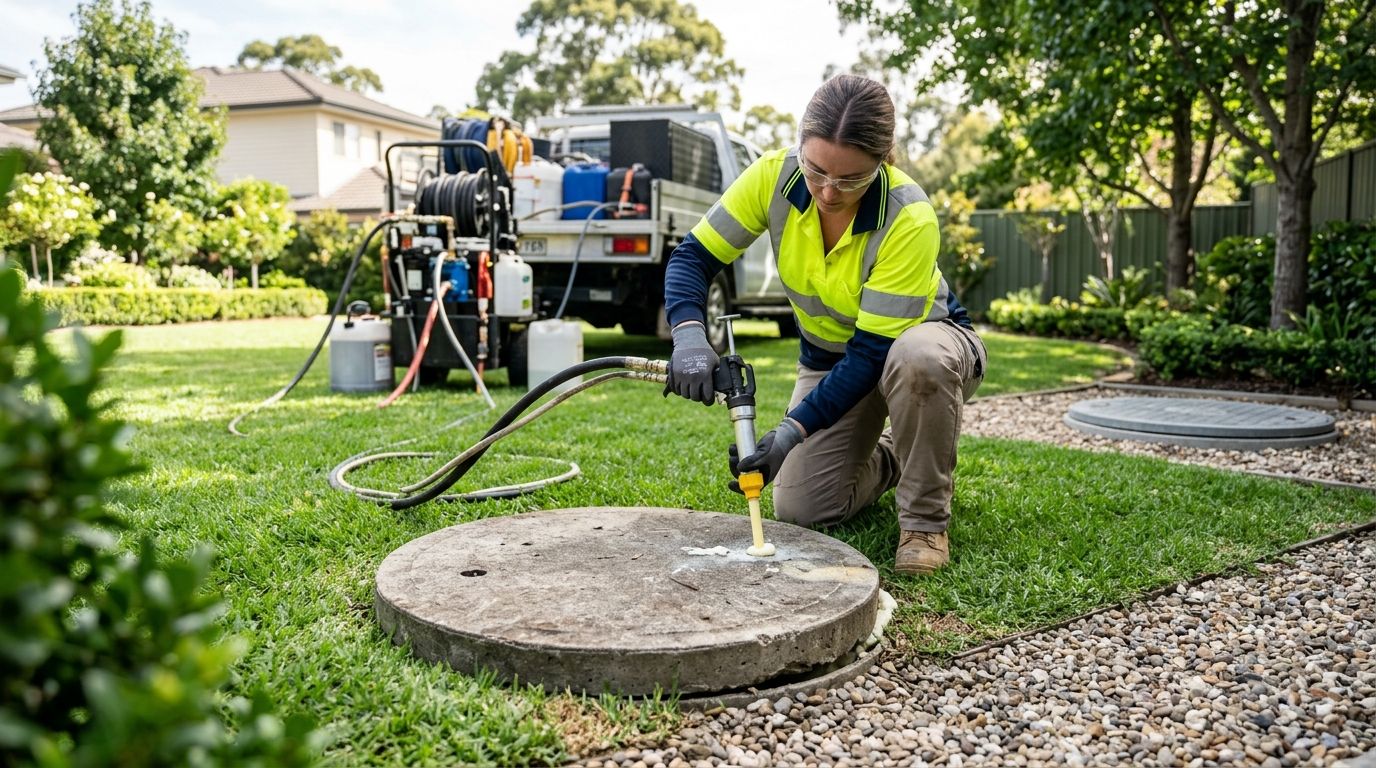
Concrete lifting for septic lids and utility vaults is the process of raising a sunken precast concrete cover back to grade using polyurethane foam injection, done without digging up the tank, cistern, or vault sitting below it. Property owners in Calgary, Okotoks, High River, and Lethbridge usually call about this after a lid drops an inch or two below the surrounding lawn or driveway, turning the access point into a trip hazard or a spot where surface water pools and seeps into the tank.
- Concrete lifting septic lid work uses polyurethane foam injection to raise sunken vault and tank covers without excavation.
- Mudjacking suits driveway slabs but adds too much dead weight near a buried septic tank or utility vault.
- A lid settled more than 2 inches below grade usually signals soil compaction, not a cracked cover.
- Skip DIY shimming on septic lids — uneven support cracks precast concrete under foot or truck traffic.
- Book the lift before spring thaw in 2026 while the ground is soft enough for injection but not saturated.
Why this matters for septic lid and utility vault owners
Septic lids and utility vaults settle differently than a garage slab because the soil around them was backfilled loosely during installation, then never compacted the way a driveway subgrade is. That loose backfill keeps consolidating for years, sometimes decades, which is why a lid that sat flush for 15 years can suddenly drop 2 inches in one wet spring. Sunken slab lifting techniques apply here, but the stakes are different: a sunken lid over a septic tank isn't just cosmetic, it changes drainage around the tank access and can let groundwater into the system.
Calgary and area property owners run into this most often in three situations: a septic pumping truck can't get its hose to sit flush anymore, a home inspection flags the lid as a safety item before a sale, or the lid has dropped enough that lawn equipment or a vehicle tire catches the edge. None of these wait well. A lid that's off by half an inch this year is commonly off by an inch or more within two seasons once freeze-thaw cycling gets into the gap.
Inspect the lid and surrounding grade first
Before any lifting happens, the ground around the lid needs a real look, not a glance from the porch.
- Measure the drop with a straightedge and level across the lid and 3 feet of surrounding grade
- Check for standing water or erosion channels leading toward the vault
- Confirm the lid material — precast concrete, poly riser, or fiberglass — since each responds differently to foam
- Note any visible cracking in the lid itself versus just the surrounding soil
- Check whether the settling is isolated to the lid or extends toward a nearby driveway or walkway slab
Confirm the vault or tank hasn't shifted structurally
Settling around a lid sometimes signals movement in the tank or vault itself, not just soil loss above it. This step matters more for older systems and anything installed before current Alberta backfill standards.
- Look for a lid that sits crooked rather than just low — crooked usually means the riser or collar shifted
- Check for gaps between the lid and the riser ring that weren't there originally
- Watch for a lid that rocks under light foot pressure, which points to a support failure below
- Flag any sewage odor at the lid edge, since that can mean a seal failure, not just settling
- Rule out foundation settling nearby if the vault sits close to a structure, since the same soil movement often affects both
Choose polyurethane foam over mudjacking for lid work
Mudjacking pumps a cement-and-soil slurry under a slab and relies on its own weight to hold the lift. That works fine on a driveway. Around a septic lid or utility vault, the extra mass can push against the riser collar or crack a lid that's already thinner than a structural slab.
- Polyurethane foam expands to fill voids and adds a fraction of the weight mudjacking slurry does
- Foam cures fast enough that most lids can bear light traffic again within an hour
- Injection ports are small — usually dime-sized holes — so the lid surface stays largely intact
- Foam resists water absorption, unlike cement slurry, which matters directly above a tank
- Foam lift is more precise for small covers, since technicians can raise a lid a quarter inch at a time
Schedule the lift before freeze-thaw cycles widen the gap
Alberta's frost line runs roughly four feet deep most winters, and every freeze-thaw cycle above that line pulls more soil away from a settled lid. Waiting a season usually means a bigger gap and a longer repair.
- Book lifting work in spring or fall when the ground is workable but not frozen solid
- Avoid scheduling right after heavy rain, since saturated soil doesn't hold an injected lift as well
- Ask whether the crew checks soil moisture on site before committing to a lift date
- Treat a lid that's dropped for a second consecutive winter as a priority, not a wait-and-see item
- Plan around any septic pumping schedule so the lift happens before the next service visit
Seal and reset the lid after lifting
Lifting the lid back to grade solves half the problem. The seal between the lid and the riser needs attention too, or water finds its way back in.
- Reseat the lid with a fresh gasket or sealant rated for below-grade use
- Regrade the soil around the lid edge so water sheds away instead of pooling
- Check that the lid sits flush with, not above, the surrounding grade to avoid a new trip hazard
- Confirm the riser collar didn't shift during the lift and reset it if needed
- Mark the lid location clearly if it was buried under sod or gravel before the repair
Grade the surrounding soil to redirect water
A lifted lid that sits in a low spot will settle again within a year or two if water keeps collecting there.
- Build a gentle slope away from the lid in all directions, roughly 2 inches of fall per foot for the first few feet
- Add clean fill rather than topsoil directly around the lid edge, since topsoil compacts unevenly
- Route downspouts and sump discharge away from the vault area entirely
- Reseed or re-sod disturbed grass once grading is finished to hold the new soil in place
Document the fix for future service techs
A lid that's been lifted and resealed should be easy for the next septic pumping crew or home inspector to identify.
- Photograph the lid location and depth before and after the lift
- Keep a record of the injection date and the contractor who performed the work
- Note any structural findings, like a cracked riser, for future reference
- Share the record with a buyer if the property sells, since it heads off inspection questions
On systems where the settling pattern is hard to explain from the surface, some contractors run a camera down the line before deciding where to inject. Sewer inspection camera systems let a technician confirm whether a pipe joint has separated under the settled section before foam goes in, which matters when the lid drop lines up with a lateral line rather than just loose backfill.
Comparison: lifting options for septic lids and utility vaults
| Option | Best for | Key limitation |
|---|---|---|
| Polyurethane foam injection | Septic lids, utility vaults, thin precast covers | Requires a contractor with foam-specific equipment, not standard mudjacking gear |
| Mudjacking (mortar slurry) | Driveway slabs, sidewalks, garage floors | Adds significant dead weight — risky directly over a tank or riser collar |
| Full excavation and reset | Lids with a cracked riser or collapsed collar | Disturbs landscaping and the septic system access for days, not hours |
| DIY shimming or gravel fill | Very minor, cosmetic settling only | Uneven support that cracks the lid under any real load within a season or two |
The verdict: polyurethane foam injection is the right call for almost every septic lid and utility vault settling case in 2026 — mudjacking and DIY shimming both carry real risk directly over a buried tank.
Get a concrete lifting assessment
Foam injection for sunken septic lids and utility vaults across the Calgary region.
Common mistakes septic lid and utility vault owners make
- Ignoring a lid that's dropped less than an inch. Small drops compound fast once freeze-thaw cycling gets under the edge — waiting until it's a 3-inch gap turns a same-day fix into a multi-visit job.
- Calling a mudjacking crew instead of a foam specialist. Slurry weight near a riser collar can crack a lid that foam would have lifted cleanly.
- Regrading without checking the lid's seal. A perfectly graded yard still floods a tank if the gasket between lid and riser failed years ago.
- Assuming a shifted lid is just cosmetic before a home sale. Inspectors flag settled septic lids specifically, and an unresolved one can hold up closing.
- Skipping the follow-up check after a lift. Soil around a freshly injected lid needs a season to confirm it's holding — most owners never look again until it drops a second time.
FAQ
What does concrete lifting for a septic lid cost compared to full replacement?
Foam injection lifting is a fraction of the labor of excavating and replacing a septic riser and lid, since it avoids digging up the tank access entirely. Ask a licensed contractor for a site-specific assessment rather than relying on general pricing, since soil depth and lid size both change the scope.
Is polyurethane foam safe to use directly over a septic tank?
Yes — polyurethane foam is inert once cured and doesn’t react with the tank, riser, or surrounding soil. It’s the preferred method specifically because it adds far less weight than mudjacking slurry near a buried structure.
How do I know if my utility vault lid needs lifting or full replacement?
If the lid sits low but flat and the riser collar hasn’t shifted, lifting usually resolves it. A crooked lid, a cracked collar, or a lid that rocks under foot pressure points toward a structural repair instead of a simple lift.
Can concrete lifting fix a septic lid that’s been settling for years?
In most cases yes, as long as the lid and riser are still structurally sound. A lid that’s cracked from prolonged uneven support may need to be replaced before foam injection can hold a lift.
Does foam injection work in winter in Alberta?
Foam injection needs workable, unfrozen ground, so most contractors schedule around Alberta’s frost line rather than mid-winter. Spring and fall windows in 2026 typically offer the most stable soil conditions for a lasting lift.
How long does a septic lid lift take to complete?
A single lid or small utility vault typically takes a few hours from injection to a lid that can bear light traffic again. Larger vaults or lids needing a riser reset take longer, usually a full day.
Will lifting the lid stop water from getting into my septic tank?
Lifting the lid back to grade and regrading the surrounding soil stops surface water from pooling at the access point, but the seal between lid and riser needs to be checked too. A lift without a good seal can still let water in during heavy rain.
Is mudjacking or polyurethane foam better for a utility vault lid?
Polyurethane foam is the better choice for utility vault lids because it adds much less weight than mudjacking’s cement slurry. Mudjacking remains a reasonable option for driveways and walkways that aren’t sitting directly over a buried structure.
One last thing
The detail most owners miss: a septic lid that's settled once almost always settles again in the same spot within 3 to 5 years unless the grading around it changes too. Lifting the lid fixes the symptom; redirecting water away from that exact point is what keeps it from becoming a recurring call.
Related guides