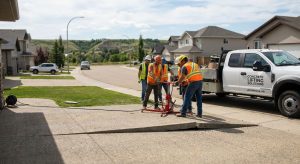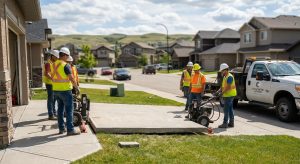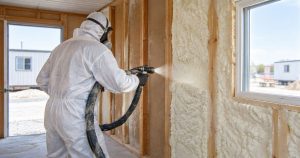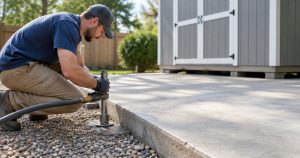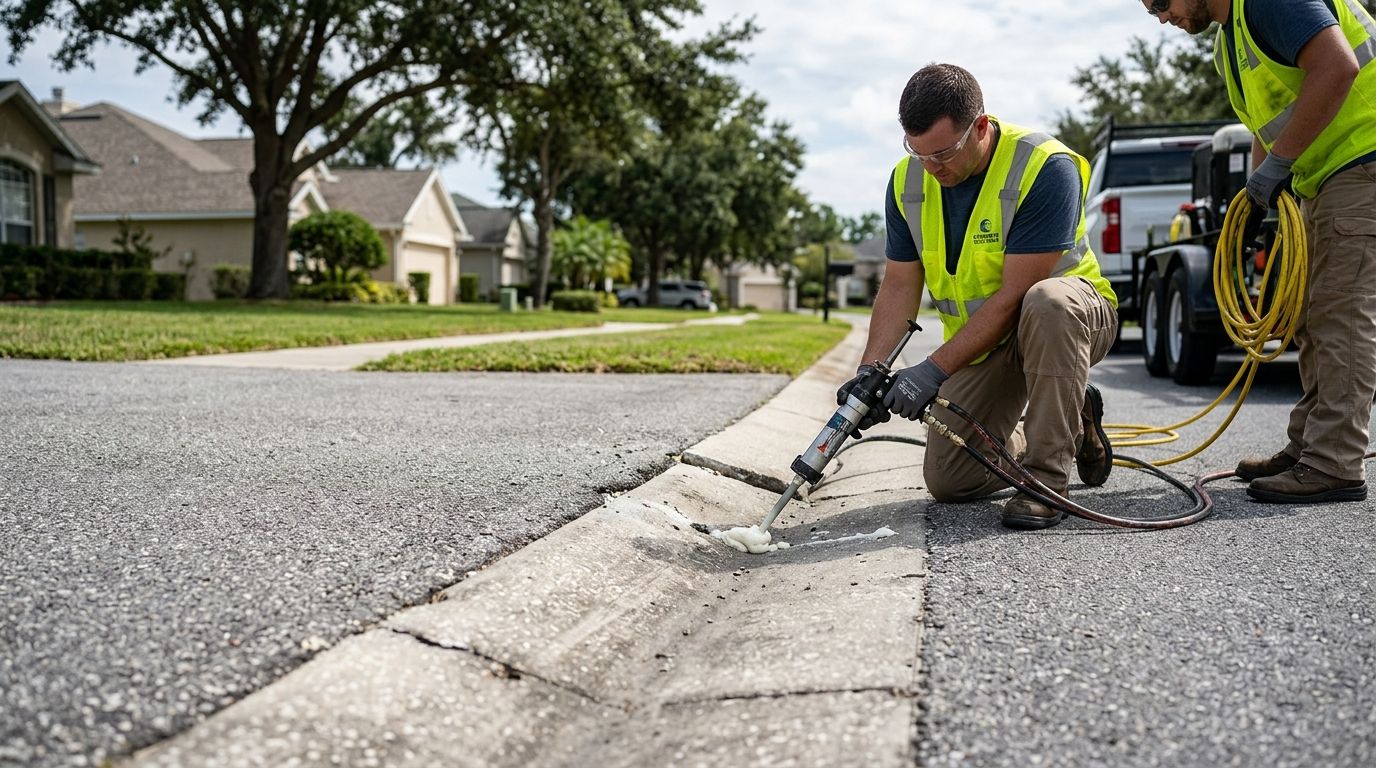
Sunken curb and gutter sections turn into standing water, ice sheets, and liability claims fast, and full tear-out isn't always the fix a property owner needs in 2026. Concrete lifting for curb and gutter runs raises the settled slab back to grade in hours instead of days, without a jackhammer crew closing a lane for a week.
- Concrete lifting curb and gutter repair raises sunken sections back to drainage grade in hours, not days.
- Polyurethane foam injection is the fastest fix for curb and gutter runs; Aztec Spray Systems handles Calgary, Okotoks, High River, and Lethbridge sites.
- Full replacement only makes sense when the concrete itself has failed, not just settled.
- Skipping the drainage-grade check after a lift is the most common reason curb repairs fail again within a year.
Why concrete lifting matters for curb and gutter sections
A curb and gutter system is a drainage system first and a driving surface second. When one section drops even a couple of centimetres, water stops flowing toward the catch basin and starts pooling against the curb face instead. In an Alberta winter, that pooled water freezes, expands, and accelerates the exact settling problem that caused the sag in the first place.
Municipal crews and commercial property managers carry a different risk profile than a homeowner patching a driveway crack. A sunken gutter section next to a parking lot or loading zone is a trip-and-fall claim waiting to happen, and a drainage failure that backs water toward a building foundation is a much more expensive problem than the curb itself. Concrete lifting for curb and gutter sections addresses both issues at once by restoring the original slope, not just the surface.
Step 1: Map every settled section along the run
Walk the full curb and gutter length before scheduling anything. A single sunken panel is rarely the whole story — soil erosion and poor compaction tend to run in sequence along a stretch of curb.
- Photograph each low spot with a tape measure in frame for scale
- Note where water is already pooling after a rain, not just where concrete looks cracked
- Flag sections near downspouts, catch basins, and driveway aprons — these settle first
- Check for lateral movement, not just vertical drop, where curb meets sidewalk
Step 2: Check the drainage grade with a level
Curb and gutter systems are built to a specific slope for a reason — usually a minimum grade written into the original engineering plan. Settling throws that grade off even when the concrete looks intact.
- Run a 4-foot level or laser level along each gutter section
- Compare the current slope against the direction water should flow
- Mark any section sloping backward toward a building or parking stall
- Record the low point of each dip — this is where the injection ports go later
Step 3: Rule out the underlying cause before you patch anything
Lifting concrete without knowing why it dropped just buys time until the same section sinks again. Erosion, poor sub-base compaction, and tree root movement all cause settling, but they call for different follow-up work.
- Look for washout signs (voids, hollow-sounding concrete when tapped) that point to soil erosion under the slab
- Check nearby grading — does water run toward the curb from a slope above it?
- Inspect for root intrusion if mature trees line the boulevard
- Ask whether the sub-base was ever properly compacted at original construction
A homeowner or small property manager can do this diagnostic work with a level and a flashlight. Once you know the cause, Aztec Spray Systems can confirm it on-site and quote the lift method that fits the cause, not just the symptom.
Step 4: Compare lifting methods against full replacement
Most curb and gutter sections that have simply settled — not cracked, spalled, or structurally failed — are candidates for lifting rather than replacement. The best concrete lifting method for sunken slabs depends on how much the section has dropped and what's underneath it.
- Polyurethane foam injection: small injection ports, minimal excavation, cures fast enough to reopen the area same day
- Mudjacking (mortar slurry): heavier material, works on thicker slabs, needs longer cure time before traffic loads
- Full replacement: the only option once the concrete itself is cracked through or crumbling, not just sunken
Step 5: Time the lift around Alberta's freeze window
Ground conditions matter more for curb and gutter work than for an isolated patio slab, because the soil under a boulevard curb is exposed to more moisture cycling. Scheduling a lift while the ground is actively freezing or thawing in 2026 makes it harder to get a stable result.
- Late spring through early fall gives the most predictable soil conditions for injection work
- Avoid scheduling right after a heavy spring melt when sub-base soil is saturated
- Winter lifts are possible but need a contractor experienced with frozen or partially frozen ground
- Build in a buffer before the first hard freeze so the fill has time to stabilize
Step 6: Verify slope and compaction after the lift
Don't treat the injection as the finish line. The whole point of concrete lifting curb and gutter work is restoring the grade, so confirm it did.
- Re-run the level check from Step 2 across the repaired section
- Run water from a hose along the gutter to confirm flow direction toward the catch basin
- Check that the lifted section sits flush with adjoining panels — no new lip or step
- Document the after photos next to the before photos from Step 1
Step 7: Build an inspection routine so it doesn't happen again
One lift doesn't guarantee the section never settles again if the underlying soil issue wasn't addressed. A short annual check catches problems while they're still cheap to fix.
- Walk the curb and gutter run every spring after freeze-thaw season
- Recheck any section that was lifted within the past two years
- Watch for new hairline cracks near injection ports
- Keep drainage clear of leaves and debris so water isn't sitting against the curb face
Comparing your options for sunken curb and gutter sections
| Method | Best for | Disruption | Key limitation |
|---|---|---|---|
| Polyurethane foam injection | Sections settled a few centimetres with sound concrete | Low — small ports, reopens same day | Not a fix for structurally cracked concrete |
| Mudjacking (mortar slurry) | Thicker slabs, larger sunken areas | Moderate — longer cure before traffic | Adds weight that can push soft soil further down |
| Full curb replacement | Concrete that's cracked, spalled, or crumbling | High — demo, forming, cure time | Costs more and takes longer than lifting |
| Asphalt or concrete patch | Cosmetic fix only, short-term | Low | Doesn't correct drainage grade — will fail again |
Verdict: for curb and gutter sections that have settled but the concrete itself is intact, polyurethane foam injection is the right call — full replacement is for concrete that has actually failed, not concrete that has simply sunk.
“If the curb face is still solid and only the grade has dropped, lifting it back into place beats tearing it out every time.”
Common mistakes property owners make with curb and gutter repairs
- Patching the surface without checking the slope. A cosmetic patch that ignores drainage grade looks fine until the next rain pools in the same spot.
- Ignoring hairline cracks near the gutter line. These are often the first sign of erosion working underneath, not just surface wear.
- Ordering a full replacement out of habit. Many sunken sections are structurally fine and only need to be lifted, not demolished.
- Scheduling the lift without a firm weather window. A rushed job during a spring melt or a hard freeze doesn't give the fill material time to stabilize.
- Skipping the follow-up inspection. Without a spring check after the first freeze-thaw cycle, a partial cause (like unresolved erosion) resurfaces as the same problem a year later.
Get your curb and gutter section assessed
Serving Calgary, Okotoks, High River, and Lethbridge property owners.
FAQ
What is concrete lifting for curb and gutter sections?
It’s a repair method that raises a sunken curb or gutter panel back to its original drainage grade by injecting polyurethane foam or mortar slurry underneath it, instead of removing and repouring the concrete.
Is concrete lifting cheaper than replacing a curb section?
Lifting is generally less disruptive and faster than replacement because it skips demolition, forming, and full cure time — get a site-specific quote since costs depend on the section length and depth of settling.
How long does a lifted curb section take to reopen to traffic?
Polyurethane foam injection typically bears weight within hours of the pour, while mortar slurry (mudjacking) needs a longer cure window before it’s safe for vehicle loads.
Can concrete lifting fix drainage problems along a gutter run?
Yes, when the cause is settling rather than a structural crack — the lift restores the original slope so water flows toward the catch basin again instead of pooling.
Does concrete lifting work in cold Alberta winters?
Lifting is possible in winter with an experienced contractor, but late spring through early fall gives more predictable soil conditions for the injection to stabilize before the ground freezes again.
How do I know if a curb section needs lifting versus full replacement?
If the concrete itself is intact and only the grade has dropped, lifting is the right call; cracked, spalled, or crumbling concrete needs replacement instead.
Will a lifted curb section settle again?
It can, if the underlying cause — soil erosion, poor compaction, or root intrusion — wasn’t addressed before the lift, which is why diagnosing the cause matters as much as the repair itself.
Who handles concrete lifting for curb and gutter sections in Alberta?
Licensed and insured contractors serving Calgary, Okotoks, High River, and Lethbridge, such as Aztec Spray Systems, quote lifting jobs based on an on-site assessment of the settled section and its cause.
One last thing
Polyurethane foam used in modern curb and gutter lifting typically cures firm enough to carry traffic within about 15 minutes of injection — that's the entire reason it beats mudjacking or replacement for anyone trying to keep a lane, driveway, or loading zone open during the repair. If your 2026 spring walk-through turns up more than two sunken sections on the same run, treat it as one erosion problem, not three separate patch jobs.
Related guides
- Concrete lifting for commercial parking lots
- Concrete lifting for sidewalks and walkways
- How to protect a driveway from future concrete settling