.pseo-content { font-size: 17px; line-height: 1.7; color: inherit; }
.pseo-content h2 { font-size: 1.6em; margin-top: 1.8em; margin-bottom: 0.6em; line-height: 1.3; color: inherit; }
.pseo-content h3 { font-size: 1.25em; margin-top: 1.5em; margin-bottom: 0.4em; line-height: 1.35; color: inherit; }
.pseo-content h4 { color: inherit; }
.pseo-content p { margin: 0 0 1em; }
.pseo-content ul, .pseo-content ol { margin: 0 0 1em 1.4em; padding: 0; }
.pseo-content li { margin: 0.3em 0; }
.pseo-content strong { font-weight: 600; }
.pseo-content blockquote { margin: 1.2em 0; padding: 0.6em 1em; border-left: 3px solid color-mix(in srgb, currentColor 30%, transparent); background: color-mix(in srgb, currentColor 4%, transparent); color: inherit; }
.pseo-content a { text-decoration: underline; }
.pseo-content .pseo-table-wrap { overflow-x: auto; margin: 1.4em 0; -webkit-overflow-scrolling: touch; }
.pseo-content table { width: 100% !important; border-collapse: collapse !important; table-layout: auto !important; font-size: 0.96em; }
.pseo-content table th,
.pseo-content table td {
padding: 10px 12px !important;
border-bottom: 1px solid color-mix(in srgb, currentColor 14%, transparent) !important;
border-left: none !important;
border-right: none !important;
vertical-align: top !important;
text-align: left !important;
word-break: break-word !important;
overflow-wrap: anywhere !important;
white-space: normal !important;
}
.pseo-content table th {
background: color-mix(in srgb, currentColor 6%, transparent) !important;
color: inherit !important;
font-weight: 600 !important;
border-top: 1px solid color-mix(in srgb, currentColor 14%, transparent) !important;
}
.pseo-content table tr:last-child td { border-bottom: 1px solid color-mix(in srgb, currentColor 14%, transparent) !important; }
Sunken concrete doesn't fix itself, and guessing at a repair method usually means paying twice. This guide ranks the concrete lifting methods used on Alberta driveways, sidewalks, and garage floors in 2026, and tells you which one actually matches a sunken slab versus a slab that needs full replacement.
- Polyurethane foam injection is the best concrete lifting method for sunken slabs in most Alberta driveways and sidewalks — buy it.
- Mudjacking still works for large slabs on a budget but needs 24-48 hours before you can drive on it.
- Self-leveling compound only hides dips under a quarter inch — it does not lift a sunken slab, skip it for real settlement.
- Full slab replacement is the right call once a panel has dropped more than 2-3 inches or cracked into multiple pieces.
Why this matters
A sunken slab is a symptom, not the problem. The soil underneath has washed out, compacted unevenly, or frozen and thawed one too many times — common across Calgary, Okotoks, High River, and Lethbridge where freeze-thaw cycles hit concrete hard every winter. Pick the wrong repair method and the slab sinks again within a season or two, and you've paid for a fix that didn't fix anything.
The method matters more than the contractor's sales pitch. Aztec Spray Systems works on sunken driveways, sidewalks, patios, garage floors, and pool decks across southern Alberta, and the method that gets picked depends on slab size, soil condition, and how much weight the surface needs to carry once it's back level.
How this list was ranked
The methods below are ranked on four factors: how long the fix lasts, how fast you can use the surface again, how much material disturbance it causes to landscaping and soil, and how well it performs specifically on sunken slabs versus slabs with only cosmetic surface flaws. Methods built for minor cosmetic leveling — not true lifting — are flagged and ranked lower even when they're cheaper up front. This isn't a generic concrete-repair roundup; it's built around the sunken-slab use case specifically, which rules out a few popular DIY options fast.
The ranked methods
1. Polyurethane foam injection — the modern standard
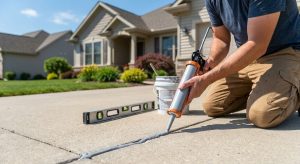
Polyurethane foam injection uses small holes, roughly 5/8 inch in diameter, drilled through the slab to pump expanding structural foam beneath it. The foam expands within seconds, fills voids, and lifts the slab back to grade. Cure time runs 1 to 2 hours, meaning a driveway or sidewalk can carry traffic again the same day.
The foam weighs a fraction of traditional fill material, so it doesn't add load stress to already-weak soil underneath — a real advantage on the sandy, freeze-thaw-prone ground found around Okotoks and High River. Holes are small enough to patch invisibly, and the process works on sunken driveways, garage slabs, and thin sidewalk panels alike.
Verdict: Buy. This is the method to specify by name when a sunken slab needs lifting in 2026, especially on residential driveways and walkways.
2. Mudjacking (mortar slurry injection) — the budget option for big slabs
Mudjacking pumps a cement, sand, and limestone slurry mixture under the slab through larger drilled holes, typically 1 to 2 inches wide. It's been the standard lifting method for decades and still works, particularly on large commercial areas like parking lots where the cost per square foot matters more than speed.
The tradeoff is weight and time. The slurry mixture is heavy, which can compress already-soft soil further, and it needs 24 to 48 hours to cure before the surface takes load again. Holes are larger and patch less cleanly than foam injection.
Verdict: Consider. Reasonable on large commercial pours like concrete lifting for commercial parking lots where downtime is acceptable, weaker fit for a residential driveway you need back in service the same afternoon.
3. Self-leveling compound — cosmetic fix only
Self-leveling compound is poured over the surface to smooth out minor dips and unevenness, usually less than a quarter inch deep. It's fast, cheap, and fine for interior garage floors with shallow surface irregularities.
It does not lift a slab. If the concrete has actually sunk — meaning the whole panel has dropped relative to the slab next to it — self-leveling compound sits on top of the problem and does nothing about the void underneath.
Verdict: Skip for true sunken-slab repair. Fine only for cosmetic surface leveling on garage floor slabs with minor unevenness, not settlement.
4. Slabjacking — same process, different name
Slabjacking is essentially the older industry term for mudjacking — the mortar slurry method described above, sometimes marketed under a different name. Some contractors use "slabjacking" to describe any pressure-grouting lift, foam or mortar.
Ask exactly what material goes under the slab before signing anything. If the quote says "slabjacking" with no material specified, get clarity — it changes the cure time and the weight added to the soil.
Verdict: Consider, but only after confirming which material is actually being pumped.
5. Full slab replacement — the reset button
When a slab has sunk more than 2 to 3 inches, cracked into separate pieces, or the base material underneath has fully washed out, lifting doesn't hold. Replacement means breaking out the old concrete, rebuilding the base, and pouring new.
It costs more and takes days rather than hours, but it's the only real fix once the existing slab is structurally compromised. This applies most often to older patios and pool decks and sidewalks and walkways that have shifted for years without repair.
Verdict: Buy — but only once lifting has been ruled out by inspection, not as a first move.
“If the quote says slabjacking with no material named, ask what’s actually going under the slab before you sign.”
Comparison table
| Method | Cure time | Best for | Adds soil weight | Verdict |
|---|---|---|---|---|
| Polyurethane foam injection | 1-2 hours | Driveways, sidewalks, garage floors | No | Buy |
| Mudjacking (mortar slurry) | 24-48 hours | Large commercial slabs | Yes | Consider |
| Self-leveling compound | Hours | Cosmetic surface dips only | N/A | Skip for lifting |
| Slabjacking (unspecified) | Varies | Depends on material used | Varies | Consider with clarity |
| Full slab replacement | Days | Cracked or severely sunken panels | N/A | Buy when needed |
Get your sunken slab inspected
Find out which lifting method fits your driveway, sidewalk, or patio in 2026.
Where to hire the work
Getting the right method specified matters more than getting the lowest bid. Three rules before hiring anyone for a sunken slab in 2026:
- Ask what material goes under the slab, by name. "Concrete lifting" and "mudjacking" and "foam injection" are not interchangeable, and the quote should say which one.
- Confirm licensing and insurance for the region. A contractor working driveways in Calgary, Okotoks, High River, or Lethbridge should carry coverage specific to Alberta freeze-thaw conditions.
- Get the cure time and traffic timeline in writing. A driveway you can't use for two days is a different project than one you can drive on by dinner.
FAQ
What is the best concrete lifting method for a sunken slab?
Polyurethane foam injection is the best concrete lifting method for most sunken slabs in 2026 because it cures in 1 to 2 hours and adds no extra weight to already-soft soil. Mudjacking remains a reasonable budget option for large commercial slabs where a 24-48 hour cure time isn’t a problem.
Is mudjacking or foam injection better for a sunken driveway?
Foam injection is better for most residential driveways because it cures within hours instead of days and uses lightweight material that won’t compress weak soil further. Mudjacking still works on larger slabs where cost per square foot matters more than downtime.
Can self-leveling compound fix a sunken slab?
No, self-leveling compound only smooths cosmetic surface dips under about a quarter inch and does not address the void underneath a settled slab. True settlement needs foam injection, mudjacking, or replacement.
How long does polyurethane foam take to cure?
Polyurethane foam injection cures in roughly 1 to 2 hours, and the surface can typically handle traffic the same day. That’s significantly faster than mudjacking, which needs 24 to 48 hours before load-bearing use.
When should a sunken slab be replaced instead of lifted?
Replacement is the right call once a slab has sunk more than 2 to 3 inches, cracked into separate pieces, or the base material underneath has fully washed out. Lifting a structurally compromised slab usually doesn’t hold.
Does concrete lifting work in cold Alberta winters?
Concrete lifting is typically scheduled during warmer months when the ground isn’t frozen, since frozen soil prevents proper foam or slurry placement underneath the slab. Freeze-thaw cycles are also the main reason Alberta slabs sink in the first place.
Is slabjacking the same as mudjacking?
Slabjacking is often just an older term for mudjacking, the mortar slurry injection method, though some contractors use it loosely to describe any pressure-grouting lift. Always confirm which material is actually being pumped under the slab before agreeing to a quote.
One last thing
The injection hole size is the tell. If a contractor's foam injection quote mentions holes wider than about 5/8 inch, ask why — oversized holes usually mean the crew is used to mudjacking equipment and hasn't switched material, not that the job needs it.
Related guides
- Concrete lifting for Okotoks properties
- Concrete lifting for commercial parking lots
- Concrete lifting for Lethbridge properties
{“@context”:”https://schema.org”,”@type”:”FAQPage”,”mainEntity”:[{“@type”:”Question”,”name”:”What is the best concrete lifting method for a sunken slab?”,”acceptedAnswer”:{“@type”:”Answer”,”text”:”Polyurethane foam injection is the best concrete lifting method for most sunken slabs in 2026 because it cures in 1 to 2 hours and adds no extra weight to already-soft soil. Mudjacking remains a reasonable budget option for large commercial slabs where a 24-48 hour cure time isn’t a problem.”}},{“@type”:”Question”,”name”:”Is mudjacking or foam injection better for a sunken driveway?”,”acceptedAnswer”:{“@type”:”Answer”,”text”:”Foam injection is better for most residential driveways because it cures within hours instead of days and uses lightweight material that won’t compress weak soil further. Mudjacking still works on larger slabs where cost per square foot matters more than downtime.”}},{“@type”:”Question”,”name”:”Can self-leveling compound fix a sunken slab?”,”acceptedAnswer”:{“@type”:”Answer”,”text”:”No, self-leveling compound only smooths cosmetic surface dips under about a quarter inch and does not address the void underneath a settled slab. True settlement needs foam injection, mudjacking, or replacement.”}},{“@type”:”Question”,”name”:”How long does polyurethane foam take to cure?”,”acceptedAnswer”:{“@type”:”Answer”,”text”:”Polyurethane foam injection cures in roughly 1 to 2 hours, and the surface can typically handle traffic the same day. That’s significantly faster than mudjacking, which needs 24 to 48 hours before load-bearing use.”}},{“@type”:”Question”,”name”:”When should a sunken slab be replaced instead of lifted?”,”acceptedAnswer”:{“@type”:”Answer”,”text”:”Replacement is the right call once a slab has sunk more than 2 to 3 inches, cracked into separate pieces, or the base material underneath has fully washed out. Lifting a structurally compromised slab usually doesn’t hold.”}},{“@type”:”Question”,”name”:”Does concrete lifting work in cold Alberta winters?”,”acceptedAnswer”:{“@type”:”Answer”,”text”:”Concrete lifting is typically scheduled during warmer months when the ground isn’t frozen, since frozen soil prevents proper foam or slurry placement underneath the slab. Freeze-thaw cycles are also the main reason Alberta slabs sink in the first place.”}},{“@type”:”Question”,”name”:”Is slabjacking the same as mudjacking?”,”acceptedAnswer”:{“@type”:”Answer”,”text”:”Slabjacking is often just an older term for mudjacking, the mortar slurry injection method, though some contractors use it loosely to describe any pressure-grouting lift. Always confirm which material is actually being pumped under the slab before agreeing to a quote.”}}]}