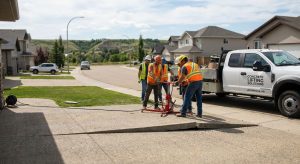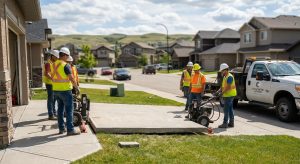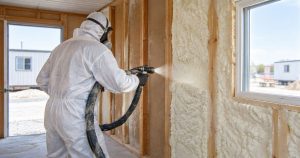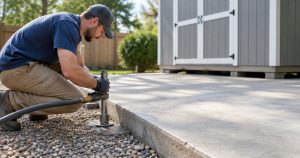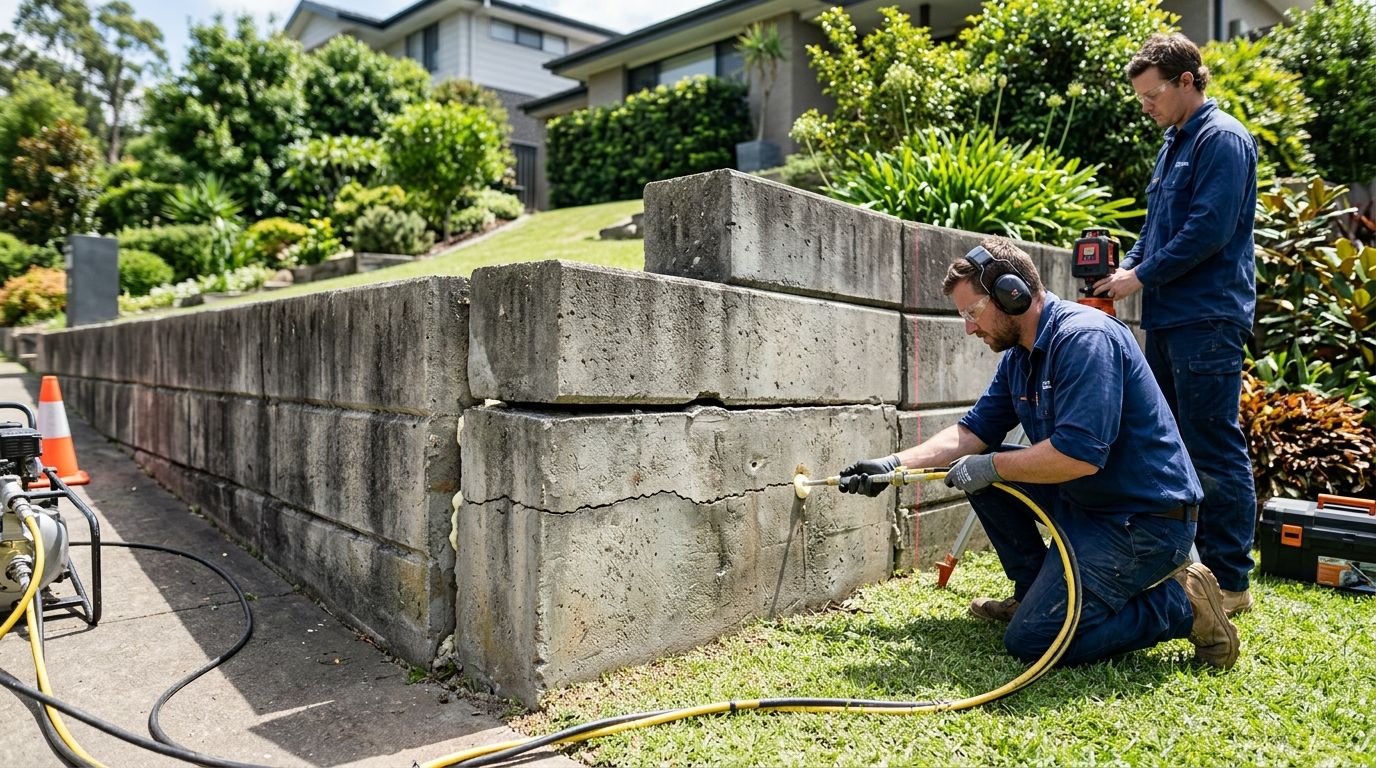
Concrete lifting for retaining walls is a repair method that raises a settled or tilting wall section back to level by injecting polyurethane foam under the footing, restoring support without tearing out the structure. Retaining walls carry a different load than a garage slab or driveway — they hold back soil under constant lateral pressure — so the fix has to address grade, drainage, and footing support together, not just the tilt you can see from the yard.
- Concrete lifting for retaining walls raises settled footings in hours using polyurethane foam injection, not a multi-day tear-out.
- Best for walls tilted under roughly 2 inches per 4 feet of height with the footing still intact and no cracked block.
- Alberta’s clay soils and freeze-thaw cycles cause most retaining wall settling in Calgary, Okotoks, High River, and Lethbridge properties.
- Aztec Spray Systems runs concrete lifting on retaining walls, patios, and driveways across southern Alberta.
- Skip lifting and plan a rebuild when block sections are cracked, bowed, or the wall has shifted more than a few inches.
Why concrete lifting matters for retaining wall owners
A retaining wall that's out of level isn't just a cosmetic problem. Once a footing settles unevenly, water starts pooling against the low side, which accelerates soil erosion behind the wall and speeds up the next round of settling. On a lot in Okotoks or High River with heavy clay content, that cycle can turn a 1-inch dip into a 3-inch tilt within a couple of freeze-thaw seasons.
Concrete lifting services exist specifically to interrupt that cycle before the wall needs a full rebuild. The foam injection method fills voids under the footing and lifts the section back to grade, which is a fundamentally different repair than patching mortar joints or adding a cap stone — those fixes address the symptom, not the settled soil underneath.
Retaining wall owners also deal with a constraint homeowners with flat slabs don't: you can't just pour a new pad next to a wall holding back a slope. The repair has to work with the existing footing, which is why injection-based lifting is the dominant method for this application rather than excavation.
Inspect the wall for the real cause
Before any repair decision, figure out whether you're dealing with settlement, lateral movement, or a drainage failure — they look similar but need different fixes.
- Check for a horizontal crack line near the base, which usually signals footing settlement rather than soil pressure
- Look for outward bulging mid-wall, which points to lateral soil pressure, not settling
- Note whether the tilt is uniform across the wall or concentrated in one section
- Check for water staining or efflorescence, a sign drainage behind the wall has failed
- Photograph the wall from the same spot every few weeks to track movement over time
Measure the tilt and settlement before calling anyone
A plumb line and a tape measure tell you more than a phone call to a contractor who hasn't seen the wall yet.
- Hold a level against the wall face and record the degree of lean per foot of height
- Measure the gap between the wall base and any adjacent patio or walkway
- Check whether the top cap is still level relative to the base courses
- Mark the current position with a chalk line so you can confirm movement stops after any repair
- Note the wall's age and original construction type if you know it — segmental block, poured concrete, or timber-faced
Check drainage behind the wall
Most retaining wall settling traces back to water, not the concrete or block itself. This step is free and takes an afternoon.
- Confirm weep holes or drain pipes at the base of the wall aren't clogged with soil or debris
- Check that the grade above the wall slopes away from the structure, not toward it
- Look for downspouts discharging directly behind the wall instead of away from it
- Test soil saturation after a rain by digging a small pit near the footing
- Flag any standing water within 24 hours of rainfall as an active drainage problem
Compare your repair options before committing
This is the point where most retaining wall owners decide between a patch, a lift, or a rebuild. Concrete lifting for retaining walls only works when the footing itself is sound — it can't fix a wall with structural cracking in the block or panel material.
| Option | Best for | Key limitation |
|---|---|---|
| Polyurethane foam injection | Settled footing, tilt under 2 in per 4 ft, intact wall material | Doesn't correct lateral bulging or cracked block |
| Mudjacking (traditional cement slurry) | Older repair method, heavier material load | Adds significant weight to soil that's already settling |
| Helical pier underpinning | Walls on unstable or expansive soil needing permanent support | More invasive and slower than injection |
| Full wall rebuild | Cracked block, bowed panels, or movement over several inches | Highest cost and longest project timeline |
| Drainage regrading only | Early-stage settling with no visible wall damage | Doesn't lift or correct existing tilt |
Verdict: polyurethane foam injection wins for retaining walls with intact block and a tilt under roughly 2 inches per 4 feet of height — anything beyond that, or with visible cracking, needs a structural assessment before lifting makes sense.
Get a lift assessment before the tilt gets worse
Once you've confirmed the footing is intact and drainage is the underlying trigger, an assessment from a crew that works on retaining walls specifically — not just flat slabs — tells you whether injection will hold.
- Ask whether the crew has lifted retaining walls before, not only driveways and patios
- Request core measurements of the void space under the footing before any foam goes in
- Confirm the injection pattern accounts for the wall's full length, not just the visibly sunken section
- Get a written scope that separates the lifting work from any drainage correction
- Ask what movement, if any, is expected in the first 30 days after injection
Get a retaining wall assessment
Aztec Spray Systems serves Calgary, Okotoks, High River, and Lethbridge properties.
Address drainage after the lift, not just the tilt
Lifting a wall back to level without fixing the water source that caused the settling means you're paying for the same repair again in a few years.
- Extend downspouts at least 6 feet away from the top of the wall
- Regrade the soil above the wall to slope away from the structure
- Clear or replace weep holes that were blocked before the repair
- Add a gravel drainage channel behind the wall if none currently exists
- Re-check drainage function after the next significant rainfall
Monitor the wall for the first year after repair
A properly lifted retaining wall should hold its new position through at least one full freeze-thaw cycle. Alberta winters are the real test.
- Re-measure the tilt at 30, 90, and 365 days using your original chalk line marks
- Photograph the same section each spring to compare against your baseline
- Watch for any new cracking near the injection points
- Confirm drainage improvements are still functioning after winter thaw
Common mistakes retaining wall owners make
- Ignoring a small tilt for a full season — a half-inch lean often becomes a 2-inch lean by the next spring thaw, once clay soil starts moving
- Fixing the cap stones and calling it done — cosmetic repairs on top don't touch the settled footing underneath
- Skipping the drainage check — lifting a wall without fixing the water source guarantees a repeat call within a year or two
- Hiring a slab-only crew for a wall job — retaining walls settle differently than flat driveways and need a crew that accounts for lateral soil pressure, not just vertical lift
- Waiting until block sections crack — once the wall material itself fails, foam injection is off the table and a rebuild is the only option
FAQ
How much does concrete lifting for a retaining wall cost?
Cost depends on wall length, footing depth, and how much void space needs filling, so get a site assessment for an accurate figure rather than relying on a general estimate.
Is concrete lifting better than rebuilding a retaining wall?
Concrete lifting is faster and less invasive when the footing is intact and the wall material isn’t cracked; a rebuild becomes necessary once block or panel sections fail structurally.
How do I know if my retaining wall needs lifting?
Check for a horizontal crack near the base, an uneven cap line, or a gap forming between the wall and an adjacent patio — these point to footing settlement rather than surface wear.
Can a retaining wall be lifted without removing it?
Yes, polyurethane foam injection lifts the footing from underneath through small injection ports, so the visible wall structure stays in place during the repair.
What causes retaining walls to settle in Alberta?
Clay-heavy soil combined with seasonal freeze-thaw cycles is the leading cause of retaining wall settling across Calgary, Okotoks, High River, and Lethbridge properties.
Will the wall settle again after lifting?
It can if the drainage problem that caused the original settling isn’t corrected — addressing grading and weep holes after the lift is what prevents a repeat.
How long does concrete lifting for a retaining wall take?
Most retaining wall lifting projects finish in a single day since the foam sets and cures within hours, compared to the multi-day timeline of a tear-out and rebuild.
Does concrete lifting work on bowed retaining walls?
No, foam injection corrects vertical settlement under the footing but doesn’t fix lateral bulging in the wall face, which usually points to a structural issue needing a different repair.
One last thing
The single detail that separates a lasting retaining wall repair from a repeat call two years later isn't the lifting method — it's whether anyone checked the drainage behind the wall before closing out the job. Foam injection puts the footing back where it belongs, but clay soil that keeps saturating against the wall will settle it again regardless of what filled the void the first time. Fix the water path first, or fix it right alongside the lift, and 2026's repair is the last one that section needs.
Related guides
- Best method for sunken slabs
- Identify foundation settling before it worsens
- Concrete lifting for Okotoks properties
- Concrete lifting for Canmore properties