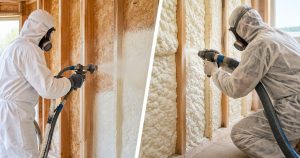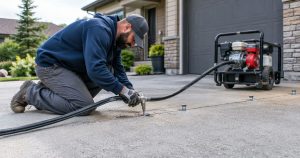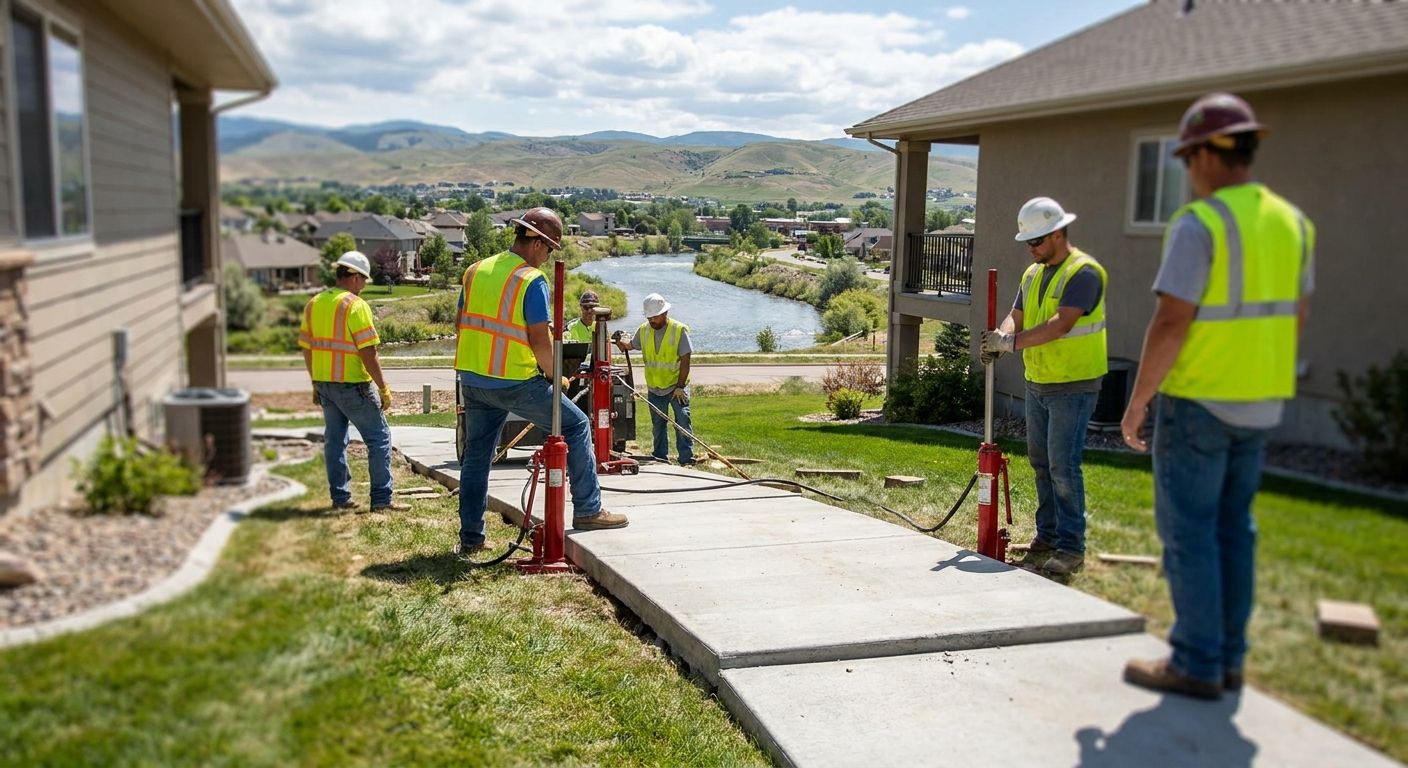
Concrete lifting for High River properties is a polyurethane foam or mudjacking service that raises sunken driveways, sidewalks, garage floors, and patios back to grade without tearing out the original slab. High River sits on expansive clay soil in the Highwood River valley, so slabs here settle differently than they do on the sandier soil north toward Calgary — the fix has to account for that.
- Polyurethane foam injection is the fastest fix for concrete lifting in High River — slabs bear weight again within about an hour.
- High River’s clay soil and flood history mean repeat settling is common if drainage isn’t fixed first.
- Aztec Spray Systems lifts driveways, sidewalks, garage floors, and patios for High River homeowners and commercial owners in 2026.
- Mudjacking and full slab replacement remain options, but both add weight or cost that polyurethane foam avoids.
Why concrete lifting matters for High River properties
High River's soil is dense clay that expands when it's wet and shrinks when it dries out. That swelling and shrinking cycle pushes and drops slabs unevenly, which is a different failure pattern than the frost heave you'd see on gravel-based lots. The town's history with the Highwood River — including the 2013 flood — left some properties with saturated subgrade that took years to fully drain, and that kind of prolonged moisture exposure accelerates slab settling long after the water is gone.
Most municipalities treat a vertical offset of more than 1/4 inch between slab sections as a trip hazard, and once a driveway or walkway crosses that line it's a liability issue, not just a cosmetic one. Aztec Spray Systems works on residential and commercial concrete across High River, Okotoks, Calgary, and Lethbridge, and the settling pattern in High River specifically tracks back to that clay-and-moisture combination more often than it does on newer subdivisions with engineered fill.
Inspect your slab for settling signs
Start with a walk-around before you call anyone. Slabs rarely fail all at once — they show small tells for months before the settling gets bad enough to matter.
- Look for a visible dip or slope where the slab meets the foundation or garage threshold
- Check for standing water after rain instead of it draining away from the house
- Run a hand along expansion joints to feel for a step between adjacent sections
- Note any new cracks wider than a hairline, especially ones that run corner to corner
- Watch garage doors for binding or dragging along the bottom seal
If your garage floor specifically shows a slope toward the door or standing puddles near the walls, the signs your garage floor needs concrete lifting are usually clearer indoors than outdoors because there's no rain to mask the drainage problem.
Check the soil and drainage around your property
Settling almost never happens in isolation from water. Fix the water problem before you fix the concrete, or the slab will just sink again within a season or two.
- Confirm downspouts discharge at least 4-6 feet away from the foundation
- Grade soil so it slopes away from the slab, not toward it
- Look for gaps where soil has pulled away from the edge of the driveway or walkway
- Check sprinkler heads and irrigation lines for leaks near the slab edge
- Note any low spots in the yard that collect and hold water near the concrete
High River's clay subgrade holds water longer than sandy soil, so drainage fixes matter more here than in a lot of surrounding towns.
Measure the size and depth of the sinking
A level and a tape measure tell you more than a guess. Lay a straightedge across the low spot and measure the gap at the deepest point — that number decides which repair method makes sense.
- Under 1/4 inch: cosmetic, monitor it, no urgent action needed
- 1/4 to 1 inch: a candidate for polyurethane foam lifting
- 1 to 3 inches: still liftable in most cases, but plan for more material
- Over 3 inches, or a slab that's cracked into multiple pieces: replacement is often the more realistic call
Choose a lifting method for the job
This is where the manual comparison happens before any contractor gets involved. Three real options exist for a settled slab, and each behaves differently on High River's clay.
- Polyurethane foam injection — lightweight expanding foam pumped through small holes, adds minimal load to already-soft soil
- Mudjacking (mortar slurry) — heavier material pumped underneath, cheaper per job but adds weight that can cause future settling on soft clay
- Full slab replacement — tear-out and repour, the only option once a slab is cracked into separate pieces
- Topical leveling compound — a thin patch over a low spot, cosmetic only and not a real fix for structural settling
For a side-by-side breakdown of how these methods perform on different failure types, the concrete lifting method for sunken slabs comparison covers weight load, cure time, and which slab conditions rule each option out. Aztec Spray Systems runs polyurethane foam injection as its standard method for High River jobs because the foam's low weight doesn't add to the load the clay subgrade already has to support.
Get your High River slab assessed
Aztec Spray Systems evaluates driveways, walkways, and garage floors across High River.
Prepare the site before lifting day
A few steps beforehand keep the job on schedule and avoid surprises once the crew arrives.
- Clear vehicles, planters, and furniture off the slab and the surrounding area
- Mark any known utility lines or sprinkler heads near the injection zone
- Photograph existing cracks and offsets for a before-and-after record
- Confirm access for equipment if the slab is behind a gate or narrow side yard
Get the slab lifted and sealed
On the day itself, small holes get drilled into the slab (typically 5/8 inch), foam is injected and expands to fill voids and lift the concrete, and the holes get patched. Polyurethane foam generally cures enough to walk on within about 15 minutes and support vehicle traffic within roughly an hour, which is why it's the practical choice for driveways that can't sit unusable for days.
Maintain the slab after lifting
Lifting fixes the position — it doesn't fix the underlying moisture pattern permanently unless you address drainage too.
- Re-check downspout extensions and grading every spring after freeze-thaw movement
- Reseal expansion joints annually to keep water from re-entering under the slab
- Watch the same spot for the first two winters after a lift, since clay settling can be gradual
- Address any new cracking early instead of waiting for it to widen
Comparison: concrete lifting methods for High River slabs
| Method | Best For | Key Limitation |
|---|---|---|
| Polyurethane foam injection | Driveways, walkways, garage floors on clay soil | Not viable on slabs cracked into multiple pieces |
| Mudjacking (mortar slurry) | Larger commercial slabs with stable subgrade | Added weight can cause re-settling on soft clay |
| Full slab replacement | Cracked or severely broken concrete | Full tear-out cost and multi-day downtime |
| Topical leveling compound | Minor cosmetic dips under 1/4 inch | Not a structural fix, wears down over time |
Polyurethane foam injection is the practical default for most High River slabs because it adds the least weight to soil that's already prone to movement, and it gets a driveway or walkway back in service the same day.
Common mistakes High River property owners make
- Fixing the slab before fixing the drainage — a lift on clay soil with an unresolved downspout or grading issue often re-settles within a year or two
- Assuming a hairline crack is nothing — on expansive clay, small cracks widen faster than on stable soil once water gets underneath
- Using a topical patch as a permanent fix — leveling compound covers a dip but doesn't address the void underneath, so the low spot returns
- Waiting through another freeze-thaw season — every winter cycle on saturated clay adds more movement, and repairs get more expensive the longer settling goes unaddressed
- Skipping the connection to foundation settling — a sinking walkway right next to the house sometimes signals the same soil movement affecting the foundation, not just the slab; the foundation settling warning signs guide covers what to check before assuming it's isolated to the concrete
FAQ
What’s the best method for concrete lifting in High River?
Polyurethane foam injection is the best fit for most High River slabs in 2026 because it adds minimal weight to the area’s expansive clay soil. Mudjacking works on larger commercial slabs with stable subgrade, but it adds more weight than foam.
How long does concrete lifting take?
A typical driveway or walkway lift takes a few hours from start to finish. Polyurethane foam cures enough to walk on within about 15 minutes and supports vehicle traffic within roughly an hour.
Is concrete lifting cheaper than replacement?
Lifting avoids the demolition, disposal, and repour costs that come with full slab replacement. Replacement is only the better option once a slab is cracked into separate pieces rather than settled as a single unit.
Why does concrete settle more in High River than other Alberta towns?
High River sits on expansive clay soil that swells and shrinks with moisture, and the Highwood River valley’s flood history, including the 2013 flood, left some areas with prolonged subgrade saturation. That combination causes more uneven settling than the sandier soil found in parts of Calgary.
How do I know if my garage floor needs concrete lifting?
A sloped garage floor, standing water near the walls, or a garage door that drags along the bottom seal are the clearest signs. Check for a visible dip where the slab meets the foundation before assuming it’s just cosmetic.
Can I fix a sunken slab myself?
Topical leveling compound can mask a dip under 1/4 inch, but it doesn’t fill the void underneath and isn’t a structural fix. Anything deeper than that needs foam injection or mudjacking to address the actual settling.
Does concrete lifting stop future settling?
Lifting corrects the current position but won’t prevent future movement unless drainage and grading issues around the slab are fixed too. Re-checking downspouts and grading each spring reduces the chance of the same spot settling again.
What size gap means my slab needs lifting?
A vertical offset over 1/4 inch is generally treated as a trip hazard and a candidate for lifting. Gaps between 1/4 inch and 1 inch are typically the best fit for polyurethane foam injection.
One last thing
The slab that settles first on a High River property is rarely the one that matters most — it's usually the walkway or patio right next to the foundation, because it's sitting on the same disturbed clay that the foundation footings rest on. Checking that connection before booking a lift saves a second call later.
Related guides