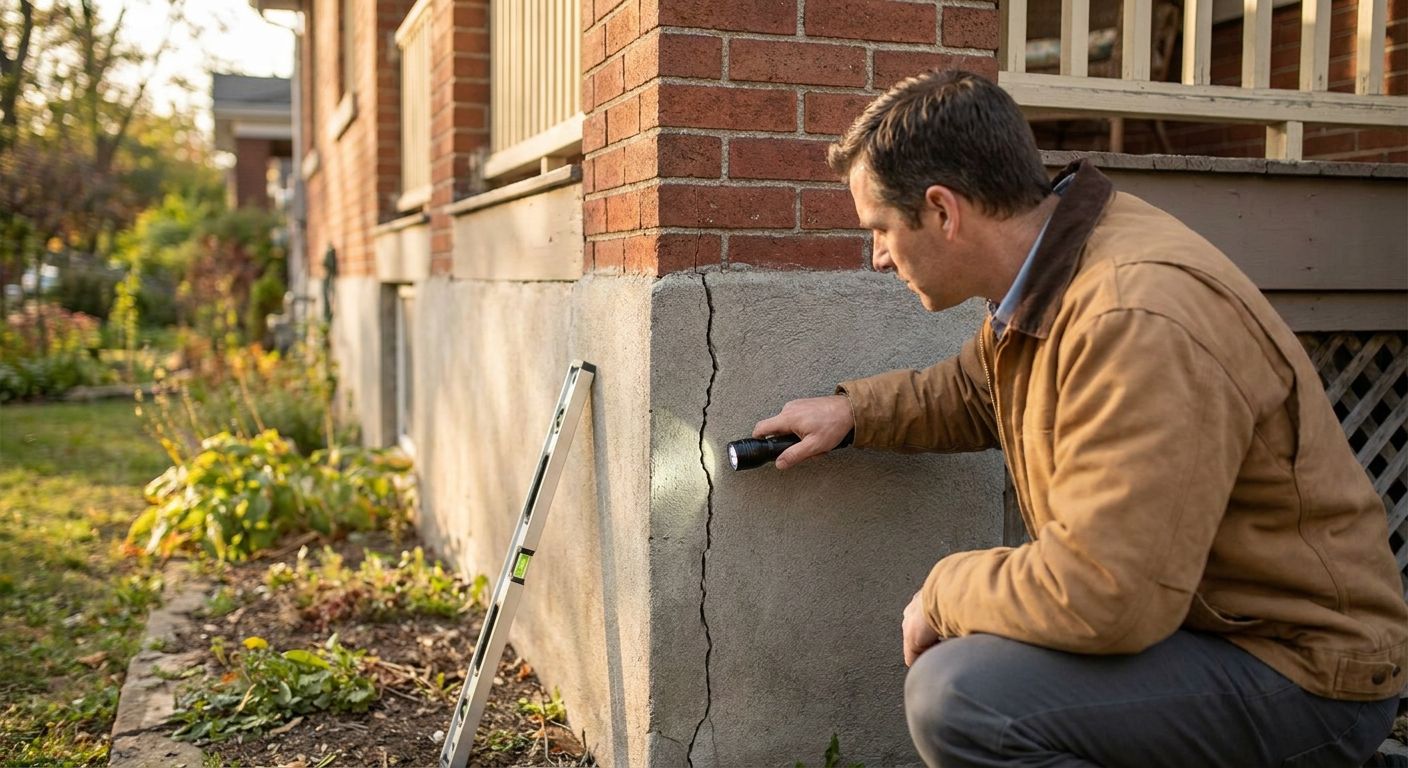
Foundation settling starts small: a hairline crack in the drywall, a door that sticks in July but swings free in January, a slight slope near one corner of the slab. Catch these signs in 2026 while they're cosmetic and a repair is a weekend job — miss them and you're looking at underpinning or full slab replacement.
- Cracks wider than 1/4 inch (6mm) or diagonal/stair-step cracks signal active foundation settling, not normal curing.
- Alberta’s expansive clay soil and freeze-thaw cycles make settling checks a twice-yearly habit for Calgary, Okotoks, and Lethbridge homeowners.
- Concrete leveling for foundation settling fixes sunken slabs before cracks widen into structural damage.
- Doors sticking seasonally, gaps at window frames, and uneven floors together (not alone) point to real movement.
Why this matters
Alberta's clay-heavy soil expands when wet and contracts hard when it dries, and freeze-thaw cycles push that movement into overdrive every spring and fall. A foundation that looks fine in August can show new cracking by November once the ground refreezes.
The cost difference between catching settling early and catching it late is significant. A sunken slab addressed with concrete leveling for foundation settling runs a fraction of what underpinning or foundation replacement costs once the movement has compromised load-bearing walls. Identifying the signs in 2026, before winter sets in again, is the cheapest move a homeowner can make.
What you'll need
- A flashlight and a small level (torpedo or 2-foot)
- A tape measure or crack width gauge (a dime is roughly 1.35mm thick)
- A notebook or phone camera to log crack locations and dates
- 20-30 minutes for a full exterior-and-interior walkthrough
- Access to the basement, crawl space, and attic if your home has one
The steps
1. Walk the exterior foundation line
Circle the entire foundation looking for cracks, bulging, or sections where the concrete has visibly separated from the ground. This is the fastest way to spot movement before it shows up inside.
Look specifically for horizontal cracks (often the most serious — they suggest lateral pressure) versus vertical hairline cracks, which are frequently just curing shrinkage. Note the location and take a photo with today's date visible in frame.
Common mistake: dismissing a crack because it's been there for years. Cracks change width over months, not days — you need a baseline photo to know if it's moving.
2. Measure crack width with a gauge or coin
Any crack wider than 1/4 inch (6mm) warrants a closer look, and diagonal or stair-step cracks in block or brick are a stronger red flag than straight vertical ones. Measure at the widest point, not the average.
Re-measure the same crack in 60-90 days. If it's grown by more than a hair, that's active settling, not old damage.
Common mistake: measuring once and moving on. A static crack and a growing crack need completely different responses.
3. Test every exterior door and window for sticking
Open and close every exterior door and window on the ground floor. Doors that stick only in humid months but swing free the rest of the year usually point to seasonal wood movement, not settling — but doors that have progressively needed more force over a year or two are a different story.
Check for gaps at the top corners of window and door frames where the frame has pulled away from the wall. A gap you can slide a business card into is worth logging.
Common mistake: blaming a sticking door on humidity without checking whether the frame itself has shifted out of square.
4. Run the level test on interior floors
Place your level on the floor in several rooms, especially near exterior walls and load-bearing points. A slope of more than 1 inch over 20 feet is generally considered significant and worth a professional look.
A marble or golf ball rolled slowly across the floor will show you the same thing without a level — watch where it settles.
Common mistake: testing only one room. Settling is often localized to one corner of a home, and a single flat room tells you nothing about the rest of the foundation.
5. Inspect the basement or crawl space for gaps and moisture
Walk the basement perimeter looking for gaps where the foundation wall meets the floor slab, plus any signs of water intrusion, efflorescence (white mineral staining), or soft, damp framing. Moisture accelerates soil movement under the slab and is one of the most common contributors to settling in Alberta basements.
If your crawl space shows standing water or persistent dampness, that moisture is likely working against your foundation year-round. Spray foam insulation for crawl spaces helps control the moisture and temperature swings that make soil movement worse.
Common mistake: treating a damp crawl space as a separate issue from foundation health. The two are directly connected.
6. Check the exterior grading and drainage
Stand back from the house and look at how the ground slopes away from the foundation. It should drop at least 6 inches over the first 10 feet. Flat or reverse-sloped grading pools water right against the foundation, which is one of the fastest ways to accelerate settling.
Look at downspouts too — if they're dumping water within a few feet of the foundation instead of routing it away, that's a fixable cause of ongoing movement.
Common mistake: assuming grading only matters after heavy rain. Alberta's spring melt moves as much water against a foundation as any single storm.
7. Log everything and set a re-check date
Compile your photos, measurements, and notes into one file with dates. Set a calendar reminder for 90 days out to repeat the exterior and level checks.
A single inspection tells you where things stand today. A pattern over two or three checks tells you whether the foundation is actively moving — and that pattern is what a contractor needs to recommend the right fix.
Common mistake: doing the inspection once in 2026 and never repeating it. Settling is a slow process; catching the trend matters more than catching a single snapshot.
Get a foundation settling assessment
Talk to Aztec Spray Systems about concrete lifting and leveling options for your property.
Troubleshooting
- Cracks appear only in drywall, not the foundation itself: This often reflects seasonal humidity swings rather than structural movement. Watch it for one full season before assuming settling.
- A door sticks in winter but not summer: Usually wood expansion, not foundation movement. If it sticks year-round and gets progressively worse, that's a different signal.
- Concrete steps or a porch slab have separated from the house: This is a common early sign of settling around the entry point. How to fix cracked concrete steps walks through the repair options before the gap widens further.
- Basement floor has a visible dip near the center: Central slab settling is common where soil compaction under the original pour was uneven. This typically needs concrete leveling rather than a cosmetic patch.
- Cracks widened noticeably after a wet spring: Water saturation under the slab is the likely driver. Fixing drainage and grading first often stops the progression before any structural repair is needed.
- Multiple small cracks appeared at once after a hard freeze: Rapid freeze-thaw movement can cause a cluster of new hairline cracks in a single season. Log them together and recheck as a group in 90 days.
Tools and resources
- Flashlight, torpedo level, tape measure, and a crack gauge or coin
- A dated photo log (phone camera is sufficient)
- Best concrete lifting method for sunken slabs for comparing repair approaches once you've confirmed movement
- A calendar reminder set for a 90-day re-check
- A licensed contractor consultation if any single crack exceeds 1/4 inch or grows measurably between checks
What to do next
Once you've logged your findings, the next step is matching the repair to the cause. Slab settling from soil compaction responds well to concrete leveling, while cracks driven by drainage problems need the water addressed first or the repair won't hold. Review the concrete leveling options for a slab versus a foundation wall issue before booking any work.
FAQ
How do I know if foundation settling is serious?
Cracks wider than 1/4 inch, diagonal or stair-step patterns, and floors sloping more than 1 inch over 20 feet are the clearest signs of serious settling in 2026. A single hairline crack that isn’t growing is usually not urgent.
What causes foundation settling in Alberta homes?
Expansive clay soil that swells when wet and shrinks when dry, combined with freeze-thaw cycles, is the leading cause across Calgary, Okotoks, High River, and Lethbridge. Poor grading and downspout drainage make the movement worse.
Can I fix foundation settling myself?
Cosmetic crack sealing is a DIY-friendly job, but actual slab or foundation leveling requires specialized equipment and should go to a licensed contractor. Attempting to lift a slab without the right method risks uneven results or further cracking.
How much does concrete leveling cost compared to underpinning?
Concrete leveling for a sunken slab typically costs a fraction of full underpinning, since it addresses the slab directly rather than requiring excavation to the footing. Exact pricing depends on the size and severity of the settling.
Is a sticking door always a sign of foundation problems?
No, a door that sticks seasonally and frees up again is usually wood expansion from humidity, not foundation movement. A door that gets progressively harder to close year over year is the pattern worth investigating.
How often should I inspect my foundation for settling?
Twice a year is the standard recommendation for Alberta homes: once after spring thaw and once before the ground freezes in fall. These are the two periods when soil movement is most active.
Does moisture in a crawl space affect foundation settling?
Yes, persistent moisture under a home softens the soil supporting the slab and accelerates movement. Controlling crawl space moisture and temperature is one of the more overlooked ways to slow settling.
What’s the difference between foundation cracks and normal curing cracks?
Curing cracks are hairline, vertical, and appear within the first year of a new pour without changing over time. Settling cracks widen, run diagonally or in a stair-step pattern, and often pair with sticking doors or sloped floors.
One last thing
The single most overlooked check is the downspout test — walk your property right after a heavy rain in 2026 and watch where the water actually goes. If it's pooling within a few feet of the foundation instead of draining away, that's often the real driver behind cracks homeowners assume are just old-house wear, and it's a fix that costs far less than any slab repair.
Related guides
- How to protect a driveway from future concrete settling
- Concrete lifting for sunken driveways
- Best concrete lifting method for sunken slabs (compare methods)