.pseo-content { font-size: 17px; line-height: 1.7; color: inherit; }
.pseo-content h2 { font-size: 1.6em; margin-top: 1.8em; margin-bottom: 0.6em; line-height: 1.3; color: inherit; }
.pseo-content h3 { font-size: 1.25em; margin-top: 1.5em; margin-bottom: 0.4em; line-height: 1.35; color: inherit; }
.pseo-content h4 { color: inherit; }
.pseo-content p { margin: 0 0 1em; }
.pseo-content ul, .pseo-content ol { margin: 0 0 1em 1.4em; padding: 0; }
.pseo-content li { margin: 0.3em 0; }
.pseo-content strong { font-weight: 600; }
.pseo-content blockquote { margin: 1.2em 0; padding: 0.6em 1em; border-left: 3px solid color-mix(in srgb, currentColor 30%, transparent); background: color-mix(in srgb, currentColor 4%, transparent); color: inherit; }
.pseo-content a { text-decoration: underline; }
.pseo-content .pseo-table-wrap { overflow-x: auto; margin: 1.4em 0; -webkit-overflow-scrolling: touch; }
.pseo-content table { width: 100% !important; border-collapse: collapse !important; table-layout: auto !important; font-size: 0.96em; }
.pseo-content table th,
.pseo-content table td {
padding: 10px 12px !important;
border-bottom: 1px solid color-mix(in srgb, currentColor 14%, transparent) !important;
border-left: none !important;
border-right: none !important;
vertical-align: top !important;
text-align: left !important;
word-break: break-word !important;
overflow-wrap: anywhere !important;
white-space: normal !important;
}
.pseo-content table th {
background: color-mix(in srgb, currentColor 6%, transparent) !important;
color: inherit !important;
font-weight: 600 !important;
border-top: 1px solid color-mix(in srgb, currentColor 14%, transparent) !important;
}
.pseo-content table tr:last-child td { border-bottom: 1px solid color-mix(in srgb, currentColor 14%, transparent) !important; }
Hairline cracks on a concrete step are usually a Saturday-afternoon fix. Wide, shifting, or diagonal cracks are a different story — and confusing the two is how homeowners spend money twice.
- Cracks under 1/4 inch on concrete steps fix with epoxy or vinyl patching compound in one afternoon — DIY it in 2026.
- Cracks over 1/2 inch, rocking treads, or a step pulling away from the house point to settling, not a surface flaw.
- Skip patching sunken or settling steps — polyurethane concrete lifting from a licensed contractor like Aztec Spray Systems fixes the cause, not the symptom.
- Alberta’s freeze-thaw cycle reopens unsealed patches within one to two winters, so seal every repair before first frost.
Why this matters
A cracked step is more than an eyesore. Water gets into the crack, freezes overnight, and expands roughly 9% in volume — that's what turns a hairline crack into a chunk missing from the tread by spring. In Calgary, Okotoks, High River, and Lethbridge, that freeze-thaw cycle runs dozens of times a winter, which is why concrete damage here moves faster than in milder climates.
There's also a liability angle. A cracked or uneven step is a trip hazard on a walkway that gets used every day, and insurance adjusters ask about maintenance history after a fall claim. Fixing it now, in 2026, costs a fraction of what a full step replacement or a foundation settling repair runs once the problem spreads underground.
What you'll need
- Wire brush and an angle grinder with a masonry wheel (for undercutting the crack)
- Shop vac to clear dust and debris
- Concrete bonding adhesive
- Vinyl concrete patching compound for cracks 1/8 to 1/2 inch wide, or epoxy mortar for structural cracks
- Quick-set hydraulic cement for any crack below grade or holding water
- Margin trowel, pointing trowel, and a mason's level
- Silane/siloxane concrete sealer
- Safety glasses, gloves, and a dust mask
- A chalk line to check whether the step is still square to the house
Budget half a day for a single-crack repair, longer if you're patching multiple steps or waiting on cure time between coats.
The steps
1. Diagnose the crack before you touch it
Measure the width with a quarter or a crack gauge. Cracks under 1/8 inch are cosmetic. Cracks between 1/8 and 1/2 inch usually mean surface stress from freeze-thaw cycling. Anything wider, or a crack that runs diagonally across the full width of the tread, is often a symptom of settling underneath the step — check this before you spend a weekend patching something that will crack again in six months. Press down on each corner of the step; if it rocks or you hear a hollow sound, the slab underneath has a void.
Common mistake: patching a crack without checking for movement first. A cosmetic fix on a structurally unstable step just hides the problem until it gets worse.
2. Clean out the crack
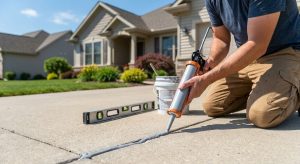
Use the angle grinder to undercut the crack slightly — wider at the bottom than the top — so the patch material locks in mechanically instead of just sitting on the surface. Vacuum out all dust, loose aggregate, and debris. Any leftover dust breaks the bond between old and new concrete.
3. Prime with a bonding agent
Brush a concrete bonding adhesive into the cleaned crack and let it get tacky before applying patch material — most products need 5 to 15 minutes depending on temperature. Skipping this step is the single biggest reason DIY patches fail within a year.
4. Fill with the right compound
For cracks under 1/2 inch, pack in vinyl concrete patching compound with a margin trowel, pressing firmly to eliminate air pockets. For structural cracks or anything below grade holding moisture, use hydraulic cement instead — it sets in roughly 3 to 5 minutes and expands slightly as it cures, which helps it grip.
5. Match the slope of the tread
Steps need a slight forward slope, about 1/4 inch per foot, so water sheds instead of pooling. Feather the patch with a pointing trowel to match that existing slope. A flat or backward-sloping patch collects water and refreezes every winter, guaranteeing the crack comes back.
6. Cure and seal
Let vinyl patch cure for 24 to 48 hours before foot traffic, and hold off on sealing until it's fully cured — check the product label for the exact window. Apply a silane/siloxane sealer once cured; this is what actually keeps Alberta's freeze-thaw cycles from getting back into the concrete pores.
7. Watch for repeat cracking or settling
If the same crack reopens in the same spot within a season, or if you notice the step pulling away from the house or sinking relative to the porch slab, the problem is underneath the concrete, not on the surface. That's a job for concrete lifting for sunken slabs, which raises and stabilizes the step from below instead of patching over a moving foundation.
Not sure if it’s a patch job or a lifting job?
Aztec Spray Systems assesses cracked and sinking concrete across Calgary, Okotoks, High River, and Lethbridge.
Troubleshooting
The patch keeps cracking in the same spot. The crack is likely a symptom of settling underneath, not a surface flaw — patching without addressing the void underneath just delays the same failure.
Steps rock or shift when you step on them. This means there's a gap between the step and the base it sits on. No surface patch fixes this; the void needs to be filled from below.
Water pools on the patched tread. The patch was likely applied flat instead of matching the original 1/4-inch-per-foot slope. Re-grade the patch surface or add a thin topping coat with the correct pitch.
The crack runs the full width of the step diagonally. This pattern usually points to differential settling — one side of the step is sinking faster than the other. Check the soil and drainage around the step before doing any cosmetic work.
White chalky residue appears on the cured patch. That's efflorescence, caused by moisture moving through the concrete and depositing salts on the surface. It's cosmetic, but persistent efflorescence signals ongoing moisture intrusion worth investigating.
The patch color doesn't match. New concrete patch material almost never matches aged concrete exactly. A concrete stain or tinted sealer applied after full cure closes the gap visually.
Tools and resources
Beyond the basic patching kit, a few resources are worth bookmarking if steps aren't the only concrete issue on the property:
- Concrete lifting for sidewalks and walkways — useful if the step problem extends into the adjoining walkway
- A masonry-grade angle grinder with dust shroud, for cleaner crack prep
- A moisture meter, if efflorescence keeps returning after sealing
- Local building code reference for step rise/run if you're replacing a full step rather than patching
Aztec Spray Systems handles the concrete lifting side of these jobs across Calgary, Okotoks, High River, and Lethbridge — worth a call before you commit to a full step replacement, since lifting a settled slab often costs less than tearing it out.
What to do next
If the crack is cosmetic and the step doesn't rock, the DIY patch above holds for years with proper sealing. If you found movement, sinking, or a crack that keeps reopening, treat that as the priority — a cracked step that's actually a settling slab won't stay fixed no matter how many times you patch it in 2026 or any year after.
FAQ
What causes cracked concrete steps in Calgary and Okotoks homes?
Freeze-thaw cycling is the main cause — water gets into small cracks, freezes, expands, and widens the crack over each winter. Poor soil compaction underneath the step and age-related settling are the other common causes in Alberta homes.
Can I fix a cracked concrete step myself?
Yes, if the crack is under 1/2 inch wide and the step doesn’t rock or shift underfoot. Wider cracks or steps that move when you step on them usually mean settling underneath, which needs concrete lifting instead of a surface patch.
How much does it cost to fix cracked concrete steps?
Cost depends on crack width, whether it’s cosmetic or structural, and whether settling is involved. A DIY patch runs the cost of the patching materials alone, while lifting a settled step requires a contractor quote based on the size of the void underneath.
Is concrete lifting better than patching for sinking steps?
Yes, if the step is sinking or rocking. Patching only fills the visible crack, while concrete lifting fills the void underneath and raises the slab back to level, which stops the crack from reopening.
How long does a concrete step patch take to cure?
Vinyl concrete patching compound typically needs 24 to 48 hours before foot traffic and should be sealed only after full cure. Hydraulic cement sets much faster, in roughly 3 to 5 minutes, but still needs time to fully harden before sealing.
What’s the difference between epoxy and vinyl concrete patch?
Epoxy mortar is stronger and better for structural cracks that carry load, while vinyl concrete patch is easier to work with and suited to cosmetic cracks under 1/2 inch. Both need a bonding agent and proper surface prep to hold.
Do cracked steps always mean my foundation is failing?
No — most step cracks are surface-level freeze-thaw damage, not a foundation problem. Diagonal cracks across the full tread, rocking steps, or a step separating from the house are the signs worth having assessed for settling.
When should I call a professional instead of patching steps myself?
Call a professional when the step rocks, sinks, or the crack keeps reopening after a patch. A licensed concrete lifting contractor can confirm whether the issue is cosmetic or a void underneath the slab.
One last thing
The patch material is almost never the reason a repair fails — skipped surface prep and mismatched slope are. Undercut the crack, vacuum it clean, prime it, and match the original 1/4-inch-per-foot pitch, and a $20 tube of patching compound outlasts most step repairs done without that prep.
Related guides
{“@context”:”https://schema.org”,”@type”:”FAQPage”,”mainEntity”:[{“@type”:”Question”,”name”:”What causes cracked concrete steps in Calgary and Okotoks homes?”,”acceptedAnswer”:{“@type”:”Answer”,”text”:”Freeze-thaw cycling is the main cause — water gets into small cracks, freezes, expands, and widens the crack over each winter. Poor soil compaction underneath the step and age-related settling are the other common causes in Alberta homes.”}},{“@type”:”Question”,”name”:”Can I fix a cracked concrete step myself?”,”acceptedAnswer”:{“@type”:”Answer”,”text”:”Yes, if the crack is under 1/2 inch wide and the step doesn’t rock or shift underfoot. Wider cracks or steps that move when you step on them usually mean settling underneath, which needs concrete lifting instead of a surface patch.”}},{“@type”:”Question”,”name”:”How much does it cost to fix cracked concrete steps?”,”acceptedAnswer”:{“@type”:”Answer”,”text”:”Cost depends on crack width, whether it’s cosmetic or structural, and whether settling is involved. A DIY patch runs the cost of the patching materials alone, while lifting a settled step requires a contractor quote based on the size of the void underneath.”}},{“@type”:”Question”,”name”:”Is concrete lifting better than patching for sinking steps?”,”acceptedAnswer”:{“@type”:”Answer”,”text”:”Yes, if the step is sinking or rocking. Patching only fills the visible crack, while concrete lifting fills the void underneath and raises the slab back to level, which stops the crack from reopening.”}},{“@type”:”Question”,”name”:”How long does a concrete step patch take to cure?”,”acceptedAnswer”:{“@type”:”Answer”,”text”:”Vinyl concrete patching compound typically needs 24 to 48 hours before foot traffic and should be sealed only after full cure. Hydraulic cement sets much faster, in roughly 3 to 5 minutes, but still needs time to fully harden before sealing.”}},{“@type”:”Question”,”name”:”What’s the difference between epoxy and vinyl concrete patch?”,”acceptedAnswer”:{“@type”:”Answer”,”text”:”Epoxy mortar is stronger and better for structural cracks that carry load, while vinyl concrete patch is easier to work with and suited to cosmetic cracks under 1/2 inch. Both need a bonding agent and proper surface prep to hold.”}},{“@type”:”Question”,”name”:”Do cracked steps always mean my foundation is failing?”,”acceptedAnswer”:{“@type”:”Answer”,”text”:”No — most step cracks are surface-level freeze-thaw damage, not a foundation problem. Diagonal cracks across the full tread, rocking steps, or a step separating from the house are the signs worth having assessed for settling.”}},{“@type”:”Question”,”name”:”When should I call a professional instead of patching steps myself?”,”acceptedAnswer”:{“@type”:”Answer”,”text”:”Call a professional when the step rocks, sinks, or the crack keeps reopening after a patch. A licensed concrete lifting contractor can confirm whether the issue is cosmetic or a void underneath the slab.”}}]}