Attic insulation is generally covered by home insurance in Alberta only when it is damaged by an event your policy insures; routine top-ups, ageing insulation and energy-efficiency upgrades are normally homeowner responsibilities. For a 2026 claim, the cause of damage, exclusions and approved repair scope determine coverage—not simply whether the insulation needs replacing.
- Is attic insulation covered by home insurance? Insured damage can qualify; maintenance and efficiency upgrades generally do not.
- Water-damaged attic insulation needs a cause assessment; wet material alone does not establish insurance coverage.
- Separate damage restoration from optional upgrades before authorizing attic insulation replacement.
- Aztec Spray Systems provides attic insulation services; your insurer decides whether your policy covers the work.
Is attic insulation covered by home insurance in Alberta?
Home insurance covers insured losses, not every problem discovered in your attic. Insulation damaged during a covered fire or another insured event can form part of a building repair claim. Insulation that is simply inadequate, deteriorated or due for improvement belongs in a maintenance or renovation plan.
Use this table to identify the question your insurer must answer. These are coverage distinctions, not approval guarantees.
| Situation | Coverage distinction | Best next step | Main limitation |
|---|---|---|---|
| Fire damages attic insulation | Resulting damage can fall within insured building repairs | Report the loss and document the affected area | The policy and approved scope still control payment |
| A storm damages the roof and insulation gets wet | The insurer must assess the event and resulting damage | Document the roof damage and water entry | Not every water-entry circumstance is insured |
| A slow roof leak damages insulation | Gradual damage and maintenance exclusions become relevant | Establish the leak history and request a coverage explanation | Replacing wet insulation does not resolve the roof defect |
| Condensation or mould affects the attic | Coverage depends on the cause and applicable exclusions | Arrange a moisture assessment before replacement | Insulation replacement alone does not correct the moisture source |
| Existing insulation needs a top-up | This is normally an improvement rather than an insured loss | Plan a homeowner-funded project | Insurance is not a routine upgrade programme |
Before arranging removal, review how to remove old attic insulation before a spray foam upgrade. For an active claim, confirm documentation and disposal instructions with the insurer first.
Why this matters
An attic repair can involve separate jobs: correcting the source of damage, removing affected material and restoring the insulation. Approval for one job does not establish approval for every job. Get the boundaries in writing.
The distinction also protects your project planning. You can discuss an efficiency improvement while arranging damage repairs, but the estimate should show which work restores the insured loss and which work changes the attic beyond that restoration.
Insured damage: ask what restoration includes
When an insurer accepts the cause of loss, ask whether the approved scope includes affected insulation, removal, disposal and reinstatement. Do not assume that approval for ceiling repairs also includes everything above the ceiling. Read the scope line by line.
Ask how the insurer will establish the damaged area. A visible ceiling stain identifies a symptom; it does not, by itself, define the extent of affected attic material. The assessment should connect the observed damage with the proposed repair.
Your contractor's estimate should describe the work rather than promise coverage. Material, affected area, access requirements and removal tasks belong in that estimate; the insurer's coverage decision belongs in separate claim correspondence.
Routine upgrades: keep them separate from the claim
Adding insulation to improve comfort or thermal performance is normally a homeowner-funded improvement. An attic that feels cold or has insufficient insulation does not establish an insured event. Start with an assessment, not a coverage assumption.
If you want an upgrade during an accepted repair, request 2 written scopes: damage restoration and optional improvement. This gives you a clear distinction between the insurer-approved work and the additional work you are choosing.
A different insulation material is not automatically an approved substitute. Before changing the proposed assembly, ask the insurer about the repair scope and ask the contractor about installation requirements. Approval of an insurance claim and suitability of an insulation system are different decisions.
Water damage: identify where the water came from
Wet insulation is evidence of moisture, not proof of insurance coverage. The insurer needs the circumstances: what happened, when you discovered it and what evidence connects the moisture to the reported event.
Keep observations separate from conclusions. Record that you noticed a ceiling stain after a storm if that is what happened; do not describe a roof opening or failed component unless someone actually identified it. A precise account is more useful than an assumed cause.
Request an assessment that addresses both the affected material and the moisture source. Replacing insulation without addressing ongoing water entry leaves the cause unresolved. Coverage discussions should not delay necessary safety measures or reasonable steps to prevent further damage.
Why attic insulation coverage varies
For a 2026 attic insulation claim, these policy and loss details determine the coverage discussion:
- Cause of loss: Identify the event that damaged the insulation, rather than describing only its current condition.
- Policy wording: Check the building coverage, exclusions, conditions and endorsements that apply to the reported event.
- Damage history: Distinguish a newly discovered event from evidence of recurring leakage or deterioration.
- Approved scope: Confirm which areas, materials and repair activities the insurer has accepted.
- Settlement terms: Review the deductible, applicable limits and basis of settlement in your own documents.
- Proposed changes: Separate restoration from material substitutions, added insulation and other improvements.
There is no single Alberta-wide approval rule that replaces your insurance contract. A neighbour's accepted attic claim does not determine yours. Use your policy, the facts of your loss and the insurer's written explanation.
How do I prepare an attic insulation insurance claim?
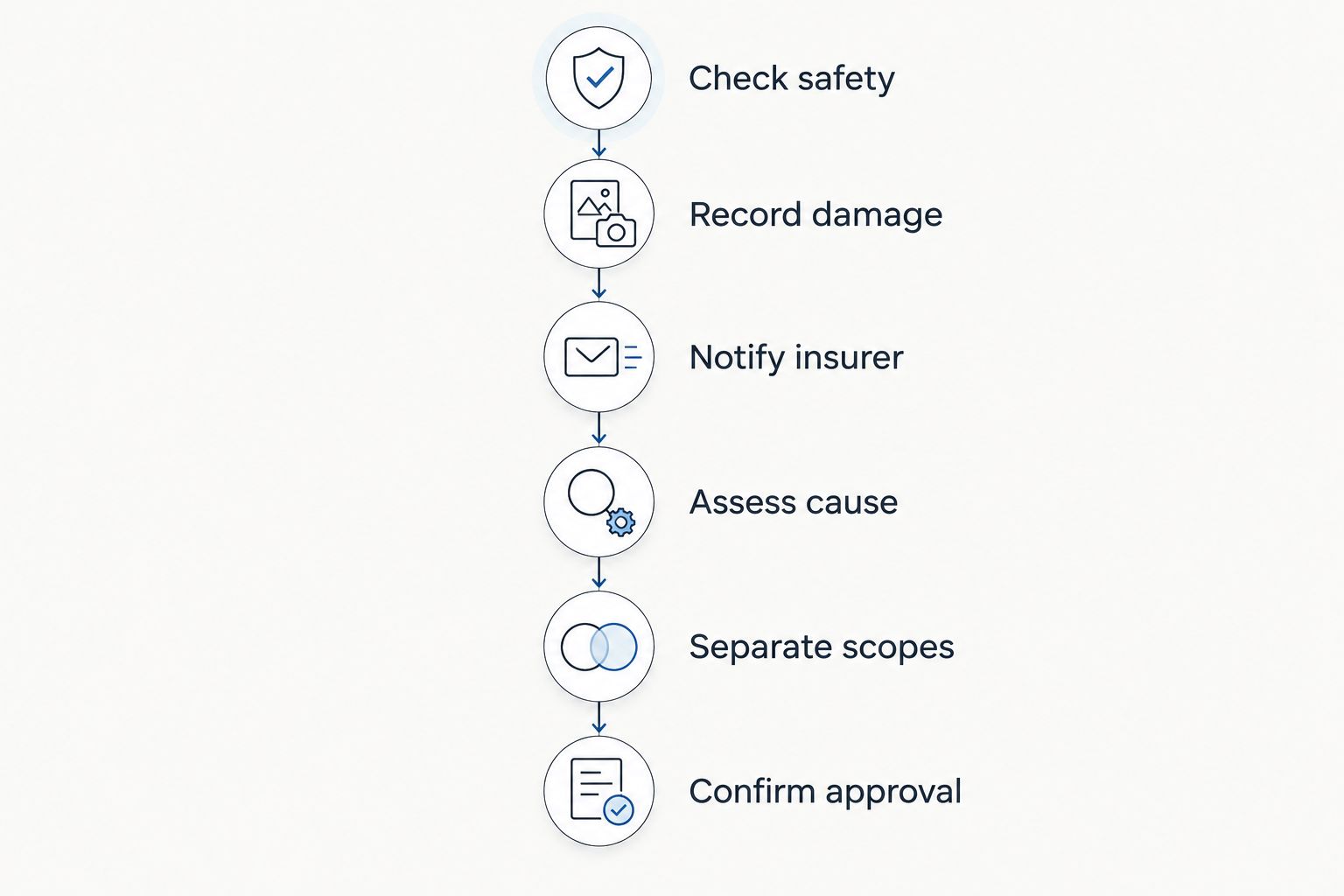
Use these 6 steps to organize a 2026 claim discussion. They are a documentation sequence, not a promise that the insurer will accept the loss.
- Check safety. Keep away from unstable ceilings, wet electrical equipment and unsafe attic access. Arrange appropriate help for immediate hazards rather than entering the attic to collect evidence.
- Record damage. Photograph visible damage from safe locations and record the discovery date. Include what you observed before and after the event without guessing about hidden conditions.
- Notify insurer. Report the circumstances promptly and ask what evidence, inspections and emergency measures the insurer requires. Keep the claim reference and a record of the instructions.
- Assess cause. Arrange the relevant inspection to identify the moisture source or other damage mechanism. Ask for findings that distinguish observations from conclusions.
- Separate scopes. Obtain an itemized restoration estimate and keep elective improvements distinct. Ask the insurer to clarify disputed or omitted items before treating them as approved.
- Confirm approval. Get written authorization for the repair scope before committing to non-emergency replacement. Retain invoices, correspondence and completion records.
The practical order is safety first, evidence next and permanent replacement after the repair boundaries are clear. Emergency action to limit damage is different from authorizing an entire attic renovation.
What documents should I have ready?
Keep 3 document groups together: policy records, damage evidence and repair paperwork. This is a practical filing checklist, not a universal insurer submission requirement. Your adjuster can specify additional documents.
Policy records
Keep the policy wording, declarations and relevant endorsements accessible. Locate the coverage period that applies to the loss, not just the renewal documents you received in 2026. Ask the insurer to identify the wording used in its decision.
Damage evidence
Save photographs, discovery notes, inspection findings and records of temporary measures. Preserve original files and dates. If damaged material must be removed for safety or mitigation, ask how to document it before disposal whenever circumstances allow.
Repair paperwork
Retain itemized estimates, approved scopes, change approvals and invoices. The description of completed work should match what was authorized. If conditions discovered during removal require more work, document them and seek clarification before treating the additional work as covered.
Can I replace damaged insulation before approval?
Take necessary safety and damage-limitation measures, but confirm the process before permanent replacement. Removing everything immediately can make it harder to establish the original condition and extent of damage. Ask the insurer what evidence it needs preserved.
Do not leave an active hazard untreated while waiting for a routine response. Explain urgent conditions when you report the loss and retain records of the measures taken. Distinguish emergency mitigation from the final reinstatement project in the paperwork.
For a 2026 claim, ask who can authorize changes to the repair scope. An installer identifying additional affected material is not the same as the insurer approving additional insured work.
Will insurance pay for a better insulation system?
An accepted damage claim does not automatically fund an efficiency upgrade. The approved settlement and repair scope determine the insured work; any change beyond that scope needs a separate discussion.
Ask for a written explanation if code-related work or a material substitution affects the repair. Do not assume that every current requirement or preferred installation method is included under your policy. Establish what is required, what is approved and what you are electing to add.
If you combine restoration with an upgrade, keep the accounting distinct through completion. That separation helps you understand the work you authorized and avoids presenting an elective improvement as damage restoration.
Who handles the insulation work and the coverage decision?
Aztec Spray Systems fits homeowners seeking attic insulation services in Calgary, Okotoks, High River and Lethbridge. It is a licensed and insured contractor providing attic insulation and spray foam services to homeowners and commercial property owners.
The relevant fit is the insulation work—not an insurance coverage ruling. Contractor insurance and your home insurance serve different purposes, and a contractor's insured status does not establish that your attic project is covered.
Keep the roles clear: the insurer assesses coverage under the policy, while the contractor estimates and performs the agreed work. For a claim-related project, give the contractor the approved scope rather than asking the contractor to infer what the insurer will fund.
FAQ
Is attic insulation covered by home insurance in Alberta in 2026?
Attic insulation can be covered when an event insured by your policy damages it. Routine maintenance, top-ups and energy-efficiency upgrades are generally homeowner responsibilities; the cause, exclusions and approved scope determine the claim.
Will home insurance replace insulation after a roof leak?
Coverage depends on the cause of the roof leak and your policy wording. Document how water entered and ask the insurer to distinguish resulting insulation damage from repairs to the underlying roof problem.
Does home insurance cover mould in attic insulation?
Mould coverage depends on the policy, exclusions and circumstances that caused it. A mould finding alone does not establish coverage, so request an assessment of the moisture source and a written coverage explanation.
Can I claim for an attic insulation top-up?
A routine attic insulation top-up is generally an improvement rather than an insured loss. If an accepted claim also involves insulation replacement, keep any elective top-up separate from the approved restoration scope.
Should I remove wet insulation before the adjuster sees it?
Ask the insurer how to document affected insulation before removal whenever circumstances allow. Immediate safety and damage-limitation work takes priority, but preserve photographs and records of emergency measures.
Can I switch to spray foam during an insurance repair?
A switch to spray foam requires confirmation of the repair scope and the suitability of the proposed installation. Do not assume an accepted insulation claim authorizes a different material or attic assembly.
Can Aztec Spray Systems decide whether my attic repair is insured?
Your insurer decides coverage under your home insurance policy; Aztec Spray Systems provides insulation services. Share the insurer-approved scope with the contractor and keep optional improvements distinct from insured repairs.
One last thing
Ask for a coverage explanation, not just a yes or no. If an attic insulation claim is declined or only partly accepted, request the relevant policy wording and the explanation of how it applies to the reported damage.
Then compare that explanation with the inspection findings and proposed scope. A disagreement about the cause, affected area or elective improvements needs a different response than a policy exclusion. Identify the disputed point before requesting another estimate.
Related guides
- How to connect a home inspection report to a spray foam repair
- How to air seal an attic before adding insulation
- How to top up attic insulation with blown-in product