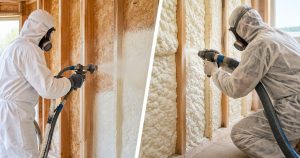
Removing old attic insulation before a spray foam upgrade means clearing the attic down to the joists and roof deck so the foam can bond directly to a clean substrate. Loose-fill fibreglass or cellulose gets pulled out with a commercial insulation removal vacuum, while batts get hand-pulled, rolled, and bagged. A typical 1,200 to 2,000 square foot attic on a Calgary-area home takes 4 to 8 hours to clear before spray foam application can start. Removal is also when hidden problems surface — vermiculite, knob-and-tube wiring, rodent nesting, or moisture staining — and any of those add time before the foam goes in.
- Knowing how to remove old attic insulation right means vacuuming loose-fill and hand-pulling batts before spray foam goes in.
- A 1,200-2,000 sq ft Calgary attic takes 4 to 8 hours to clear before spray foam starts in 2026.
- Vermiculite, knob-and-tube wiring, and rodent damage often surface during removal and change the job’s scope.
- Spray foam needs a bare roof deck — it can’t be sprayed over old fibreglass or cellulose.
- Aztec Spray Systems handles removal and spray foam installation across Calgary, Okotoks, High River, and Lethbridge.
Why this matters
Spray foam bonds to wood, not to a layer of compressed fibreglass sitting on top of it. Leaving old insulation in place traps moisture between the two layers, stops adhesion, and can void the performance the foam is supposed to deliver. If you're not sure your attic even needs a redo yet, it's worth reading how to know if your attic needs more insulation before booking removal.
Old batts also compress and settle over 15-20 years, losing much of their rated R-value long before a homeowner notices higher heating bills. Pulling everything out and starting with spray foam resets that clock and gives an accurate baseline for the new install in 2026.
How do you remove old attic insulation before a spray foam upgrade?
Removal follows the same sequence on almost every job, whether the attic holds loose-fill or batts:
- Cut power to attic lighting circuits, fans, and any wiring you'll be working near.
- Seal the access opening below with plastic sheeting and tape so dust and fibres don't drift into living space.
- Suit up — N95 or P100 respirator, safety glasses, gloves, and long sleeves. Old insulation carries decades of dust, and vermiculite specifically requires respiratory protection.
- Vacuum loose-fill insulation using a commercial-grade insulation removal vacuum, feeding material directly into heavy-duty bags staged outside the attic hatch.
- Hand-pull batts, rolling and bagging them as you go rather than tearing them loose in pieces.
- Inspect the exposed joists and roof deck for rodent damage, mold, moisture staining, or old knob-and-tube wiring before anything new goes back in.
- Do a final vacuum pass to clear residual fibres and debris, then confirm the deck is dry.
- Schedule the spray foam application once the attic is clean, dry, and any wiring or moisture issues are resolved.
Removing loose-fill insulation: the vacuum method
Loose-fill fibreglass and cellulose move fastest with a dedicated insulation vacuum rather than a shop vac — the hose and airflow are built for bulk material, not just dust. This method works section by section, starting at the attic hatch and working outward toward the eaves so you're not walking back over uncleared material.
Removing batt insulation: the hand-pull method
Batts don't vacuum well — they need to be pulled, rolled, and bagged by hand, which is slower per square foot but produces less airborne dust than loose-fill removal. On older Calgary homes, it's common to find a mix of both: original batts topped with a later loose-fill layer added during a previous upgrade. Both come out before the attic gets spray foam insulation for older Calgary homes.
Why removal time and cost vary
No two attics clear at the same rate. The factors that move the needle:
- Attic square footage and roofline — a cathedral or vaulted roof takes longer to access than a standard truss attic.
- Insulation type — loose-fill vacuums out faster per hour than dense-packed batts.
- Contamination — vermiculite requires specific handling protocols and slows the job down.
- Access point — a single small hatch adds time compared to a walk-up attic.
- Hidden scope — knob-and-tube rewiring, rodent remediation, or moisture repair found mid-removal.
- Disposal logistics — bag count and haul-away distance affect the labour hours billed.
Before booking a date, it helps to walk through how to prepare your home for spray foam insulation day so the crew isn't held up moving furniture or clearing storage boxes on arrival.
“Spray foam needs a bare roof deck to bond to — it can’t be sprayed over last decade’s fibreglass and still perform the way it’s rated to.”
Do you have to remove old insulation before spray foam?
Yes — in nearly every case, existing loose-fill or batt insulation gets removed before spray foam goes in. Spray foam needs to bond directly to the roof deck and joist cavities, not stack on top of old fibreglass or cellulose, so removal is the standard first step in 2026 attic upgrades.
Can you spray foam over existing attic insulation?
No — spraying foam over existing insulation traps moisture between the two layers and stops the foam from adhering to the wood framing underneath. That trapped moisture is also how mold and wood rot start showing up years later, which is why removal comes first on nearly every job.
How much old insulation can be left in an attic before spray foam?
None on any surface getting sprayed — spray foam requires a bare roof deck and clean joist cavities to bond properly. Insulation tucked into inaccessible soffit areas can sometimes stay in place if it isn't blocking roof ventilation, but that's a judgment call made on site, not a default.
Once the attic is cleared, contractors typically walk through how to choose the right spray foam R-value for your attic with the homeowner before the crew sprays, since Calgary, Okotoks, High River, and Lethbridge attics don't all need the same thickness.
Get your attic removal quoted
Aztec Spray Systems handles removal and spray foam install in one visit.
FAQ
How do you remove old attic insulation before spray foam?
You vacuum out loose-fill fibreglass or cellulose with a commercial insulation vacuum and hand-pull batts, bagging both as you clear the attic section by section. The attic needs to be down to bare joists and roof deck before spray foam gets applied.
How long does it take to remove old attic insulation?
A 1,200 to 2,000 square foot attic typically takes 4 to 8 hours to clear in 2026, depending on insulation type and access. Cathedral ceilings and cramped hatches push that timeline longer.
Do I need a respirator to remove attic insulation?
Yes, an N95 or P100 respirator is standard for attic insulation removal, along with safety glasses and gloves. Older insulation carries decades of dust, and any vermiculite found on site needs extra respiratory precautions.
Can you spray foam directly over old batts?
No, spray foam needs a bare roof deck and joist cavity to bond to properly. Spraying over old batts traps moisture between layers and stops adhesion.
What happens if vermiculite is found during attic removal?
Vermiculite requires specific handling protocols before removal continues, since some vermiculite batches contain asbestos. A licensed contractor should assess it before vacuuming resumes.
Does removing old insulation reveal wiring problems?
Yes, knob-and-tube wiring and damaged wiring runs are commonly found once old insulation is cleared. That discovery typically needs to be resolved before spray foam is applied.
Is attic insulation removal messy?
Yes, both loose-fill vacuuming and batt removal produce dust, which is why the attic access gets sealed with plastic sheeting below before work starts.
One last thing
The removal step, not the spray foam itself, is usually where a project's real timeline gets decided — a clean, dry attic with no wiring surprises sprays in an afternoon, while one hiding vermiculite or rodent damage can add a full extra day before the foam crew even shows up. Budget for that inspection window rather than assuming removal and spraying happen back to back on the same clock.
Related guides