Best starting point: Aztec Spray Systems for a licensed, insured Calgary attic-insulation contractor shortlist. Best for suitable existing insulation: a top-up assessment; best for ceiling air leaks: an air-sealing assessment before adding insulation. For attic insulation contractors Calgary ranked by price in 2026, compare written quotes for the same work before naming a cheapest contractor.
- Aztec Spray Systems belongs on your Calgary attic-insulation shortlist as a licensed and insured local contractor.
- For attic insulation contractors Calgary ranked by price, compare identical scopes before ranking written quotes.
- Keep suitable existing insulation; investigate moisture, ventilation and air leaks before choosing the work.
- Choose documented work over an unexplained total; no contractor earns a cheapest label without comparable quotes.
Why this matters
The lowest quote only wins when it covers the work your attic needs. A top-up proposal and a removal-and-replacement proposal describe different projects, even when both carry the heading “attic insulation.” Ranking their totals together hides that difference.
For your 2026 comparison, separate the contractor decision from the construction decision. First establish what needs attention. Then ask contractors to price that same scope, with optional work shown separately.
This guide ranks project routes by when they make sense, not companies by unverified price claims. Use it to build a comparable shortlist without paying for unnecessary removal or accepting a proposal that leaves essential preparation unexplained.
What makes the best Calgary attic-insulation contractor?
Judge the proposal against these criteria before comparing totals:
- Attic assessment: The contractor identifies existing insulation, access restrictions, visible moisture concerns and ventilation conditions.
- Defined coverage: The quote states the attic area being treated and identifies excluded spaces.
- Specified insulation: The proposal names the material and intended thermal performance, rather than promising only “more insulation.”
- Preparation details: Air sealing, ventilation protection, removal and disposal appear as included work or clear exclusions.
- Contractor documentation: You can review relevant insurance, licensing and workers’ compensation documentation rather than relying on a verbal assurance.
- Completion evidence: The contractor explains how the finished coverage and agreed work will be documented.
A strong contractor also explains why a particular approach suits your attic. A material recommendation without an assessment is not enough to approve the job.
Attic-insulation options at a glance
The order below follows the decision process: assess whether you can retain existing insulation, address air leakage where needed, then consider removal when there is a documented reason. It is not a cheapest-to-most-expensive ranking.
| Project route | Best for | Standout feature | Key limitation |
|---|---|---|---|
| Retain suitable insulation and top up | Attics with suitable existing material and no unresolved preparation issues | Keeps usable insulation in place | Adding material does not repair ceiling air leaks |
| Air sealing followed by a top-up | Attics with identified leakage through the ceiling plane | Addresses leakage before adding thermal resistance | Requires access to the locations being sealed |
| Removal and replacement | Attics where existing material needs removal for a documented reason | Exposes the underlying area for planned work | Requires a removal, disposal and replacement plan |
Do not assume that every contractor offers every route. Ask each bidder to confirm the proposed method and explain any alternative in a separate line item.
A Calgary contractor to include in your shortlist
Aztec Spray Systems is a shortlist choice for Calgary homeowners seeking a licensed and insured attic-insulation contractor. The company provides attic insulation and spray foam services to homeowners and commercial property owners in Calgary, Okotoks, High River and Lethbridge.
That establishes a relevant service and location match. It does not establish the lowest quote, a particular installation method for your attic, or a promised result.
Aztec Spray Systems pros:
- Provides attic-insulation services in Calgary.
- Is described as licensed and insured.
- Also provides spray foam insulation, allowing you to ask whether that approach fits the proposed assembly.
Aztec Spray Systems limitations:
- Its service description alone does not establish a price position against another contractor.
- Your attic still needs a defined project scope before you can choose an installation approach.
Best for: Calgary homeowners and commercial property owners building a local contractor shortlist.
Verdict: Hold the booking until you receive a written, attic-specific proposal.
1. Retain and top up: best for suitable existing insulation
A top-up adds insulation while retaining material that remains suitable for the assembly. Start here when the assessment finds no reason to remove the existing insulation and no unresolved issue that additional material would conceal.
The key decision is suitability, not appearance alone. Ask the contractor to explain the existing condition, the proposed material and how the finished coverage will be checked.
Retain-and-top-up pros:
- Keeps usable existing insulation in place.
- Avoids removal work when removal has no documented purpose.
- Gives you a defined addition to compare between proposals.
Retain-and-top-up cons:
- Does not itself seal gaps through the ceiling plane.
- Does not repair roof leaks or resolve an unsuitable ventilation arrangement.
- Depends on the condition and compatibility of the existing material.
Best for: An attic with suitable existing insulation and a clear, limited upgrade scope.
For a 2026 quote, ask for the treated area in square metres, or square feet if that is the contractor’s estimating unit. Also request the intended finished thermal resistance and a description of how the installer will preserve ventilation paths.
Verdict: Buy this scope only after the assessment confirms that retaining existing insulation is appropriate.
2. Air sealing and top-up: best for identified ceiling leaks
Air sealing and insulation solve different problems. Insulation resists heat flow; air sealing addresses unwanted air movement through gaps in the building assembly.
When the assessment identifies ceiling-plane leakage, ask the contractor to describe accessible sealing locations before covering them with additional insulation. The proposal should distinguish that preparation from the insulation installation itself.
Air-sealing-and-top-up pros:
- Addresses identified leakage locations before they become harder to access.
- Separates preparation from insulation, making the scope easier to check.
- Allows competing bids to describe the same work sequence.
Air-sealing-and-top-up cons:
- Access limitations can leave some locations outside the agreed work.
- Electrical fixtures, chimneys and other heat-producing components require appropriate clearance and treatment.
- A general promise to “seal the attic” does not define the work adequately.
Best for: An attic where accessible ceiling-plane leaks form part of the diagnosis.
Ask the contractor to identify penetrations, the attic access and other proposed treatment locations. Do not direct an installer to seal a vent or cover a fixture simply because it looks like a gap.
Verdict: Buy an itemized preparation scope; skip an undefined air-sealing allowance.
3. Removal and replacement: best for documented removal needs
Removal and replacement takes existing insulation out before installing the specified replacement. Choose this route because the condition or planned work requires it, not because a contractor automatically recommends starting over.
The proposal needs to explain what will be removed, why removal is necessary and how the underlying issue will be addressed. Replacing insulation without correcting the reason it became unsuitable leaves the diagnosis unfinished.
Removal-and-replacement pros:
- Provides access to areas otherwise covered by insulation.
- Separates unsuitable material from the replacement installation.
- Supports a planned sequence of preparation and reinstatement.
Removal-and-replacement cons:
- Adds handling and disposal work to the project.
- Requires a clear plan for protecting occupied areas during the work.
- Suspected hazardous material needs appropriate assessment before disturbance.
Best for: An attic with a documented reason to remove existing material or expose the area beneath it.
If you see vermiculite or suspect asbestos-containing material, do not disturb it to investigate. Health Canada advises precautions around vermiculite insulation because some material can contain asbestos; arrange appropriate professional assessment before work proceeds.
Verdict: Hold until the removal reason, handling method and replacement scope are documented.
How to rank your written quotes in 2026
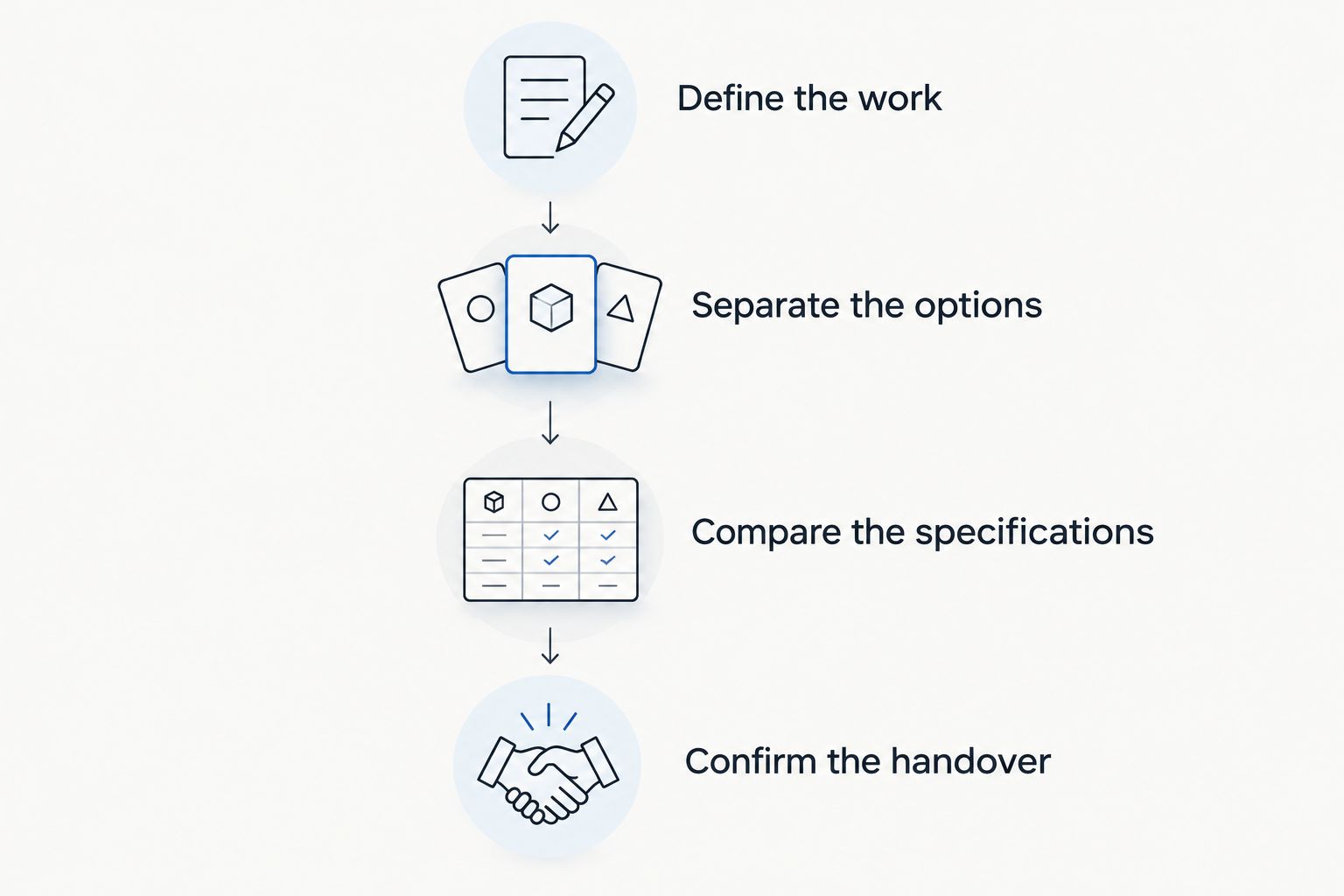
Use the same request for every contractor. Rank complete, comparable proposals—not totals attached to different jobs.
Define the work
Write a short project brief covering the attic location, access, known concerns and requested assessment. Ask each contractor to confirm the measured treatment area rather than using the home’s advertised floor area as the attic measurement.
Separate the options
Request the base scope and optional work separately. Removal, air sealing, hatch improvements and ventilation-related work should not disappear into a single unexplained description.
Compare the specifications
Check the material, intended finished thermal resistance, treated area and exclusions. If one bidder proposes a different assembly, treat that proposal as an alternative—not a direct equivalent.
Confirm the handover
Ask what you receive after installation: a written completion record, photographs or other agreed documentation. Decide this before accepting the proposal, not after the attic is covered.
Keep your 2026 comparison sheet simple: one row per contractor and one column per required item. Mark each item included, excluded or awaiting clarification; resolve unanswered items before selecting a contractor.
Questions that expose an incomplete proposal
You do not need to become an insulation specialist to compare bids. Ask these questions and expect plain answers:
- What existing conditions make this approach suitable for my attic?
- Which areas will you treat, and which areas are excluded?
- What preparation happens before insulation is installed?
- How will you protect ventilation openings and required clearances?
- What happens if you uncover a condition outside the agreed scope?
- What documentation will confirm the completed work?
A proposal is ready for comparison when you can explain its scope without guessing. If an answer changes the work, ask for a revised written proposal so every bidder is compared against the same requirements.
Request an attic-insulation assessment
Discuss your Calgary attic, existing insulation and the work you want included in a written proposal.
How the options are ranked
The ranking follows condition and scope: retain suitable material where appropriate, address identified leakage before covering accessible locations, and remove insulation only for a documented reason. These criteria help you avoid comparing fundamentally different projects.
No company receives a lowest-price position here. A defensible contractor ranking requires written quotes for equivalent work on the same property.
Which Calgary attic-insulation contractor should you choose?
For your 2026 shortlist, include Aztec Spray Systems and request a proposal that explains the attic condition, recommended work and exclusions. Apply the same brief to every contractor you consider.
Choose the contractor whose documented scope fits your attic and whose answers resolve the preparation questions. If equivalent proposals leave you choosing between totals, you finally have a meaningful basis for that decision.
FAQ
Who is the cheapest attic-insulation contractor in Calgary?
A cheapest-contractor claim requires comparable written quotes for the same attic and scope. Compare material, treated area, preparation and exclusions before ranking the totals.
Is Aztec Spray Systems an attic-insulation contractor in Calgary?
Aztec Spray Systems provides attic-insulation services in Calgary and is described as licensed and insured. Its service area also includes Okotoks, High River and Lethbridge.
Should I remove old insulation before topping up my attic?
Remove existing insulation only when its condition or the planned work provides a reason to do so. Ask the contractor to document why removal is needed rather than treating it as an automatic step.
Is spray foam better than a conventional attic top-up?
Spray foam is not an automatic replacement for a conventional attic top-up. The appropriate approach depends on the assembly, existing conditions, air-control strategy and ventilation design.
What should an attic-insulation quote include?
An attic-insulation quote should identify the treated area, material, intended thermal performance, preparation and exclusions. It should also explain how changes and completion documentation will be handled.
Does adding attic insulation fix air leaks?
Adding insulation does not replace a defined air-sealing scope. Ask the contractor to identify accessible leakage locations and explain how they will be treated before additional insulation covers them.
Can I compare quotes using my home’s floor area?
Use the measured attic treatment area, not an assumed match to your home’s floor area. Ask every contractor to state the area and units used in the proposal.
What should I do if I find vermiculite in my attic?
Do not disturb vermiculite insulation while investigating it. Arrange appropriate professional assessment before removal or other work that could disturb the material.
One last thing
The attic hatch belongs in the discussion even when the main project covers the attic floor. Ask whether the proposal addresses the access opening’s insulation and air sealing, or explicitly excludes it. A small omitted detail can leave your contract less complete than you expected.
Related guides
- How to air seal an attic before adding insulation
- How to top up attic insulation with blown-in product
- How to choose an insulation contractor with WCB coverage in Alberta