Attic insulation for rental property landlords in Calgary means bringing every unit up to a minimum R-50 attic value while keeping the retrofit schedule compatible with leases, tenant turnover, and cash flow rather than a single owner-occupied timeline. A landlord's math is different from a homeowner's: the payback has to show up in lower vacancy, fewer maintenance calls, and a defensible capital improvement on the books, not just a warmer living room.
- Calgary’s building code sets a minimum attic R-50 for most rental buildings — anything less is a red flag at inspection or sale.
- Attic insulation for rental property landlords pays back faster on multi-unit buildings because one attic access point often serves several suites.
- Blown-in cellulose or fibreglass tops up an existing attic without disturbing tenants; spray foam solves air leakage and ice damming at the same time.
- Aztec Spray Systems services Calgary, Okotoks, High River, and Lethbridge rental portfolios with licensed, insured crews.
- Time the job around vacancy or lease renewal, not around the calendar — that single decision changes the disruption cost to near zero.
Why attic insulation matters for rental property landlords
A rental attic is a liability the moment it falls below code. If you're refinancing, selling, or adding units, an under-insulated attic shows up in the inspection report and becomes a negotiating point against you. Tenants also notice: a unit with a cold ceiling in January generates more maintenance tickets, more thermostat complaints, and slower lease renewals than one that holds heat evenly.
Property management companies across Calgary increasingly treat attic insulation as a standard line item during turnover, not a reactive repair. That shift matters because it changes when the work gets scheduled — during the gap between tenants, when nobody's stuff is in the way and nobody's schedule gets disrupted.
The other reason this matters in 2026 specifically: utility costs and tenant expectations around comfort keep climbing, and a poorly insulated attic is one of the most visible ways a rental building loses that argument. Landlords who fix it once, correctly, stop fielding the same complaint from every new tenant who moves through the unit.
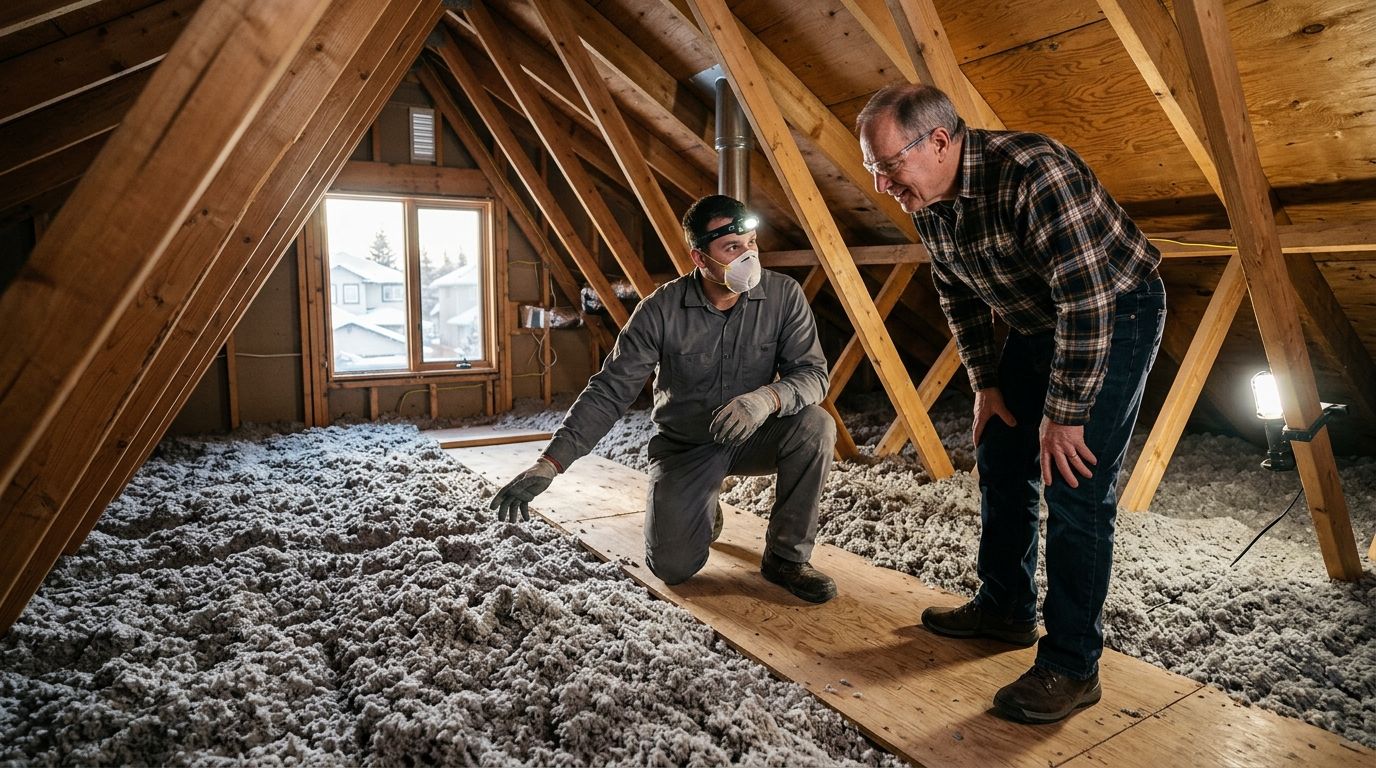
Audit your current attic insulation depth and R-value
Before anything else, find out what you're actually working with. Older Calgary rentals — especially anything built before the 1990s — often carry R-20 to R-28 of loose-fill fibreglass or cellulose that's settled and compacted over decades.
- Measure insulation depth at three or four spots per attic, not just near the hatch
- Check for compression around the perimeter where trusses meet the top plate
- Look for daylight through soffit vents when you're up there — that's a sign of gaps, not ventilation working correctly
- Note any dark, matted patches — that's usually moisture staining, not just dust
- Photograph everything before you touch it, for your own records and for any tax documentation later
Fix air leaks before you add insulation
Adding R-value on top of an attic full of air leaks is throwing good insulation after bad. Warm, moist air from the units below rises into the attic through every unsealed penetration and undermines whatever insulation sits above it.
- Seal around plumbing stacks and electrical penetrations with fire-rated caulk or foam
- Check bathroom and kitchen exhaust fans actually vent outside, not just into the attic space
- Look for gaps around the attic hatch itself — a common, overlooked leak point
- Inspect knob-and-tube wiring runs if the building is old enough to have them, since insulation code around older wiring has specific requirements
- Confirm soffit-to-ridge airflow isn't blocked by insulation baffles collapsing or missing
Choose the right insulation type for a rental building
This is where the manual top-up approach and a professional retrofit start to diverge. A straightforward top-up with blown-in fibreglass or cellulose is the lower-cost, lower-disruption option for a building that just needs more depth and doesn't have air-sealing problems.
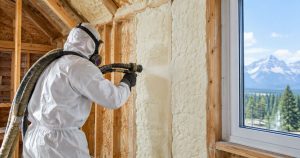
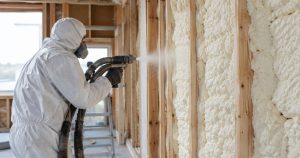
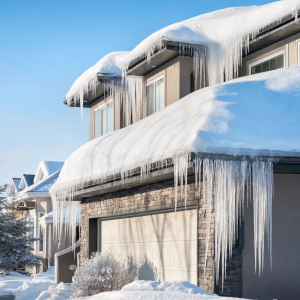
Where the attic has real air leakage, ice damming history, or knob-and-tube wiring complicating a blown-in job, spray foam insulation becomes the faster path to a code-compliant, air-sealed attic in one visit instead of two separate trades. Aztec Spray Systems runs both approaches depending on what the attic audit shows, rather than defaulting to one product for every building.
- Loose-fill fibreglass: fastest to install, lowest disruption, doesn't air-seal on its own
- Blown-in cellulose: denser, better sound dampening between floors in multi-unit buildings
- Open-cell spray foam: air-seals and insulates in one pass, better for irregular attic framing
- Closed-cell spray foam: highest R-value per inch, adds structural rigidity, best where roof deck condensation has been a recurring issue
- Hybrid approach: spray foam at penetrations and the perimeter, blown-in for the open field — often the most cost-efficient combination on a large attic
Time the retrofit around tenant turnover, not just budget
The single biggest scheduling mistake landlords make is waiting for a slow month instead of waiting for vacancy. Attic work from inside the unit — through a ceiling hatch — is disruptive when tenants are living below; it's a non-issue when the unit is empty.
- Build attic insulation into your standard turnover checklist alongside paint and flooring
- Batch multiple units in the same building together when several turn over close in time
- Flag units with upcoming lease renewals as priority candidates if they've had comfort complaints
- Avoid scheduling loud or dusty attic work during a tenant's final week in a unit — it complicates move-out inspections
Document the upgrade for tax and disclosure purposes
Attic insulation on a rental property is typically treated as a capital improvement rather than a repair, which affects how it's claimed. That distinction matters enough that it's worth confirming with your accountant before filing, since the treatment can shift the timing of the deduction.
- Keep the itemized invoice and scope of work separate from any general maintenance invoices
- Photograph before-and-after attic conditions with dated timestamps
- Retain any certificate of insurance or workmanship documentation from the contractor
- Log the square footage and R-value achieved — useful for future disclosure to buyers or new tenants
- Track the cost against the specific unit or building for portfolio-level ROI comparisons later
Get quotes from insured contractors, not handyman crews
A landlord managing more than one property has more exposure than a homeowner if a job goes wrong — more units, more tenants, more liability if something is done to code minimums instead of properly. Confirm WCB coverage and liability insurance before signing anything, especially for multi-unit buildings where a mistake in one attic can affect several suites.
- Ask for proof of WCB coverage in writing, not a verbal assurance
- Confirm the crew is aware of Alberta Building Code minimums for your specific building type
- Get the R-value target in writing on the quote, not just "top up the attic"
- Ask how they handle knob-and-tube wiring or older electrical if your buildings have it
- Request references from other Calgary-area rental or multi-family jobs specifically
Get an attic insulation quote for your rental
Licensed crews serving Calgary, Okotoks, High River, and Lethbridge rental buildings.
Attic insulation options for rental landlords compared
| Option | Best for | Key limitation |
|---|---|---|
| Loose-fill fibreglass top-up | Buildings with no air-leak issues, fast turnaround | Doesn't air-seal; won't fix ice damming on its own |
| Blown-in cellulose | Multi-unit buildings needing sound dampening between floors | Settles over time, needs re-checking every several years |
| Open-cell spray foam | Irregular framing, older attics with air leakage | Higher upfront labour time than blown-in options |
| Closed-cell spray foam | Roof deck condensation history, structural add-value | More material cost per R-value than open-cell |
| Do nothing | No one — this option exists only as a comparison point | Fails code minimums, weakens sale and refinance position |
Verdict: for a Calgary rental attic with no air-sealing problems, a blown-in top-up gets you to code fastest with the least disruption; for anything with a history of ice damming, drafts, or knob-and-tube wiring, spray foam from Aztec Spray Systems solves the insulation and the air leak in the same visit.
Common mistakes Calgary rental landlords make
- Insulating only vacant units and skipping occupied ones indefinitely — the occupied units keep generating complaints while the backlog grows
- Treating a cold ceiling as the tenant's problem — it's a building envelope issue, and framing it otherwise damages the lease relationship
- Skipping the pre-work air seal step — adding insulation over unsealed penetrations wastes the investment and doesn't stop ice damming
- Not checking code compliance before a refinance or sale — an attic under R-50 can stall a deal or trigger a price reduction during inspection
- Using uninsured labour to save money on a multi-unit job — one claim from a fall or fire risk in an uninsulated, unsealed attic erases years of savings
“A cold attic doesn’t just waste heat on a rental — it tells the tenant nobody is watching the building.”
FAQ
What’s the minimum attic insulation R-value for a Calgary rental property in 2026?
Most Calgary rental buildings need to meet R-50 in the attic under the Alberta Building Code. Older buildings retrofitted before this standard was adopted are often well below it and worth auditing.
Is spray foam or blown-in insulation better for a rental attic?
Blown-in insulation is faster and cheaper for a simple depth top-up with no air-leak problems. Spray foam is the better call when the attic has drafts, ice damming history, or irregular framing that blown-in can’t seal.
Can I claim attic insulation as a rental expense in Alberta?
Attic insulation on a rental property is typically treated as a capital improvement rather than an immediate repair expense. Confirm the specific tax treatment with your accountant before filing.
How disruptive is attic insulation work for tenants?
Work done through an interior hatch while a tenant is living in the unit involves some noise and access disruption for a day. Scheduling the job during vacancy or turnover removes that disruption entirely.
Does attic insulation affect a rental property’s resale value?
An attic below code minimum is a common inspection flag that can slow a sale or become a negotiating point. Bringing it up to R-50 removes that objection before a buyer’s inspector finds it.
Should I insulate every unit in a multi-unit building at once?
Batching units together when several turn over close in time reduces per-visit costs and mobilization time for the crew. Waiting for full vacancy across a whole building usually isn’t necessary if the attic access allows section-by-section work.
What happens if a rental attic isn’t air-sealed before insulating?
Warm, moist air keeps rising into the attic and can cause ice damming and moisture staining regardless of how much insulation sits on top. Sealing penetrations first is what makes the added R-value actually perform.
How do I verify a contractor is qualified for a multi-unit attic job?
Ask for proof of WCB coverage and liability insurance in writing, and request references from other Calgary-area rental or multi-family projects. A written R-value target on the quote is a second good check.
One last thing
Most landlords budget for attic insulation as a one-time expense, but the bigger win in 2026 is catching it during the same visit as an air-seal check for older wiring or ice-damming history — because a contractor already in the attic for insulation can flag those issues before they become a tenant complaint or an inspection failure months later. Ask any quote to include that walkthrough as part of the job, not as a separate call-out.
Related guides
- Concrete lifting contractor for property managers
- Blown-in attic insulation cost in Calgary
- Spray foam insulation cost in Calgary