Insulating a chicken coop for Alberta winters means sealing the walls and roof with a material rated at least R-5 per inch, then keeping controlled ventilation running so moisture from droppings and respiration doesn't build up and freeze. Skip the ventilation step and you trade frostbite for ammonia fumes and condensation-soaked birds, which is worse.
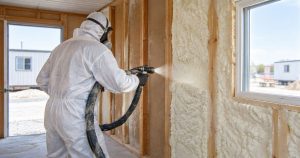
- Closed-cell spray foam insulation rates R-6 per inch and seals air gaps in one pass, the fastest way to insulate a chicken coop for Alberta winters.
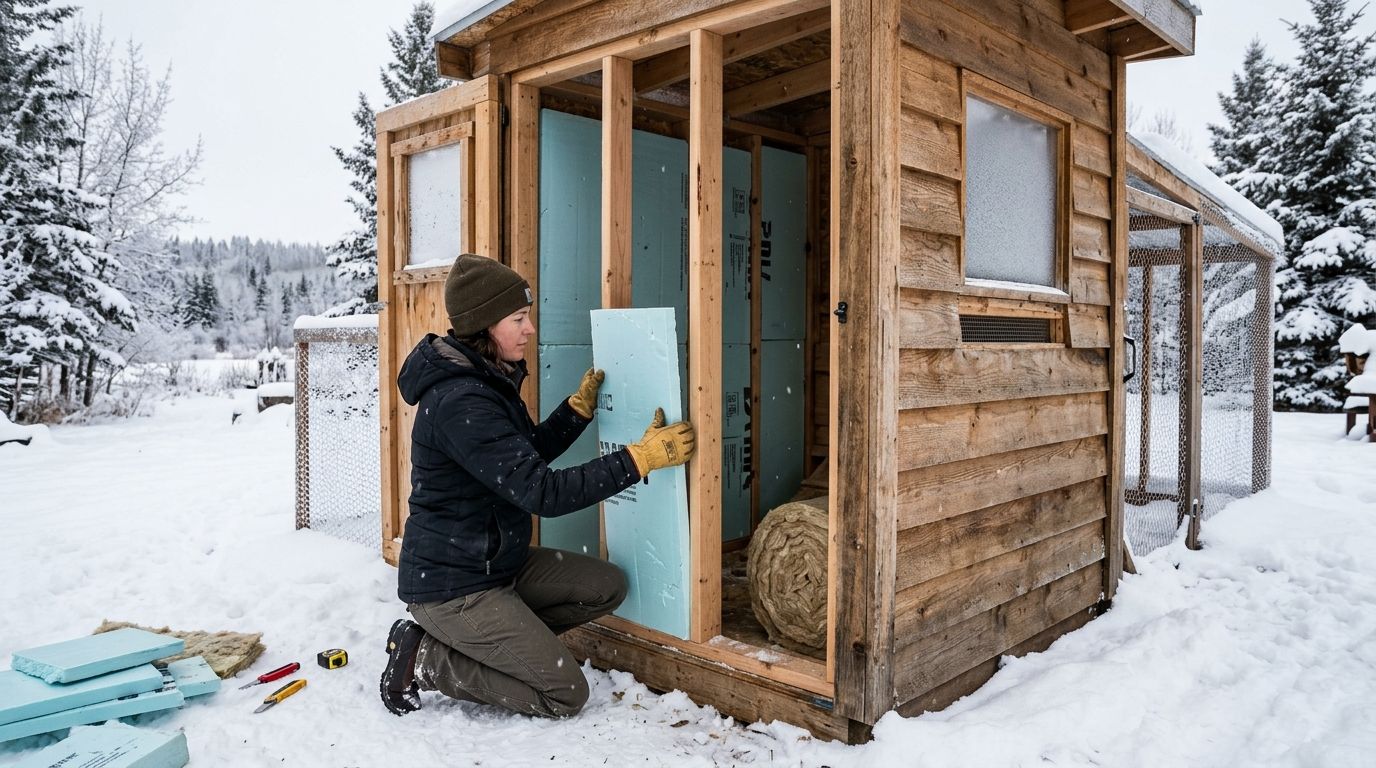
- Rigid foam board (R-5 per inch) works as a DIY option but needs a vapor barrier and moisture-resistant covering over it.
- Ventilation matters more than heat: 1 square foot of vent opening per 4 birds keeps ammonia and condensation out even at -30°C.
- Never leave foam insulation exposed inside a coop — birds peck it and ingest particles, so it needs a hardware-cloth or plywood liner.
Why this matters
Calgary and southern Alberta routinely see January lows near -30°C, and a stretch of -40°C wind chill isn't rare. Chickens tolerate cold better than most owners assume — a healthy adult bird with dry feathers handles temperatures well below freezing — but an uninsulated wood coop loses heat fast enough that water freezes solid within hours and moisture from droppings condenses on cold walls, soaking feathers and setting up frostbite on combs and toes.
The fix isn't cranking up a heat lamp. It's building an envelope that holds the birds' own body heat without trapping moisture, the same principle Aztec Spray Systems applies on pole barns and shops across Calgary, Okotoks, High River, and Lethbridge. A flock of six to eight hens generates a surprising amount of warmth in a well-sealed 4×6 coop — the goal is keeping that heat in, not adding more.
How do you insulate a chicken coop for Alberta winters?
The process is the same whether the coop is a converted shed or built from scratch, and it follows four steps in order.
- Seal air leaks first. Caulk gaps around the frame, nesting boxes, and any seams before adding insulation — foam or batts over a leaky shell wastes material.
- Insulate walls and roof to at least R-5 per inch of material. Rigid foam board or closed-cell spray foam both clear that bar; fiberglass batts don't hold up in a damp coop environment.
- Cover exposed insulation with plywood, OSB, or hardware cloth. Chickens peck at foam and drywall, so nothing insulating should be exposed to the birds directly.
- Keep gable or ridge vents open year-round. Ventilation above the roost line lets moist air escape without creating a draft at bird height.
| Material | R-value per inch | Moisture resistance | Best for |
|---|---|---|---|
| Closed-cell spray foam | R-6 | High — also air-seals gaps | Permanent coops, new builds |
| Rigid foam board (XPS) | R-5 | Moderate — needs a vapor barrier | DIY retrofits on existing coops |
| Fiberglass batts | R-3.2 | Low — absorbs moisture, mats down | Skip for coop use |
| Straw bale walls | R-1.5 per inch (varies) | Low — breaks down, harbors mites | Temporary or backup insulation only |
Closed-cell spray foam is the verdict for anyone building a permanent coop or converting an outbuilding — it insulates and air-seals in the same step, which matters more in a small structure than in a house where the wall cavity does some of that work anyway.
Closed-cell spray foam: R-6 per inch
Spray foam expands into every seam and corner, which eliminates the small gaps around nesting boxes and pop-doors that let cold air pool at floor level. It costs more upfront than foam board but a 2-inch application clears R-12, which is more than enough for a small unheated coop through an Alberta winter. It has to be covered with plywood or OSB before the birds go in — never leave cured foam exposed where chickens can peck it.
Rigid foam board: R-5 per inch
XPS foam board cut to fit between studs is the practical DIY route for an existing coop. It needs taped seams and a vapor barrier on the warm side to actually perform at its rated value; skipping the vapor barrier is the most common reason a foam-board retrofit underperforms. Budget two layers (4 inches total) for anything approaching R-20 in a coop that sees regular -30°C nights.
Fiberglass batts: R-3.2 per inch (skip it)
Batts are cheap and easy to find, but they compress, sag, and absorb ammonia-laden moisture in a coop environment far faster than in a house wall. Skip fiberglass batts for coop insulation — the R-value on paper doesn't hold up once humidity gets into the fibers.
Why insulation needs vary coop to coop
- Flock size relative to coop volume — six hens in a 4×4 coop generate more heat per cubic foot than the same flock in an 8×8 structure.
- Wind exposure — a coop on an open acreage near High River or Okotoks needs more sealing at ground level than one tucked against a windbreak.
- Existing wall material — a plywood shed retrofit needs foam board added between studs; a metal shed needs a different fastening approach for rigid insulation.
- Roof pitch and attic space — flat-roofed coops lose more heat through the ceiling and need the thickest insulation layer overhead, not on the walls.
- Bedding depth — deep litter method (6+ inches of composting bedding) adds a measurable heat source from below and reduces how much wall insulation is strictly necessary.
- Predator-proofing requirements — any vent opening needs 1/4-inch hardware cloth, which slightly changes how much airflow actually reaches the interior compared to open mesh.
“Ventilation above the roost line matters more than R-value on the walls — a warm, damp coop causes more frostbite than a cold, dry one.”
Do chicken coops need to be heated in Alberta winters?
No, a properly insulated and ventilated coop does not need supplemental heat for a standard backyard flock in Alberta, even through stretches of -30°C. Heat lamps introduce fire risk and create a false sense of security — birds acclimate to cold gradually through fall, and a heated coop that loses power suddenly exposes unacclimated chickens to a shock they're not prepared for.
How cold is too cold for chickens without insulation?
An uninsulated coop becomes a problem below about -20°C, particularly for breeds with large combs prone to frostbite. The issue at that point usually isn't the ambient temperature — it's trapped moisture from droppings and breath condensing on cold interior walls and refreezing on the birds themselves overnight.
Can you use spray foam insulation in a chicken coop?
Yes, closed-cell spray foam works well in a chicken coop as long as it's fully covered with plywood, OSB, or hardware cloth so birds can't peck at the cured foam. The same closed-cell product used on horse barns and equestrian facilities applies to small outbuildings, since the moisture and air-sealing challenges are similar in scale.
How much ventilation does an insulated coop need in winter?
Roughly 1 square foot of vent opening per 4 birds is a workable baseline, positioned high on the wall or at the ridge so it pulls moist air out without creating a draft at roost height. Cutting ventilation to "keep heat in" is the single most common mistake that turns an insulated coop into a frostbite risk instead of a solution.
Aztec Spray Systems installs closed-cell spray foam on farm and acreage structures throughout Calgary, Okotoks, High River, and Lethbridge, and the same sealing approach that stops ice-damming on a house roof is what keeps a coop's roof cavity from sweating in a 2026 Alberta winter. For anyone weighing coop insulation against a larger outbuilding project on the same property, the material choice and vapor-barrier logic are identical.
Insulating more than a coop this year?
Get a spray foam quote for barns, shops, or acreage buildings in Alberta.
FAQ
What is the best insulation for a chicken coop in Alberta?
Closed-cell spray foam at R-6 per inch is the best option because it insulates and air-seals gaps in one application. Rigid foam board at R-5 per inch is a solid DIY alternative if it’s covered with a proper vapor barrier.
Do I need a vapor barrier in a chicken coop?
Yes, any foam board insulation needs a vapor barrier on the warm interior side to stop moisture from condensing inside the wall cavity. Closed-cell spray foam acts as its own vapor barrier, which is one reason it performs better long-term.
How thick should chicken coop insulation be for -30°C winters?
Two inches of closed-cell spray foam (R-12) or four inches of rigid foam board (R-20) handles a typical Calgary or Okotoks winter for a small backyard coop. Larger coops or ones with heavy wind exposure benefit from the higher end of that range.
Can chickens survive Alberta winters without any coop insulation?
Adult chickens with dry feathers survive short cold snaps without insulation, but sustained -30°C stretches common in Alberta increase frostbite risk on combs and toes. Insulation combined with proper ventilation is the safer, lower-maintenance approach for a full winter season.
Does deep litter method replace the need for insulation?
No, deep litter (6 inches or more of composting bedding) adds some heat from decomposition but does not replace wall and roof insulation. It works best as a supplement to an insulated coop, not a substitute.
Is spray foam safe for chickens to be around?
Cured closed-cell spray foam is safe once fully covered with plywood, OSB, or hardware cloth so birds cannot peck at or ingest it directly. Exposed foam should never be left accessible inside an active coop.
How do I stop moisture buildup in an insulated coop?
Keep roughly 1 square foot of ventilation per 4 birds positioned high on the wall or at the roofline to let humid air escape year-round. Reducing ventilation to conserve heat is the most common cause of condensation and frostbite in insulated coops.
One last thing
The detail most first-time coop builders miss isn't the insulation material — it's that an airtight coop with no ventilation is more dangerous in a 2026 Alberta winter than a drafty one, because trapped ammonia and condensation cause more frostbite and respiratory illness than cold air ever does. Insulate to R-5 or better, then make sure that vent stays open all season.
Related guides