.pseo-content { font-size: 17px; line-height: 1.7; color: inherit; }
.pseo-content h2 { font-size: 1.6em; margin-top: 1.8em; margin-bottom: 0.6em; line-height: 1.3; color: inherit; }
.pseo-content h3 { font-size: 1.25em; margin-top: 1.5em; margin-bottom: 0.4em; line-height: 1.35; color: inherit; }
.pseo-content h4 { color: inherit; }
.pseo-content p { margin: 0 0 1em; }
.pseo-content ul, .pseo-content ol { margin: 0 0 1em 1.4em; padding: 0; }
.pseo-content li { margin: 0.3em 0; }
.pseo-content strong { font-weight: 600; }
.pseo-content blockquote { margin: 1.2em 0; padding: 0.6em 1em; border-left: 3px solid color-mix(in srgb, currentColor 30%, transparent); background: color-mix(in srgb, currentColor 4%, transparent); color: inherit; }
.pseo-content a { text-decoration: underline; }
.pseo-content .pseo-table-wrap { overflow-x: auto; margin: 1.4em 0; -webkit-overflow-scrolling: touch; }
.pseo-content table { width: 100% !important; border-collapse: collapse !important; table-layout: auto !important; font-size: 0.96em; }
.pseo-content table th,
.pseo-content table td {
padding: 10px 12px !important;
border-bottom: 1px solid color-mix(in srgb, currentColor 14%, transparent) !important;
border-left: none !important;
border-right: none !important;
vertical-align: top !important;
text-align: left !important;
word-break: break-word !important;
overflow-wrap: anywhere !important;
white-space: normal !important;
}
.pseo-content table th {
background: color-mix(in srgb, currentColor 6%, transparent) !important;
color: inherit !important;
font-weight: 600 !important;
border-top: 1px solid color-mix(in srgb, currentColor 14%, transparent) !important;
}
.pseo-content table tr:last-child td { border-bottom: 1px solid color-mix(in srgb, currentColor 14%, transparent) !important; }
Acreages and rural properties in Alberta lose heat differently than an infill house in Calgary — bigger envelopes, exposed rim joists, detached shops, and wind that doesn't quit through an Okotoks or High River winter. This guide breaks down what actually matters when you're pricing spray foam insulation for a rural property in 2026, not a suburban bungalow.
- Closed-cell spray foam wins for exposed rim joists and detached shops on Alberta acreages in 2026 — buy it over open-cell.
- Aztec Spray Systems covers acreage work around Calgary, Okotoks, High River, and Lethbridge — confirm your travel zone before quoting.
- Skip open-cell-only builds in unheated outbuildings; it can’t hold up against -30°C vapor drive.
- Alberta building code targets R-40 in attics — many older farmhouses sit closer to R-20 today.
Why this matters
A farmhouse built in the 1980s or a pole barn converted into a heated shop wasn't built to the insulation standards Alberta uses in 2026. Add a longer perimeter, a crawlspace or pier foundation, and a propane or wood-heat bill that climbs every January, and the math on spray foam changes fast compared to an in-town retrofit.
Aztec Spray Systems works acreages and rural properties across Calgary, Okotoks, High River, and Lethbridge, and the jobs look different every time — a well house here, a shop with in-floor heat there, a farmhouse rim joist that's never been touched since it was poured. Start with Aztec Spray Systems if you're not sure which part of the property to tackle first; a walk-through before quoting beats guessing off square footage alone.
Who this is for
This guide is for acreage and rural property owners 10 to 40 minutes outside Calgary, Okotoks, High River, or Lethbridge who own a detached shop, barn, older farmhouse, or new build on well and septic. If you're comparing bids for attic top-ups, rim joist sealing, or full envelope retrofits on a property with more exposed wall than a standard suburban lot, keep reading.
What to look for in spray foam insulation for acreages
R-value coverage for a bigger, leakier envelope
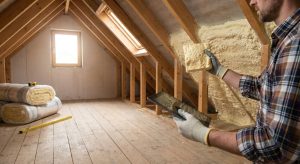
Rural builds often have more linear feet of exterior wall and roofline per square foot of living space than a townhouse or infill. Alberta's building code target is R-40 in attics and R-22 in above-grade walls — a lot of acreage homes built before 2010 sit well under that, which means your heat loss is disproportionate to the home's size.
Closed-cell vs open-cell for exterior exposure
Closed-cell spray foam runs about R-6.5 per inch and adds structural rigidity plus a vapor barrier in one pass — the right call for rim joists, crawlspaces, and any wall facing prevailing wind. Open-cell foam is cheaper per board foot but doesn't stop vapor drive the same way, which matters more on a property with no neighboring structures blocking wind.
Rim joist and crawlspace sealing
A huge share of acreage heat loss happens at the rim joist and crawlspace band, not the attic. Older pier-and-beam farmhouses especially need this sealed with closed-cell foam before anything else gets touched, because it's usually the single leakiest zone in the whole envelope.
Detached building coverage
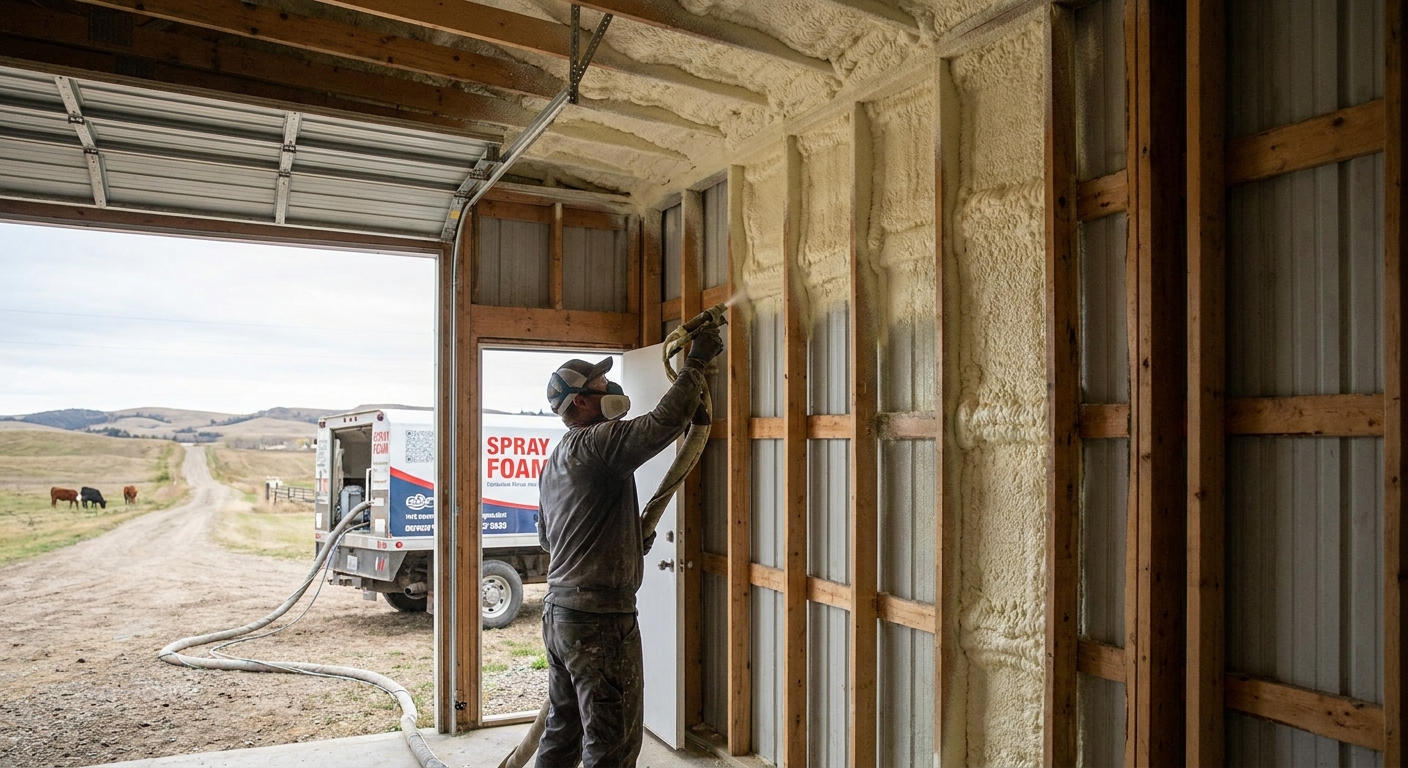
Shops, barns, and well houses need their own insulation plan — a heated shop with in-floor heat loses money every day it sits under-insulated, and a well house that isn't foamed can freeze a pump in a hard cold snap. Price these separately from the main house; contractors quoting one number for "the property" are often missing a building.
Contractor licensing and travel radius
Rural jobs mean travel time, and not every insulation contractor books acreage work outside city limits. Confirm the contractor is licensed and insured for commercial and residential work in your specific rural municipality before signing — Aztec Spray Systems is licensed and insured across its Calgary, Okotoks, High River, and Lethbridge service area.
Foundation and slab stability before you insulate
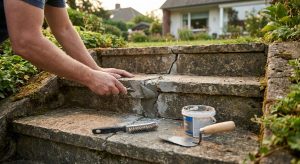
Freeze-thaw cycling is harder on rural foundations and detached slabs than on serviced-lot homes, especially with chinook swings through southern Alberta. If a slab or foundation has settled, get it checked and leveled before spending on insulation that will just get disturbed by future movement.
Where to prioritize on an acreage
The rim joist and crawlspace fix — the workhorse pick. Closed-cell foam at R-6.5 per inch applied to an exposed rim joist band stops the single biggest heat-loss zone on most pre-2010 farmhouses. This is almost always the first job to do, not the attic. Buy.
The Okotoks-area acreage retrofit — the regional fit. Properties just outside Okotoks tend to combine older farmhouse construction with newer detached shops, and spray foam insulation for Okotoks homeowners covers the specifics of that mix, including attic top-ups alongside wall retrofits. Buy if your acreage sits in that corridor.
The wind-belt pick — High River rural shops and outbuildings. High River-area acreages catch more sustained wind than city lots, and spray foam insulation for High River homeowners walks through why closed-cell is the default there rather than the exception. Consider this route for any detached shop with in-floor heat.
The Lethbridge chinook cycle pick. Southern Alberta's freeze-thaw swings are harsher in the Lethbridge corridor than further north, and that cycling stresses both insulation seams and foundation slabs on rural properties. Buy closed-cell here specifically for its air-seal and moisture resistance under repeated temperature swings.
Budget planning — check real numbers before you commit. Rural jobs cost more per square foot than in-town retrofits once travel and detached buildings are factored in, and pricing benchmarks built for Calgary proper don't always transfer cleanly to acreage work.
What to avoid
- Open-cell-only quotes for exposed rim joists — it looks cheaper on paper but won't hold vapor drive at -30\u00b0C, and you'll be redoing it within a decade.
- One flat price for "the property" — a shop, well house, and farmhouse are three different insulation jobs; a single number usually means one of them got skipped.
- Insulating over an unstable slab or foundation — chinook-driven freeze-thaw settling should get addressed first, or the new insulation just gets disturbed later.
Get an acreage insulation quote
Site visits available across Calgary, Okotoks, High River, and Lethbridge.
Verdict comparison
| Option | R-value | Best for | Verdict |
|---|---|---|---|
| Closed-cell spray foam | R-6.5/inch | Rim joists, crawlspaces, exposed walls | Buy |
| Open-cell spray foam | R-3.6/inch | Interior partition walls only | Consider |
| Batt/fiberglass top-up | R-3.2/inch | Budget attic top-ups only | Skip for exposed zones |
| Concrete leveling | n/a | Settled foundations before insulating | Consider first if slab has shifted |
FAQ
What’s the best insulation for an Alberta acreage in 2026?
Closed-cell spray foam is the best fit for rim joists, crawlspaces, and exposed walls on Alberta acreages in 2026, since it hits R-6.5 per inch and doubles as an air and vapor barrier. Open-cell foam works fine for interior partition walls but shouldn’t be the only insulation on wind-exposed exteriors.
Is closed-cell spray foam worth it for a detached shop or barn?
Yes, especially for shops with in-floor heat or well houses that need freeze protection. The added air-seal and structural rigidity pay off faster on detached buildings that don’t share heat with the main house.
How much does spray foam insulation cost in Calgary compared to acreages?
Costs vary by square footage and access, and rural jobs typically run higher than comparable in-town work due to travel and multiple structures on one property. Check current Calgary-area pricing and ask for a separate line item for any detached building.
Do acreages need a higher R-value than in-town homes?
Not a higher target R-value, but acreages often have more exposed wall and roofline per square foot, so hitting Alberta’s R-40 attic and R-22 wall targets matters more in practice. Older rural farmhouses frequently sit well under those numbers today.
Can spray foam be applied to an older farmhouse crawlspace?
Yes, closed-cell foam is a common fix for pier-and-beam crawlspaces on older rural homes, since it seals the rim joist band that’s usually the biggest single source of heat loss. This is often the first job to prioritize before touching the attic.
Is spray foam better than fiberglass for wind-exposed walls?
Closed-cell spray foam outperforms fiberglass batt on wind-exposed acreage walls because it air-seals as it insulates, while batt insulation does nothing to stop air infiltration through gaps. On a property with no windbreak, that gap matters more than in a sheltered subdivision lot.
How long does spray foam insulation last on a rural property?
Closed-cell spray foam is a long-term, one-time application that doesn’t settle or compress the way batt insulation does over decades. It holds its R-value through repeated freeze-thaw cycling better than fiberglass alternatives.
Does Aztec Spray Systems service acreages outside Calgary, Okotoks, High River, and Lethbridge?
Aztec Spray Systems is licensed and insured for residential and commercial work across Calgary, Okotoks, High River, and Lethbridge, Alberta, including acreage and rural properties within that service radius. Confirm your specific location when requesting a quote.
One last thing
The part most acreage owners skip: checking the slab or foundation before insulating anything. Southern Alberta's chinook cycles push freeze-thaw movement harder on rural foundations and detached slabs than on serviced city lots, and a settled well house floor or shop slab will keep shifting new insulation loose if it's not leveled first. Get the concrete checked before you spend on foam — not after.
Related guides
{“@context”:”https://schema.org”,”@type”:”FAQPage”,”mainEntity”:[{“@type”:”Question”,”name”:”What’s the best insulation for an Alberta acreage in 2026?”,”acceptedAnswer”:{“@type”:”Answer”,”text”:”Closed-cell spray foam is the best fit for rim joists, crawlspaces, and exposed walls on Alberta acreages in 2026, since it hits R-6.5 per inch and doubles as an air and vapor barrier. Open-cell foam works fine for interior partition walls but shouldn’t be the only insulation on wind-exposed exteriors.”}},{“@type”:”Question”,”name”:”Is closed-cell spray foam worth it for a detached shop or barn?”,”acceptedAnswer”:{“@type”:”Answer”,”text”:”Yes, especially for shops with in-floor heat or well houses that need freeze protection. The added air-seal and structural rigidity pay off faster on detached buildings that don’t share heat with the main house.”}},{“@type”:”Question”,”name”:”How much does spray foam insulation cost in Calgary compared to acreages?”,”acceptedAnswer”:{“@type”:”Answer”,”text”:”Costs vary by square footage and access, and rural jobs typically run higher than comparable in-town work due to travel and multiple structures on one property. Check current Calgary-area pricing and ask for a separate line item for any detached building.”}},{“@type”:”Question”,”name”:”Do acreages need a higher R-value than in-town homes?”,”acceptedAnswer”:{“@type”:”Answer”,”text”:”Not a higher target R-value, but acreages often have more exposed wall and roofline per square foot, so hitting Alberta’s R-40 attic and R-22 wall targets matters more in practice. Older rural farmhouses frequently sit well under those numbers today.”}},{“@type”:”Question”,”name”:”Can spray foam be applied to an older farmhouse crawlspace?”,”acceptedAnswer”:{“@type”:”Answer”,”text”:”Yes, closed-cell foam is a common fix for pier-and-beam crawlspaces on older rural homes, since it seals the rim joist band that’s usually the biggest single source of heat loss. This is often the first job to prioritize before touching the attic.”}},{“@type”:”Question”,”name”:”Is spray foam better than fiberglass for wind-exposed walls?”,”acceptedAnswer”:{“@type”:”Answer”,”text”:”Closed-cell spray foam outperforms fiberglass batt on wind-exposed acreage walls because it air-seals as it insulates, while batt insulation does nothing to stop air infiltration through gaps. On a property with no windbreak, that gap matters more than in a sheltered subdivision lot.”}},{“@type”:”Question”,”name”:”How long does spray foam insulation last on a rural property?”,”acceptedAnswer”:{“@type”:”Answer”,”text”:”Closed-cell spray foam is a long-term, one-time application that doesn’t settle or compress the way batt insulation does over decades. It holds its R-value through repeated freeze-thaw cycling better than fiberglass alternatives.”}},{“@type”:”Question”,”name”:”Does Aztec Spray Systems service acreages outside Calgary, Okotoks, High River, and Lethbridge?”,”acceptedAnswer”:{“@type”:”Answer”,”text”:”Aztec Spray Systems is licensed and insured for residential and commercial work across Calgary, Okotoks, High River, and Lethbridge, Alberta, including acreage and rural properties within that service radius. Confirm your specific location when requesting a quote.”}}]}