.pseo-content { font-size: 17px; line-height: 1.7; color: inherit; }
.pseo-content h2 { font-size: 1.6em; margin-top: 1.8em; margin-bottom: 0.6em; line-height: 1.3; color: inherit; }
.pseo-content h3 { font-size: 1.25em; margin-top: 1.5em; margin-bottom: 0.4em; line-height: 1.35; color: inherit; }
.pseo-content h4 { color: inherit; }
.pseo-content p { margin: 0 0 1em; }
.pseo-content ul, .pseo-content ol { margin: 0 0 1em 1.4em; padding: 0; }
.pseo-content li { margin: 0.3em 0; }
.pseo-content strong { font-weight: 600; }
.pseo-content blockquote { margin: 1.2em 0; padding: 0.6em 1em; border-left: 3px solid color-mix(in srgb, currentColor 30%, transparent); background: color-mix(in srgb, currentColor 4%, transparent); color: inherit; }
.pseo-content a { text-decoration: underline; }
.pseo-content .pseo-table-wrap { overflow-x: auto; margin: 1.4em 0; -webkit-overflow-scrolling: touch; }
.pseo-content table { width: 100% !important; border-collapse: collapse !important; table-layout: auto !important; font-size: 0.96em; }
.pseo-content table th,
.pseo-content table td {
padding: 10px 12px !important;
border-bottom: 1px solid color-mix(in srgb, currentColor 14%, transparent) !important;
border-left: none !important;
border-right: none !important;
vertical-align: top !important;
text-align: left !important;
word-break: break-word !important;
overflow-wrap: anywhere !important;
white-space: normal !important;
}
.pseo-content table th {
background: color-mix(in srgb, currentColor 6%, transparent) !important;
color: inherit !important;
font-weight: 600 !important;
border-top: 1px solid color-mix(in srgb, currentColor 14%, transparent) !important;
}
.pseo-content table tr:last-child td { border-bottom: 1px solid color-mix(in srgb, currentColor 14%, transparent) !important; }
Pole barns and detached shops in southern Alberta lose heat fast through steel roofing and thin wall girts, and spray foam insulation solves that better than batt or blown-in in most builds. This guide breaks down what matters when you're insulating a pole barn or shop, what to skip, and where spray foam actually pays for itself.
- Closed-cell spray foam is the right call for pole barn shops facing Alberta winters — it seals steel purlins and stops condensation.
- Open-cell works for interior partition walls in a heated shop but skip it on the roof deck in this climate.
- Spray foam insulation for a pole barn shop runs thicker at the roof than the walls — plan for 3 to 4 inches minimum overhead.
- Skip fiberglass batts in a pole barn with steel skin — moisture gets trapped and R-value drops within a few winters.
Why this matters
A pole barn or metal shop behaves nothing like a stick-framed house. Steel skin transfers cold straight through, and without a continuous air seal, moisture from vehicles, heaters, or livestock condenses on the underside of the roof deck and drips onto tools, feed, or floors. Spray foam insulation for a pole barn shop closes that gap because it's applied as a continuous membrane, not a batt that shrinks or a blown product that settles.
In 2026, more Alberta shop owners around Calgary, Okotoks, High River, and Lethbridge are converting cold-storage pole barns into workshops, and the insulation choice usually decides whether the space is usable in January or just a place to park equipment.
Who this is for
This guide is for anyone insulating a pole barn, metal shop, or detached workshop on an acreage or rural property in southern Alberta — whether you're heating it year-round with a wood stove or forced-air furnace, or just keeping frost off tools and equipment through winter. It applies to new pole barn construction and retrofits on existing steel-clad buildings.
What to look for in spray foam insulation for a pole barn shop
Closed-cell vs open-cell at the roof deck
The roof deck of a pole barn takes the worst temperature swing in the building, and that's where the choice between foam types matters most. Closed-cell spray foam runs about R-6.5 per inch and acts as its own vapor barrier, which stops condensation from forming on cold steel purlins. Open-cell foam is cheaper per board foot but absorbs moisture over time in an unheated or intermittently heated shop, so it's the wrong pick overhead in this climate.
Thickness at the roof vs the walls
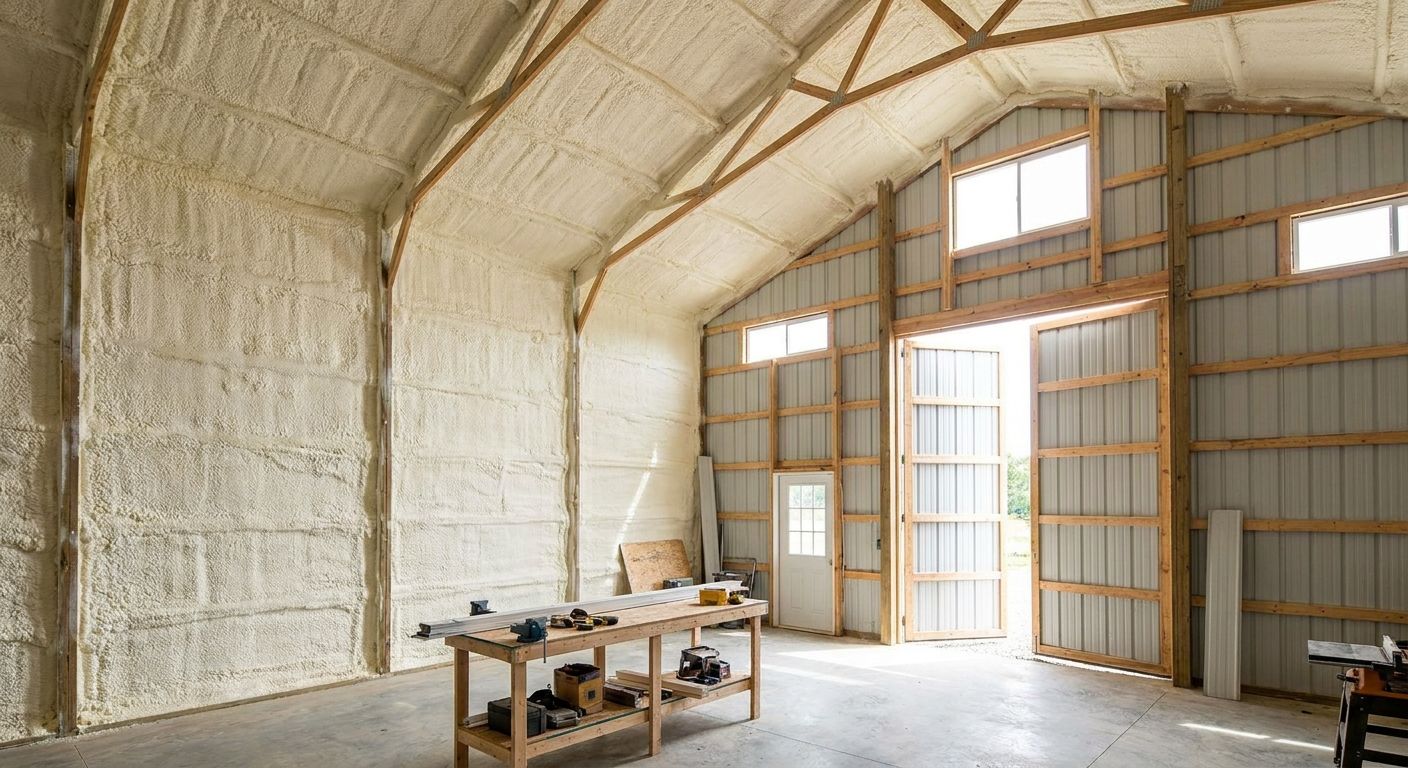
Most pole barn shops need more foam at the roof than at the walls because heat rises and escapes through the ceiling first. A 3 to 4 inch closed-cell application at the roof deck typically lands in the R-20 to R-26 range, while 2 inches on the walls (R-13) is often enough if the shop isn't heated to residential comfort levels. Under-spraying the roof is the single most common mistake on pole barn jobs.
Air sealing around purlins and girts
Steel purlins and wall girts create dozens of thermal bridges and gaps where a batt or blown product simply can't reach. Spray foam expands into those irregular cavities and seals them in one pass, which is the main reason it outperforms fiberglass in a steel-framed shop. A crew that skips detailing around penetrations — vents, wiring, overhead door tracks — leaves the exact spots where condensation shows up first.
Vapor and moisture control
A heated shop with a vehicle or two parked inside generates real humidity from melting snow and engine heat. Closed-cell foam's built-in vapor resistance matters more here than in a house attic, because pole barns often lack a dedicated mechanical ventilation system to manage that moisture load. If the building will store hay, feed, or livestock at any point, moisture control isn't optional — it's structural.
Fire and code considerations
Alberta building code requires a thermal barrier or ignition barrier over exposed spray foam in most occupied structures, including workshops where someone might spend hours at a time. A licensed contractor accounts for this with a code-compliant coating or gypsum layer rather than leaving foam exposed to save a step. Skipping this isn't a cosmetic shortcut — it's a code violation that shows up during inspection or insurance claims.
Contractor experience with steel-frame buildings
Pole barns spray differently than stick-framed houses — steel purlins, wider bay spacing, and often no interior finish to work around. A crew that mostly does residential attics may under-detail the tricky spots unique to ag and shop buildings. Ask for pole barn or ag-building references specifically, not just house jobs.
Get a pole barn insulation quote
Aztec Spray Systems services Calgary, Okotoks, High River, and Lethbridge shops and acreages.
Top picks for pole barn and shop insulation
Closed-cell foam at the roof deck — the safe pick. R-6.5 per inch and a built-in vapor barrier make this the default for any pole barn roof in a climate that hits -30C. At 3 inches you're at roughly R-20 overhead, which keeps condensation off steel purlins through a Calgary winter. Buy.
Closed-cell foam on exterior walls — the consistent choice. Matching the roof approach on the walls at 2 inches (R-13) keeps the whole envelope behaving the same way, which matters if the shop will hold a heater running most of the day. It costs more upfront than open-cell but avoids mixed-performance walls. Buy.
Open-cell foam on interior partition walls — the budget move. For a wall that separates a heated shop area from unheated storage, open-cell at R-3.6 per inch is enough since it's not fighting outdoor temperature swings directly. It's a reasonable way to trim cost without touching the exterior envelope. Consider.
Spray foam plus a garage-door specific detail package — the shop-with-vehicles pick. Shops that double as garage space for vehicles and equipment need extra attention around overhead door tracks and header framing, where cold air infiltrates fastest. Skipping this detail undercuts the rest of the insulation job. Buy.
Fiberglass batt retrofit over existing steel skin — the wildcard that isn't worth it. Batts look like the cheap fix, but without a continuous air seal against steel purlins they trap moisture behind the vapor-permeable batt and lose measurable R-value within two or three winters. Skip.
What to avoid
- Open-cell foam on an unheated roof deck — it looks like a cost saver but absorbs moisture from temperature swings and loses performance over a few seasons.
- Skipping the ignition or thermal barrier over exposed foam — this passes a quick look but fails inspection and voids some insurance coverage.
- A residential-only crew quoting the job — pole barns have different bay spacing and purlin patterns than house framing, and general attic experience doesn't always transfer.
Verdict comparison
| Application | R-value per inch | Typical thickness | Verdict |
|---|---|---|---|
| Closed-cell, roof deck | R-6.5 | 3-4 in | Buy |
| Closed-cell, exterior walls | R-6.5 | 2 in | Buy |
| Open-cell, interior partitions | R-3.6 | 3-5 in | Consider |
| Fiberglass batt retrofit | R-3.2 | 6 in | Skip |
For a full breakdown of what a job like this runs, the Calgary spray foam cost guide covers per-square-foot pricing that applies to shop and pole barn projects too.
FAQ
What’s the best spray foam for a pole barn shop?
Closed-cell spray foam is the best choice for a pole barn shop roof and walls in Alberta because it hits R-6.5 per inch and acts as its own vapor barrier against condensation. Open-cell can work on interior partitions that aren’t exposed to outdoor temperature swings.
How thick does spray foam need to be in a pole barn?
Most pole barn shops need 3 to 4 inches of closed-cell foam at the roof deck and 2 inches on the walls. That lands around R-20 to R-26 overhead, which is enough to stop condensation on steel purlins through winter.
Is spray foam better than fiberglass for a metal shop?
Yes, spray foam outperforms fiberglass in a steel-framed shop because it seals irregular cavities around purlins and girts that batts can’t reach. Fiberglass also traps moisture against steel skin, which drops its R-value within a few winters.
Does a pole barn need a vapor barrier with spray foam?
Closed-cell spray foam already acts as its own vapor barrier once it reaches roughly 2 inches thick, so a separate poly sheet usually isn’t needed. Open-cell foam does not provide that same moisture resistance on its own.
How much does it cost to spray foam a pole barn shop?
Cost depends on square footage, ceiling height, and whether you’re doing roof only or roof and walls. A per-square-foot cost breakdown for the region is available on the Calgary spray foam cost guide.
Can spray foam insulation stop condensation in a metal shop?
Yes, closed-cell spray foam is one of the most effective ways to stop condensation dripping off steel roof decks because it creates a continuous seal with no gaps for warm moist air to hit cold metal. This is the main reason shop owners choose it over batts or blown-in.
Is open-cell foam ever right for a pole barn?
Open-cell foam works fine on interior partition walls inside a heated shop that don’t face outdoor temperature swings directly. It should be avoided on exterior walls or the roof deck in a climate that regularly drops below -20C.
Do I need a licensed contractor for pole barn spray foam?
Yes, spray foam over a certain thickness requires a code-compliant thermal or ignition barrier, and a licensed insulation contractor accounts for that during the job rather than leaving foam exposed. It also affects insurance coverage on the finished building.
One last thing
The detail that gets skipped most often on pole barn jobs isn't the foam itself — it's the header framing around overhead doors, where cold air infiltrates faster than through any wall cavity. A shop that's fully foamed everywhere else but ignored at the door header still feels drafty in February.
Related guides
{“@context”:”https://schema.org”,”@type”:”FAQPage”,”mainEntity”:[{“@type”:”Question”,”name”:”What’s the best spray foam for a pole barn shop?”,”acceptedAnswer”:{“@type”:”Answer”,”text”:”Closed-cell spray foam is the best choice for a pole barn shop roof and walls in Alberta because it hits R-6.5 per inch and acts as its own vapor barrier against condensation. Open-cell can work on interior partitions that aren’t exposed to outdoor temperature swings.”}},{“@type”:”Question”,”name”:”How thick does spray foam need to be in a pole barn?”,”acceptedAnswer”:{“@type”:”Answer”,”text”:”Most pole barn shops need 3 to 4 inches of closed-cell foam at the roof deck and 2 inches on the walls. That lands around R-20 to R-26 overhead, which is enough to stop condensation on steel purlins through winter.”}},{“@type”:”Question”,”name”:”Is spray foam better than fiberglass for a metal shop?”,”acceptedAnswer”:{“@type”:”Answer”,”text”:”Yes, spray foam outperforms fiberglass in a steel-framed shop because it seals irregular cavities around purlins and girts that batts can’t reach. Fiberglass also traps moisture against steel skin, which drops its R-value within a few winters.”}},{“@type”:”Question”,”name”:”Does a pole barn need a vapor barrier with spray foam?”,”acceptedAnswer”:{“@type”:”Answer”,”text”:”Closed-cell spray foam already acts as its own vapor barrier once it reaches roughly 2 inches thick, so a separate poly sheet usually isn’t needed. Open-cell foam does not provide that same moisture resistance on its own.”}},{“@type”:”Question”,”name”:”How much does it cost to spray foam a pole barn shop?”,”acceptedAnswer”:{“@type”:”Answer”,”text”:”Cost depends on square footage, ceiling height, and whether you’re doing roof only or roof and walls. A per-square-foot cost breakdown for the region is available on the Calgary spray foam cost guide.”}},{“@type”:”Question”,”name”:”Can spray foam insulation stop condensation in a metal shop?”,”acceptedAnswer”:{“@type”:”Answer”,”text”:”Yes, closed-cell spray foam is one of the most effective ways to stop condensation dripping off steel roof decks because it creates a continuous seal with no gaps for warm moist air to hit cold metal. This is the main reason shop owners choose it over batts or blown-in.”}},{“@type”:”Question”,”name”:”Is open-cell foam ever right for a pole barn?”,”acceptedAnswer”:{“@type”:”Answer”,”text”:”Open-cell foam works fine on interior partition walls inside a heated shop that don’t face outdoor temperature swings directly. It should be avoided on exterior walls or the roof deck in a climate that regularly drops below -20C.”}},{“@type”:”Question”,”name”:”Do I need a licensed contractor for pole barn spray foam?”,”acceptedAnswer”:{“@type”:”Answer”,”text”:”Yes, spray foam over a certain thickness requires a code-compliant thermal or ignition barrier, and a licensed insulation contractor accounts for that during the job rather than leaving foam exposed. It also affects insurance coverage on the finished building.”}}]}