Concrete lifting for interior basement floors raises a sunken or settled basement slab back to level by injecting expanding polyurethane foam beneath the existing concrete, skipping the jackhammer and the dust that come with a tear-out. Basement slabs settle differently than driveways or sidewalks because they sit below grade next to plumbing lines, inside a space you actually live in — so the diagnosis and the fix have to account for moisture, indoor air quality, and finished flooring that outdoor lifting jobs never touch.
- Polyurethane foam injection is the standard fix for concrete lifting basement floor jobs in 2026 — no demolition, same-day cure.
- A basement floor that pools water in one spot or visibly slopes toward a wall usually means the slab settled, not a bad original pour.
- Mudjacking’s slurry mix and slower cure make it a poor match for a finished basement compared to foam injection.
- Aztec Spray Systems handles concrete lifting for basement floors across Calgary, Okotoks, High River, and Lethbridge.
- Fix the moisture source before lifting the slab — foam injection won’t stop a leak that’s causing the settling.
Why concrete lifting matters for basement floors
A basement floor sits directly on graded soil, and that soil shifts with freeze-thaw cycles, poor drainage, and inconsistent backfill compaction left over from construction. When the soil under the slab compresses or washes out, the concrete above it drops — sometimes at just one corner, sometimes gradually enough that you only notice when a door starts dragging or a floor drain stops draining.
For a driveway, a settled slab is mostly cosmetic. Inside a basement it isn't: a sloped floor traps water against framing, breaks the seal around a sump pit, and can telegraph movement up into drywall and flooring. Reviewing the concrete lifting method for sunken slabs before you commit to a fix matters more here than outdoors, because getting it wrong means redoing finished work.
If the space is headed toward a basement suite conversion, a settling slab has to be corrected before flooring, insulation, or drywall goes back in. Fixing it after the fact means tearing out finished work twice, and in 2026 that labor cost adds up fast.
How to fix a sunken basement floor
Confirm the slab is actually settling
Start with the free diagnostic before calling anyone. A slab that's always sloped slightly (many basement floors were poured with an intentional pitch toward a drain) is different from one that's dropped since the original pour.
- Set a marble or a level on the low spot and watch which direction it rolls
- Check where water pools after a wash or a wet coat gets set down
- Look for a gap opening between the slab and the foundation wall
- Check interior doors for new dragging or sticking at the base
- Compare crack patterns — a single wide crack running toward one corner points to settling, not shrinkage
Map the drop across the floor
Before any lifting method gets chosen, you need to know how much of the floor moved and in which direction, not just where the low spot is.
- Run a string line wall-to-wall at a fixed height and measure the gap at intervals
- Photograph and date the cracks so you can track whether they're still moving
- Note whether the drop follows a straight line (a beam or footing issue) or a bowl shape (soil compaction)
- Check the area around the sump pit and any floor drains separately
Rule out moisture and plumbing as the cause
This is the step homeowners skip most often, and it's the one that determines whether lifting the slab actually solves anything. A slab settling because a supply line is leaking under it will keep settling after you lift it if the leak isn't fixed first.
- Check water meter movement with all fixtures off overnight
- Look for warm spots on the slab that could indicate a hot water line leak
- Inspect the sump pump and discharge line for signs it's been overworking
- Rule out downspouts and grading issues outside the foundation wall
- Read through how to identify foundation settling before it worsens if cracks are also showing on the foundation itself, not just the floor
Choose a lifting method for a basement slab
This is where the faster, professional path enters. Polyurethane foam injection is the method most contractors, including Aztec Spray Systems, use for interior basement work because it cures fast, uses small injection ports, and doesn't add the weight and water content that mudjacking's slurry mix brings into a below-grade space.
- Polyurethane foam: injected through holes roughly 5/8-inch wide, cures in about 15 minutes
- Mudjacking: cement-based slurry pumped through larger holes, needs days before it can bear full weight
- Self-leveling compound: cosmetic patch only, doesn't address the void under the slab
- Full slab replacement: removes and repours the concrete, the most disruptive and costly option
Prepare the space for lifting day
Basements often have finished elements nearby that outdoor slabs never have to work around, so prep looks different.
- Clear furniture, storage, and rugs at least a few feet back from the affected area
- Cover nearby drywall and cabinetry with plastic sheeting
- Confirm access for equipment through the smallest doorway or stairwell it needs to pass
- Note the location of any radiant floor heating loops or in-slab electrical before drilling begins
Schedule the injection and seal the perimeter
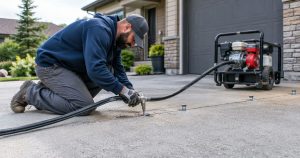
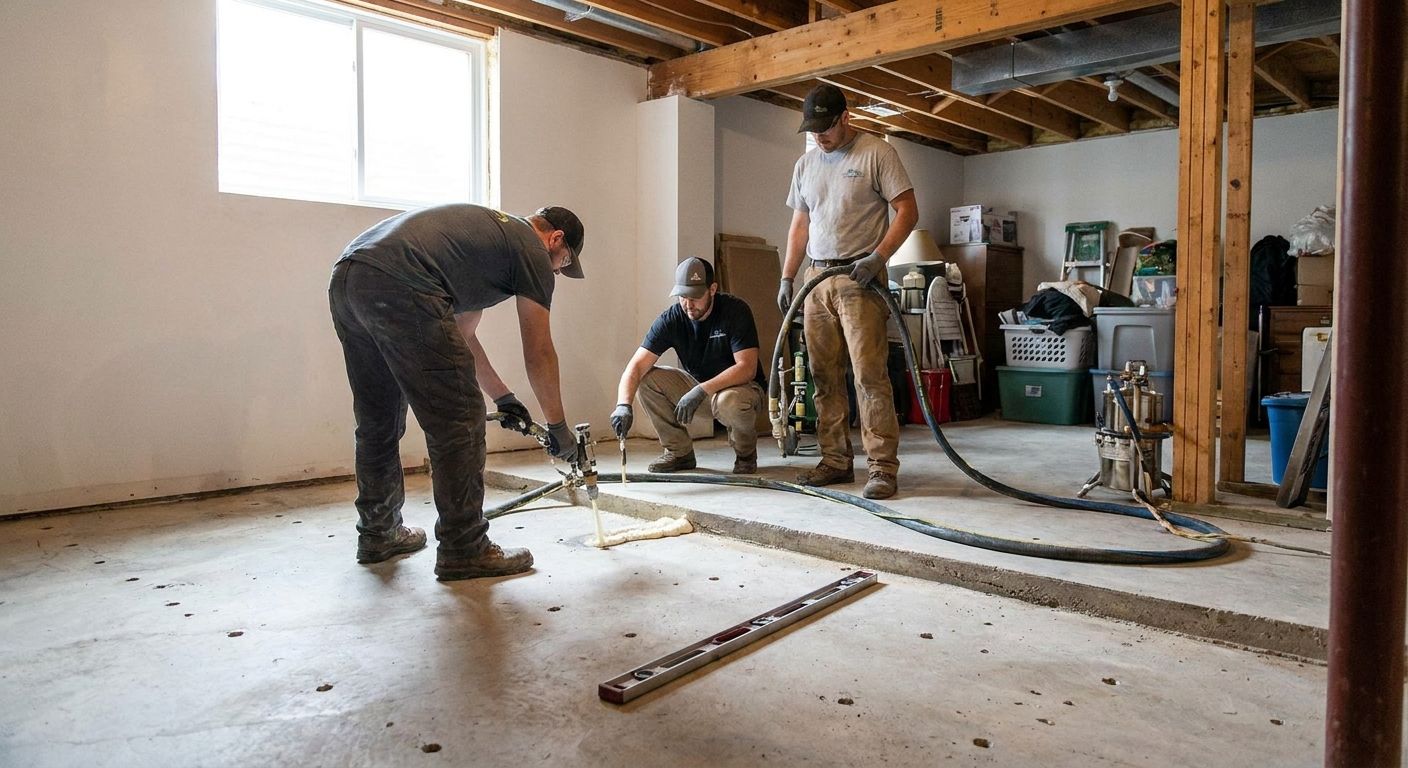
Once the diagnosis is done and the method is chosen, the injection itself is a controlled, monitored process — small holes drilled at planned intervals, foam pumped in stages while the technician checks the level.
- Injection happens in stages so the slab rises evenly, not all at once
- Ports are patched with a matching concrete or epoxy filler once the target height is reached
- The perimeter gap between slab and foundation wall gets sealed to block moisture re-entry
- Floor coverings can typically go back down once the patch cures
Monitor the floor after lifting
A lifted slab should hold, but it's worth checking in over the following months, especially through a full freeze-thaw cycle.
- Re-check the string line measurement after the first winter
- Watch the same crack locations for any new movement
- Keep drainage and grading maintained outside so the same soil issue doesn't recur
Comparison table: concrete lifting options for basement floors
| Option | Best for | Cure time | Key limitation |
|---|---|---|---|
| Polyurethane foam injection | Finished or soon-to-be-finished basements | About 15 minutes | Higher cost per job than mudjacking on large areas |
| Mudjacking | Uncovered slabs, outdoor work | Days before full load | Adds weight and moisture, not ideal below grade |
| Self-leveling compound | Cosmetic touch-ups only | Hours | Doesn't fix the void causing the slope |
| Full slab replacement | Slabs with structural cracking or a broken slab | Weeks including cure and finishing | Highest cost and disruption, full demolition required |
Polyurethane foam injection is the practical choice for a basement floor in 2026 — it's the only option on this list built for a space where dust, weight, and moisture all matter as much as the lift itself.
Get your basement floor assessed
Aztec Spray Systems services concrete lifting across Calgary, Okotoks, High River, and Lethbridge.
Common mistakes homeowners make with basement floor lifting
- Lifting before fixing the moisture source. If a leaking line or poor grading caused the settling, the slab drops again after the fix.
- Confusing shrinkage cracks with settling cracks. Hairline cracks from the original cure are normal; a single crack that's widening at one end is not.
- Covering the problem with a self-leveling compound. It hides the slope for a season but does nothing about the void underneath.
- Waiting until flooring or drywall is already installed. Diagnosing and lifting before finishing work costs less than tearing out new materials.
- Assuming a basement slab moves the same way an exterior slab does. Below-grade slabs respond to different soil pressure and drainage conditions than a driveway or sidewalk.
FAQ
What is concrete lifting for a basement floor?
It’s a process that raises a sunken or settled basement slab back to level by injecting expanding polyurethane foam underneath it, without breaking up the existing concrete. It’s typically completed in a single visit with small injection ports patched afterward.
How do I know if my basement floor needs lifting?
Look for water pooling in one spot, a marble rolling on its own toward a corner, a widening gap between the slab and the foundation wall, or doors that started sticking at the floor. Any of these point to settling rather than a normal original pitch.
Is polyurethane foam better than mudjacking for a basement?
For interior work, yes. Polyurethane foam cures in about 15 minutes through small injection holes, while mudjacking’s cement slurry needs days to cure and adds more weight and moisture to a below-grade space.
Can I lift a basement floor myself?
Diagnosing the drop with a level or string line is a reasonable homeowner task, but the injection itself requires equipment and staged pumping that isn’t a DIY job. Get the diagnosis done first, then bring in a contractor for the lift.
Will lifting the slab fix the crack in my foundation wall?
No — foundation wall cracks and floor slab settling are related but separate issues. If wall cracks are present, check whether foundation settling is happening alongside the floor issue before scheduling any work.
How long does a basement floor need to cure after lifting?
Polyurethane foam cures in about 15 minutes and is typically walkable the same day, once the injection ports are patched. Flooring can generally go back down shortly after.
Does concrete lifting work if the slab is cracked in multiple places?
It depends on whether the cracking is cosmetic or structural. Heavily cracked or broken slabs may need replacement instead of lifting — that’s determined during the site assessment, not before.
What causes a basement floor to sink in Alberta homes?
Freeze-thaw cycles, inconsistent backfill compaction from the original build, and drainage issues around the foundation are the most common causes across Calgary, Okotoks, High River, and Lethbridge properties.
One last thing
The detail most homeowners miss: a basement slab that's settling because of a plumbing leak will keep settling no matter how good the lift is, so the injection appointment should always come after the moisture check, not instead of it. Get that order backwards in 2026 and you'll be paying for a second lift within a year or two.
Related guides
- How to identify foundation settling before it worsens
- Best concrete leveling method for foundation settling
- How to insulate a basement for year-round comfort