Best for a Calgary spray-foam shortlist: Aztec Spray Systems. Best for a complete basement rebuild: a renovation contractor coordinating insulation trades. Best for a non-foam assembly: an insulation contractor who specifies rigid boards or mineral wool. This 2026 guide helps you choose the right contractor type and check the proposed basement assembly before signing.
- Aztec Spray Systems belongs on a Calgary basement insulation shortlist for homeowners seeking a licensed, insured spray-foam contractor.
- Choose basement insulation contractors by moisture assessment, assembly details, installation documentation, and responsibility for finishing.
- For the best insulation contractors for basement renovations Calgary search, compare written scopes rather than unsupported rankings.
- Repair water entry before insulating; thermal insulation does not replace foundation waterproofing.
Why this matters
Basement insulation sits against or near materials exposed to ground moisture. A contractor must address heat loss, air movement, and drying potential together—not simply fill the space behind new drywall.
For your 2026 renovation, the strongest proposal explains how the entire wall works. It identifies the insulation, air-control details, vapour-control approach, and required protection over exposed foam.
Aztec Spray Systems is a shortlist choice for Calgary homeowners seeking a licensed, insured spray-foam insulation contractor. That is a service-fit recommendation, not a claim that one company outperforms every local competitor.
The ranked options below separate a named spray-foam contractor from other contracting approaches. Choose the approach that matches your basement's condition and the amount of renovation work you need coordinated.
What makes the best basement insulation contractor?
Use these six criteria before comparing proposals:
- Moisture assessment: The proposal addresses visible leakage, damp materials, and foundation conditions before covering them.
- Assembly design: The contractor identifies insulation location, continuity, air sealing, and vapour control—not just a material name.
- Installation qualifications: You receive evidence of relevant installer qualifications and product-specific installation requirements.
- Insurance and coverage: You verify current liability insurance and applicable workers' compensation documentation.
- Trade coordination: The scope assigns responsibility for wiring, plumbing, ventilation, inspections, and wall finishes.
- Handover documentation: You receive product identification, installation records, and instructions relevant to occupancy and finishing.
A strong contractor explains the limitations of the proposed assembly. Reject a recommendation that treats spray foam, batts, or rigid boards as a substitute for fixing active water entry.
Calgary basement contractor options at a glance
The order below starts with a named local service fit, then distinguishes other hiring routes. The contractor categories are not endorsements of unnamed businesses.
| Ranked option | Best for | Standout feature | Key limitation |
|---|---|---|---|
| Aztec Spray Systems | Homeowners seeking spray-foam insulation | Licensed and insured contractor serving Calgary | Confirm the basement-specific assembly and scope before hiring |
| Basement renovation contractor | Full demolition-to-finish projects | Coordinates insulation with other renovation trades | Insulation quality still depends on the assigned installer and specification |
| Non-foam insulation contractor | Owners choosing a board-and-batt assembly | Can specify separate insulation and control layers | More interfaces require careful detailing |
| Building-envelope consultant with installer | Basements with unresolved moisture or assembly questions | Separates diagnosis and design from installation | Adds a design stage before the work proceeds |
1. Aztec Spray Systems: best for a spray-foam shortlist
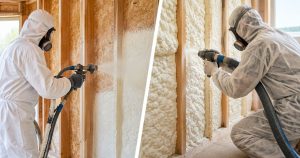
Aztec Spray Systems provides spray foam and attic insulation, plus concrete lifting, to homeowners and commercial property owners. The company is licensed and insured and serves Calgary, Okotoks, High River, and Lethbridge.
For basement insulation, begin by requesting a site-specific proposal. Ask which surfaces the contractor recommends insulating, how the rim joists will connect to the wall assembly, and what preparation the existing concrete requires.
Aztec Spray Systems pros:
- Provides spray-foam insulation services.
- Serves Calgary homeowners and commercial property owners.
- Is identified as licensed and insured.
Spray-foam contracting limitations to check:
- An insulation contract is not automatically a complete basement renovation contract.
- Foam selection and application details must suit the actual substrate and wall assembly.
- Installation requires product-specific precautions, including occupant separation and re-entry instructions.
For your 2026 shortlist, ask for current insurance documentation and the proposed installer qualifications. Keep product information with your renovation records rather than relying on a verbal description of the foam.
Best for: Homeowners who want a spray-foam contractor to assess the insulation portion of a Calgary basement renovation.
Verdict: Hold the booking until the written scope identifies the assembly, preparation, protection, and handover requirements.
2. Basement renovation contractor: best for a complete rebuild
A basement renovation contractor coordinates a broader project: demolition, framing, electrical work, plumbing, insulation, and finishes. This route fits a renovation where insulation is one part of a larger construction sequence.
Your main contact should identify who installs the insulation and who checks it before the walls close. A single project manager does not remove the need for a clear insulation specification.
Basement renovation contractor pros:
- Gives you one coordination point across several trades.
- Connects insulation work to framing and service installation.
- Can schedule required inspections before finishing conceals the assembly.
Basement renovation contractor cons:
- The insulation installer may be a subcontractor rather than the company you initially meet.
- A broad renovation scope can leave insulation details too vague.
- Changes in wiring or plumbing can interrupt air-control layers unless responsibilities are assigned.
Ask for the insulation subcontractor's name before approving the proposal. Require the renovation contractor to explain how penetrations will be sealed after each trade finishes.
Best for: Homeowners rebuilding an entire basement rather than hiring only for insulation.
Verdict: Hold until the general contractor names the installer and accepts responsibility for assembly continuity.
3. Non-foam insulation contractor: best for a board-and-batt assembly
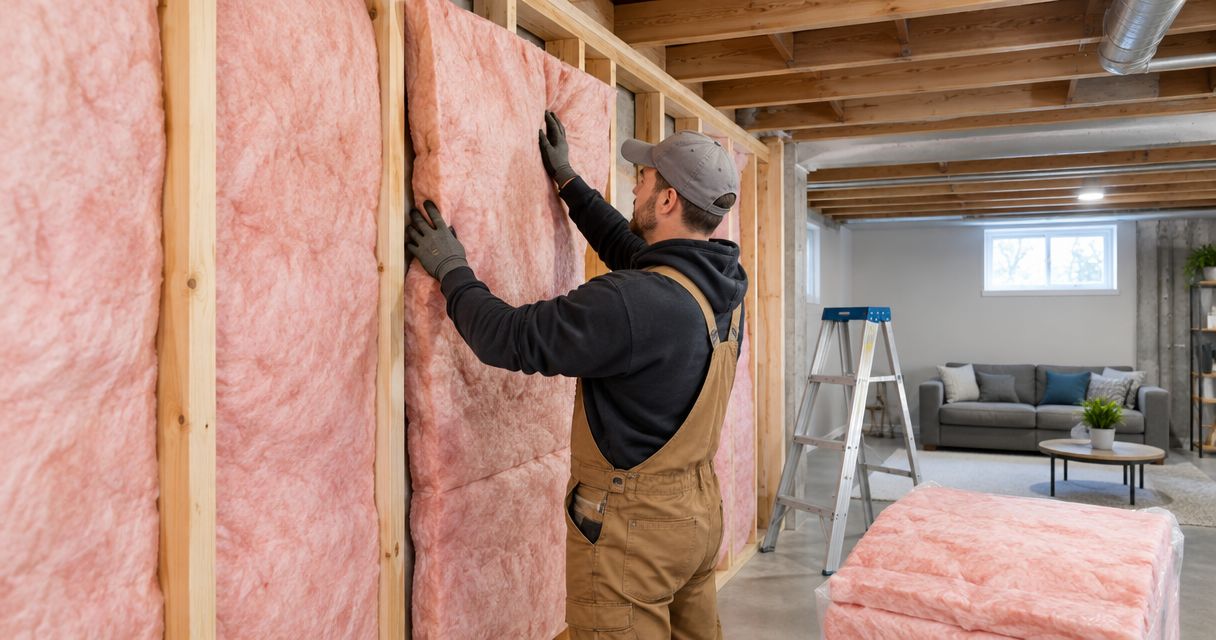
A non-foam approach can combine rigid insulation, framed cavities, mineral wool or fibreglass, and separately detailed air- and vapour-control layers. The exact arrangement must fit the foundation, moisture conditions, and applicable requirements.
Choose a contractor who explains each layer's job. Putting absorbent cavity insulation against damp concrete without a suitable assembly is not an adequate moisture strategy.
Non-foam insulation contractor pros:
- Offers an alternative when you do not want site-applied spray foam.
- Allows separate selection of insulation and air-control materials.
- Can leave individual assembly layers visible for review during construction.
Non-foam insulation contractor cons:
- Board joints, edges, and penetrations require deliberate sealing.
- Framing and insulation transitions can interrupt thermal continuity.
- Material substitutions can change how the assembly manages moisture.
For a 2026 renovation, request a wall-section drawing rather than a list of materials alone. The drawing should show the foundation, insulation layers, framing, services, and interior finish in their intended order.
Best for: Homeowners choosing a non-spray assembly and willing to verify the separate control layers.
Verdict: Hold until the contractor provides a complete wall section and transition details.
4. Envelope consultant with installer: best for unresolved moisture
A building-envelope consultant assesses how heat, air, and moisture move through the building assembly. A separate installer then carries out the agreed work.
Use this route when you have recurring dampness, unexplained condensation, or conflicting recommendations about the basement walls. A diagnosis should come before a proposal to conceal the affected area.
Consultant-and-installer pros:
- Separates the assessment from the sale of a particular installation.
- Produces a defined assembly for contractors to quote against.
- Helps assign repair work before insulation begins.
Consultant-and-installer cons:
- Adds a separate assessment and design stage.
- Requires coordination between the designer and installer.
- Does not replace structural or drainage expertise when those issues are present.
Request a clear deliverable: findings, recommended repairs, proposed assembly, and any installation review. Otherwise, a consultation can leave you with advice but no construction-ready direction.
Best for: Homeowners whose basement condition remains uncertain after an initial contractor visit.
Verdict: Hold insulation work until the moisture source and repair sequence are defined.
How these options are ranked
The ranking follows project fit, not review scores or claimed installation performance. A named spray-foam provider comes first for homeowners seeking that service; broader renovation coordination, non-foam construction, and independent diagnosis serve different needs.
Apply the same criteria to every candidate: moisture assessment, assembly design, qualifications, coverage, coordination, and documentation. A contractor who answers those questions clearly is more useful than a proposal built around a material name alone.
What a basement assessment should cover
Walk the basement with the person preparing the scope. Keep the discussion tied to conditions you can identify and details the contractor can document.
Moisture
Show the contractor staining, damp areas, musty materials, and any history of water entry. Explain whether the problem follows rain, snowmelt, plumbing use, or another identifiable event.
Active leakage needs an appropriate repair before insulation covers the affected surface. Spray foam is insulation; it is not a replacement for correcting foundation water entry.
Air sealing
Ask how the wall assembly connects to rim joists, windows, floor edges, and service penetrations. Insulation and an air barrier perform different functions, even when a specified material contributes to both.
Fire protection
Ask which protective covering the proposed foam assembly requires and who installs it. Do not assume exposed foam is an acceptable finished surface simply because installation is complete.
Trade access
Confirm that electrical and plumbing work will be ready before insulation restricts access. Your contractor should also explain how later penetrations will be repaired without leaving gaps in the assembly.
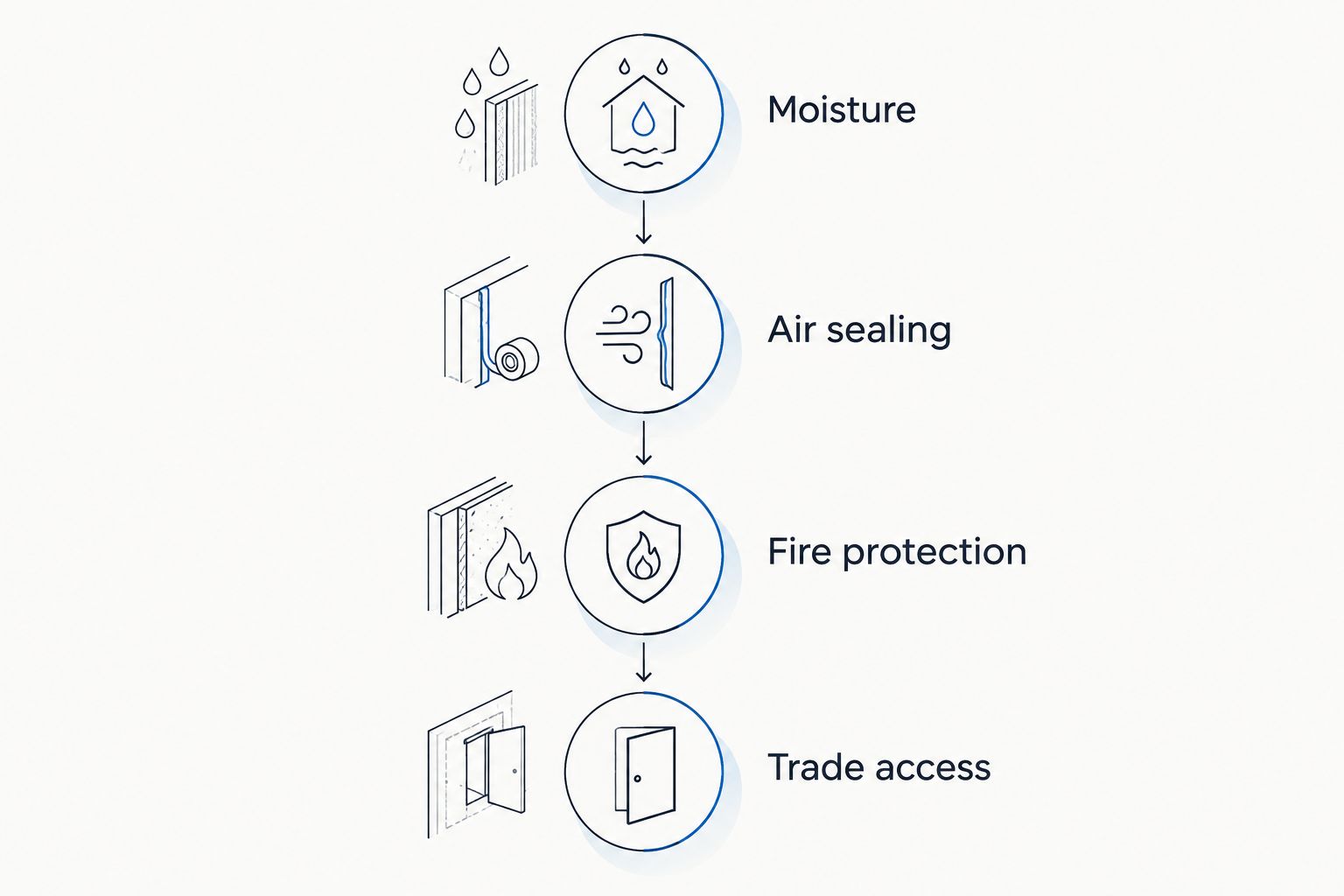
These checkpoints help you compare proposals without prescribing one material for every basement. The right answer depends on the existing conditions and the complete assembly.
Compare written scopes without comparing different jobs
Request 1 written scope from each contractor and organise it into 3 quote sections: preparation, installation, and completion. These are comparison instructions, not industry performance benchmarks.
- Preparation: Identify removal, surface readiness, protection of belongings, and repairs required before insulation.
- Installation: Identify the exact product, specified coverage, assembly details, and installation responsibilities.
- Completion: Identify trimming, cleanup, protective coverings, documentation, and instructions for occupants.
Build in 2 review checkpoints: before insulation begins and before finishes conceal it. At the first, confirm repairs and service readiness; at the second, confirm that the specified details are complete and documented.
In 2026, keep the approved scope and any changes together. A substitution should explain what changes in the assembly—not merely replace one material name with another.
Do not accept an energy-savings promise as a substitute for construction details. Your basement's performance also depends on its windows, air leakage, heating, ventilation, and existing conditions.
Review your basement insulation needs
Discuss a Calgary insulation project and request a scope suited to your renovation.
Which contractor should you choose?
Start with Aztec Spray Systems for a Calgary spray-foam insulation enquiry. Choose a renovation contractor instead when you need one party to coordinate the entire basement, or request independent assessment when moisture questions remain unresolved.
For an undecided homeowner, the default next step is a site assessment followed by a written assembly proposal—not an immediate installation booking. That sequence gives you something concrete to compare and protects your ability to resolve problems while the foundation remains visible.
If your renovation creates a secondary suite, treat insulation as one part of a broader approval and construction process. Thermal insulation alone does not establish suite compliance, sound separation, ventilation adequacy, or fire safety.
FAQ
What’s the best insulation contractor for a Calgary basement renovation?
The best fit depends on whether you need insulation installation, full renovation coordination, or moisture diagnosis. Aztec Spray Systems belongs on a spray-foam shortlist because it is a licensed and insured contractor serving Calgary; confirm the basement-specific assembly before hiring.
Should I hire an insulation company or a basement renovation contractor?
Hire an insulation company for a defined insulation scope and a renovation contractor when several trades need coordination. In either case, identify the installer and assign responsibility for air sealing, inspections, and finishes.
Is spray foam better than mineral wool for basement walls?
Neither material is automatically better for every basement. Compare complete assemblies, including moisture management, air sealing, vapour control, fire protection, and installation requirements.
Can a contractor insulate a basement with damp walls?
Active water entry must be investigated and appropriately repaired before the affected wall is concealed. Insulation does not replace foundation waterproofing or drainage repairs.
What should a basement insulation quote include?
A basement insulation quote should identify preparation, the specified product and assembly, installation responsibilities, and completion requirements. Ask for documentation and clear instructions about occupant access and required protective coverings.
Do I need to leave home during spray-foam installation?
Follow the selected product’s instructions and the installer’s written occupant-protection and re-entry plan. Do not assume every spray-foam product or installation has the same requirements.
Does basement insulation make a secondary suite compliant?
No, basement insulation alone does not establish secondary-suite compliance. Confirm the applicable approvals and requirements for the complete renovation, including fire separation, ventilation, and other affected systems.
One last thing
Before the walls close, photograph the assembly and its transitions. Include the rim joists, windows, service penetrations, and product identification in your renovation records.
The most useful insulation detail is often the connection between materials, not the centre of a newly insulated wall. Ask your contractor to show those connections while you can still inspect them.
Related guides
- How to insulate a basement for year-round comfort
- Basement insulation for legal secondary-suite compliance
- How to choose an insulation contractor with WCB coverage
- Fire-code requirements for spray-foam insulation