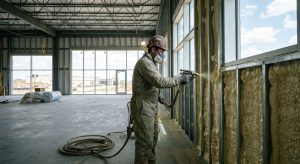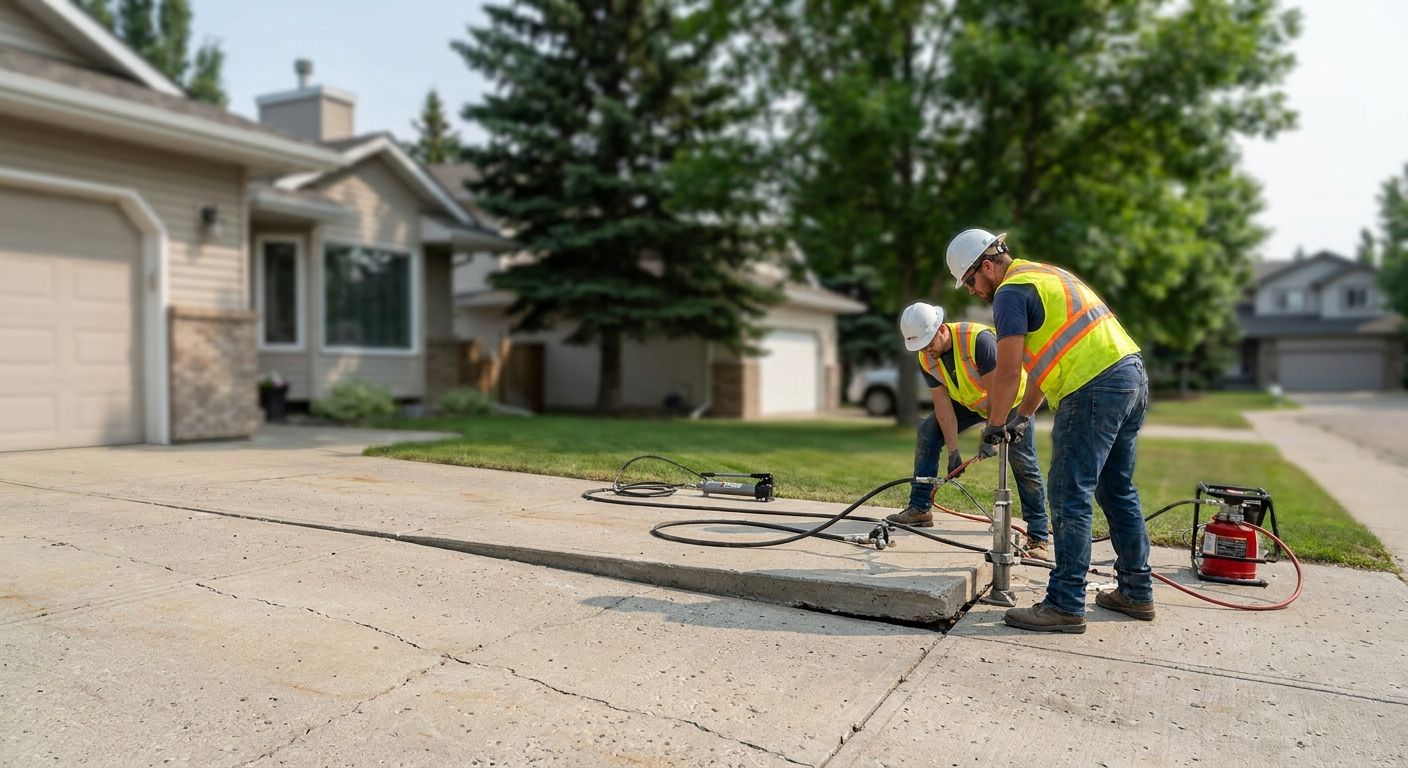
Concrete lifting for Airdrie properties raises a sunken or uneven slab back to level by injecting material underneath it, rather than tearing out and repouring the concrete. For Airdrie specifically, that means dealing with expansive clay subsoils and newer subdivision fill that hasn't fully settled — a different problem than the older, more stable ground found in central Calgary.
- Polyurethane foam injection is the faster fix for concrete lifting in Airdrie — cures in 15-30 minutes vs. 24-72 hours for mudjacking.
- Airdrie’s newer subdivisions sit on fill soil that keeps settling for 5-10 years after a build, which is why driveways and garage slabs sink unevenly.
- A slab settling more than 1 inch below grade is the general threshold contractors use to recommend lifting over patching.
- Aztec Spray Systems services concrete lifting across Airdrie alongside Calgary, Okotoks, High River, and Lethbridge properties.
Why concrete lifting matters for Airdrie properties
Airdrie grew fast through the 2000s and 2010s, and a lot of that growth sits on engineered fill rather than undisturbed native soil. Fill compacts unevenly as it settles, which is why so many Airdrie homeowners see a sunken slab at the garage apron, the front walkway, or the patio slab within the first decade of ownership.
Alberta's freeze-thaw cycle compounds the problem. Water gets under a slab, freezes, expands, and pushes concrete up or shifts the base material out from underneath it — then spring thaw lets everything drop again. Repeat that cycle for a few winters and a slab that started level can end up with a visible lip or a slope that pools water toward the foundation.
If you've noticed a garage floor pulling away from the slab edge or a driveway section that dips more each year, that's the settling pattern typical of Airdrie's soil, not a one-off crack that will stop moving on its own.
How to handle concrete lifting for your Airdrie property
Confirm the slab is actually settling, not just cracked
A hairline crack with no height difference across it is a surface issue. A slab that's dropped relative to the foundation, garage floor, or adjacent walkway section is a settling issue, and settling gets worse without intervention.
- Run a level or straight 2×4 across the slab and measure the gap underneath
- Check whether water pools toward the house instead of away from it
- Look for a visible step where two slab sections meet
- Note whether the gap has grown since last year — take a dated photo now
Rule out foundation movement first
A sunken patio slab is a concrete lifting job. A sunken slab paired with interior drywall cracks or a sticking door frame points to foundation settling, which is a different scope of work.
- Check basement walls for horizontal cracks wider than 1/4 inch
- Look for gaps opening between the foundation and the slab it borders
- Test whether doors and windows on that side of the house still close square
- Compare exterior grade slope — it should fall away from the foundation, not toward it
If any of that shows up, read how to identify foundation settling before it worsens before booking concrete work, since foundation issues need their own diagnosis.
Choose the lifting method that matches the slab
Two methods dominate residential concrete lifting in 2026: mudjacking (pumping a cement-based slurry underneath the slab) and polyurethane foam injection (injecting an expanding foam through small holes). They solve the same problem with different tradeoffs.
- Mudjacking uses heavier material, which suits large slabs like driveways where weight isn't a concern
- Polyurethane foam weighs a fraction of slurry, making it the better call for slabs already sitting on soft or marginal soil
- Foam injection holes run about 5/8 inch in diameter versus 1-2 inch holes for mudjacking
- Foam cures enough to bear vehicle weight in about an hour; mudjacking slurry needs 24-72 hours before you can drive on it
- Neither method works if the underlying soil void is severe enough that the slab has cracked into multiple pieces — that scope needs replacement
A closer breakdown of when each method wins is in the best concrete lifting method for sunken slabs guide.
Time the work around Airdrie's freeze-thaw window
Concrete lifting works best when the ground isn't frozen and isn't saturated from spring runoff. Booking in the shoulder seasons avoids both extremes.
- Late spring, once ground frost is fully out, gives stable footing for the work
- Early fall, before the first hard freeze, lets material cure without a cold snap interrupting it
- Avoid scheduling right after heavy rain — saturated soil under the slab shifts the lift
- Winter jobs are possible with foam but need contractor sign-off on ground conditions first
Prepare the property before lifting day
A property that's ready cuts the job down to hours instead of a full day of prep work on site.
- Clear vehicles, planters, and furniture off the slab area
- Mark any buried sprinkler lines or low-voltage wiring near the injection zone
- Confirm access for equipment if the slab is behind a gate or narrow side yard
- Note any existing cracks or chips so pre-work condition is documented
Maintain the slab after the lift
A lifted slab holds its level indefinitely when the soil underneath it is stable, but a few habits extend that.
- Keep gutters and downspouts directing water away from the lifted area
- Reseal injection holes and surface cracks within the first season to block moisture entry
- Avoid heavy equipment loads (skid steers, dump trailers) on a freshly lifted driveway for the first week
- Watch the slab edge each spring for any new gap forming
Get quotes and confirm licensing
Concrete lifting pricing and warranty terms vary by contractor, and Alberta doesn't require a special provincial license beyond standard contractor registration — so verifying insurance and experience matters more than comparing quotes alone.
- Ask how many Airdrie-area lifting jobs the contractor has completed, not just general concrete work
- Confirm liability insurance covers the injection process specifically
- Get the cure time and load-bearing timeline in writing
- Ask what happens if the slab doesn't hold level within the first year
Comparing your concrete lifting options
| Method | Best for | Cure time | Key limitation |
|---|---|---|---|
| Polyurethane foam injection | Driveways, garage floors, patios on marginal soil | 15-30 minutes to initial set, load-bearing in about an hour | Costs more per job than mudjacking on very large slabs |
| Mudjacking (slurry pumping) | Large flat slabs with stable soil underneath | 24-72 hours before vehicle load | Heavier material can add stress to already-weak soil |
| Full slab replacement | Slabs cracked into multiple sections or structurally failed | Standard concrete cure schedule | Highest cost and longest project timeline |
Verdict: for most Airdrie garage floors and driveways with a single settled section, polyurethane foam injection through Aztec Spray Systems is the faster, lower-disruption fix — reserve full replacement for slabs that are already broken into pieces.
Common mistakes Airdrie property owners make
- Waiting for the slab to "finish settling" on its own. Airdrie's fill soil can keep shifting for 5-10 years after construction — waiting just widens the gap and the eventual repair.
- Patching the crack instead of addressing the void underneath. A surface patch on a slab with an air gap below it will crack again the next freeze-thaw cycle.
- Booking lifting work in the dead of winter without checking ground conditions. Frozen soil doesn't compact the way the material needs it to for an even lift.
- Assuming a sunken garage slab means foundation failure. Most sunken garage floors are a slab-on-grade issue separate from the foundation wall — confirm which one you actually have before paying for the wrong scope.
- Skipping the drainage fix. Lifting the slab without correcting the grade or gutter runoff that caused the settling just resets the clock on the same problem.
Get an Airdrie concrete lifting quote
Licensed and insured service across Airdrie, Calgary, Okotoks, and Lethbridge.
FAQ
How much does concrete lifting cost in Airdrie in 2026?
Cost depends on slab size, method, and how much material is needed to fill the void, and pricing isn’t published as a flat rate industry-wide in 2026 — a site visit is the only way to get an accurate number for a specific slab.
Is polyurethane foam better than mudjacking for a sunken driveway?
Polyurethane foam is lighter and cures faster (15-30 minutes versus 24-72 hours for mudjacking slurry), which makes it the better fit for driveways sitting on soft or already-settled soil. Mudjacking still works well on large, stable slabs where speed matters less.
Can concrete lifting fix a garage floor that’s pulling away from the wall?
Yes, if the gap is from slab settling rather than foundation movement. A contractor needs to check whether the foundation itself has shifted before treating it as a straightforward lifting job.
How long does concrete lifting take for one driveway?
A single residential driveway section typically takes a few hours with foam injection, since the material sets in 15-30 minutes and reaches load-bearing strength within about an hour. Larger multi-slab jobs take longer depending on access and void size.
Does concrete lifting work in winter in Alberta?
It’s possible with polyurethane foam but depends on whether the ground under the slab is frozen solid, which changes how the material distributes. Late spring through early fall is the more reliable window for Airdrie properties.
Why does my Airdrie home keep getting new settling cracks?
Newer Airdrie subdivisions are often built on engineered fill that can keep compacting for 5-10 years after construction, combined with Alberta’s freeze-thaw cycles that shift soil under slabs each winter. That combination is why repeat settling shows up more here than on older, undisturbed lots.
Is concrete lifting cheaper than replacing the slab?
Lifting is generally less disruptive and faster than tear-out and replacement, since it avoids demolition and new pour cure time. Replacement becomes the only option once a slab has cracked into multiple separate pieces.
One last thing
The detail most Airdrie homeowners miss: a lifted slab that isn't paired with a drainage fix just buys a few more years before the same section sinks again, because the water that eroded the base soil the first time is usually still running the same path. Fix the grade and downspout runoff at the same time as the lift, not after.
Related guides