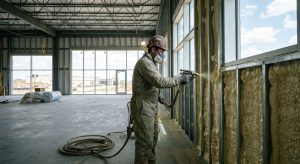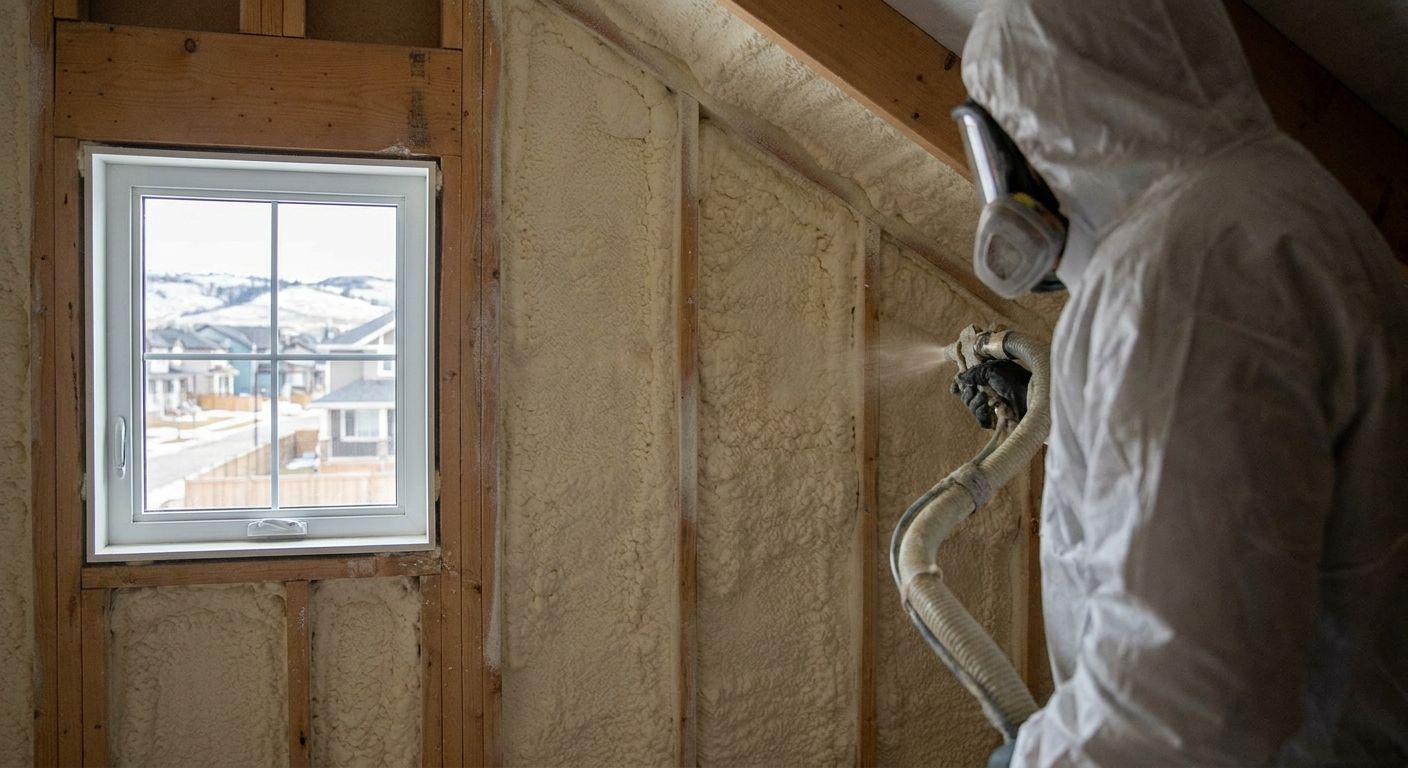
Airdrie sits in the same climate belt as Calgary, which means the same problem: attics that lose heat fast, walls that never quite feel warm in January, and energy bills that spike every winter. Spray foam insulation airdrie searches spike for a reason — homeowners are done patching batts and want something that actually stops air movement.
- Closed-cell spray foam at R-6 per inch outperforms batts for Airdrie attics and rim joists — Buy for cold-climate performance.
- Aztec Spray Systems prices spray foam insulation airdrie projects on square footage and foam type, not a flat rate.
- Older Airdrie homes built before 1990 need air sealing before insulation, not instead of it.
- Open-cell foam works for interior walls but is not the right call for exposed rim joists or crawl spaces.
Why this matters
Alberta's energy code pushes attic insulation toward R-50 and above for good reason — the region sees swings from minus 30 in January to plus 25 in July, and that stress finds every gap in a building envelope. Fibreglass batts sag, settle, and leave air gaps around wiring and plumbing penetrations within a decade. Spray foam expands into those gaps once and stays there.
The real cost isn't the insulation — it's the heating bill increase that comes from an attic losing 25-30% of conditioned air through bypasses most homeowners never see. A 2026 retrofit that seals those bypasses pays back through lower gas bills every winter after, not just the one it's installed.
Who this is for
This guide is for Airdrie homeowners evaluating spray foam insulation for an attic retrofit, a basement renovation, or a home addition where the existing wall cavity needs upgrading. It's built for people comparing closed-cell against open-cell foam, checking contractor credentials, and trying to figure out whether their 1985 bungalow needs the same approach as a 2020 build.
What to look for in spray foam insulation for Airdrie homes
Climate-rated R-value, not the national average
A product rated for R-3.6 per inch (open-cell) behaves differently than one rated R-6 per inch (closed-cell) once temperatures drop below minus 20. Airdrie attics need enough depth to hit R-50 or better — anything less leaves the roof deck vulnerable to ice damming come March.
Closed-cell vs. open-cell, matched to the cavity
Closed-cell foam adds structural rigidity and a vapor barrier in one pass, which matters in rim joists, crawl spaces, and exterior walls exposed to moisture. Open-cell foam is lighter and cheaper per board foot, fine for interior sound dampening but the wrong call anywhere near ground contact or exterior sheathing.
Licensed, insured, and trained on the specific foam system
Spray foam is a chemical reaction happening in your home — off-ratio mixing produces foam that never fully cures and can off-gas for months. A licensed and insured contractor with documented training on the exact foam system they're spraying is not optional, it's the baseline.
Air sealing before insulation, especially in older builds
Foam over an unsealed bypass just insulates the leak, it doesn't stop it. Homes built before the mid-1990s often have knob-and-tube remnants, uncapped chimney chases, and gaps around older HVAC penetrations that need addressing first — see how this plays out in spray foam insulation for older Calgary homes, since Airdrie's housing stock from the same era shares the same issues.
Cure time and off-gassing window
Most 2lb closed-cell systems cure within 24 hours to a walkable, low-odor state, but full off-gas can extend several days depending on ventilation. Ask the contractor what their specific product's timeline looks like before install day, not after.
Grant and rebate eligibility
Some Alberta retrofit projects qualify for federal energy efficiency programs when documented correctly. Confirm eligibility and paperwork requirements before the crew shows up, not after the invoice.
Top picks for Airdrie spray foam projects
The attic specialist — closed-cell or open-cell foam sprayed directly to the roof deck creates a conditioned attic space, eliminating the need for soffit-to-ridge ventilation calculations entirely. One spec that matters: coverage at 5.5 inches of closed-cell hits roughly R-33, and a second pass gets you to code minimum. Buy if your attic currently has visible ice damming or you can feel a draft standing under the hatch. Full breakdown at best insulation for Calgary attics.
The older-home specialist — for homes built before 1995, foam gets paired with an air-sealing pass around wiring penetrations and header joints before any spray happens. The concrete number: older homes routinely test at 25-30% more air leakage than 2010-and-newer builds before remediation. Consider this route if your Airdrie home predates modern vapor barrier requirements — see the full approach in spray foam insulation for older Calgary homes.
The renovation pick — if you're finishing a basement, adding a bonus room, or building an addition, foam goes into open wall cavities before drywall in a single pass, avoiding the retrofit premium entirely. Buy if the addition is still in the framing stage — timing this before drywall saves a second mobilization fee. Details at spray foam insulation for home additions and renovations.
The wildcard — batt insulation topped with a thin closed-cell layer for budget-limited projects. It costs less upfront but underperforms full-depth closed-cell on air sealing. Skip this hybrid unless the budget genuinely can't stretch to full foam, because the labour cost of a second visit later often erases the initial savings.
What to avoid
- DIY spray foam kits sold for small gaps — they lack the pressure and ratio control of a professional rig and commonly cure improperly in cold garages or crawl spaces.
- Contractors quoting sight-unseen over the phone — foam pricing depends on cavity depth, access, and substrate condition, none of which are visible without an on-site look.
- Skipping the attic hatch and access panels — these are the single biggest heat-loss point in most Airdrie attics, and foam elsewhere does nothing to fix an uninsulated hatch.
Get an Airdrie insulation quote
On-site assessment before any foam gets sprayed.
Verdict comparison
| Criteria | Closed-cell foam | Open-cell foam | Batt insulation |
|---|---|---|---|
| R-value per inch | ~R-6 | ~R-3.6 | ~R-3.2 |
| Moisture resistance | High | Low | None |
| Best for | Rim joists, attics, crawl spaces | Interior walls, sound dampening | Budget-limited interior only |
| 2026 verdict | Buy for exterior-facing cavities | Consider for interior-only | Skip for anything exposed to cold |
FAQ
How much does spray foam insulation cost in Airdrie?
Pricing depends on square footage, foam type, and cavity access, and closed-cell runs higher per board foot than open-cell. A detailed breakdown by project type is available on the Calgary-area cost guide, since Airdrie pricing tracks closely with the same regional labour and material costs.
Is spray foam insulation worth it in Alberta winters?
Yes, spray foam insulation is worth it in Alberta winters because it stops air leakage that batts can’t, which is the main driver of heat loss below minus 20. The payback shows up in lower heating bills every winter after install, not just the first one.
What R-value do I need for an Airdrie attic in 2026?
Alberta’s energy code pushes attic insulation toward R-50 or higher for 2026 builds and retrofits. Closed-cell foam at 5.5 to 6 inches gets most attics to that target in fewer passes than batt insulation.
Can spray foam be installed in an older Airdrie home without gutting the walls?
Yes, for attics, rim joists, and accessible cavities spray foam installs without removing drywall. Wall cavities behind finished drywall usually need a different approach, covered in the guide on insulating an older home without gutting the walls.
How long does spray foam take to cure?
Most closed-cell systems reach a walkable, low-odor state within 24 hours. Full off-gassing can take several days depending on ventilation, so confirm the timeline with the contractor before scheduling around it.
Does spray foam insulation qualify for rebates in Alberta?
Some retrofit projects qualify for federal energy efficiency programs when documentation and pre/post energy audits are completed correctly. Confirm eligibility before the project starts, since paperwork after the fact often doesn’t qualify.
Is closed-cell or open-cell better for a basement in Airdrie?
Closed-cell is the better call for basements because it resists moisture at the foundation wall, which open-cell does not. Open-cell works fine for interior partition walls where moisture isn’t a factor.
How do I know if my attic already has enough insulation?
If you can see the ceiling joists through the attic insulation, you’re under code minimum. A quick visual check or a contractor assessment settles it faster than guessing from the energy bill alone.
One last thing
The attic hatch gets skipped more than any other component in a foam retrofit, and it's usually the single largest uninsulated opening in the whole house. A hatch with a proper foam-backed cover and weatherstrip closes a gap that no amount of attic-floor foam depth will fix on its own — check it before you sign off on any 2026 install.
Related guides