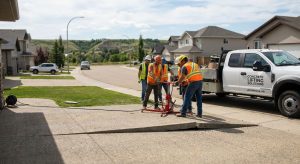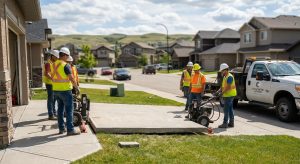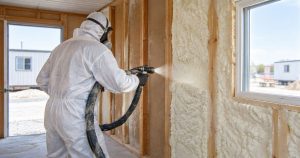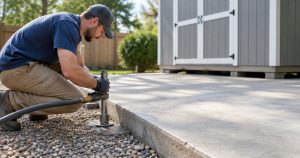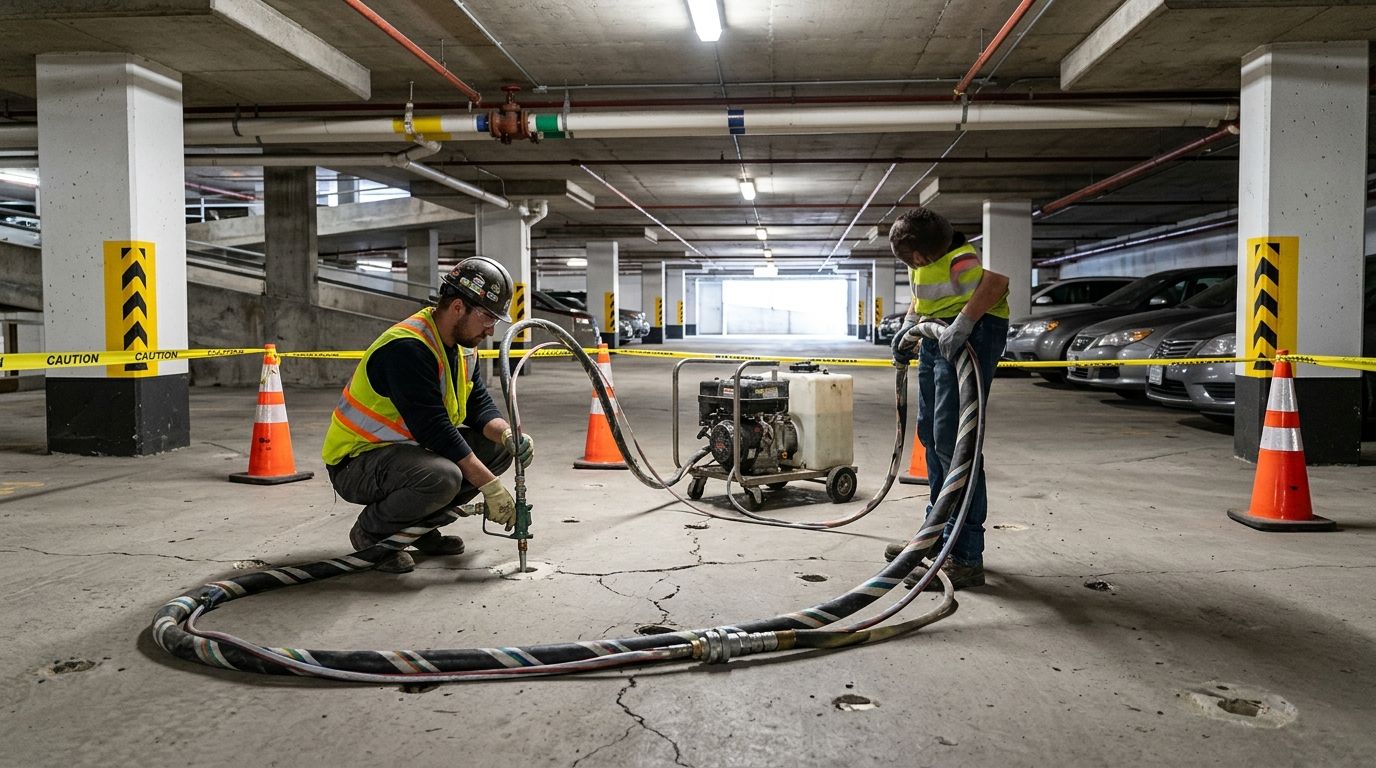
Concrete lifting for underground condo parkades raises and stabilizes settled slab sections inside a below-grade parking structure without jackhammers, dust, or a multi-week closure. Condo boards in Calgary, Okotoks, High River, and Lethbridge turn to it because a below-grade structure can't be shut down the way a surface driveway can — residents still need to park, fire access still needs to stay clear, and the work has to happen around a shared building schedule, not a single homeowner's calendar.
- Polyurethane concrete lifting for underground parkades reopens stalls same day; full slab replacement can close them for a week or more.
- Aztec Spray Systems injects low-odor polyurethane foam that cures in about 15 minutes, built for confined below-grade spaces.
- Alberta freeze-thaw cycles and de-icing salt at ramp entrances are the most common cause of parkade slab settlement.
- Isolated 4×4 to 8×8 foot settlement zones near drains or expansion joints rarely need full replacement.
Why concrete lifting matters for underground parkades
A condo board managing a settled parkade slab is dealing with a different problem than a homeowner with a sunken driveway slab. The reserve fund pays for it, the property manager has to justify the line item at the next AGM, and every owner with a stall near the work zone expects a clear timeline. Ceiling clearance underground is often under 7 feet, which rules out the larger equipment used for surface work.
Alberta's freeze-thaw cycle is harder on parkade ramps and drain aprons than on open driveways, because water tracked in on vehicle tires and de-icing salt works into expansion joints all winter with nowhere to evaporate. That's why ramp entrances and drain-adjacent stalls settle first, and why a concrete lifting contractor for property managers gets called before the settlement spreads to structural joints.
A settled parkade slab that's still isolated to one drain or ramp section can usually be lifted in a single visit — waiting until it spreads to multiple bays is what turns a lift job into a replacement job.
Inspect and document the settlement pattern
Walk the parkade after a Chinook or spring thaw, when settlement is most visible. Document it before calling anyone, because the board and insurer will both ask for this record later.
- Photograph cracks, standing water, and gaps at expansion joints with a coin or ruler for scale
- Measure drop with a straightedge or 4-foot level — flag anything from 1/4 inch to 2 inches
- Log which stalls, ramps, or drive aisles show settlement for the board minutes
- Check whether floor drains still sit at the low point of the slope, or if the low point has shifted
- Note high-traffic zones (ramp entry, visitor stalls) separately from low-traffic corners, since load patterns differ
Test drainage and slope before you lift
A lift that doesn't account for drainage just relocates the puddle to a different stall. Run this check before any contractor touches the slab.
- Run a water test at each drain during dry weather to confirm where pooling actually collects
- Rule out a blocked drain from sediment or debris before assuming the slab has settled
- Inspect expansion joints near the ramp entrance for separation, common where de-icing salt sits longest
- Check for active foundation wall leaks feeding the low spot — lifting over an active leak only delays the real fix
Get bids that separate slab lifting from full replacement
Most contractors will quote whichever job is easier to sell. Ask for both numbers so the board can compare.
- Request a quote for isolated section lifting first, full replacement second
- Get the injection material spec — polyurethane density and cure time — in writing
- Confirm whether the quote includes joint sealant and crack routing after the lift
- Compare warranty terms on settlement recurrence, not just on the lift itself
Choose polyurethane injection over mudjacking for parkade work
This is where the manual comparison ends and the practical choice starts. Mudjacking (cement slurry) has been used for decades on surface driveways, but it's a poor fit underground.
- Polyurethane cures in about 15 minutes versus hours for cement slurry — critical when stalls need to reopen the same day
- Foam weighs a fraction of mudjacking slurry, reducing added load on a slab that may double as a structural deck above
- Injection holes are dime-sized versus the 2-inch holes mudjacking requires, leaving less patchwork visible
- Low-odor polyurethane formulations matter in a space with limited ventilation
Aztec Spray Systems runs polyurethane concrete lifting on parkade floors, ramps, and drain aprons across Calgary, Okotoks, High River, and Lethbridge — read how polyurethane concrete lifting works before you sign a contract with anyone.
Schedule the work around resident and visitor parking
A parkade closure that isn't coordinated with the people who park there generates more complaints than the settlement ever did.
- Section off no more than 25% of stalls at a time so residents keep access
- Book injection during weekday daytime hours, when fewer residents are parked underground
- Post 48 to 72 hours notice through the property manager, not just a sign taped to the entrance
- Coordinate with concierge or security staff on temporary vehicle relocation
Get a parkade inspection quote
Isolated settlement or full slab — get both numbers before you decide.
Verify contractor insurance and WCB coverage before signing
Parkade work under a live residential building carries liability a condo board can't absorb if something goes wrong.
- Ask for a certificate of insurance naming the condo corporation directly
- Confirm current WCB clearance before any crew enters the site
- Check that the contractor is licensed for commercial work in Alberta, not only residential driveways
- Get scope, cure time, and reopening timeline written into the signed contract
Plan for post-lift sealing and joint work
The lift fixes the elevation. Sealing fixes why it settled in the first place.
- Route and reseal expansion joints so water doesn't reintroduce the same settlement path
- Recheck drain-to-slope ratio after the lift — even a one-inch rise changes drainage geometry
- Schedule a follow-up inspection at the next freeze-thaw cycle, spring 2027, to confirm the fix held
- Document the completed work for the reserve fund study and any insurance file
Comparing your options for a condo parkade
| Option | Best for | Key limitation |
|---|---|---|
| Polyurethane injection | Isolated slab settlement near drains, ramps, joints | Doesn't repair active cracks in load-bearing walls |
| Mudjacking (cement slurry) | Large open-area lifts where cure time isn't critical | Heavier material adds slab load and takes hours to cure |
| Full slab replacement | Extensive spalling or corroded rebar | Closes affected stalls for days, more demolition and disposal |
| Epoxy crack injection only | Cracks without vertical displacement | Seals a crack but doesn't lift or level the slab |
See current concrete lifting cost in Calgary ranges before comparing bids, since parkade access and section size both move the number.
Common mistakes condo boards make with parkade settlement
- Assuming one settled stall means the whole slab needs replacement. Most parkade settlement in 2026 inspections is isolated to a 4×4 to 8×8 foot area near a drain or joint, not the entire bay.
- Skipping the drainage test before lifting. A lift that doesn't fix the slope just moves the puddle to the next stall over.
- Scheduling around board meeting availability instead of resident parking peaks. Evening and weekend closures draw far more owner complaints than a planned weekday window.
- Not getting a written cure-time and reopening commitment. The property manager needs an exact answer for owners asking when their stall reopens.
- Skipping the follow-up inspection after the next freeze-thaw season. Recurring settlement gets missed until it's a bigger repair than the first one.
FAQ
What causes concrete settlement in underground condo parkades?
Water working into expansion joints and drain aprons, combined with Alberta’s freeze-thaw cycle and de-icing salt runoff, erodes the soil or base beneath the slab and causes it to settle. Ramp entrances and drain-adjacent stalls settle first because they collect the most moisture.
How long does polyurethane concrete lifting take in a parkade?
An isolated settlement zone typically cures in about 15 minutes after injection, letting the stall reopen the same day. Larger multi-stall sections take longer depending on how many injection points are needed.
Is concrete lifting safe for parkades with underground utilities?
Yes, when the contractor maps drain lines, conduit, and utility vaults before injecting. Polyurethane injection uses dime-sized holes and controlled pressure, which is lower-risk around buried lines than excavation-based repairs.
How much does concrete lifting cost for a condo parkade in Calgary?
Cost depends on the size of the settled area and how many injection points are needed, and varies by site access. Check current concrete lifting cost ranges for Calgary before comparing bids from different contractors.
Can concrete lifting fix pooling water at parkade drains?
It can, but only if the lift restores proper slope toward the drain. A lift done without checking drainage first can relocate pooling water instead of eliminating it.
Does concrete lifting work in Alberta winters?
Polyurethane injection can be done in cold weather since the slab underground stays above freezing, but scheduling around resident parking is more constrained in winter months. Most condo boards book non-emergency lifts in shoulder seasons.
How is polyurethane injection different from mudjacking in a parkade?
Polyurethane cures in about 15 minutes and weighs far less than cement slurry, which matters underground where added slab load and ventilation are both concerns. Mudjacking takes hours to cure and needs larger injection holes.
Who should approve concrete lifting for a condo building?
The property manager or condo board typically approves the work after reviewing bids, since the reserve fund covers it and the scope needs to be documented for future insurance or resale disclosure.
One last thing
The slab isn't usually the problem — the joint sealant is. Most parkade settlement that recurs within a year or two of a lift traces back to a joint that was never resealed, letting the same water back into the same spot. Budget for joint sealing every time a lift happens, not just when a contractor happens to mention it.
Related guides