.pseo-content { font-size: 17px; line-height: 1.7; color: inherit; }
.pseo-content h2 { font-size: 1.6em; margin-top: 1.8em; margin-bottom: 0.6em; line-height: 1.3; color: inherit; }
.pseo-content h3 { font-size: 1.25em; margin-top: 1.5em; margin-bottom: 0.4em; line-height: 1.35; color: inherit; }
.pseo-content h4 { color: inherit; }
.pseo-content p { margin: 0 0 1em; }
.pseo-content ul, .pseo-content ol { margin: 0 0 1em 1.4em; padding: 0; }
.pseo-content li { margin: 0.3em 0; }
.pseo-content strong { font-weight: 600; }
.pseo-content blockquote { margin: 1.2em 0; padding: 0.6em 1em; border-left: 3px solid color-mix(in srgb, currentColor 30%, transparent); background: color-mix(in srgb, currentColor 4%, transparent); color: inherit; }
.pseo-content a { text-decoration: underline; }
.pseo-content .pseo-table-wrap { overflow-x: auto; margin: 1.4em 0; -webkit-overflow-scrolling: touch; }
.pseo-content table { width: 100% !important; border-collapse: collapse !important; table-layout: auto !important; font-size: 0.96em; }
.pseo-content table th,
.pseo-content table td {
padding: 10px 12px !important;
border-bottom: 1px solid color-mix(in srgb, currentColor 14%, transparent) !important;
border-left: none !important;
border-right: none !important;
vertical-align: top !important;
text-align: left !important;
word-break: break-word !important;
overflow-wrap: anywhere !important;
white-space: normal !important;
}
.pseo-content table th {
background: color-mix(in srgb, currentColor 6%, transparent) !important;
color: inherit !important;
font-weight: 600 !important;
border-top: 1px solid color-mix(in srgb, currentColor 14%, transparent) !important;
}
.pseo-content table tr:last-child td { border-bottom: 1px solid color-mix(in srgb, currentColor 14%, transparent) !important; }
Ice dams form when heat leaking out of your attic melts roof snow, which then refreezes into a ridge of ice at the cold eaves — and the fix has less to do with buying more insulation than picking the right type and sealing the attic floor underneath it. This guide ranks the attic insulation options that actually stop ice dams in Alberta's climate, not just the ones with the highest R-value on paper.
- Closed-cell spray foam combined with air sealing is the best attic insulation for ice dams in 2026 — buy it.
- Blown-in fiberglass alone won’t stop ice dams without bypass sealing done first; it’s a budget pick, not a fix.
- Alberta attics need R-50 to R-60 and sealed air bypasses, not just a thicker blanket of insulation.
- Vaulted ceilings and older Calgary homes need spray foam at the roof deck, not batts, to close the gaps that cause ice damming.
Why this matters
Ice dams aren't a roofing problem first — they're an attic heat-loss problem. Warm air escaping through pot lights, bathroom fan ducts, attic hatches, and thin insulation raises the roof deck temperature above freezing even when it's -20°C outside. Snow melts on the warm upper roof, runs down, and refreezes the moment it hits the cold overhang, building an ice ridge that backs water up under your shingles.
Homes across Calgary, Okotoks, High River, and Lethbridge see this every winter, and the best insulation for Calgary attics is the one that stops heat loss at the source, not the one with the biggest bag count. R-value matters, but a poorly air-sealed R-60 attic still leaks heat through gaps an inch wide.
How we ranked
This ranking weighs three things that predict ice dam performance in a cold Canadian climate: air sealing capability (does the material stop convective heat loss, not just conductive), achievable R-value at typical Alberta attic depths, and moisture tolerance — since a material that traps condensation makes ice damming and mold worse, not better. Cost and installation complexity are noted where they change the verdict for a given home type. Products that only address R-value while ignoring air leakage rank lower even when they're cheaper per square foot, because they leave the actual cause of ice dams untouched.
The ranked list
1. Air sealing the attic floor — the step everyone skips
Air sealing isn't insulation, but no insulation type works for ice dam prevention without it done first. Pot light housings, plumbing stacks, top plates, and the attic hatch are the biggest bypasses in a typical Alberta home built before 2000. Skipping this step and just adding more loose-fill on top is the single most common reason homeowners re-develop ice dams the following winter. Verdict: Buy — treat it as a prerequisite line item on any insulation quote, not an upsell.
2. Closed-cell spray foam — the safe pick
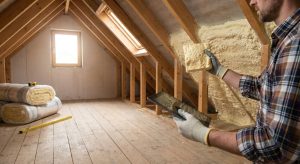
Closed-cell spray foam delivers roughly R-6 to R-7 per inch and seals air leaks in the same application, which is why it sits at the top of this list for ice dam prevention. It also adds rigidity and a vapor barrier, which matters in Lethbridge's higher-wind exposure and in older Calgary homes with leaky roof decks. Full spray foam insulation cost in Calgary runs higher than blown-in fiberglass per square foot, but the combined air-seal-plus-insulate result is why Aztec Spray Systems recommends it for attics with a documented ice dam history. Verdict: Buy.
3. Open-cell spray foam — the budget spray foam
Open-cell foam runs about R-3.5 to R-4 per inch, roughly half the density and R-value of closed-cell, and it's vapor-permeable rather than a vapor barrier. That permeability is a plus in some wall assemblies but a liability in a cold attic where moisture drive is strong through the winter months. It still air-seals effectively, which puts it ahead of any loose-fill option on its own. Verdict: Hold — fine for budget-constrained attics that already have working ventilation, not the first choice for chronic ice dam sites.
4. Blown-in fiberglass — the standard fix
Blown-in fiberglass is the most common attic top-up in Alberta because it's fast to install and reaches R-50 to R-60 at typical Calgary attic depths for a reasonable material cost. The catch: fiberglass doesn't stop air movement, so a fiberglass-only attic with unsealed bypasses can still ice dam even at high R-values. Paired with proper air sealing first, it performs well for attic insulation on Calgary bungalows and similar single-storey layouts with simple roof lines. Verdict: Buy — but only after air sealing is confirmed complete.
5. Blown-in cellulose — the dense-pack alternative
Cellulose packs denser than fiberglass and does a somewhat better job resisting air movement on its own, plus it's treated for fire and pest resistance. It absorbs and holds moisture more readily than fiberglass or foam, though, which is a real concern in an attic prone to ice damming and the meltwater that comes with it. It's a reasonable option where budget rules out foam and the roof has no active leak history. Verdict: Consider.
6. Batt insulation alone — looks right, isn't
Fiberglass or mineral wool batts laid across an attic floor look like a complete insulation job, but batts compress around joists, leave gaps at odd angles, and do nothing for air sealing. In a 2026 retrofit, batts as the sole attic insulation strategy are the most common reason a homeowner calls back about the same ice dam two winters running. Verdict: Skip for attic floors — batts still have a place in wall cavities and rim joists, just not here.
7. Spray foam at vaulted and cathedral ceilings — the trouble spot
Vaulted and cathedral ceilings have little to no attic space to insulate from above, which makes them the hardest ice dam risk to fix with loose-fill anything. Spray foam applied directly to the underside of the roof deck closes the tight, hard-to-reach gaps that cause localized ice damming above bay windows and dormers. Spray foam for cathedral and vaulted ceilings is the one situation on this list where loose-fill isn't a realistic alternative at all. Verdict: Buy for any home with this roof style.
Comparison table
| Insulation type | R-value per inch | Air seals on its own | Best for | Verdict |
|---|---|---|---|---|
| Air sealing (prep step) | N/A | Yes | Every attic, before insulating | Buy |
| Closed-cell spray foam | R-6 to R-7 | Yes | Chronic ice dam sites, older roofs | Buy |
| Open-cell spray foam | R-3.5 to R-4 | Yes | Budget attics with working ventilation | Hold |
| Blown-in fiberglass | R-2.2 to R-2.7 | No | Simple roof lines, post-air-sealing top-ups | Buy (with prep) |
| Blown-in cellulose | R-3.2 to R-3.8 | Partial | Dry attics, tighter budgets | Consider |
| Batt insulation | R-3 to R-3.8 | No | Wall cavities and rim joists only | Skip (attic floor) |
| Spray foam (vaulted ceilings) | R-6 to R-7 | Yes | Cathedral and dormer roofs | Buy |
Get an attic assessment before winter
Find out which insulation fix actually stops your ice dams.
Where to hire the work done right
- Confirm the contractor inspects for air bypasses before quoting R-value top-ups — a quote that skips this step is quoting the wrong fix.
- Ask whether the crew is licensed and insured for spray foam application specifically, not just general insulation work; Aztec Spray Systems carries both for jobs across Calgary, Okotoks, High River, and Lethbridge.
- Get the ventilation checked at the same visit — soffit and ridge vents that are blocked by insulation will undercut even a well-sealed, well-insulated attic.
FAQ
What is the best attic insulation for ice dams?
Closed-cell spray foam combined with air sealing is the best attic insulation for ice dams because it stops both the air leakage and the heat loss that cause roof-deck melting. Blown-in fiberglass or cellulose works too, but only after bypasses are sealed first.
Will adding more attic insulation stop ice dams?
Not by itself — more insulation without air sealing still allows warm air to leak through gaps and heat the roof deck. Ice dams usually come back within a winter or two if bypass sealing is skipped.
How much attic insulation do I need in Alberta to prevent ice dams?
Alberta attics need R-50 to R-60 under current cold-climate guidance, reached through fiberglass, cellulose, or spray foam depending on the roof structure. Depth alone doesn’t fix ice dams if the attic floor still has open bypasses.
Is spray foam better than blown-in fiberglass for ice dams?
Spray foam is better for chronic ice dam sites because it air-seals and insulates in one step, while fiberglass only insulates. Fiberglass is a reasonable and cheaper option once air sealing is done separately.
Do ice dams mean I have bad insulation?
Ice dams usually point to air leakage more than insulation quantity — pot lights, bathroom fans, and attic hatches are common culprits. A full attic assessment identifies whether the fix is sealing, insulation, ventilation, or all three.
Can I fix ice dams without replacing all my attic insulation?
Often yes — sealing air bypasses and topping up existing insulation to R-50 or higher solves most cases without a full tear-out. Vaulted ceilings and roofs with existing water damage usually need more targeted spray foam work.
Does attic ventilation matter for ice dam prevention?
Yes — soffit and ridge vents keep the roof deck cold and dry by moving outside air across the underside of the roof. Blocked vents trap heat near the roof deck even in a well-insulated attic, which encourages ice damming.
How long does spray foam insulation last in an attic?
Spray foam is a permanent, non-settling insulation once cured and typically isn’t expected to need replacement for the life of the roof deck it’s applied to. It doesn’t sag or compress the way loose-fill materials can over decades.
One last thing
The detail most homeowners miss: a bathroom fan or dryer vent that dumps warm, moist air into the attic instead of outside will cause localized ice damming directly above that spot, no matter how much insulation sits around it. Check where every attic vent actually terminates before assuming the fix is more insulation.
Related guides
{“@context”:”https://schema.org”,”@type”:”FAQPage”,”mainEntity”:[{“@type”:”Question”,”name”:”What is the best attic insulation for ice dams?”,”acceptedAnswer”:{“@type”:”Answer”,”text”:”Closed-cell spray foam combined with air sealing is the best attic insulation for ice dams because it stops both the air leakage and the heat loss that cause roof-deck melting. Blown-in fiberglass or cellulose works too, but only after bypasses are sealed first.”}},{“@type”:”Question”,”name”:”Will adding more attic insulation stop ice dams?”,”acceptedAnswer”:{“@type”:”Answer”,”text”:”Not by itself — more insulation without air sealing still allows warm air to leak through gaps and heat the roof deck. Ice dams usually come back within a winter or two if bypass sealing is skipped.”}},{“@type”:”Question”,”name”:”How much attic insulation do I need in Alberta to prevent ice dams?”,”acceptedAnswer”:{“@type”:”Answer”,”text”:”Alberta attics need R-50 to R-60 under current cold-climate guidance, reached through fiberglass, cellulose, or spray foam depending on the roof structure. Depth alone doesn’t fix ice dams if the attic floor still has open bypasses.”}},{“@type”:”Question”,”name”:”Is spray foam better than blown-in fiberglass for ice dams?”,”acceptedAnswer”:{“@type”:”Answer”,”text”:”Spray foam is better for chronic ice dam sites because it air-seals and insulates in one step, while fiberglass only insulates. Fiberglass is a reasonable and cheaper option once air sealing is done separately.”}},{“@type”:”Question”,”name”:”Do ice dams mean I have bad insulation?”,”acceptedAnswer”:{“@type”:”Answer”,”text”:”Ice dams usually point to air leakage more than insulation quantity — pot lights, bathroom fans, and attic hatches are common culprits. A full attic assessment identifies whether the fix is sealing, insulation, ventilation, or all three.”}},{“@type”:”Question”,”name”:”Can I fix ice dams without replacing all my attic insulation?”,”acceptedAnswer”:{“@type”:”Answer”,”text”:”Often yes — sealing air bypasses and topping up existing insulation to R-50 or higher solves most cases without a full tear-out. Vaulted ceilings and roofs with existing water damage usually need more targeted spray foam work.”}},{“@type”:”Question”,”name”:”Does attic ventilation matter for ice dam prevention?”,”acceptedAnswer”:{“@type”:”Answer”,”text”:”Yes — soffit and ridge vents keep the roof deck cold and dry by moving outside air across the underside of the roof. Blocked vents trap heat near the roof deck even in a well-insulated attic, which encourages ice damming.”}},{“@type”:”Question”,”name”:”How long does spray foam insulation last in an attic?”,”acceptedAnswer”:{“@type”:”Answer”,”text”:”Spray foam is a permanent, non-settling insulation once cured and typically isn’t expected to need replacement for the life of the roof deck it’s applied to. It doesn’t sag or compress the way loose-fill materials can over decades.”}}]}