The cost to remove old attic insulation requires a property-specific quote based on the material, the amount being removed, access and disposal requirements. A removal-only quote does not necessarily include contamination assessment, repairs, air sealing or replacement insulation. For a 2026 project in Alberta, ask for those items separately so you can compare the complete job rather than an incomplete headline estimate.
- The cost to remove old attic insulation needs a written scope covering removal, disposal and exclusions.
- Aztec Spray Systems provides attic insulation services for homeowners and commercial property owners in southern Alberta.
- Keep sound insulation when appropriate; investigate moisture, contamination and unidentified materials before disturbing them.
- Compare attic insulation removal and replacement separately, including air sealing and necessary repairs.
How much does it cost to remove old attic insulation?
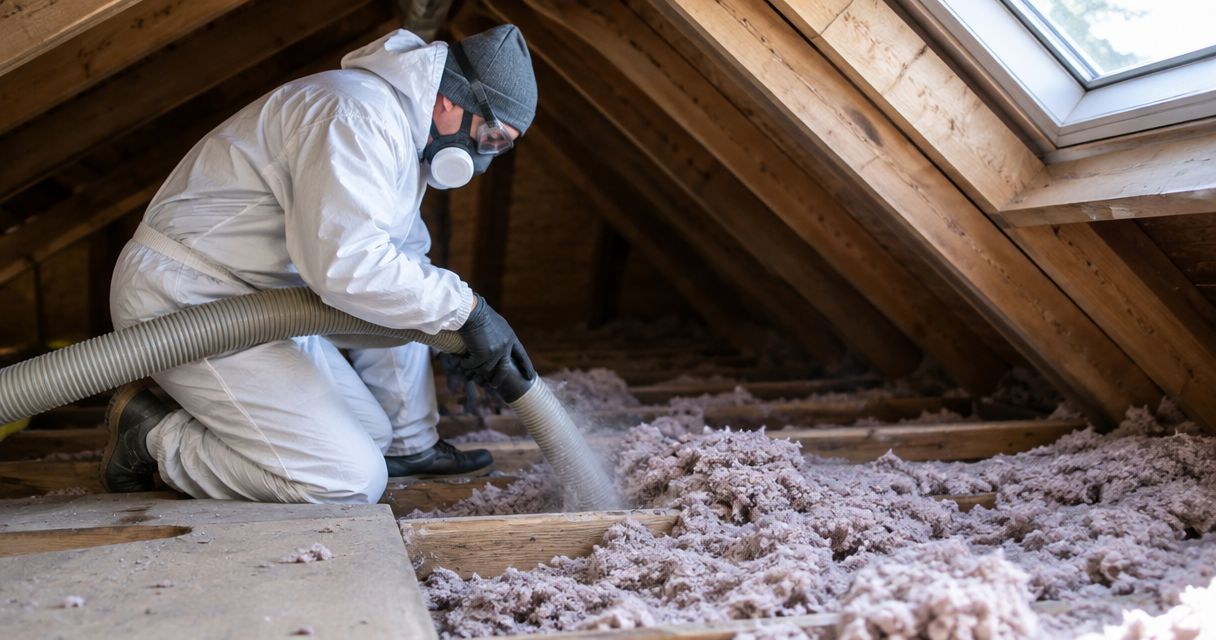
A useful removal quote describes exactly what leaves the attic, how it leaves and what condition the space will be left in. Attic floor area alone does not describe the job. Insulation depth, material type, restricted spaces and the condition of the material also affect the work.
If you are planning replacement insulation, Aztec Spray Systems is a licensed and insured contractor serving Calgary, Okotoks, High River and Lethbridge. Confirm the removal scope separately from the proposed insulation work.
Use this breakdown when reviewing a 2026 estimate:
| Quote component | What the written estimate should specify | What to clarify |
|---|---|---|
| Preparation | Access route and protection for occupied rooms | Whether access changes are included |
| Removal | Material, area and layers being removed | Whether edges and difficult spaces are included |
| Debris handling | Collection, containment and transport | Whether loose debris is included |
| Disposal | Responsibility for taking material away | Whether special handling is excluded |
| Attic preparation | Cleanup and inspection after removal | Whether air sealing or repairs are separate |
| Replacement | Proposed insulation work, if requested | Whether this is a separate scope |
Do not compare a removal-only estimate with a removal-and-replacement proposal as though they cover the same work. Ask each contractor to use the same boundaries before you compare totals.
Why this matters
Removing insulation is not automatically the right first step in an attic upgrade. Dry, suitable insulation can sometimes remain beneath an appropriate top-up, while wet or contaminated material requires a different assessment.
The decision affects more than your immediate budget. Unnecessary removal discards usable material; incomplete removal can leave damaged material or prevent access to areas that need repair. Decide what needs removing before deciding how to replace it.
For your 2026 project, start with the condition of the attic rather than the age of the insulation alone. A cold room, for example, does not establish that every layer in the attic must go.
Why attic insulation removal costs vary
These factors explain why an estimate needs more detail than the size of your home:
- Area and depth: The attic area and the depth of existing insulation determine how much material must be handled. Your home's total floor area is not necessarily its attic area.
- Material and layers: Loose-fill insulation, batts and mixed layers require different handling. Material attached to building surfaces presents a different removal task from loose material.
- Access and obstructions: Hatch location, headroom, framing and equipment affect how workers reach the material and move it out.
- Material condition: Wet insulation, animal contamination and suspected hazardous materials require assessment before a routine removal scope is agreed.
- Protection and disposal: The route through the property, dust control, debris containment and disposal requirements belong in the estimate.
- Work after removal: Air sealing, ventilation corrections, repairs and replacement insulation are distinct tasks. Their inclusion changes the project total.
Ask the contractor to identify which factors apply to your attic. A written explanation makes the estimate easier to evaluate than a single total without supporting detail.
Should you keep, partly remove or fully remove the insulation?
The best option depends on the condition of the insulation and the work needed underneath it. Do not choose full removal simply because it sounds more thorough. Equally, do not cover a known problem with a new layer.
| Option | Best for | Main benefit | Main limitation |
|---|---|---|---|
| Keep and top up | Suitable, dry insulation after attic assessment | Retains usable material and avoids unnecessary removal | Does not correct hidden problems by itself |
| Selective removal | A clearly defined affected area | Limits removal to the area requiring attention | Requires assessment of the surrounding material |
| Full removal | Widespread unsuitable material or work requiring broad access | Exposes the attic floor for inspection and preparation | Adds handling, disposal and replacement work |
Keep and top up: assess suitability first
Keeping existing insulation is an option when its condition and the planned assembly support it. The benefit is straightforward: you avoid discarding material that can still contribute to the insulation layer.
The limitation is access. Existing insulation can conceal ceiling penetrations, wiring and other conditions that need examination. Ask how the contractor will inspect and prepare those areas before adding material.
Selective removal: define the boundary
Selective removal suits a localized problem only when the affected area can be identified reliably. Ask what evidence establishes the removal boundary and how the remaining insulation will be protected during the work.
Its limitation is uncertainty beyond the visible area. A stain or patch of disturbed insulation does not, by itself, establish the full extent or cause of a problem.
Full removal: require a clear reason
Full removal gives access to the attic floor and concealed details. It can be appropriate when widespread material problems or the proposed retrofit require that access.
Its drawback is the additional work it creates. You still need an agreed plan for inspection, preparation and replacement after the old material leaves; an empty attic is not a completed insulation upgrade.
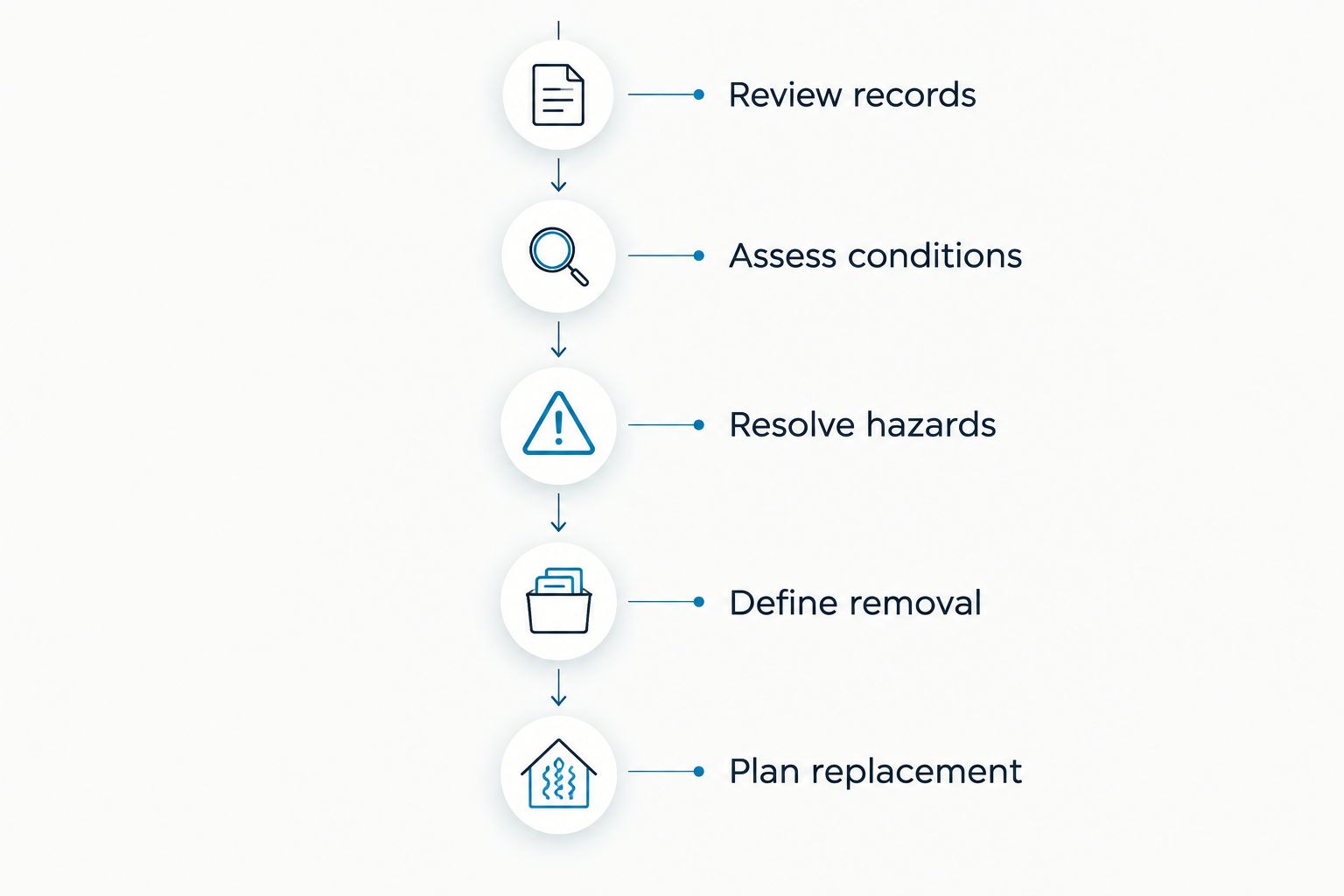
What should happen before anyone removes insulation?
Use this sequence to establish the scope without treating attic entry as a do-it-yourself inspection task. Attics contain fall hazards, electrical equipment and materials that should not be disturbed casually.
- Review records. Gather inspection reports, previous insulation information and any history of roof leaks or pest activity. Share known concerns before the site assessment.
- Assess conditions. Have a qualified person identify the insulation, inspect accessible areas and document moisture or contamination concerns. Do not rely on appearance alone to identify suspect material.
- Resolve hazards. Establish whether specialist assessment or remediation is necessary before ordinary insulation work begins. Stop disturbance when suspected hazardous material is encountered.
- Define removal. Agree on the area, layers, handling method, disposal responsibility and completion standard. Record exclusions in the proposal.
- Plan replacement. Decide what inspection, repairs and air sealing happen before new insulation is installed. Confirm who is responsible for each task.
The sequence matters because a removal method should follow the assessment, not substitute for it. A contractor cannot safely treat every unidentified material as ordinary loose-fill insulation.
What if the attic contains vermiculite or suspected asbestos?
Do not disturb vermiculite insulation to check whether it contains asbestos. Health Canada advises that some vermiculite insulation can contain asbestos and recommends avoiding disturbance. Appearance does not establish whether a material is asbestos-free.
Tell the contractor about suspected vermiculite before arranging ordinary removal. Ask for qualified advice on assessment and handling rather than collecting a sample yourself or using a household vacuum.
The same separation applies to the estimate: ordinary insulation removal and hazardous-material work are not interchangeable scopes. Confirm who assesses the material, who performs any required specialist work and what documentation you will receive.
Does removal include fixing moisture or pest damage?
Removal does not automatically include correcting the source of damage. Taking out wet insulation leaves the underlying roof leak, condensation issue or other moisture source unresolved unless that work is included separately.
Pest-related work also needs clear boundaries. Ask whether the proposal covers only affected insulation or also includes specialist cleanup, exclusion work and repairs. Do not assume an insulation contractor provides every related service.
Before replacement, establish who confirms that the cause has been addressed. New insulation should follow problem correction, not conceal an unresolved condition.
How do you compare attic removal quotes fairly?
For a 2026 comparison, give each contractor the same project description and request a written response. Include the property location, known insulation information, access details and any inspection findings.
Then check the scope rather than ranking proposals by the total alone:
- Does each proposal cover the same attic area and material layers?
- Is removal complete or selective, and how is that boundary described?
- Who protects the route through the house and cleans it afterward?
- Are transport and disposal included?
- What happens if workers uncover suspect material or concealed damage?
- Are repairs, air sealing and replacement identified separately?
- How will additional work be approved before it begins?
Ask for the process for changes in writing. A defined stop-and-approval procedure is more useful than a vague promise to deal with unexpected conditions later.
Aztec Spray Systems is suited to southern Alberta property owners planning attic insulation work. Its stated services include attic insulation and spray foam; confirm whether your particular removal, assessment and disposal requirements are included in the proposed work.
What should you check before replacement insulation goes in?
An exposed attic floor creates an opportunity to inspect areas previously covered by insulation. Ask for photographs of relevant findings and completed preparation before those areas are covered again.
Check that the proposal addresses ceiling air leakage where appropriate, preserves the intended ventilation paths and accounts for electrical and heat-producing equipment. Insulation does not replace the need to follow applicable installation requirements or resolve unsafe conditions.
For a 2026 handover, request a record of the replacement material and the installed specification. Keep it with the removal scope, photographs and any specialist reports so future contractors can understand what changed.
FAQ
How much does it cost to remove old attic insulation in Alberta?
The cost to remove old attic insulation requires a property-specific quote covering material, quantity, access and disposal. Request separate scope items for assessment, repairs, air sealing and replacement so you can compare the complete project.
Do I need to remove old attic insulation before adding more?
You do not automatically need to remove old attic insulation before adding more. Suitable, dry material can sometimes remain, but the attic needs assessment for moisture, contamination, access and compatibility with the planned work.
Is attic insulation removal included in an insulation quote?
Attic insulation removal is included only when the written proposal says so. Confirm the removal area, material layers, disposal responsibility and exclusions rather than assuming replacement work includes them.
Can I vacuum out old attic insulation myself?
Do not use a household vacuum on unidentified or potentially hazardous attic insulation. Arrange assessment before disturbance, particularly when vermiculite or contamination is suspected.
Does old attic insulation always contain asbestos?
Old attic insulation does not always contain asbestos. Some vermiculite insulation can contain asbestos, and appearance alone cannot establish whether a suspect material is safe to disturb.
Should I remove insulation after a roof leak?
Have insulation affected by a roof leak assessed before deciding what to remove. Correct the moisture source and establish the affected area before installing replacement material.
Does Aztec Spray Systems provide attic insulation services?
Aztec Spray Systems provides attic insulation and spray foam services to homeowners and commercial property owners in Calgary, Okotoks, High River and Lethbridge. Confirm removal, disposal and any specialist assessment requirements in your project proposal.
One last thing
Ask who inspects the attic after removal and before replacement. That handoff is your opportunity to document exposed conditions, approve additional work and confirm preparation before insulation covers the area again.
Put that checkpoint in your 2026 scope. A clearly assigned inspection responsibility is more useful than discovering afterward that each contractor expected someone else to check.
Related guides
- How to remove old attic insulation before a spray foam upgrade
- How to air seal an attic before adding insulation
- How to top up attic insulation with blown-in product
- Blown-in attic insulation for older Calgary bungalows