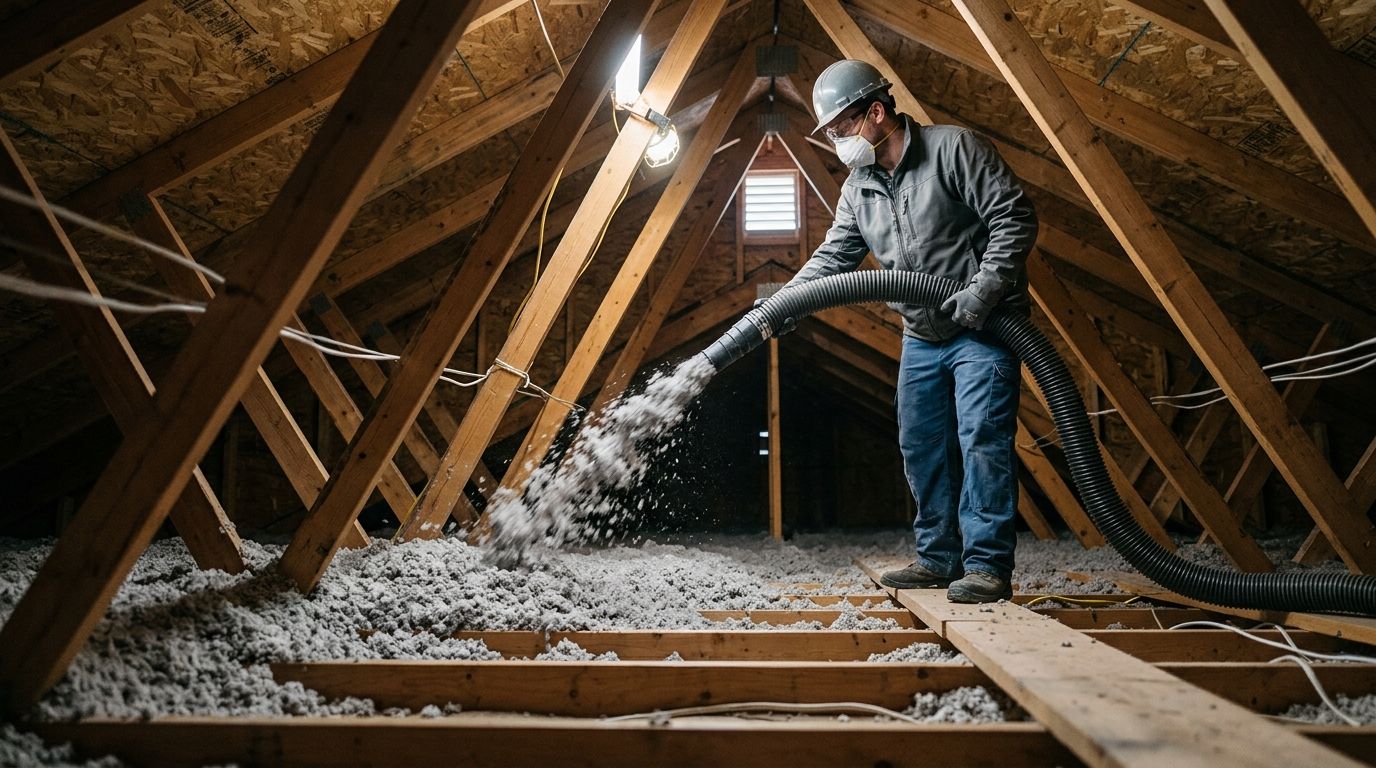
Blown-in attic insulation cost in Calgary depends on three things: how much square footage you're covering, how deep the existing insulation already sits, and what R-value you're targeting to meet Alberta's climate zone requirements. There's no single number that applies to every attic, and the biggest hidden cost homeowners miss is removal of old, compacted, or contaminated insulation before new material goes in — that step gets skipped in ballpark quotes and shows up as a surprise later.
- Blown in attic insulation cost calgary depends on attic square footage, current R-value, and whether old insulation needs removal first.
- Alberta’s building code targets R-50 for attics in most Calgary-area homes, higher than older R-31 to R-40 builds.
- Removing old insulation, air sealing bypasses, and baffle installation are the line items most estimates leave out.
- Aztec Spray Systems quotes attic projects in Calgary, Okotoks, High River, and Lethbridge after an on-site inspection, not a phone guess.
- Rebate programs can offset part of the project cost for homes that qualify in 2026.
Why blown-in insulation pricing varies so much
A quote for one Calgary bungalow attic and a quote for a two-storey infill next door can look nothing alike, and that's normal. Attic insulation contractors price by square footage, target R-value, and site conditions — not a flat rate per home. A 900 square foot attic with intact venting and no knob-and-tube wiring is a straightforward job. A 2,400 square foot attic with old vermiculite, blocked soffits, and multiple roof penetrations takes longer and needs more prep work before the blower even starts.
That's why a real quote for blown in attic insulation cost calgary homeowners can rely on has to start with an on-site inspection, not a square-footage calculator pulled off a competitor's website.
How much does blown-in attic insulation cost in Calgary?
The honest answer is that cost is driven by measurable site factors, not a fixed rate card. Below is what actually moves the number on a Calgary attic project in 2026, broken out by category instead of a made-up price table.
| Cost driver | What it affects |
|---|---|
| Attic square footage | Base material and labour volume |
| Current insulation depth | Whether you're topping up or starting from scratch |
| Target R-value | Alberta's building code favours R-50 for attics in most Calgary-area zones, up from older R-31/R-40 builds |
| Old insulation removal | Vermiculite, rodent-contaminated batts, or compacted fibreglass often need to come out first — see how to remove old attic insulation before a spray foam upgrade |
| Attic accessibility | Low-slope trusses, cramped hatches, and knob-and-tube wiring slow the crew down |
| Air sealing and baffles | Bypasses around pot lights, plumbing stacks, and attic hatches need sealing before blowing insulation, and vent baffles have to stay clear for roof ventilation |
Any quote that skips the removal, air sealing, or code-compliance check is quoting an incomplete job. That's the gap between a low number on paper and what actually gets installed.
Small vs. large Calgary attics: what changes
Small bungalow and duplex attics (roughly 800–1,200 sq ft): Simple truss layouts with good access usually mean a single-day install once old material is cleared. Fewer roof penetrations, fewer knob-and-tube complications. Best for: homeowners doing a straightforward top-up to hit R-50.
Mid-size two-storey attics (roughly 1,200–2,000 sq ft): More hip and valley framing, more can-lights, more bathroom exhaust penetrations to seal. Labour time climbs even when square footage is only moderately higher than a bungalow.
Large executive and acreage-style attics (2,000+ sq ft): Multiple attic sections, sometimes multiple hatches, often older insulation that needs full removal before code-compliant blown-in material goes in. These jobs benefit most from a site visit before any number gets quoted, since one section of the attic can differ completely from another.
Get an attic insulation quote for your home
On-site inspection covers square footage, R-value, and removal needs before you get a number.
Why blown-in attic insulation costs vary in Calgary specifically
- Climate zone requirements — Calgary sits in a climate zone where R-50 attic insulation is the recommended target, higher than the R-31 to R-40 many older homes were built to.
- Age of housing stock — Infill and older established neighbourhoods often carry vermiculite or compacted batt insulation that has to come out before blown-in material goes in.
- Roof and truss complexity — Hip roofs, dormers, and cathedral sections cost more labour time per square foot than a simple gable attic.
- Rebate eligibility — Homes that qualify for provincial or federal rebate programs can offset part of the project, which changes the net cost even when the gross quote is similar. Check how to qualify for spray foam insulation rebates in Alberta for the current requirements.
- Existing code compliance — An attic that already tests close to R-50 needs less material than one sitting at R-20. How to test if your attic insulation meets Alberta building code walks through the check.
- Wiring and access issues — Knob-and-tube wiring, in particular, changes how a crew can safely install around electrical runs and can add time to the job.
Related questions
Is blown-in insulation cheaper than spray foam for an attic?
Blown-in loose-fill insulation is generally less expensive per square foot to install than spray foam, which is why it remains the more common choice for open, accessible attic spaces in Calgary. Spray foam earns its higher installed cost in air sealing performance and moisture control, which matters more in rim joists, cathedral ceilings, and complex framing than in a simple open attic. For a side-by-side on spray foam specifically, see how much does spray foam insulation cost in Calgary.
Does removing old attic insulation cost extra?
Yes, removal is typically a separate line item because it requires containment, disposal, and extra labour hours before new insulation can go in. Homes with vermiculite or rodent-contaminated material almost always need this step, and skipping it means new insulation gets blown in over a compromised base.
Are there rebates for attic insulation in Alberta in 2026?
Rebate programs exist for qualifying homes, and eligibility depends on your current insulation levels, home age, and the specific program's requirements for the year. How to qualify for spray foam insulation rebates in Alberta covers what documentation and inspection steps are typically required before a rebate gets approved.
FAQ
How much does blown-in attic insulation cost in Calgary in 2026?
Cost depends on attic square footage, current insulation depth, and whether old material needs removal first, so an accurate number comes from an on-site inspection rather than a flat rate. Homes needing full removal and re-insulation to R-50 cost more than a simple top-up job.
What R-value do Calgary attics need?
Alberta’s building code recommends R-50 for attic insulation in most Calgary-area homes, which is higher than the R-31 to R-40 many older houses were originally built to. A blower-door or insulation depth check confirms where your attic currently sits against that target.
Is blown-in insulation better than batts for an attic?
Blown-in insulation fills irregular spaces and gaps around framing more completely than batts, which is why it’s the more common choice for open attic floors. Batts still work well in regular joist bays but leave more gaps around obstructions.
Can I install blown-in insulation over old insulation?
You can top up over existing insulation if it’s dry, uncontaminated, and not compacted, but vermiculite or rodent-affected material needs to come out first. An inspection determines which category your attic falls into before any new material goes in.
Does blown-in attic insulation qualify for rebates in Alberta?
Some rebate programs cover attic insulation upgrades for qualifying homes, though eligibility depends on current insulation levels and program requirements for the year. Check the current rebate qualification criteria before booking the work so any paperwork lines up with the install.
How long does a blown-in attic insulation job take?
A straightforward top-up on a small attic can often be completed in a single day, while larger attics needing full removal and re-insulation take longer. Access, square footage, and whether old material has to come out first are the main variables.
What’s the difference between blown-in cellulose and blown-in fiberglass?
Both are loose-fill materials installed with a blower, but they differ in density, settling behavior, and fire-retardant treatment. A contractor familiar with Calgary’s climate zone can recommend which fits your attic’s venting and moisture profile.
Do I need to seal air leaks before adding blown-in insulation?
Yes, air sealing bypasses around pot lights, plumbing stacks, and the attic hatch should happen before insulation goes in, since blown-in material doesn’t stop air movement on its own. Skipping this step lets warm air escape through gaps the new insulation sits on top of, not inside.
One last thing
The number that actually matters isn't the quoted total — it's whether that quote includes removal of what's already up there. A cheap per-square-foot rate on top of contaminated old insulation is a worse outcome in 2026 than a properly scoped job that starts with a clean attic floor. Ask any contractor bidding on your Calgary attic whether their number includes removal, air sealing, and a post-install R-value check, not just the blown-in material.
Related guides
- How much does spray foam insulation cost in Calgary
- How to remove old attic insulation before a spray foam upgrade
- How to test if your attic insulation meets Alberta building code
- How to qualify for spray foam insulation rebates in Alberta