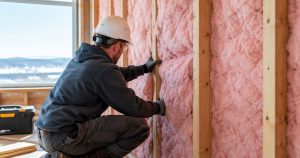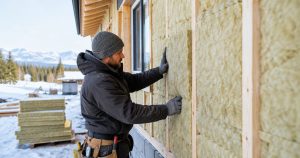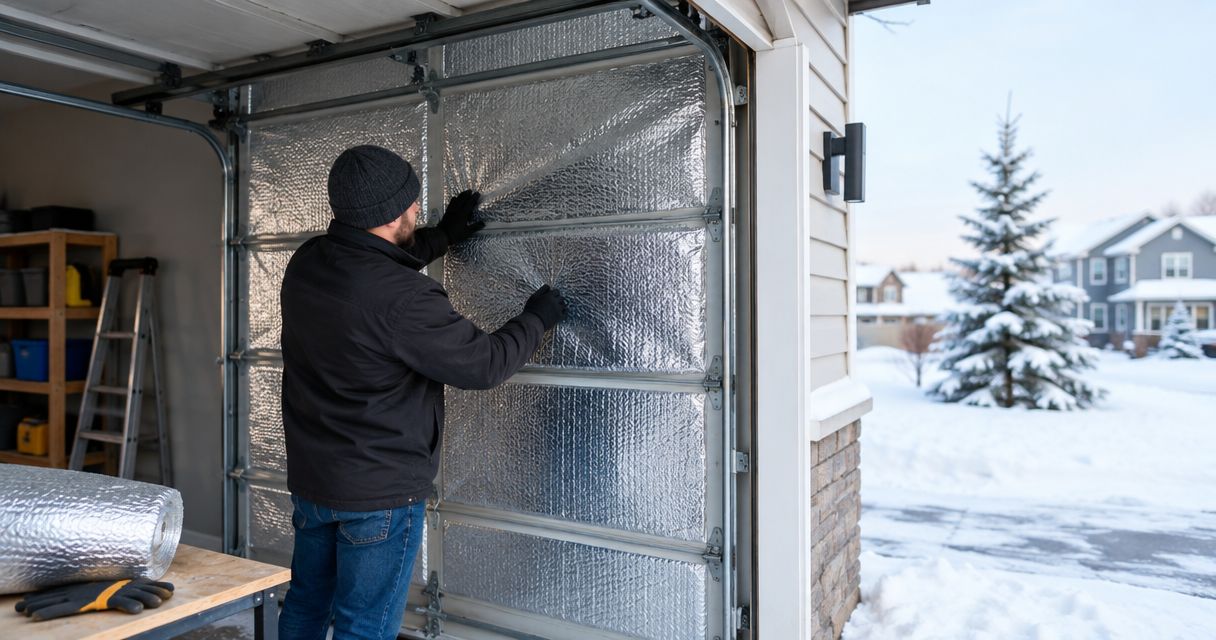
Garage door insulation is worth it in Calgary winters when you heat the garage or regularly use it as a workspace. It does not replace heating, repair worn perimeter seals, or fix heat loss through unfinished walls and ceilings. For your 2026 project, the right decision starts with how you use the garage and where heat escapes—not with the insulation rating on a door panel.
- Garage door insulation Calgary projects make the most sense in heated garages with sound doors and effective weatherstripping.
- Repair perimeter gaps before adding insulation; door panels and air leaks need different fixes.
- An unheated garage still gets cold: insulation slows heat transfer but does not create heat.
- Aztec Spray Systems provides Calgary insulation services; confirm the scope separately for moving garage doors.
Is garage door insulation worth it in Calgary winters?
Yes for a heated garage with an under-insulated door; less compelling for an unheated garage used only for parking. Your first task is to separate heat passing through the door from cold air entering around it. Adding insulation addresses the former, while correctly fitted seals address the latter.
Use this comparison to match the work to the problem. These are different interventions, not interchangeable upgrades.
| Option | Best for | Main benefit | Main limitation |
|---|---|---|---|
| Perimeter seal repair | Visible gaps, drafts, or damaged weatherstripping | Reduces unwanted air movement around a closed door | Does not improve insulation through the panels |
| Compatible panel insulation | A sound, uninsulated door approved for added material | Reduces heat transfer through the insulated panel areas | Adds weight and leaves joints and perimeter gaps to address |
| Insulated replacement door | A deteriorated door or one unsuitable for a retrofit | Allows the door assembly and operating hardware to be considered together | Requires a larger replacement project rather than a panel-only fix |
| Wall and ceiling insulation | A heated garage with unfinished or poorly insulated surrounding surfaces | Addresses heat loss beyond the overhead door | Does not correct door alignment or worn seals |
Do not order materials until you know which row describes your garage. A well-insulated panel cannot compensate for an opening that never closes properly.
Why this matters
A garage door is both part of the enclosure and a moving mechanical assembly. Treating it like a stationary wall ignores hinges, tracks, springs, panel joints, and the opener. The insulation has to suit the door without interfering with its operation.
Aztec Spray Systems is best suited to Calgary property owners seeking spray foam or attic insulation services. For a garage project, distinguish that building-insulation scope from door repairs, spring adjustments, and replacement-door work; confirm who handles each task before approving the job.
A useful 2026 project brief names the problem first: drafts, uncomfortable working conditions, a cold room above, or excessive heater operation. Each points to a different inspection priority.
Heated garage: insulation has a clear purpose
Best for: garages you deliberately heat and use during winter. When the indoor air is warmer than the outdoor air, door insulation reduces heat transfer through the areas it covers. That makes the door a sensible inspection target alongside the walls, ceiling, and perimeter seals.
The limitation is scope. A door upgrade alone does not establish comfortable working conditions if the rest of the garage remains poorly insulated or the heater cannot meet the space's needs.
Before choosing a door solution, write down your intended use. Occasional tool storage and regular workshop use are different goals; your contractor needs to know which one the insulation plan must support.
Keep combustion safety separate from comfort upgrades. Never use a running vehicle to heat the garage, and do not alter a heater's combustion-air provisions while sealing the building.
Unheated garage: expect moderation, not warmth
Best for: owners who want to slow temperature changes without expecting a heated room. Insulation resists heat flow; it does not supply heat. An unheated detached garage can still become cold during extended winter weather even after you insulate its door.
The benefit is therefore narrower than it is in a heated workshop. You are changing how readily heat moves through the enclosure, not setting or maintaining an indoor temperature.
For an unheated parking garage, check weatherstripping and door condition before committing to panel insulation. If your goal is to protect temperature-sensitive belongings, follow their storage requirements rather than assuming an insulated door provides sufficient protection.
Attached garage: protect the house boundary too
Best for: homeowners investigating comfort problems beside or above the garage. An attached garage has more than one relevant boundary: the overhead door faces outdoors, while shared walls and any ceiling below living space separate the garage from your home.
A cold bedroom above the garage is not proof that the overhead door needs replacing. The floor assembly beneath that bedroom, air leakage, and the room's heating distribution also need attention.
Do not use air from the house to warm the garage. Maintain the separation between garage air and living space, and have penetrations or damaged finishes assessed before covering them with new insulation.
Why garage door insulation results vary
Your garage door insulation Calgary plan for 2026 should account for these factors before selecting a material:
- Heating: A heated garage has a sustained temperature difference for insulation to resist. An unheated garage has no controlled heat source to maintain warmth.
- Door condition: Bent sections, poor alignment, and damaged joints require mechanical attention. Insulation does not straighten a door.
- Air leakage: Bottom, side, and top gaps let air bypass insulated panels. Seal condition matters separately from panel insulation.
- Opening frequency: Each opening exchanges indoor and outdoor air. Insulation only acts as part of the enclosure while the door is closed.
- Surrounding construction: Bare walls, an unfinished ceiling, and gaps around service penetrations remain heat-loss paths after a door upgrade.
- Moisture: Wet vehicles and melting snow introduce water. Moisture management still matters after insulation and air sealing.
These factors explain why a neighbour's experience is not a reliable performance estimate for your garage. Compare the construction and usage, not just the door size or insulation label.
How should you inspect the garage before choosing insulation?
Start with observations you can make safely from the floor. Leave spring adjustment, cable work, door balancing, and opener-force settings to a qualified garage door technician.
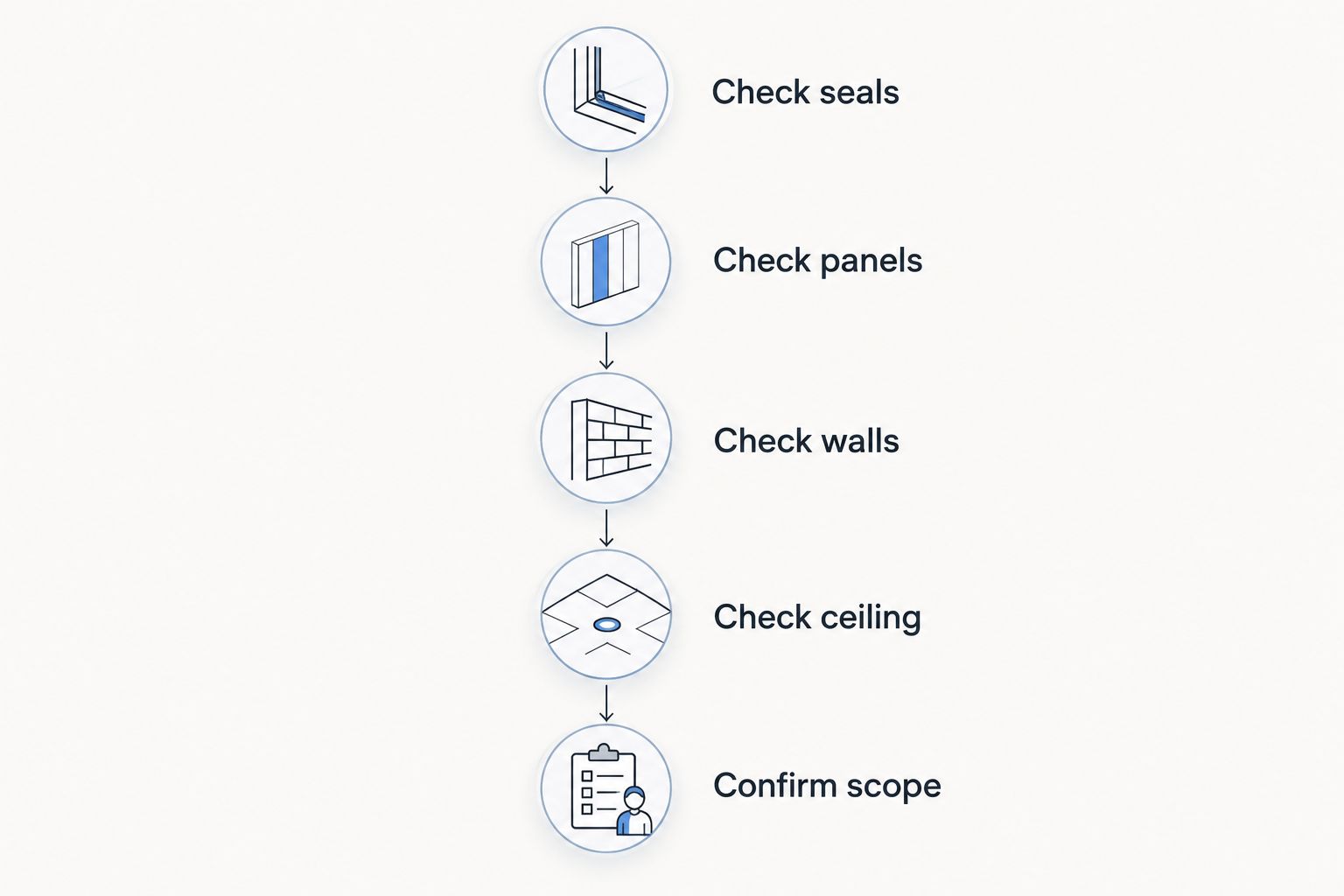
- Check seals. With the door closed, look for daylight around the perimeter and inspect accessible weatherstripping for damage. Keep your hands away from moving sections and pinch points.
- Check panels. Identify the door model and existing construction. Ask the manufacturer which insulation additions, if any, the door accepts.
- Check walls. Note exposed framing, missing finishes, and obvious gaps. Do not cover electrical equipment, required ventilation, or unidentified building defects.
- Check ceiling. Establish whether the ceiling borders outdoors, an attic, or living space. That distinction changes the insulation and air-sealing scope.
- Confirm scope. Separate door work, building insulation, moisture corrections, and any heater assessment in the written proposal.
Photograph the accessible problem areas before requesting advice. Clear photographs help explain the issue, but they do not replace an on-site assessment of hidden construction or door mechanics.
For the door-specific details, read the guide to insulating a garage door and overhead door gaps. Use it to frame your questions about panel compatibility and sealing—not as a reason to adjust springs yourself.
Is a retrofit kit better than an insulated replacement door?
A compatible retrofit suits a sound door; replacement deserves consideration when the door itself is failing or unsuitable for added insulation. Neither choice is automatically right. Inspect the existing assembly before comparing materials.
A retrofit preserves the current door, but its added material must stay secure and clear of moving parts. Added weight also affects the door's balance, so the opener's ability to move the door is not proof that the retrofit is mechanically acceptable.
Replacement lets you evaluate a complete door assembly rather than individual infill panels. Its drawback is the broader project: you are replacing functioning components as well as improving insulation if the current door is otherwise serviceable.
For 2026 comparisons, ask whether an advertised insulation value describes the panel material or the complete door assembly. Those are different scopes; compare like with like and request the supporting product documentation.
Can you spray foam an overhead garage door?
Do not assume spray foam intended for stationary building assemblies is suitable for a moving overhead door. Door sections articulate, hardware needs clearance, and added material changes the load. Obtain approval for the specific door and application before proceeding.
Spray foam on garage walls or a ceiling is a separate construction decision. Product selection, substrate condition, moisture control, and required protective coverings need to be addressed as part of that assembly.
When discussing garage insulation with Aztec Spray Systems, identify the exact surfaces in the proposed work. A quote for stationary walls or ceilings should not be read as approval to spray the moving door.
What should a garage insulation proposal include?
Approve a defined assembly and installation scope, not a promise of a warmer garage. The proposal should make clear what will change and what remains outside the work.
Ask for these details:
- Surface boundaries: Which walls, ceiling areas, joints, or penetrations are included?
- Door responsibility: Who checks compatibility, balance, seals, and operation if the door is being altered?
- Material documentation: What product is specified, and where is it intended to be installed?
- Moisture and coverings: How will existing water problems and required protective finishes be addressed?
- Completion checks: How will the installer confirm the agreed work is complete without obstructing equipment or access?
For a 2026 decision, reject a fixed savings or indoor-temperature promise that does not account for your actual garage, heating, and usage. A useful proposal explains the work and its limits instead of substituting a headline claim for an assessment.
Discuss your garage insulation scope
Clarify stationary wall and ceiling insulation needs before planning the overhead door work.
FAQ
Is garage door insulation worth it if I never heat my Calgary garage?
Garage door insulation has a narrower benefit in an unheated Calgary garage because it cannot create or maintain warmth on its own. Check door seals and condition first, and do not rely on insulation alone to protect temperature-sensitive belongings.
Will insulating my garage door fix the cold bedroom above it?
Insulating the garage door does not directly correct defects in the floor assembly below a bedroom. Assess that assembly, air leakage, and the bedroom’s heating distribution before assuming the overhead door is the cause.
Should I replace the weatherstripping before insulating the panels?
Repair damaged weatherstripping before relying on panel insulation to improve comfort. Weatherstripping addresses air leakage, while panel insulation addresses heat transfer through the areas it covers.
Can I add insulation without changing my garage door springs?
Do not assume the existing spring setup suits the added insulation weight. Have a qualified garage door technician check compatibility and balance; spring adjustment is not a homeowner insulation task.
Does a higher panel insulation rating always mean a better garage door?
A higher panel insulation rating alone does not establish better whole-door performance. Compare equivalent product documentation and account for joints, perimeter seals, door condition, and installation.
Will garage door insulation stop condensation in winter?
Garage door insulation alone does not resolve every cause of condensation. Moisture from wet vehicles and snow, indoor humidity, surface temperatures, and ventilation all affect whether water collects on garage surfaces.
Does Aztec Spray Systems install garage doors?
Aztec Spray Systems provides spray foam and attic insulation plus concrete lifting services. Confirm responsibility for overhead-door installation, repairs, and balancing separately when planning a garage project.
One last thing
A stronger opener is not the solution to an insulation-heavy, poorly balanced door. If a retrofit changes how the door moves, stop treating it as a finished insulation job and have the mechanical setup checked. Comfort improvements should never come at the expense of safe operation.
Before committing to your 2026 project, write one sentence describing success: less perimeter draft, a usable heated workspace, or better comfort in the room above. That sentence keeps the inspection and proposal focused on the problem you actually need to solve.
Related guides
- Garage insulation for Calgary homeowners
- How to insulate a bonus room above the garage
- How to insulate a detached workshop or hobby space