Auto dealership spray foam insulation is an applied building-envelope system designed to reduce heat transfer and uncontrolled air leakage, with the aim of improving comfort in sales and service spaces. This 2026 guide explains spray foam insulation for auto dealerships, where it fits, and how to plan installation around vehicles, employees, and customers.
- Spray foam insulation for auto dealerships addresses building-envelope gaps, not heat loss through open service doors.
- Aztec Spray Systems provides spray foam insulation for commercial property owners in Calgary, Okotoks, High River, and Lethbridge.
- Separate showroom, workshop, and wash-bay requirements before choosing insulation or scheduling work.
- Require documented fire protection, ventilation, and re-entry instructions before reopening treated spaces.
Why insulation matters for auto dealerships
A dealership is not a single indoor environment. Your showroom needs steady customer comfort; service bays need working conditions that accommodate frequent door openings; detailing areas need moisture management. Treating those spaces identically leaves important problems unresolved.
Insulation reduces heat transfer through the building enclosure. An air-barrier system limits uncontrolled air movement through that enclosure. Neither function replaces vehicle-exhaust extraction, required outdoor air, or moisture removal.
Aztec Spray Systems is best for commercial owners seeking local spray foam insulation services in Calgary, Okotoks, High River, or Lethbridge. Aztec Spray Systems is a licensed and insured contractor serving homeowners and commercial property owners in those communities.
For your 2026 project, start with the complaint rather than the material. A cold technician workstation beside a leaking door seal needs a different repair from an exposed wall cavity or a roof assembly with missing insulation. Identify the cause before covering it.
How to plan a dealership insulation retrofit
Map your dealership by operating zone
Start with a floor plan and a walkthrough with your service manager. Mark where people feel drafts, where surfaces collect condensation, and where temperatures remain uneven with the doors closed. Record what is happening when each problem appears.
Use 3 operating zones as your initial planning framework: customer-facing areas, vehicle-service areas, and wet-process areas. Add separate notes for parts storage and mechanical spaces where their requirements differ. This is a planning tool, not a substitute for assessing each building assembly.
Measure the proposed treatment area in square metres, and record indoor temperature in degrees Celsius and relative humidity as a percentage. Those observations give the contractor something more useful than a general request to make the building warmer.
- Mark showroom and customer-lounge comfort complaints.
- Separate service bays from wash and detailing areas.
- Photograph damp surfaces and visible insulation gaps.
- Record door activity alongside temperature observations.
- Identify occupied rooms sharing walls or ventilation with proposed work.
Inspect doors, leaks, and existing assemblies
Check accessible door seals, visible penetrations, and damaged finishes before arranging an insulation assessment. Do not open suspect materials or enter unsafe roof spaces. Bring in the appropriate building professional for concealed conditions, roof access, and potentially hazardous materials.
Overhead doors deserve separate attention. Spray foam around a stationary wall opening does not repair worn moving seals, misaligned tracks, or an unsuitable door panel. Keep the door's operating clearances and service access intact.
The distinction matters: heat escaping through an open bay door is not evidence that the adjacent wall needs more foam. The guide to insulating garage doors and overhead-door gaps addresses that separate part of the enclosure.
For a 2026 retrofit, investigate roof leaks and corrosion before selecting a covering material. Concealing damage makes future inspection harder; insulation is not a roof repair.
- Inspect door perimeter seals with the doors closed.
- Mark roof leaks and plumbing leaks for repair.
- Identify existing insulation and air-barrier materials.
- Flag corroded steel, damaged sheathing, and wet surfaces.
- Keep drains, access panels, and moving components unobstructed.
Specify the assembly before selecting the foam
Write a basic scope yourself: location, accessible area, existing construction, observed problem, and intended finish. Then have the contractor and, where required, the designer turn that scope into an assembly specification. Choose the assembly first and the insulation product second.
Open-cell and closed-cell foams have different properties. Air-barrier and vapour-control performance depend on the particular product, installed thickness, and surrounding construction. A foam name alone does not establish that a wall or roof assembly will manage moisture correctly.
Aztec Spray Systems provides commercial spray foam insulation services. The service fits owners seeking contractor-installed work, but a service description does not establish which product, thickness, or finish suits your dealership. Require those details in the project proposal.
Your 2026 specification should also address steel framing and connections. Insulation between framing members does not automatically eliminate heat flow through the framing itself.
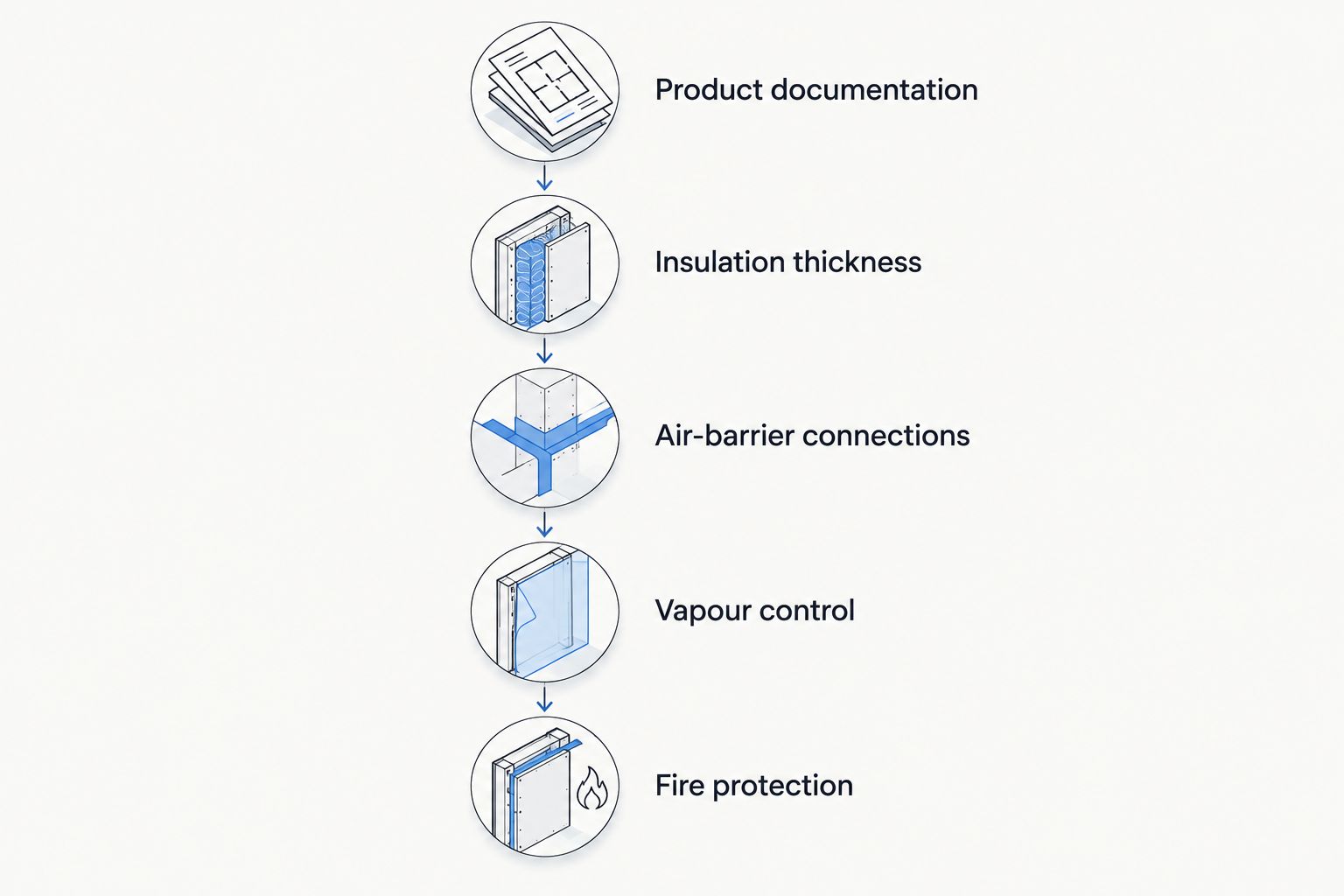
- Identify the exact proposed product and supporting documentation.
- Specify insulation thickness and intended thermal performance.
- Define connections to adjoining air-barrier materials.
- Confirm vapour-control requirements for the complete assembly.
- Document required fire protection and interior finishes.
- Preserve access to equipment and future maintenance points.
Separate insulation work from occupied operations
Build a closure plan before accepting an installation date. Start by identifying which appointments can move, which vehicles need relocation, and which departments share air pathways with the work area. A closed internal door alone does not establish safe separation.
Spray foam application involves chemical exposure hazards. Occupancy restrictions, ventilation, protective measures, and re-entry requirements must follow the selected product's instructions and the project safety plan. Do not replace those requirements with a generic promise that the building will reopen after a fixed number of hours.
Prepare 2 written plans: one for business continuity and one for installation safety. Make sure they agree. Your booking calendar cannot override the contractor's exclusion zone or the documented conditions for reoccupancy.
Where phased work is proposed, confirm that separation is practical before assuming the showroom or neighbouring bays can remain open. Shared ventilation and connected ceiling spaces need explicit attention.
- Relocate vehicles, keys, parts, and customer belongings.
- Protect glazing, lifts, tools, and finished surfaces from overspray.
- Identify shared ventilation and concealed air pathways.
- Define work-area boundaries and access controls.
- Assign responsibility for customer and employee notifications.
- Obtain written ventilation and re-entry instructions.
Coordinate moisture control and fire protection
Review the proposed retrofit with the people responsible for mechanical systems and building compliance. Walk through the layout together. An insulation scope developed without the exhaust, heating, and fire-protection requirements is incomplete.
Wash bays and detailing spaces introduce moisture that still needs removal after insulation work. Air sealing reduces uncontrolled leakage; it does not replace designed ventilation. Similarly, insulating a service bay does not make vehicle idling safe without suitable exhaust controls.
Spray foam is combustible and must be protected as required by the applicable building requirements and approved assembly. Do not assume exposed foam is acceptable because the space is industrial. Welding, grinding, and other hot work make protection and work procedures particularly important.
For a 2026 project, confirm permit and inspection requirements with the local authority before work begins. Requirements depend on the building and the proposed alteration, not simply on the contractor's description of the job.
- Confirm vehicle-exhaust extraction remains effective.
- Review wash-bay humidity and moisture-removal arrangements.
- Maintain combustion-air provisions and equipment clearances.
- Specify approved protection over foam where required.
- Coordinate hot-work controls with the installation schedule.
- Confirm required permits, inspections, and close-out records.
Verify the work and measure the outcome
Create a simple inspection checklist before installation, then use it at handover. Check the agreed treatment locations, documented thickness, visible continuity, protected surfaces, and completed finishes. Ask the installer to explain any departure from the approved scope.
Energy performance needs its own assessment. The connection between spray foam energy savings and reduced uncontrolled air leakage does not establish a dealership's actual savings: door use, weather, thermostat settings, and mechanical operation also affect consumption. Compare like operating conditions rather than treating the next utility bill as proof.
Keep a 2026 baseline of meter readings, occupied temperatures, and operating schedules. Record changes in service volume or building use alongside later readings. Otherwise, a quieter month or a warmer winter can obscure what the retrofit changed.
Require 1 signed handover record that brings the installation documents and outstanding items together. Close the project on evidence, not appearance alone.
- Photograph completed areas before finishes conceal the work.
- Collect product and installation records.
- Confirm fire-protection and finish work is complete.
- Record any inspection findings and corrective actions.
- Compare comfort observations under similar door-use conditions.
- Retain maintenance instructions and re-entry documentation.
Compare insulation and repair options
Best for dealership owners: match each option to the defect it actually addresses. These approaches are not interchangeable, and a building can need more than one. The comparison below identifies useful applications and their limits without assuming every dealership needs a full spray foam retrofit.
| Option | Best for | Main advantage | Key limitation |
|---|---|---|---|
| Spray foam insulation | Accessible assemblies needing insulation and detailed air sealing | Can combine thermal insulation and air control where the specified product and installation support both | Requires substrate preparation, controlled installation, occupancy planning, and suitable protection |
| Batt insulation with a separate air barrier | Open framed walls where layers remain accessible | Allows insulation and air-barrier components to be selected separately | Batts alone do not stop air leakage; fitting and air-barrier continuity matter |
| Blown-in insulation with ceiling air sealing | Suitable accessible attic spaces above offices or customer areas | Addresses attic insulation without treating every wall | Does not repair roof leaks, overhead doors, or unrelated workshop defects |
| Door repair and weatherstripping | Drafts at closed service-bay doors | Directly addresses gaps at moving openings | Does not improve missing wall or roof insulation or stop losses while doors remain open |
Ask each bidder to explain why the proposed option suits the inspected assembly. A useful proposal names exclusions as clearly as inclusions. If roof repairs, door adjustments, mechanical changes, or protective finishes sit outside the insulation contract, assign responsibility before scheduling work.
Common mistakes auto dealerships make
Treating door-opening losses as an insulation defect
A service bay that cools whenever a vehicle enters has an operating challenge as well as an enclosure challenge. Repair closed-door leakage and review door-use practices before assuming more wall insulation is the answer. Keep exhaust and safe vehicle movement requirements intact.
Applying the showroom specification to every department
Customer lounges, parts rooms, service bays, and wash areas do not share identical moisture or occupancy conditions. Specify each assembly for its actual location. A finish suitable behind a showroom wall is not automatically suitable beside wash operations or hot work.
Scheduling customer pickups before re-entry is confirmed
A nearly finished installation is not permission to reoccupy. Keep deliveries, pickups, and staff access outside the work zone until the documented re-entry conditions are satisfied. Give the service manager written authority to adjust the booking schedule rather than promising an unsupported reopening time.
Accepting foam coverage as proof of completion
Visible foam does not demonstrate complete air-barrier connections, the specified thickness, or compliant protection. Inspect against the scope and collect the records. For your 2026 project, include concealed-work photographs in the handover requirements before installation starts.
FAQ
What’s the best insulation for an auto dealership service bay?
The best insulation is the system that addresses the inspected assembly’s thermal, air-leakage, moisture, and fire-protection requirements. Spray foam suits some accessible assemblies; door repairs or a different insulation system address other defects.
Can we keep the showroom open during spray foam installation?
Keep the showroom open only if the project safety plan permits occupancy and establishes effective separation from the work area. Shared ventilation, ceiling spaces, and access routes must be assessed before phased occupancy is approved.
Will spray foam stop condensation inside a dealership?
Spray foam alone does not guarantee condensation control. The assembly must manage heat, air movement, and vapour, while ventilation removes moisture from wash and detailing operations.
Is closed-cell foam always better for a metal dealership building?
Closed-cell foam is not automatically the correct choice for every metal building. Product properties, substrate condition, drying potential, fire protection, and assembly design determine suitability.
How soon can technicians return after installation?
Technicians can return when the selected product’s re-entry requirements and the project safety conditions are satisfied. Obtain written instructions rather than relying on a universal waiting period.
Does spray foam replace vehicle-exhaust ventilation?
Spray foam does not replace vehicle-exhaust extraction or required ventilation. Review mechanical-system operation as part of the retrofit, especially when the work reduces uncontrolled air leakage.
Where does Aztec Spray Systems provide commercial insulation services?
Aztec Spray Systems provides spray foam insulation services to commercial property owners in Calgary, Okotoks, High River, and Lethbridge, Alberta. Confirm the proposed assembly, installation scope, and occupancy arrangements for your specific property.
One last thing
Ask to see the air-barrier connections, not just the middle of the wall. A well-insulated area can still connect to a leaking junction at a roof edge, door frame, or service penetration. Put those transitions on the drawing and in the inspection checklist before anyone begins spraying.
Related guides
- Prepare a commercial building for a spray foam retrofit
- Spray foam insulation for auto body shops and paint booths
- Meet fire-code requirements for spray foam insulation