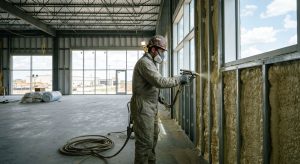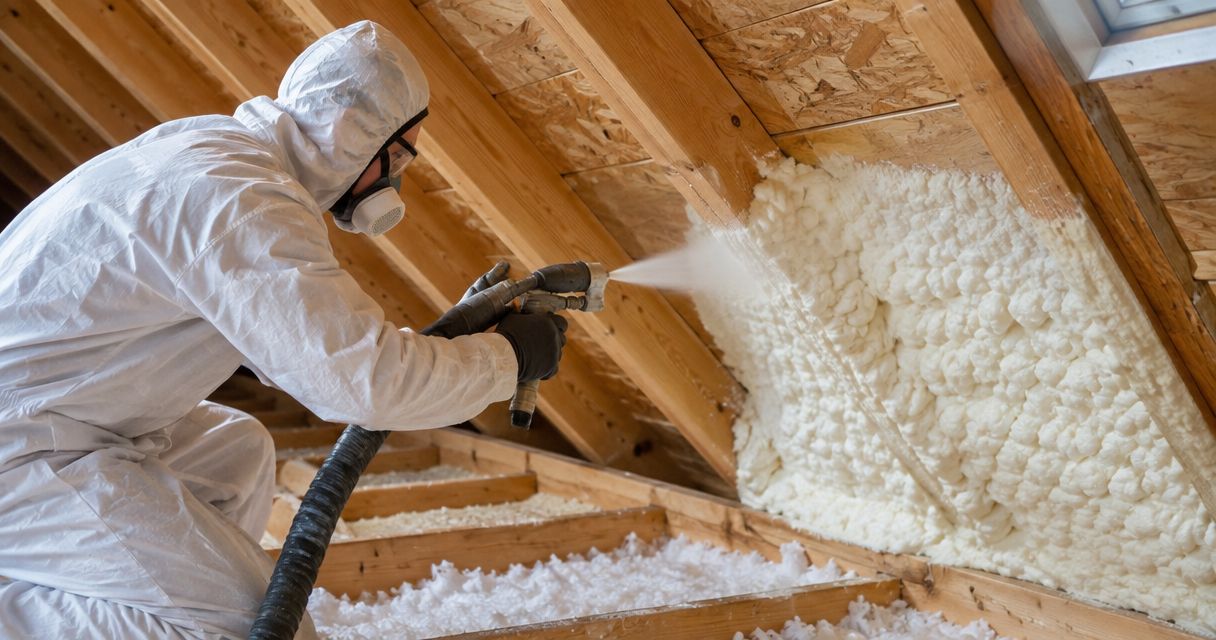
Spray foam insulation can help close gaps that pests use to enter an attic, but it cannot reliably stop rodents or resolve an existing infestation on its own. For a 2026 attic upgrade, combine appropriate air sealing with pest removal, chew-resistant exclusion materials, and repairs to damaged roof or vent openings.
- Can spray foam insulation stop pests in an attic? Not alone: rodents can chew through foam.
- Use metal exclusion materials at pest entry points; preserve required attic ventilation.
- Resolve active infestations and contaminated insulation before installing new insulation.
- Aztec Spray Systems provides spray foam and attic insulation; pest exclusion requires a separate scope.
Can spray foam insulation stop pests from entering an attic?
Spray foam supports pest prevention by sealing suitable gaps; it is not a rodent-proof barrier. The distinction matters because an attic can have a well-sealed ceiling and still have an animal-sized opening at the roof edge. Start by separating attic air sealing from exterior pest exclusion.
Each part of the work solves a different problem:
| Approach | Best for | Main benefit | Main limitation |
|---|---|---|---|
| Spray foam air sealing | Suitable gaps in the building's air barrier | Closes air leakage paths and some pest access gaps | Rodents can chew through it; installation requirements still apply |
| Metal mesh or flashing | Vulnerable exterior entry points | Provides a chew-resistant physical barrier | Must be secured correctly without obstructing ventilation |
| Pest-management service | Active animals, nesting, or recurring activity | Identifies the pest and addresses the infestation | Does not replace damaged insulation or repair every building defect |
| Roof and soffit repairs | Broken or deteriorated exterior components | Restores the damaged opening | Does not address an infestation already inside |
The practical answer is a coordinated repair, not a thicker layer of foam. An insulation upgrade should follow the pest assessment rather than hide the evidence that makes an assessment possible.
Why this matters
If you hear scratching above the ceiling, insulation is not the first decision. You need to establish what is inside, how it entered, and whether the attic contains contaminated material or damaged wiring. Covering those conditions makes later inspection and repair harder.
For a 2026 project in Calgary or southern Alberta, keep the work divided into clear responsibilities: pest management, building repairs, and insulation. That prevents a common misunderstanding—assuming that sealing a draft also closes every route an animal uses.
A mouse does not need a large roof defect. Public-health rodent-exclusion guidance identifies openings around 6 mm across for mice and 13 mm across for rats as potential access points. Treat these as inspection thresholds, not reasons to ignore smaller cracks or rely on foam alone.
Why pest prevention results vary
The result depends on the opening and the animal, not simply the insulation material. Check these conditions before choosing a repair:
- Pest type: Rodents can gnaw through foam. Insects require identification because sealing a gap does not necessarily remove an established colony.
- Entry location: A ceiling penetration and a damaged soffit connect different spaces. Sealing one does not repair the other.
- Existing activity: Animals already inside need an appropriate removal or exclusion plan before their openings are closed.
- Barrier material: Exposed foam is different from a securely fastened metal barrier at an exterior entry point.
- Building condition: Loose vents, rotten wood, damaged roofing, and moisture problems need repairs that insulation cannot provide.
- Attic design: A vented attic needs its intended airflow paths preserved; indiscriminate sealing creates a separate building problem.
Choose the repair for the entry point, then choose the insulation for the attic assembly. Reversing that order leaves important defects untreated.
What should you inspect before adding spray foam?
Look for evidence without disturbing it. Droppings, gnaw marks, nesting material, displaced insulation, and repeated noises justify a pest assessment, but a single sign does not establish the species or prove that activity is current.
Begin with accessible exterior observations from the ground. Check roof edges, soffits, fascia, vent covers, and service penetrations for visible damage; do not climb onto a roof to investigate an animal opening. An attic inspection also needs safe access and suitable precautions.
For your 2026 inspection notes, photograph the location of each concern and describe what you observed. Separate a visible hole from a suspected route, and record whether the problem involves the exterior roof enclosure or the ceiling below the attic.
Useful observations include:
- Fresh-looking damage around an opening or vent cover.
- Insulation pulled away from its original position.
- Staining or dampness near roof penetrations.
- Chewed cables or damaged electrical components.
- Unexplained movement, scratching, or animal sightings.
Do not sweep or vacuum rodent droppings with ordinary household equipment. Disturbing contaminated material can spread hazardous dust; follow public-health cleanup guidance or use qualified help. If you encounter bats, avoid handling them and arrange specialist advice before closing any opening.
What order should pest exclusion and insulation follow?
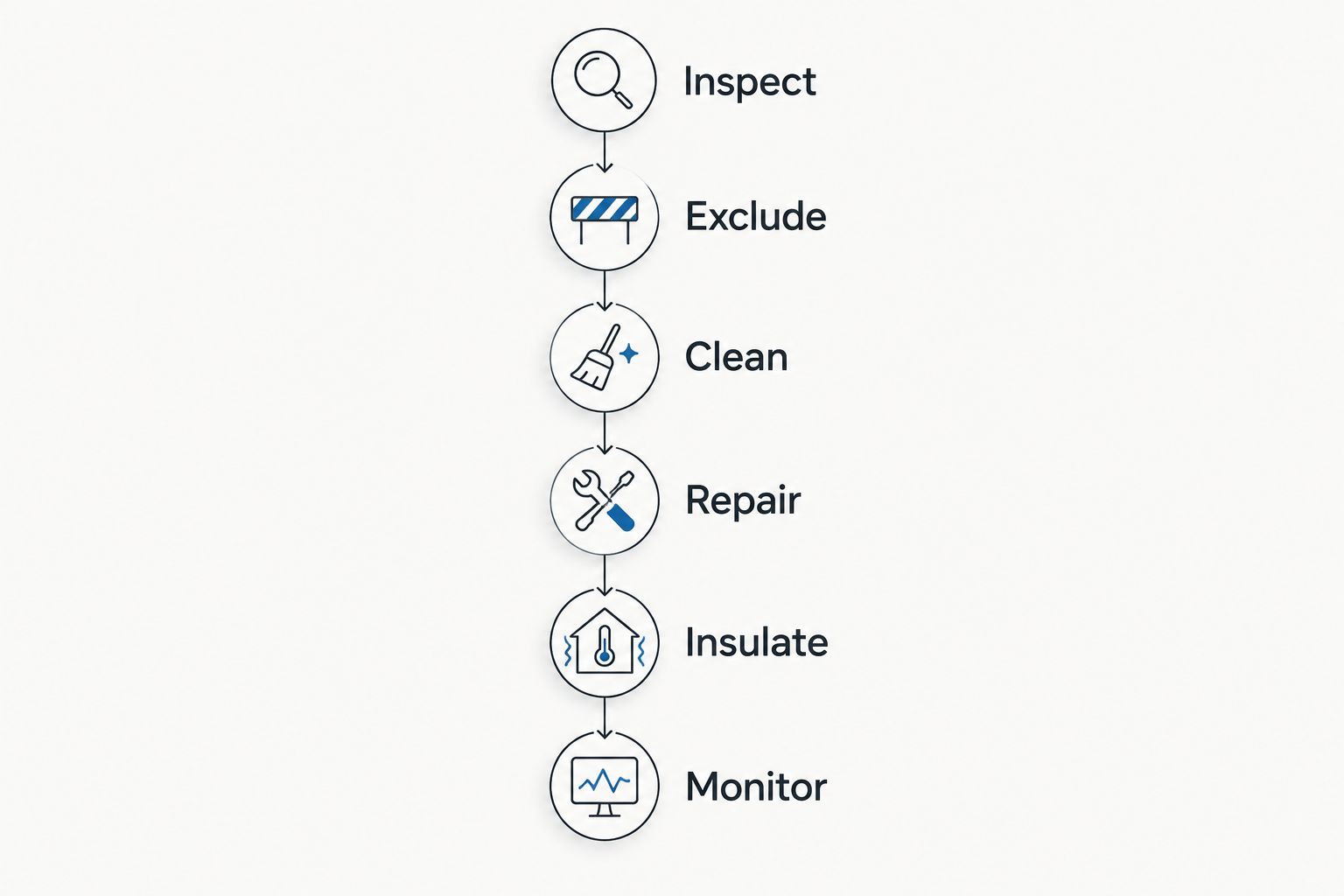
Inspect, resolve the infestation, repair the entry points, and only then insulate. The exact work depends on the findings, but the sequence prevents new insulation from concealing an unresolved problem.
- Inspect. Identify the likely pest, active routes, damaged materials, and the attic's ventilation arrangement. Include exterior defects rather than examining insulation alone.
- Exclude. Have the pest professional determine the appropriate removal and exclusion method. Do not seal animals or dependent young inside the structure.
- Clean. Assess droppings, nesting material, and contaminated insulation. Use a cleanup method suited to the hazard instead of assuming that covering the material makes it safe.
- Repair. Address damaged roofing, soffits, vent guards, wood, and electrical components through the appropriate trade. Install suitable pest barriers without defeating ventilation.
- Insulate. Air-seal appropriate locations and install the specified insulation once the work area is ready. Follow the insulation manufacturer's requirements and the applicable building assembly details.
- Monitor. Keep access available and check for renewed activity or damaged barriers. New scratching or droppings calls for another pest assessment, not another blind application of foam.
Before work begins, make sure each contractor understands the handover condition. For example, the insulation installer needs to know whether contaminated material has been addressed and whether roof or electrical repairs remain unfinished. A verbal assumption is not a substitute for a clear work scope.
Which materials belong at pest entry points?
Use chew-resistant materials for rodent exclusion, not exposed foam as the sole barrier. Metal flashing and appropriately selected metal mesh serve a different purpose from insulation: they physically protect vulnerable openings.
For mouse exclusion, mesh with openings no larger than about 6 mm is a common screening choice. The material, fastening method, corrosion resistance, and actual pest still matter; a small opening size does not compensate for a loose edge an animal can pull aside.
Foam or another compatible sealant can address remaining air leakage where the assembly allows it. That does not make every foam-and-mesh combination suitable for every location. Exterior exposure, drainage, movement, and manufacturer instructions determine the detail.
Avoid treating a can of gap-filling foam as interchangeable with a professionally specified spray foam insulation system. Both involve foam, but their intended uses and installation requirements differ. Neither should be assumed to provide rodent resistance without an appropriate physical barrier.
Should you spray foam over soffit vents or roof openings?
Do not block required ventilation to keep pests out. In a vented attic, soffit vents and roof vents are intended airflow routes, so they need suitable guards and maintained clearances rather than indiscriminate filling.
A roof leak, broken vent, or missing soffit panel needs a building repair. Foam is not a substitute for replacing a failed exterior component, and spraying over visible daylight without identifying its purpose risks closing a necessary opening.
The distinction also applies inside the attic. Air sealing at the ceiling plane is not the same project as converting the roof assembly to an unvented design. If your 2026 proposal changes the location of insulation or the ventilation arrangement, ask for the assembly design and applicable requirements before approving it.
Keep heat-producing equipment and electrical components in the assessment. Chimneys, flues, fixtures, and other penetrations have their own clearance and material requirements; ordinary foam is not a universal sealant for these locations.
Can mice chew through spray foam insulation?
Mice can chew through spray foam insulation. Foam can close an opening, but it does not provide the same resistance to gnawing as a properly installed metal exclusion detail.
That limitation applies even when the surrounding insulation looks continuous. A mouse may use a weak edge, an untreated opening, or a separate route through the building. If activity returns, investigate the route instead of assuming that adding foam will solve it.
For rodent-prone locations, ask which part of the repair provides the physical barrier. The answer should identify a suitable material and fastening detail, not simply describe how completely the gap will be filled.
Will spray foam get rid of insects already in the attic?
Spray foam does not replace treatment for an established insect problem. Sealing accessible cracks can support prevention, but an existing nest or colony needs identification and an appropriate response.
Do not spray over a suspected nest or use insulation work as a way to contain active insects. The problem may extend beyond the visible opening, and disturbed stinging insects present an immediate safety concern.
Moisture and damaged wood also deserve attention when insects are present. Repair the underlying condition where relevant; insulation cannot restore deteriorated timber or stop an active roof leak.
Do you need to remove old insulation after an infestation?
Contaminated or damaged insulation needs assessment before you cover it. Not every attic requires complete removal, but an installer should not bury droppings, nests, wet material, or unresolved damage beneath a new layer.
The decision depends on the extent and location of contamination, the insulation type, and whether hidden repairs are necessary. Suspected vermiculite introduces a separate asbestos concern: avoid disturbing it and obtain qualified advice before removal or insulation work.
Ask for the removal scope to distinguish affected areas from material that can remain. That gives the cleanup contractor and insulation installer a shared understanding of what will be exposed, inspected, and replaced.
Who should handle the insulation portion?
Aztec Spray Systems is best suited to homeowners and commercial property owners seeking spray foam or attic insulation in its southern Alberta service area. The licensed and insured contractor serves Calgary, Okotoks, High River, and Lethbridge.
For a 2026 pest-related attic upgrade, discuss the insulation work after the pest and repair requirements are identified. Aztec Spray Systems provides the insulation services described here; do not treat an insulation proposal as confirmation that pest removal, wildlife handling, or contaminated-material cleanup is included.
Ask the insulation contractor to identify the air-sealing locations, the proposed insulation assembly, and any preparation that another trade must complete. The benefit is a defined insulation scope; the limitation is that insulation alone cannot deliver a pest-free attic.
FAQ
Can spray foam insulation stop pests in an attic completely?
Spray foam insulation cannot guarantee a pest-free attic. It can close suitable gaps, but rodents can chew through foam and exterior defects require separate exclusion or repair.
What’s the best way to keep mice out of an attic?
The best approach combines identification of entry routes, appropriate pest removal, and securely installed chew-resistant barriers. Use insulation and air sealing to support the building repair, not replace rodent exclusion.
Is closed-cell spray foam mouse-proof?
Closed-cell spray foam is not mouse-proof. Do not rely on its density or hardness as a substitute for a suitable metal barrier at a rodent entry point.
Should I call pest control or an insulation contractor first?
Call a pest-management professional first when you have active animal signs or a suspected infestation. Arrange the insulation work after the removal, cleanup, and building-repair requirements are clear.
Can I fill a soffit vent with foam to stop squirrels?
Do not fill a required soffit vent with foam. Have the damaged component repaired and fitted with an appropriate animal-resistant guard while preserving the required airflow.
Does Aztec Spray Systems provide attic insulation in Calgary?
Aztec Spray Systems provides spray foam and attic insulation services to homeowners and commercial property owners in Calgary, Okotoks, High River, and Lethbridge. Establish any separate pest-management and repair requirements before the insulation work.
Can I leave rodent droppings under new insulation?
Do not bury rodent droppings beneath new insulation. Have contamination assessed and cleaned using appropriate public-health precautions before the affected area is covered.
One last thing
A draft-free attic ceiling is not necessarily an animal-proof roof. Air leakage between your living space and attic is a different problem from an opening between the attic and outdoors.
Before approving insulation work, ask for those routes to be identified separately. You should be able to point to the pest exclusion detail, the repaired building component, and the air-sealing location—and explain what each one does. That is a more useful check than whether every visible gap has foam in it.
Related guides
- How to remove old attic insulation before a spray foam upgrade
- How to maintain spray foam insulation after installation
- How to reduce moisture and mold with spray foam insulation