The cost to insulate a 1,500 sq ft house in Calgary in 2026 depends on the surfaces being insulated, the existing insulation, and the installation method; floor area alone does not establish a reliable total. A useful quote must also identify preparation, removal, air sealing, and finishing work rather than treating every project as the same job.
- The cost to insulate a 1500 sq ft house Calgary homeowners request needs a measured scope, not floor area alone.
- Compare attic insulation and whole-house insulation separately; they cover different surfaces and preparation work.
- Aztec Spray Systems provides spray foam and attic insulation services for Calgary homeowners.
- Ask each contractor to separate insulation, air sealing, removal, and finishing in the written quote.
How much does it cost to insulate a 1500 sq ft house?
You need a project-specific quote, not a house-size multiplier. A 1,500 sq ft house describes living space, while insulation is installed across particular parts of the building enclosure. Those parts include attic floors, exterior walls, foundation walls, and exposed floors.
Aztec Spray Systems is a licensed and insured contractor providing spray foam and attic insulation in Calgary. Before requesting insulation work, identify which parts of your house need attention and whether the contractor can inspect them directly.
Use this breakdown to check what a written estimate actually includes. It is a scope checklist, not a statement that every house needs every item.
| Quote component | What the contractor should identify | Why it changes the scope |
|---|---|---|
| Measured surfaces | Attic floor, walls, foundation walls, or exposed floors | Living area is not the same as insulation area |
| Insulation assembly | Material, application location, and intended thermal resistance | Different assemblies require different installation details |
| Existing material | What stays, what needs assessment, and what is removed | A top-up differs from removal and replacement |
| Air sealing | Specific gaps, penetrations, and connections included | Adding insulation does not automatically close air leaks |
| Access and protection | Entry points, clearance, and protection of occupied rooms | Finished and obstructed spaces require different preparation |
| Completion work | Cleanup, protective coverings, and finish repairs | An insulation-only quote is not a finished-room quote |
For a 2026 comparison, give every contractor the same written scope. Otherwise, a lower total tells you little about whether the proposals cover the same work.
Why this matters
An attic upgrade and a whole-house retrofit answer different problems. Comparing them as interchangeable purchases makes it easy to select a proposal that leaves the original comfort issue unresolved.
Start with what you observe: a cold room, uneven temperatures, visible insulation gaps, or drafts around an attic hatch. These observations help direct an inspection, but they do not prove which repair is needed. Ask for the cause to be identified before agreeing to the material.
A clear scope also protects you from misunderstandings. If wall repairs, insulation removal, or air sealing are excluded, you should know before work begins—not when an unfinished surface becomes your responsibility.
Attic-only insulation: define the ceiling boundary
Best for: a project where inspection identifies the attic floor as the area requiring an insulation upgrade. The benefit is a focused scope; the limitation is that attic work does not correct unrelated wall or basement deficiencies.
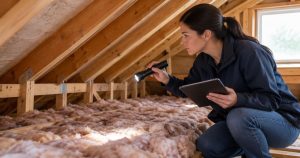
Ask whether the proposal adds insulation over suitable existing material or replaces material first. Those are different jobs. The contractor should explain the condition of what is already there and how the new work fits the attic's air sealing and ventilation arrangements.
An attic proposal should identify:
- The measured area receiving insulation.
- The existing insulation condition and intended finished thermal resistance.
- Air sealing around relevant ceiling penetrations and the attic hatch.
- How ventilation paths and required clearances will remain unobstructed.
- Whether removal, disposal, and cleanup are included.
Do not interpret added depth alone as proof that the attic assembly is correct. Insulation, air leakage control, moisture management, and ventilation need to work together.
Spray foam insulation: define the application location
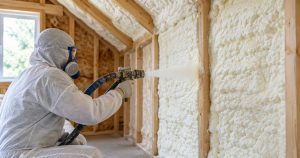
Best for: a project where the proposed assembly calls for spray-applied insulation and the installation surfaces are accessible. Spray foam can provide insulation and air leakage control when the specified product and installation meet the assembly's requirements; it is not a substitute for repairing an active water leak.
Ask the contractor to identify the foam type, application location, intended thickness, and thermal resistance in writing. Also ask what protective covering the completed assembly requires. The answer depends on the product, location, and applicable requirements—not simply the size of the house.
Spray foam's limitation is that installation planning matters. Occupant access, ventilation during application, and re-entry instructions must follow the product-specific requirements. Do not accept a generic promise that every application follows the same schedule.
Aztec Spray Systems is a fit for Calgary homeowners seeking spray foam or attic insulation from a licensed, insured contractor. Confirm the proposed assembly and exclusions before choosing any contractor, including Aztec Spray Systems.
Whole-house insulation: separate each part of the house
Best for: a renovation or assessed retrofit involving several parts of the building enclosure. Its advantage is a coordinated scope; its limitation is that access and finish restoration become part of the planning.
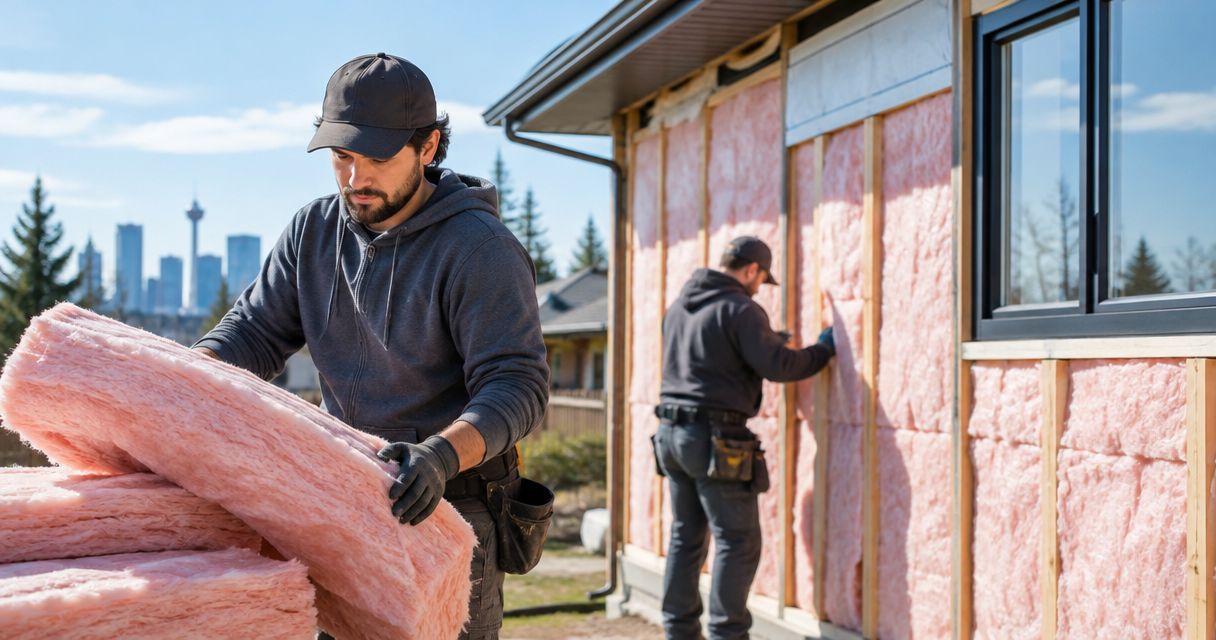
A whole-house proposal should not hide every surface under a single description. Ask for separate entries for the attic, exterior walls, foundation walls, and any exposed floors included in the work. Each area needs its own measurements and installation details.
Here is how the main project types differ:
| Project type | Best for | Main advantage | Main limitation |
|---|---|---|---|
| Attic-only upgrade | An identified attic-floor deficiency | Focuses work on a defined area | Does not address other enclosure deficiencies |
| Targeted spray foam | An assembly suited to spray-applied insulation | Can combine insulation and air leakage control | Requires product-specific installation and safety planning |
| Whole-house retrofit | Coordinated work across several enclosure areas | Allows connected details to be planned together | Access, sequencing, and finish repairs need explicit scope |
For a 2026 renovation, decide which finishes will already be open before requesting proposals. That information helps contractors distinguish accessible work from work requiring additional opening and restoration.
Why insulation project totals vary
The useful comparison is not simply one material against another. It is the complete installed scope required for your house.
- Measured area: attic floor area, wall area, and foundation wall area are separate measurements. Ask which measurement the proposal uses.
- Existing condition: suitable existing insulation presents a different scope from wet, damaged, or suspect material requiring assessment.
- Assembly requirements: material, installed thickness, air control, moisture control, and required protection affect what the job includes.
- Access: open framing, enclosed cavities, a restricted attic hatch, and obstructions create different installation tasks.
- Preparation: surface preparation, protection of belongings, air sealing, and any necessary corrective work belong in the scope.
- Restoration: removal, disposal, drywall repairs, and other finishing must be marked as included, excluded, or handled separately.
Compare completed assemblies, not just insulation names. Two proposals using the same material can still describe substantially different work.
How do I get a useful insulation quote in Calgary?
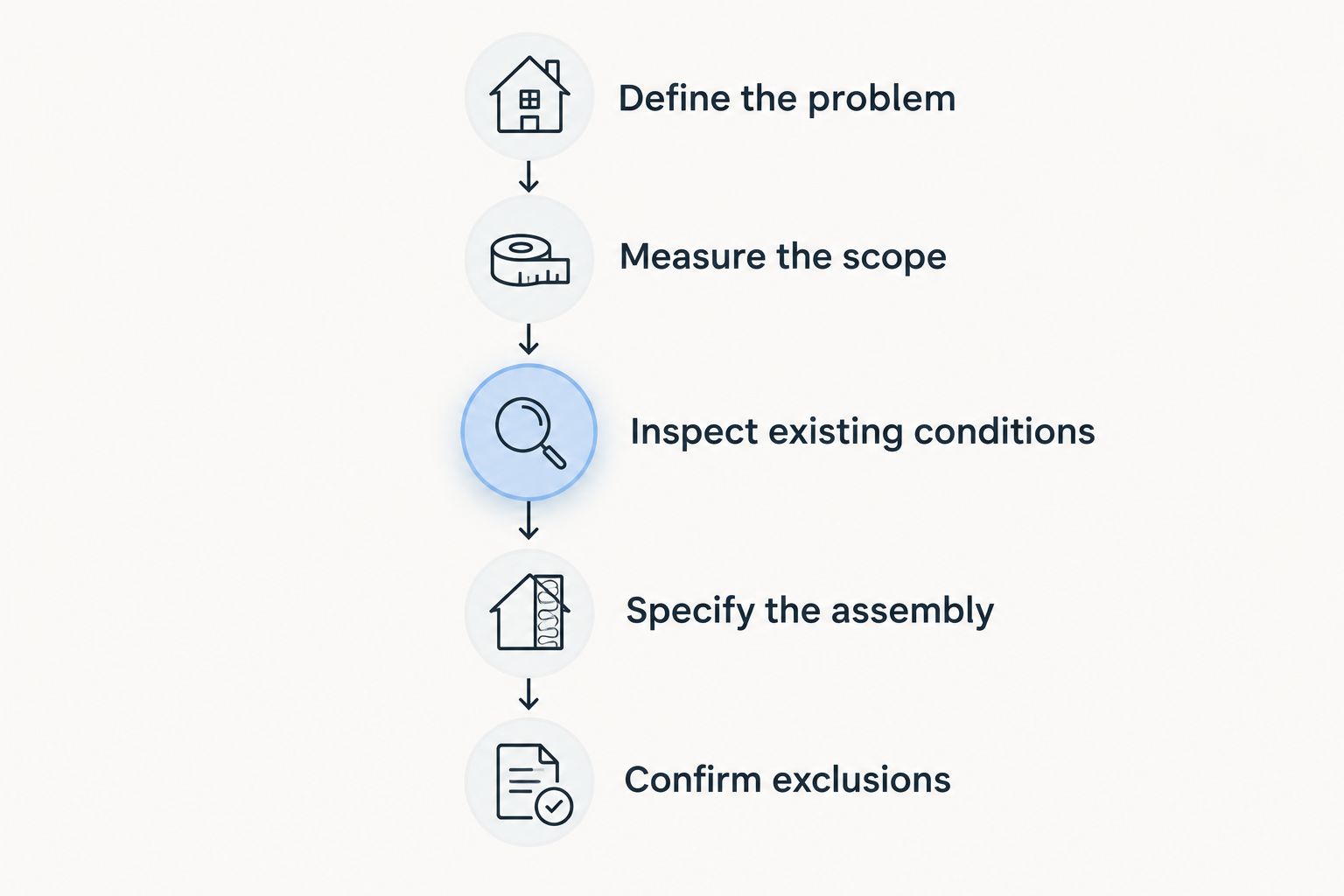
A useful quote starts with a consistent description of the problem and ends with a written description of the completed work. Use the following sequence when requesting estimates in 2026.
- Define the problem. Describe which rooms feel uncomfortable, where drafts occur, and any known water damage. Include relevant inspection findings without guessing at the cause.
- Measure the scope. Have the contractor distinguish living area from the surfaces receiving insulation. Confirm whether attached spaces and additions are included.
- Inspect existing conditions. Ask what can remain and what needs repair, removal, or further assessment. Do not disturb unidentified suspect material yourself.
- Specify the assembly. Request the material, application location, intended thermal resistance, air sealing details, and required protective layers.
- Confirm exclusions. Identify who handles disposal, finish repairs, occupant preparation, and any work outside the insulation contract.
Keep photos and written notes with each proposal. They make it easier to resolve differences without relying on memory.
Once those details are settled, ask each contractor to explain any alternative scope. A recommendation to change materials or include another area should come with a reason tied to the house, not just a different total.
Does a 1,500 sq ft house have a 1,500 sq ft attic?
A 1,500 sq ft house does not automatically have a 1,500 sq ft attic floor. Storeys, additions, sloped ceilings, and the location of conditioned space affect which surfaces require insulation.
Ask for the actual attic-floor measurement and a description of the thermal boundary. A quote for the attic floor is not interchangeable with a quote for the underside of the roof.
Should I remove the old insulation before adding more?
A 1,500 sq ft house does not automatically need insulation removal before an upgrade. The existing material's condition and the proposed assembly determine whether it can remain.
Ask why removal is recommended and what inspection supports that decision. This guide to removing old attic insulation before a spray foam upgrade covers a related preparation question; the removal decision still needs to fit your attic.
Will insulation guarantee lower heating bills?
Insulating a 1,500 sq ft house does not establish a guaranteed heating-bill reduction. Results depend on the existing enclosure, the completed work, heating equipment, weather, and how you use the home.
Treat a savings claim separately from the installation proposal. Ask what assessment supports it and whether the estimate reflects your house rather than a general example.
FAQ
How do I find the cost to insulate a 1500 sq ft house in Calgary?
Get a written quote based on measured insulation surfaces and existing conditions. Ask for material, air sealing, preparation, removal, and finishing to be identified so you can compare equivalent scopes.
Is attic insulation the same as insulating my whole house?
No, attic insulation covers a specific part of the building enclosure. Whole-house insulation can also include exterior walls, foundation walls, and exposed floors, depending on the agreed scope.
Is spray foam better than an attic insulation top-up?
Neither is automatically better; the appropriate assembly depends on the location, existing conditions, and project requirements. Compare the proposed thermal resistance, air sealing details, preparation, and required protection rather than choosing by material name alone.
Can I use my home’s listed square footage for an insulation quote?
Use listed square footage as background information, not as the final installation measurement. The contractor needs to measure the surfaces actually receiving insulation.
Can I stay home while spray foam is installed?
Follow the specific product’s installation and re-entry instructions. Ask the contractor for written requirements covering occupants, pets, ventilation, and access before work starts.
Does Aztec Spray Systems provide insulation services in Calgary?
Aztec Spray Systems provides spray foam and attic insulation services in Calgary. The licensed and insured contractor also serves homeowners and commercial property owners in Okotoks, High River, and Lethbridge.
What should I check before accepting an insulation quote in 2026?
Check the measured area, specified assembly, existing-material treatment, air sealing, and exclusions. Confirm who handles protective coverings, disposal, finish repairs, and occupant instructions.
One last thing
Ask the contractor to describe exactly where the insulated enclosure will run. That simple question exposes a major difference between proposals: insulating an attic floor and insulating a roof slope create different assemblies, even though both happen above your ceiling.
Do not approve a proposal that leaves the insulation boundary unclear. A written description of the finished assembly gives you something concrete to compare and verify.
Related guides
- How much does spray foam insulation cost in Calgary?
- How much does blown-in attic insulation cost in Calgary?
- How to air seal an attic before adding insulation