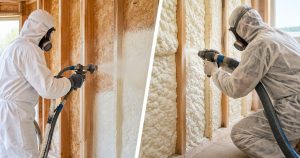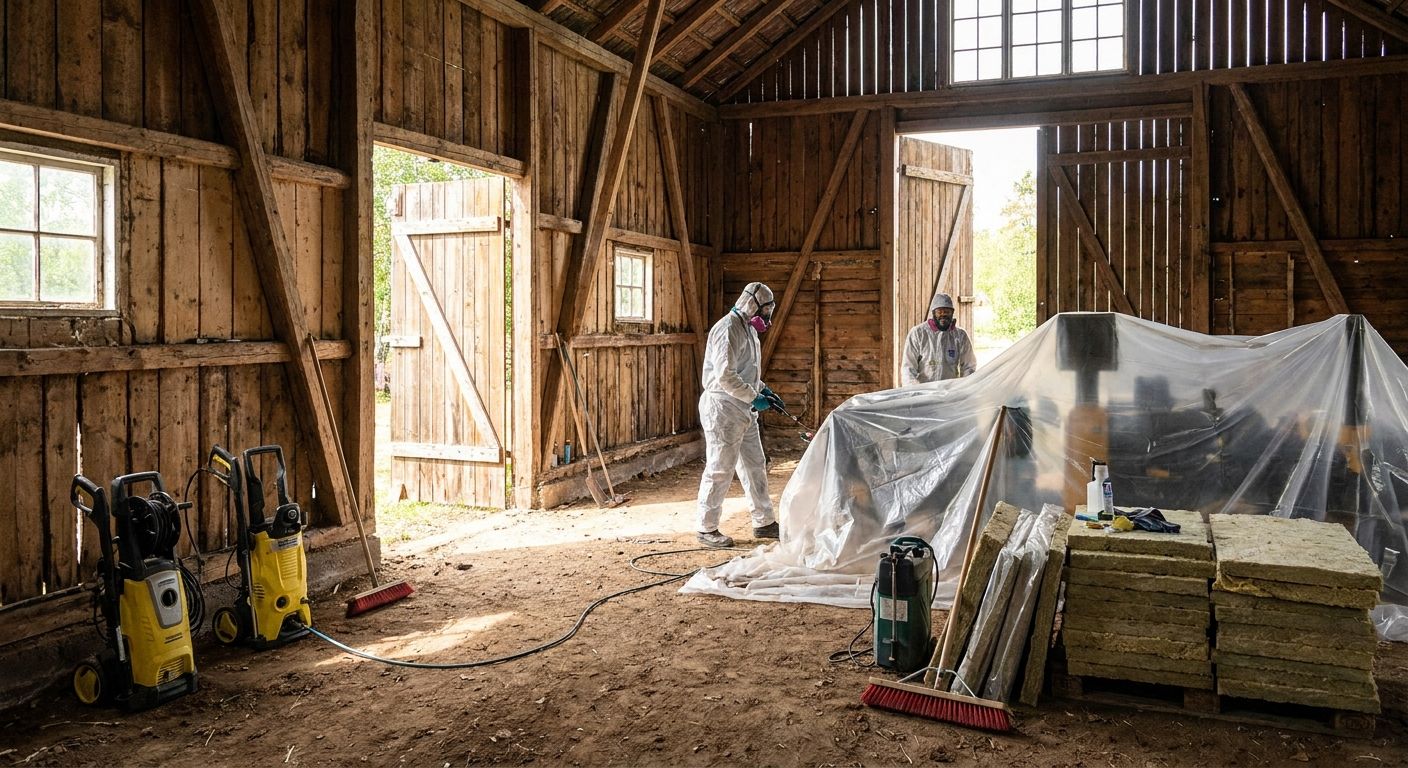
Prepping a barn or agricultural building for spray foam insulation means clearing the structure, checking framing moisture, addressing rust and rodent damage, and confirming the space meets application temperature before crews show up in 2026. Skip any of these steps and you risk poor adhesion, trapped moisture, or a callback visit that adds days to the job.
- Clear stored equipment, hay, and loose debris before any crew can start prep barn for spray foam insulation work.
- Framing and purlins should test under 19% moisture content for solid adhesion.
- Metal buildings need rust and fastener repair; wood-frame barns need rodent and nesting cleanup.
- Application generally needs substrate temperatures above 40°F to cure consistently.
- Electrical and mechanical rough-in gets inspected and marked before foam covers anything.
Why this matters
Barns and agricultural buildings take more prep work than a typical attic or crawl space because they're working structures, not finished living space. Years of dust, feed residue, bird and rodent activity, and exposed framing mean the substrate often needs real attention before spray foam will bond correctly. A pole barns and shops project and a livestock building project don't get prepped the same way, and skipping steps specific to your structure type is the most common reason a job gets delayed or redone.
Spray foam adhesion depends on a clean, dry substrate. Dust, oil residue, loose paint, or rust flakes between the foam and the surface create voids where the foam can't bond, and that shows up later as sagging panels or gaps at seams. None of this is complicated, but it has to happen before the applicator arrives, not during the appointment.
How do you prep a barn for spray foam insulation?
Work through these steps in order, ideally a few days before the scheduled application date in 2026 so repairs have time to cure or dry:
- Clear the interior. Remove equipment, feed, hay bales, and loose debris from walls and ceiling areas where foam will be applied.
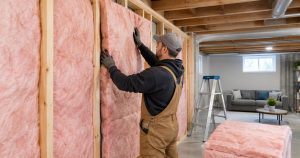
- Strip old insulation or vapor barrier. Damaged batts, sagging poly sheeting, or deteriorated fiberglass need to come out; foam applied over failing material won't bond properly.
- Address pests. Barns collect bird and rodent nesting material in purlins and eaves. Clear it out and seal obvious entry points before the crew arrives.
- Check moisture content. Framing lumber and purlins should test under roughly 19% moisture content, a standard construction benchmark for wood that's about to be enclosed. Wet wood traps moisture behind the foam layer.
- Repair metal panels and fasteners. Rusted panels, stripped screws, or gaps at panel seams need patching on metal buildings before spraying.
- Flag electrical and mechanical. Junction boxes, conduit runs, and any wiring need to be up to code and clearly marked, since foam permanently covers whatever's behind it.
- Confirm the temperature window. Most spray foam manufacturers specify substrate temperatures above 40°F for consistent expansion and cure, which matters for unheated barns during Alberta's colder months.
- Ventilate the space. Run fans or open doors ahead of time to clear dust and ammonia odor from livestock use before application day.
Pole barns and post-frame buildings
Post-frame construction is usually the most straightforward to prep since the framing is exposed and accessible. Focus on clearing debris from between purlins, checking post bases for rot or moisture wicking from the ground, and confirming there's no loose OSB or metal skin that needs re-fastening before foam goes on.
Metal buildings and quonsets
Metal skin prep is different: rust spots, condensation staining, and loose fasteners are the main issues. Any rust needs treatment or panel replacement first, because foam sprayed over active corrosion won't stop it from spreading underneath. Seams and trim also need a check for gaps that let wind-driven moisture in.
Livestock and equestrian barns
Add a deeper cleaning pass here. Ammonia buildup from stalls, manure residue on lower wall sections, and heavier dust from feed and bedding all need addressing before spray day, and ventilation matters more given the odor and moisture load. Horse barns and equestrian facilities projects also tend to need extra attention to stall dividers and tack room walls, since those areas see the most contact and wear.
Why barn prep requirements vary
- Building type — post-frame, metal-clad, and traditional stick-frame barns each expose different substrate issues.
- Current use — a livestock barn needs odor and manure cleanup a dry equipment shed doesn't.
- Existing insulation — buildings with failing batts or old vapor barrier need full removal first; see removing old attic insulation for the same logic applied to attic spaces.
- Moisture and rust condition — older buildings with years of exposure need more repair time before spraying.
- Electrical and mechanical rough-in — buildings with wiring already run need a code check before anything gets covered.
- Seasonal timing — cold Alberta winters push substrate temperatures below the 40°F application threshold, which can shift scheduling into warmer months.
“A barn that’s clean, dry, and above 40°F on spray day is the barn that gets a clean install the first time.”
Related questions
How long does it take to prep a barn before spray foam insulation?
Prep time depends on the barn's size, current condition, and how much old insulation or debris needs clearing, so there's no single number that applies across every structure. A clean, well-maintained pole barn with no existing insulation typically needs less lead time than a decades-old livestock building with rust, rodent damage, and failing batts to remove.
Do you need to remove old insulation before spraying a barn?
Yes, damaged or sagging insulation and vapor barrier need to come out before new spray foam goes in, since foam applied over failing material won't bond to the substrate underneath. This applies whether it's a barn, an attic, or a crawl space — the substrate has to be clean and dry, not layered over old material.
Does a barn need ventilation before spray foam is applied?
Yes, running fans or opening doors ahead of the appointment clears dust, ammonia odor, and airborne debris that interfere with adhesion and crew safety during application. Livestock barns need this more than equipment sheds because of manure and bedding dust buildup.
Is spray foam a good fit for acreage and rural buildings in general?
Yes, spray foam works well on rural and acreages and rural properties structures where wind exposure and temperature swings are more extreme than in-town buildings, provided the substrate prep steps above are handled first.
Get your barn spray foam ready
A quick walkthrough confirms what your building needs before application day.
FAQ
What’s the first step to prep a barn for spray foam insulation?
Clearing the interior of stored equipment, hay, and loose debris is the first step, since crews need clear access to walls, ceilings, and purlins. Everything else, from moisture checks to rust repair, happens after the space is cleared.
Do metal barns need different prep than wood-frame barns?
Yes, metal buildings need rust treatment and fastener repair while wood-frame and post-frame barns need moisture content checks under roughly 19% and rot inspection at post bases. The substrate material drives what repairs matter most.
How much does spray foam insulation cost for a barn in Calgary?
Cost depends on the building’s size, foam thickness, and current condition, and pricing details are best confirmed directly since they vary by project scope. Check the current quote process on the Aztec Spray Systems site for specifics.
Can spray foam be applied to a barn in winter?
It’s possible, but most manufacturers require substrate temperatures above roughly 40°F for consistent expansion and cure, which can limit winter scheduling on unheated buildings. Heated tents or portable heaters sometimes bridge that gap on active jobsites.
Is spray foam better than fiberglass batts for barns?
Spray foam creates an air seal that batts don’t, which matters more in barns with wind infiltration through panel seams and gaps common to agricultural construction. Batts are cheaper upfront but don’t stop air movement the way closed-cell or open-cell foam does.
Does spray foam control moisture in livestock barns?
Closed-cell spray foam acts as a vapor barrier and reduces condensation buildup that’s common in barns with high humidity from animals and bedding. That said, ventilation still matters even after foam is installed, since foam controls air movement, not humidity load from livestock itself.
Do you need to remove rodent nests before spraying?
Yes, nesting material in purlins and wall cavities has to be cleared and entry points addressed before application, since foam sprayed over debris won’t bond properly and can trap moisture. This is one of the most overlooked steps on older agricultural buildings.
Is electrical wiring safe to leave in place before spray foam goes on?
Wiring needs to be up to code and clearly marked before foam is applied, since foam permanently covers whatever sits behind it in the wall or ceiling cavity. Any planned electrical work should happen before spray day, not after.
One last thing
The step people skip most on agricultural buildings isn't cleaning or rust repair, it's the moisture check on framing. A barn can look prep-ready and still test above the roughly 19% moisture threshold that adhesion depends on, especially on post bases sitting close to grade. A five-minute moisture meter check before spray day catches that before it becomes a bonding problem after the foam cures.
Related guides
- Concrete lifting for agricultural equipment pads
- Acreages and rural properties spray foam insulation