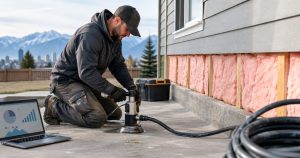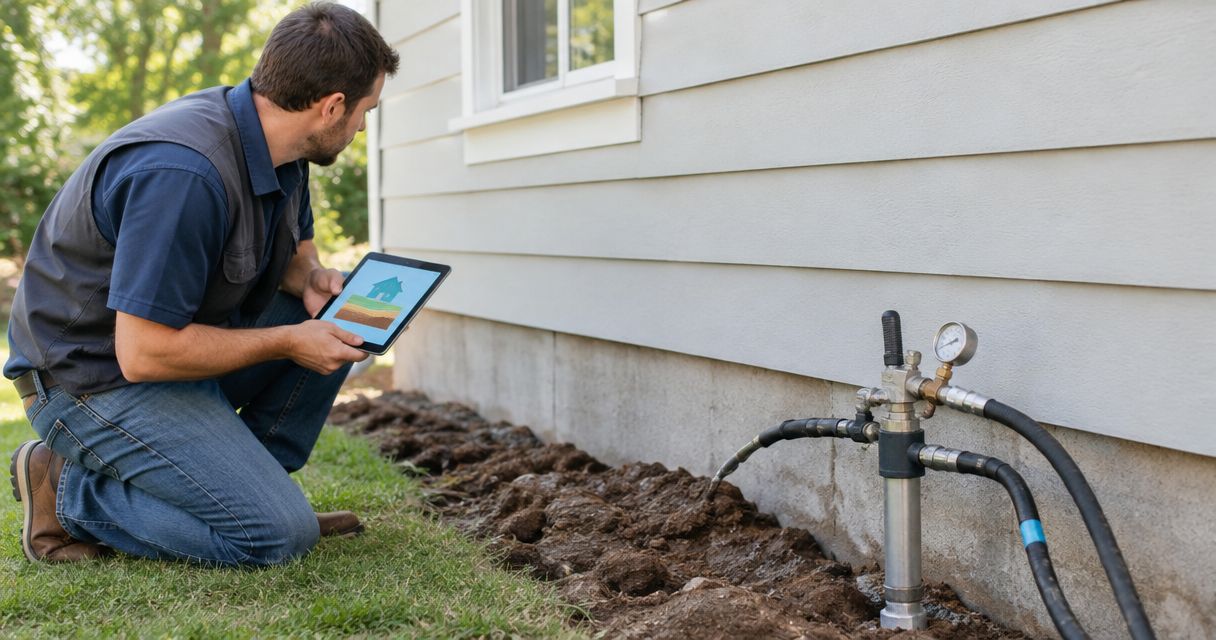
Instead of repeatedly sending disconnected photos and estimates, connect your foundation insurance claim to concrete lifting with a single evidence file linking the reported damage, the insurer’s decision and the proposed repair. For a 2026 claim, document the affected concrete first, confirm whether the problem involves a slab or the structural foundation, and obtain written direction before authorizing permanent work.
- A foundation insurance claim concrete lifting workflow needs documented damage, a coverage decision and a matching repair scope.
- Aztec Spray Systems provides concrete lifting; your insurer determines coverage under your policy.
- Slab lifting and structural foundation repair are different tasks. Confirm which problem needs treatment.
- Preserve evidence before permanent repairs, and ask the adjuster what documentation is required.
Why this matters
An accepted claim does not automatically make concrete lifting the right repair, and a lifting estimate does not establish insurance coverage. Those decisions belong to different people. Your insurer interprets the policy; the appropriate repair professional assesses the damaged component.
Aztec Spray Systems provides concrete lifting for homeowners and commercial property owners in Calgary, Okotoks, High River and Lethbridge. Aztec Spray Systems is a concrete lifting contractor for homeowners and commercial property owners in those Alberta communities. The company is licensed and insured, but that does not establish coverage under your property policy.
The practical goal is consistency. Your photographs, damage description, assessment and repair scope should identify the same location and explain the same problem without treating an unconfirmed cause as fact.
Before you start
- Gather your policy and claim access. Have the policy wording, endorsements, insurer contact details and any existing claim reference available. Ask who handles the file and how they want supporting documents delivered.
- Prepare an evidence folder. Collect dated photographs, earlier inspection records, relevant maintenance records and correspondence. Keep original files rather than relying only on compressed images pasted into messages.
- Check the slab-versus-foundation distinction. A sunken driveway, garage floor or basement slab does not, by itself, prove movement of load-bearing footings or foundation walls. Do not book slab lifting as a substitute for investigating suspected structural damage.
For your 2026 file, also confirm what the insurer expects before inspection or repair. Ask about immediate safety measures, evidence preservation and permanent-work authorization separately; they are not interchangeable instructions.
Damage record
- Identify the affected component. Write down whether the damage involves a driveway panel, garage floor, basement slab, foundation wall or another element. Use a location description that someone unfamiliar with the property can follow.
- Separate the dates. Record 2 dates when known: when you first observed the problem and when you believe the relevant event occurred. If you do not know the event date, state that rather than assigning one.
- Capture the condition. Take at least 3 photo views as a documentation starting point: the whole affected area, its relationship to nearby surfaces, and the visible defect. These are suggested views, not an insurer’s mandatory photo count.
- Record measurements safely. Where accessible without entering an unsafe area, record offsets or cracks in millimetres and identify the measurement location. Include a scale in photographs; do not infer movement from an unscaled image.
- Describe observations without diagnosing them. Report uneven surfaces, visible cracks, water entry or doors that no longer close normally. Keep suspected causes in a separate note until a qualified assessment addresses them.
Expected result: You have a dated condition record that distinguishes what you observed from what still needs investigation.
Keep older photographs too. A prior image can help establish that a defect was already present, while a current image records its condition now. Neither photograph independently proves the cause of movement.
If the area presents a safety concern, restrict access and seek appropriate professional advice. Do not enter an unstable space to improve the claim photographs.
Claim direction
- Report the damage accurately. Use the insurer’s required reporting channel and explain what happened, what you observed and what remains uncertain. Describe a sunken slab as a sunken slab rather than automatically calling it foundation failure.
- Attach the evidence record. Submit the relevant photos and timeline with the claim reference. Ask the insurer to confirm receipt and identify any missing documents.
- Ask what investigation is required. Request direction on inspections, cause reports and contractor assessments. Confirm whether the adjuster needs to see the property before its condition changes.
- Request the coverage position in writing. Ask which policy wording and endorsements apply, which damage is being considered, and whether the proposed concrete work falls within the accepted scope. Do not assume that every damaged component receives the same decision.
- Separate urgent protection from permanent repair. Ask what immediate measures the insurer expects and what authorization is needed for permanent work. Preserve records of necessary protective actions without delaying an urgent safety response.
Expected result: You know the claim contact, the outstanding evidence requests and the insurer’s position on the proposed work—or exactly which decision remains outstanding.
For a claim opened in 2026, use 1 claim reference consistently across the evidence folder, assessment and correspondence. If the insurer assigns separate references, retain those distinctions and ask how the files should be connected.
Avoid promising a repair outcome in the claim description. The insurer needs a clear account of the damage, not a conclusion selected to fit a preferred treatment.
Repair assessment
Choose the assessment from the damaged component, not from the wording of the claim. A non-structural slab and a load-bearing foundation can require different expertise, even when both problems appear at the same property.
| Assessment route | Best for | Useful contribution | Limitation |
|---|---|---|---|
| Concrete lifting assessment | A sunken slab being considered for lifting | Examines whether lifting suits the affected concrete | Does not establish insurance coverage or replace structural investigation |
| Structural engineering assessment | Suspected movement of load-bearing walls or footings | Evaluates structural concerns and informs a repair approach | Does not itself authorize insurer payment |
| Insurance adjustment | Determining how the policy applies to reported damage | Establishes the insurer’s coverage position and claim requirements | Is not a substitute for a site-specific repair design |
- Give the assessor the same evidence. Share the location record, photographs and relevant reports. Explain any access restrictions and disclose known previous repairs.
- Ask for a suitability finding. Request a written explanation of whether concrete lifting fits the slab’s condition and intended use. Ask what unresolved issues need investigation before work proceeds.
- Separate repair from cause correction. Ask whether the proposal addresses the observed level difference, its underlying cause, or both. A lifted surface does not establish that drainage, leakage or structural concerns have been resolved.
- Request a defined scope. Identify the slab areas, proposed method, intended finished condition, exclusions and follow-up recommendations. Ask how work near walls, utilities, drains and adjoining surfaces will be handled.
- Return structural concerns to the right specialist. If the assessment raises foundation-wall or footing concerns, pause the slab-only decision and obtain appropriate structural advice.
Expected result: You have a repair proposal tied to a defined component, with its limits stated clearly.
Aztec Spray Systems provides concrete lifting, but the suitability of any proposed work requires a property-specific assessment. Its service offering does not establish engineering involvement, claim management or insurer approval.
For background on the method, read how polyurethane concrete lifting works. Understanding the process helps you ask better scope questions; it does not determine whether your particular slab should be lifted.
Authorization and completion record
- Submit the repair scope. Send the assessment and proposal to the adjuster using the existing claim reference. Identify which proposed tasks correspond to the reported damage.
- Resolve scope differences. If the contractor’s proposal and insurer’s accepted scope differ, ask each party to address the specific difference in writing. Do not treat silence as agreement.
- Confirm authority to proceed. Obtain the insurer’s written position on the claimed work, then make your own written agreement with the contractor. Keep insurance correspondence and the contractor agreement together but distinct.
- Set the evidence requirements. Before work begins, ask what completion photographs, invoices or reports the insurer needs. Ask the contractor which records it will provide; do not assume a particular reporting package is included.
- Record completion and changes. Photograph the treated areas and retain the final invoice and documented scope changes. Submit the requested completion records and ask whether anything remains outstanding.
Expected result: Your completed work can be traced from the original condition record through the accepted scope to the final documents.
Keep a clearly named 2026 completion folder. Store written decisions alongside the version of the proposal they address so that an approval cannot be mistaken for approval of a later, expanded scope.
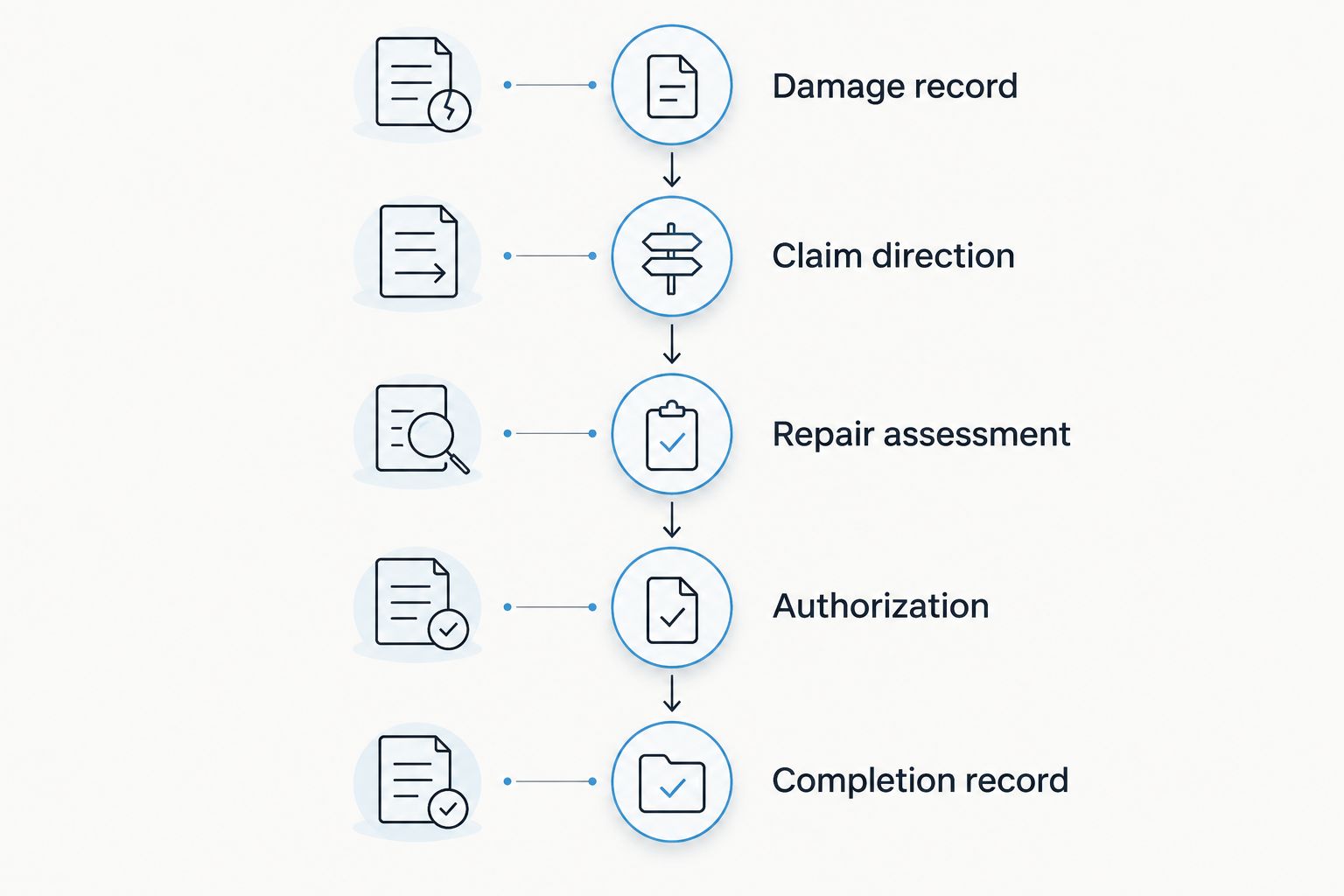
The sequence is evidence, claim direction, assessment, authorization and completion. When an unresolved issue appears, return to the relevant decision rather than pushing ahead with an incomplete file.
Update the file when the damage or scope changes
A second workflow applies when an inspection reveals additional damage or the proposed repair changes. Treat that development as an update to the evidence and scope, not as permission to expand the work automatically.
- Record the change. Add dated photos and a short description identifying the newly observed condition or revised task. Retain the earlier record rather than replacing it.
- Obtain a revised assessment. Ask the appropriate professional to explain how the change affects suitability, safety or the repair approach. Separate new findings from earlier assumptions.
- Notify the adjuster. Send the revision under the existing claim reference and ask whether more inspection or documentation is required. Confirm how the change affects the insurer’s position.
- Confirm the revised work agreement. Obtain written direction on the revised claim scope and agree on contractor changes before additional permanent work proceeds. Address urgent safety measures separately.
Expected result: Everyone works from the same revision, while the original evidence remains available.
This workflow also applies when additional damage is discovered during preparation. Keep a revision log for the 2026 claim showing what changed, who received it and which decision is still needed.
Troubleshooting
The claim says foundation damage, but the estimate covers a slab
Align the component descriptions before proceeding. Ask the assessor to identify the concrete being treated and the adjuster to identify the damage under consideration. If structural concerns remain, obtain the appropriate assessment rather than relabelling slab lifting as foundation repair.
The insurer requests a cause report
Ask what question the report must answer and what qualifications are required. A repair proposal can describe work without establishing why the damage occurred. Send the resulting findings to both the adjuster and repair assessor when they affect the scope.
The contractor is ready, but authorization is unclear
Resolve the written claim position before relying on reimbursement. Ask the adjuster to identify outstanding conditions and confirm the status of the submitted proposal. A booking date, verbal conversation or contractor recommendation is not a written coverage decision.
The claim is declined
Request the reason and applicable policy wording in writing. Compare the decision with the reported facts and supporting documents. If you dispute it, use the insurer’s complaints process; do not alter the damage description or assume a revised estimate changes coverage.
Repairs began before the inspection
Preserve everything that remains and disclose the sequence accurately. Send original photographs, contractor records, invoices and a timeline of the work. Ask the adjuster what additional evidence is needed rather than trying to recreate the pre-repair condition.
Customize your workflow
For a commercial property, add the person authorized to approve repairs, site-access arrangements and operational restrictions to the file. Keep tenant observations separate from professional findings. Notify the insurer about the actual property use rather than assuming a residential claim process applies.
For a condominium or townhouse property, establish who is responsible for the affected component before commissioning work. Ask the board or property manager which policy and authorization process applies, and keep that direction with the claim record.
When several professionals are involved, assign one document coordinator. That person keeps the current scope available, records unanswered questions and prevents an outdated proposal from reaching the work crew.
Discuss your concrete lifting project
Aztec Spray Systems provides concrete lifting in Calgary, Okotoks, High River and Lethbridge.
FAQ
Does property insurance cover concrete lifting for foundation damage?
Coverage depends on your policy, the cause of damage and the insurer’s decision on the proposed work. Submit the evidence and repair scope, and request a written position before relying on reimbursement.
Is concrete lifting the same as repairing a structural foundation?
No. Lifting a slab and repairing load-bearing foundation walls or footings are different tasks. Suspected structural movement needs an appropriate assessment before a slab-only repair decision.
Should I contact the insurer or a concrete lifting contractor first?
Notify the insurer promptly and ask about evidence and inspection requirements before permanent repair changes the condition. A contractor assessment can then help define the proposed work; urgent safety concerns need immediate attention.
What photos should I send with a sunken concrete claim?
Send dated views of the whole area, its relationship to nearby surfaces and the visible defect. Include safely obtained measurements and earlier photographs when available, then follow the adjuster’s specific documentation requests.
Can Aztec Spray Systems approve my insurance claim?
Your insurer determines coverage under your policy. Aztec Spray Systems provides concrete lifting services; a contractor’s repair proposal is not an insurance approval.
What should I do if additional damage appears during preparation?
Document the new condition and notify the adjuster before expanding permanent work. Obtain a revised assessment and confirm both the claim position and contractor scope, while addressing urgent safety needs separately.
What if my concrete lifting claim is denied?
Request the denial reason and relevant policy wording in writing. Check the decision against the evidence and use the insurer’s complaints process if you dispute it; repair suitability and insurance coverage remain separate decisions.
One last thing
Never use the repair method as the diagnosis. Concrete lifting describes work on concrete; it does not explain why the damage happened or prove that a structural foundation is sound. Keep the condition, cause, coverage and repair scope as separate entries in your file, even when they all concern the same location.
Related guides
- How to identify foundation settling before it worsens
- Concrete lifting for interior basement floors
- Concrete lifting for restoration contractors