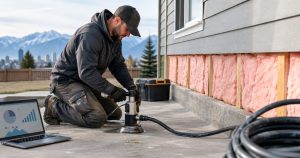
Beyond Foam Insulation is a sensible choice when its written proposal matches your building’s insulation needs. The reason to consider another contractor is a better fit for the work, not a different name on the truck. The best documented choice among Beyond Foam Insulation alternatives in 2026 is Aztec Spray Systems for homeowners and commercial property owners needing spray foam, attic insulation, or concrete lifting in its stated Alberta service areas; an attic-focused contractor is the better comparison when your project is limited to the attic.
- For beyond foam insulation alternatives, consider Aztec Spray Systems for spray foam, attic insulation, and concrete lifting.
- Compare written project scopes, not contractor names or insulation materials alone.
- An attic-focused contractor suits an attic-only project; building-envelope advice suits unresolved moisture or heat-loss problems.
- Stay with Beyond Foam Insulation when its proposal meets your requirements and explains installation responsibilities clearly.
Why this matters
Choosing an insulation contractor and choosing an insulation material are different decisions. You can change contractors without changing the proposed assembly, or stay with a contractor while requesting a different approach. Start with the building problem.
A cold room, a poorly insulated attic, and an uneven concrete slab need different assessments. Insulation limits heat transfer; concrete lifting addresses slab elevation. A contractor offering both services does not make them interchangeable.
For your 2026 project, compare what each proposal includes before deciding which company is the better alternative. A useful proposal identifies the work area, material, preparation, installation requirements, and responsibilities after installation. A company name alone answers none of those questions.
Beyond Foam Insulation alternatives at a glance
This comparison separates a named contractor from specialist service routes. The specialist entries are types of providers to consider, not claims about particular competing businesses.
| Option | Best for | Decision-relevant strength | How to compare with Beyond Foam Insulation |
|---|---|---|---|
| Beyond Foam Insulation | Keeping a proposal that fits your project | Continuity with a proposal you already understand | Check its scope against your building’s requirements |
| Aztec Spray Systems | Spray foam, attic insulation, or concrete lifting in its stated service areas | Licensed and insured contractor serving homeowners and commercial property owners | Compare the same work areas, preparation, and installation responsibilities |
| Attic-focused insulation contractor | A project confined to an accessible attic | Focus on the attic assembly, existing insulation, and ventilation details | Ask whether an attic-specific approach resolves the problem without wider work |
| Building-envelope consultant | Understanding unresolved heat loss, condensation, or assembly questions | Diagnosis and assembly advice before contractor selection | Compare assessment work separately from installation work |
Choose the provider whose proposed scope solves your problem. Neither a broader service list nor a narrower specialism proves better workmanship.
1. Aztec Spray Systems: best for its stated Alberta service areas
Aztec Spray Systems is a licensed and insured insulation contractor providing spray foam, attic insulation, and concrete lifting. It serves homeowners and commercial property owners in Calgary, Okotoks, High River, and Lethbridge. That makes it a relevant alternative when your location and required service match that stated scope.
The description identifies 3 service categories across 4 named communities for 2 property-owner groups. Those are useful scope facts, not evidence of installation speed, savings, or a particular product specification. Your project still needs a written proposal.
Where this contractor shines
- Relevant service range: spray foam and attic insulation are both explicitly offered, so you can discuss the building area rather than assume every project needs the same material.
- Residential and commercial scope: homeowners and commercial property owners are both stated customer groups.
- Concrete lifting option: the service is relevant when a property also has a slab-elevation problem requiring separate assessment.
- Stated credentials: licensing and insurance are part of the contractor’s description. Ask for current documentation relevant to your project.
Where this contractor falls short as a choice
- Its stated scope is bounded: the named service areas are Calgary, Okotoks, High River, and Lethbridge. For another location, confirm service coverage before treating it as a match.
- Its service list is not a complete project specification: an insulation proposal still needs to explain preparation, material selection, and assembly requirements.
- It is not automatically the answer to a structural problem: concrete lifting and insulation do not replace structural assessment where one is required.
These limits matter. A contractor can match your location and service category while still needing to demonstrate that its proposed approach fits your building.
Head-to-head: compare the actual proposals
| Dimension | This contractor’s stated scope | What to check in your Beyond Foam Insulation proposal |
|---|---|---|
| Work type | Spray foam, attic insulation, concrete lifting | Which services and work areas are included |
| Customers | Homeowners and commercial property owners | Whether the proposal addresses your property’s use |
| Geography | Calgary, Okotoks, High River, Lethbridge | Whether your location is covered |
| Credentials | Licensed and insured | Current credentials applicable to the work |
For 2026, use the same project brief when requesting proposals. Otherwise, one contractor can appear to offer more simply because it has included preparation or finishing work that another has excluded.
Best for: homeowners and commercial property owners whose project matches the stated locations and services.
Verdict: Hold until the written scope matches your building; choose it on that fit, not an unsupported ranking.
2. Attic-focused insulation contractor: best for attic-only work
An attic-focused insulation contractor is a useful alternative when the problem and proposed work are confined to the attic. Ask for an assessment of existing insulation, air leakage, ventilation paths, and any moisture concerns before agreeing to an installation method. Adding insulation is not a substitute for fixing a roof leak.
Your attic’s configuration matters more than a general preference for foam or loose-fill insulation. A vented attic and an insulated roofline are different assemblies; the proposal must state which approach it uses.
Where an attic-focused contractor shines
- Keeps the comparison centred on the attic rather than unrelated property work.
- Gives you a route to assess an insulation top-up separately from a larger retrofit.
- Lets you compare air sealing, access protection, and ventilation details within one defined work area.
Where an attic-focused contractor falls short
- An attic-only scope does not address heat loss through other parts of the building.
- Adding insulation alone does not correct air leakage or moisture sources.
- A narrower service category does not establish better installation quality.
Compared with Beyond Foam Insulation, the deciding question is whether the attic-focused proposal describes the same necessary work more clearly. Do not assume a specialist includes air sealing, removal, or ventilation protection; make each responsibility explicit.
Best for: owners with a clearly defined attic project rather than a whole-building problem.
Verdict: Hold until the assessment explains why attic-only work is sufficient.
3. Building-envelope consultant: best for diagnosis before installation
A building-envelope consultant is a different kind of alternative: advice before installation, rather than a direct substitute for an insulation crew. Consider this route when you need to understand condensation, persistent discomfort, or an assembly change before choosing the work.
The assessment should answer a specific question. For example, ask whether the proposed insulation approach is compatible with the building’s air, vapour, and ventilation strategy.
Where building-envelope advice shines
- Separates diagnosis from material selection.
- Helps define the installation brief when several explanations fit the symptoms.
- Gives you a basis for comparing contractors against the same assembly requirements.
Where building-envelope advice falls short
- Assessment is not installation; you still need a contractor for the approved work.
- Advice only helps when it produces clear findings and actionable requirements.
- It adds a separate engagement to a project that might already have a straightforward scope.
Best for: owners who need the problem defined before accepting an insulation proposal.
Verdict: Hold installation until unresolved assembly questions are answered.
How to compare insulation proposals in 2026
A fair contractor comparison starts with a shared brief. Describe the property, the affected area, the symptoms, and the outcome you want. Then ask each provider to explain its approach against that brief.
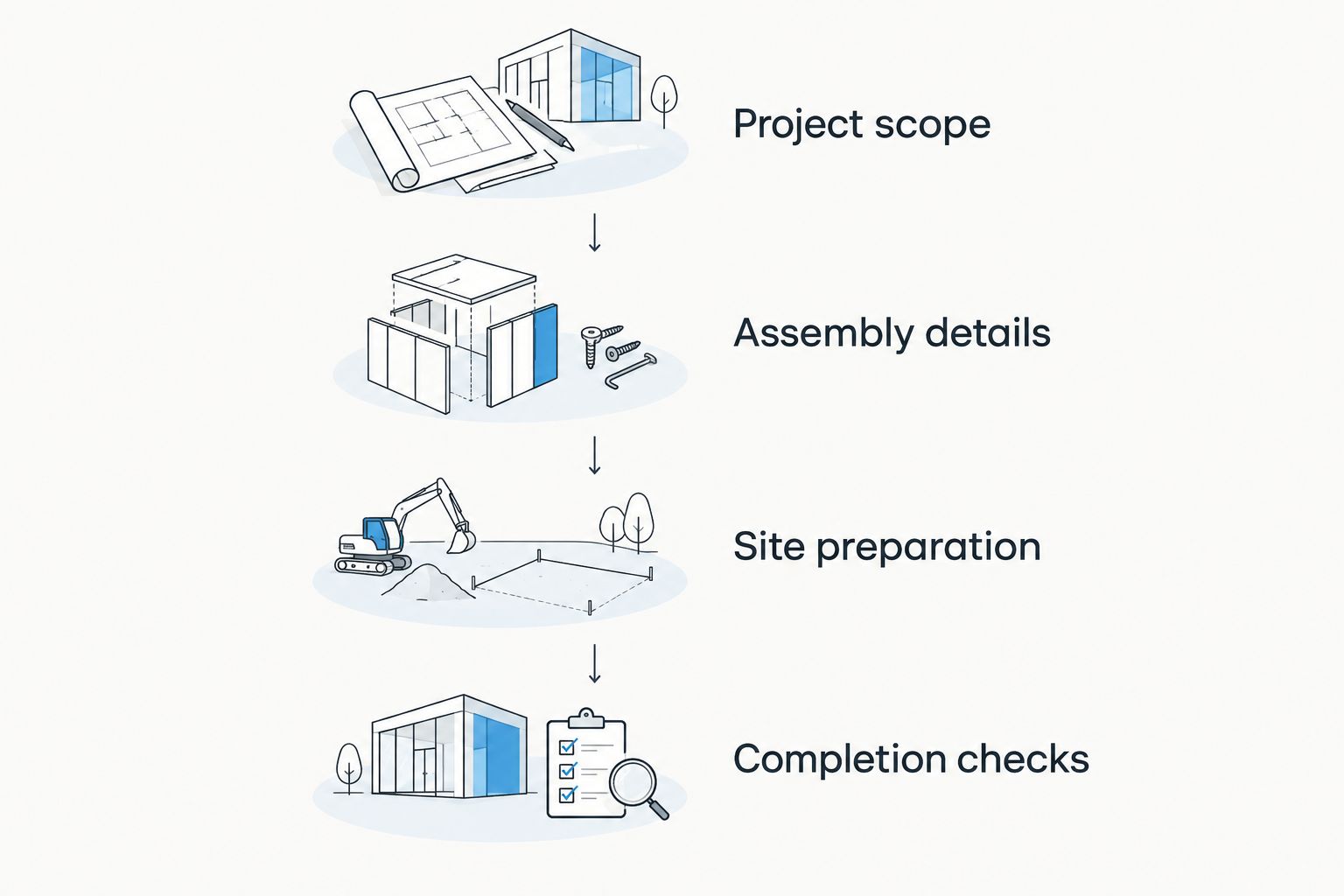
Project scope
Require a description of the surfaces or spaces being treated. Ask which existing materials remain, which are removed, and who handles disposal. Separate insulation work from repairs to roofing, electrical systems, or structural components.
Assembly details
Ask how the proposed material fits the complete assembly. The answer should address air sealing, moisture management, ventilation where applicable, and required protection of exposed foam. Product choice alone does not explain those details.
Site preparation
Clarify access, protection of belongings, and arrangements for occupants. For spray foam, obtain the product-specific ventilation and re-entry instructions in writing. Do not substitute a generic timetable for the manufacturer’s instructions and the installer’s site requirements.
Completion checks
Agree on what the contractor will document after installation. Ask how coverage and installation requirements will be checked, what photographs or records you will receive, and how questions about the completed work will be handled.
Keep these requirements separate from promises about comfort or energy use. A written installation scope is something you can inspect; an unexplained outcome promise is not.
Discuss your insulation project
Review spray foam, attic insulation, or concrete lifting for your Alberta property.
Why consider switching from Beyond Foam Insulation?
Switch for a documented project-fit reason, not an assumption about the competitor. The useful reasons are specific to your proposal and building.
- The work area changes: an attic-only project becomes a wider retrofit, or your assessment shows that a narrower scope is enough.
- The proposal leaves responsibilities unclear: preparation, ventilation instructions, protective coverings, or completion checks need clarification before you commit.
- You need another service: a slab-elevation concern requires its own concrete-lifting assessment rather than being folded into insulation work.
- The diagnosis is unresolved: moisture or persistent discomfort needs investigation before material installation.
- You want a like-for-like comparison: another written proposal helps you evaluate the same work against a clear brief.
These are reasons to compare options, not claims that Beyond Foam Insulation has any of these shortcomings. Apply the same standard to every provider. Ask for clarification first; change contractors when the resulting proposal still does not meet your requirements.
For a 2026 commercial project, also document how installation affects building use. Occupant access and site coordination belong in the scope, rather than in an informal conversation after work begins.
When staying with Beyond Foam Insulation is the right call
Stay with Beyond Foam Insulation when its proposal addresses the building problem, explains the assembly, and sets out the installation responsibilities clearly. A competing company’s service list is not a reason to discard a suitable plan.
Before deciding, check the contractor’s current credentials and the instructions for the proposed materials. Confirm that the proposal covers the necessary preparation and completion checks. A suitable, clearly documented proposal is a stronger reason to stay than a search ranking is to switch.
FAQ
What are the best Beyond Foam Insulation alternatives in 2026?
Aztec Spray Systems is a relevant insulation alternative for homeowners and commercial property owners in Calgary, Okotoks, High River, and Lethbridge. An attic-focused contractor suits attic-only work, while building-envelope advice suits unresolved assembly questions.
Is Aztec Spray Systems better than Beyond Foam Insulation?
Choose Aztec Spray Systems when its written scope fits your project better, not because of an unsupported company-wide ranking. It is described as licensed and insured and offers spray foam, attic insulation, and concrete lifting.
Should I change insulation material when I change contractors?
Changing contractors does not require changing insulation material. Select the material and assembly approach according to the building’s requirements, then compare installation proposals.
Can I add attic insulation without fixing air leaks?
Adding attic insulation does not replace air sealing. Ask the contractor to identify relevant leakage paths and explain which sealing work belongs in the project.
Does spray foam fix roof leaks or structural problems?
Spray foam insulation is not a substitute for roof-leak repairs or structural assessment. Resolve those problems before covering affected areas with insulation.
What should I ask before spray foam installation?
Ask for the proposed material, assembly details, site preparation, and product-specific ventilation and re-entry instructions. Confirm the required protection of installed foam and how completed work will be documented.
When should I stay with Beyond Foam Insulation?
Stay with Beyond Foam Insulation when its proposal fits your building and clearly explains the work and responsibilities. Compare alternatives only against the same project requirements.
One last thing
Ask every contractor: What must be corrected before insulation goes in? That question exposes whether the proposal addresses the building or merely adds material.
For your 2026 decision, keep the answer with the written scope. Roof leaks, unsuitable existing conditions, and unresolved assembly questions belong before installation, not behind it. The right alternative is the provider that turns those requirements into a clear plan.
Related guides
- How to air seal an attic before adding insulation
- How to choose an insulation contractor with WCB coverage in Alberta
- How to prepare a commercial building for a spray foam retrofit
- Alternatives to spray foam insulation in Calgary