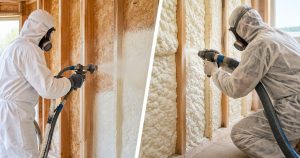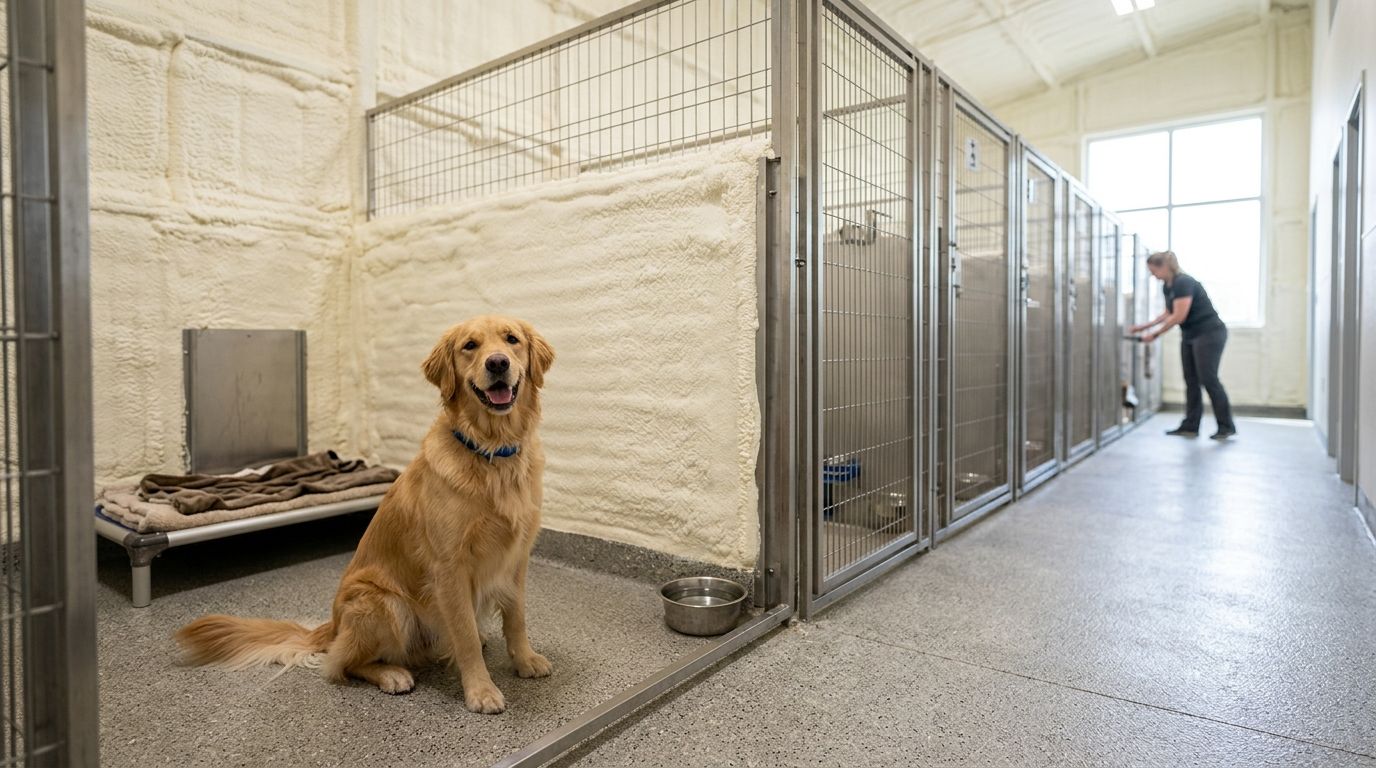
Spray foam insulation for dog kennels and boarding facilities means sealing and insulating kennel walls, ceilings, and slab perimeters with closed-cell or open-cell polyurethane foam to hold a stable indoor temperature for animals housed 24/7. A boarding facility runs HVAC nonstop, deals with washdown moisture every day, and needs a building envelope that survives disinfectant exposure and scratching — needs a typical garage or bungalow retrofit never has to meet.
- Closed-cell spray foam insulation dog kennel installs seal air gaps and block moisture, cutting the HVAC runtime boarding facilities pay for year-round.
- Kennels need vapor-resistant, washable-surface-compatible foam — not standard attic-grade open-cell product.
- Wall-to-floor sealing matters more in kennels than in homes because urine and washdown water find every gap.
- Calgary-area kennels see the widest temperature swings in Alberta, making 2026 R-value planning a real animal-welfare issue, not a cosmetic one.
Why spray foam insulation matters for dog kennels
A boarding facility is occupied every hour of every day, which is different from a house that empties out for eight hours. Dogs generate heat and moisture through respiration and activity, and washdown routines dump water on floors and lower walls multiple times daily. That combination — constant occupancy, constant moisture, aggressive cleaning chemicals — breaks down standard batt insulation faster than it would in a residential wall.
Uninsulated or poorly sealed kennel buildings in Alberta swing between overheating in summer and losing heat fast through metal walls and roof decks in winter. Spray foam insulation for a dog kennel addresses both problems at once: it seals air leaks that let outside temperature swings reach the animals, and closed-cell variants resist moisture absorption in a way fiberglass batts cannot. For a pole barn or shop converted into a kennel, or a purpose-built metal building, the insulation choice determines whether the HVAC system runs constantly or cycles normally.
Assess your kennel's build type before choosing a product
Most Alberta boarding facilities fall into one of three shells: a converted pole barn, a metal-clad building, or a purpose-built concrete-block structure. Each has a different air-sealing profile and moisture risk before any foam goes in.
- Walk the perimeter and check for daylight gaps at the wall-to-slab junction
- Note where washdown drains sit relative to exterior walls
- Check roof deck condition for existing condensation staining
- Identify any shared walls with an office, retail lobby, or grooming area with different humidity needs
- Flag areas with existing wire mesh, chain-link, or kennel panel mounting hardware that will interfere with spray application
Choose the right foam type for animal-occupied areas
Homeowners doing an attic retrofit can often get away with open-cell foam. A kennel run wall facing daily hosing and disinfectant cannot. Closed-cell spray foam has a higher density and resists water absorption, which matters directly against a wall dogs urinate on or that gets pressure-washed.
- Specify closed-cell foam on any wall below 4 feet in wash and run areas
- Use open-cell foam in ceiling cavities where moisture exposure is lower and cost matters more
- Confirm the foam formulation is rated for the temperature range the space will see, not just attic-standard product
- Ask about a washable rigid-foam or FRP panel overlay on top of the foam in high-contact zones
- Aztec Spray Systems installs both closed-cell and open-cell foam and can spec the mix by zone rather than blanketing the whole building with one product — this is the point where a contractor's product mix beats a DIY big-box foam kit, which only offers one formulation
Seal wall-to-floor and wall-to-ceiling gaps first
Air sealing before bulk insulation is the step most kennel retrofits skip, and it's the step that actually stops odor and moisture migration between runs. A gap at the base of a partition wall lets ammonia smell and moisture travel between kennels no matter how much foam sits above it.
- Seal the slab-to-wall junction along the entire perimeter, not just visible gaps
- Foam around every drain penetration and utility chase
- Close gaps around kennel panel anchor bolts before spraying over them
- Treat any header above a run door or gate opening as a priority sealing point
- Check ceiling-to-wall transitions where metal roof deck meets stud framing
Insulate walls and ceilings for temperature stability
Once sealing is done, the bulk foam application is what holds the space at a stable temperature through an Alberta winter and summer. A well-insulated kennel building should not need the furnace or AC to run continuously to hold a comfortable range for dogs.
- Target full-cavity fill in exterior walls, not a partial-depth application
- Insulate the roof deck directly rather than only the ceiling plane if the attic space is used for storage or equipment
- Extend insulation down to the footing in any building with a shallow or uninsulated foundation
- Pay separate attention to overhead doors and man-doors, which lose heat fastest in a kennel building
- Compare this approach to a horse barn or equestrian facility retrofit, which faces a similar moisture-and-occupancy profile
Address ventilation and odor control after insulating
A tightly sealed building traps ammonia and moisture just as effectively as it keeps out cold air, so ventilation planning has to happen alongside the insulation job, not after.
- Size exhaust fans for the sealed building's new air-change rate, not the old leaky rate
- Add makeup air intakes so exhaust fans aren't pulling conditioned air back through wall gaps
- Route exhaust away from public entrances and neighboring properties
- Schedule fan and HVAC commissioning within days of the foam cure, not weeks later
Protect insulation from bite, scratch, and disinfectant damage
Foam alone is not a finished surface in a kennel. Dogs chew, scratch, and lean against walls, and disinfectant fogging or spraying degrades exposed foam over time.
- Cover any foam within reach of animals with a rigid, washable panel — FRP, HDPE, or similar
- Avoid leaving exposed foam edges at door frames or gate openings
- Choose disinfectant products compatible with whatever surface covers the foam, not the foam itself
- Inspect covered areas quarterly for panel separation that could expose foam underneath
Plan installation around live animals and downtime
A boarding facility can rarely close for a week. Phasing the retrofit by zone keeps the business running while the work gets done.
- Insulate empty or low-occupancy runs first and relocate animals in stages
- Schedule spray days for off-peak boarding periods if the calendar allows it
- Confirm cure and off-gas times with the contractor before animals re-enter a sprayed zone
- Coordinate with staff on temporary ventilation during and immediately after application
“If a kennel wall sweats in January, the insulation failed before the heater ever ran.”
Verify code compliance and vapor barrier requirements
Alberta's building code has specific requirements for vapor barriers and ignition/thermal barriers over spray foam, and a commercial-use kennel building may fall under different inspection rules than a residential accessory building.
- Confirm whether the building's occupancy classification triggers commercial code review
- Check that any exposed foam meets required thermal barrier coverage
- Ask the contractor for documentation on vapor barrier placement relative to the foam layer
- Keep inspection records on file — a boarding facility with paying clients and animal welfare obligations should have this documented regardless of whether the municipality asks for it
Comparing insulation options for kennel and boarding buildings
| Option | Best for | Key limitation |
|---|---|---|
| Closed-cell spray foam | Wash/run areas, below-grade walls, moisture-heavy zones | Higher material cost per cavity than open-cell |
| Open-cell spray foam | Ceiling cavities, low-moisture office or lobby areas | Absorbs water if a leak occurs, needs vapor barrier detailing |
| Rigid foam board | Retrofits where spray access is limited | Seams need taping, less effective air sealing than sprayed foam |
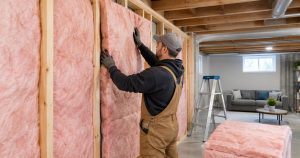
| Fiberglass batts | Budget-limited storage or non-animal areas only | Poor moisture resistance, not recommended for run or wash zones |
Verdict: closed-cell spray foam wins for any kennel wall or ceiling that contacts moisture, animals, or washdown water — fiberglass batts belong nowhere near an occupied run.
Common mistakes kennel owners make
- Insulating before sealing air leaks — bulk foam over an unsealed slab-to-wall gap still lets odor and drafts through
- Using one foam type everywhere — treating a lobby wall the same as a wash-bay wall wastes money in one zone and fails in the other
- Skipping ventilation redesign — a sealed building traps ammonia if fan sizing isn't updated after insulating
- Leaving foam exposed to bite and scratch contact — unprotected foam degrades within months in an active run
- Ignoring code review for commercial occupancy — a boarding facility can carry different inspection requirements than a residential outbuilding, and skipping that step creates liability later
Get a kennel insulation quote
Licensed, insured spray foam contractor serving Calgary, Okotoks, High River, and Lethbridge.
FAQ
What is the best spray foam insulation for a dog kennel?
Closed-cell spray foam is the best choice for wash areas, run walls, and any surface below 4 feet that contacts moisture or disinfectant. Open-cell foam works in dry ceiling cavities where cost matters more than moisture resistance.
Does spray foam insulation reduce odor in a boarding facility?
Sealing air gaps with spray foam stops odor migration between runs and rooms, but ventilation still has to be sized correctly after the building is sealed. Foam alone without an exhaust redesign can trap ammonia instead of removing it.
Can dogs be present during a spray foam installation?
No — animals need to be relocated during application and for the manufacturer’s specified cure and off-gas period. Phasing the job by zone lets a boarding facility keep operating while empty runs get insulated first.
How much does spray foam insulation cost for a kennel building in Calgary?
Cost depends on building size, foam type by zone, and whether wall-to-floor sealing and rigid panel overlays are included. A licensed contractor can provide a project-specific quote after walking the building.
Is closed-cell or open-cell foam better for a kennel wash area?
Closed-cell foam is better for wash areas because it resists water absorption, while open-cell foam can hold moisture if exposed to repeated washdown or a leak.
Do kennel buildings need a vapor barrier over spray foam?
Alberta building code requirements for vapor barriers depend on the foam type and building occupancy classification, and a commercial-use kennel may face different requirements than a residential outbuilding. Confirming this with a contractor before installation avoids a failed inspection.
Does spray foam insulation help control temperature swings in a kennel?
Yes — sealing air leaks and insulating walls and ceilings reduces how much outside temperature swings reach the animals, which cuts how hard the HVAC system has to work through Alberta’s 2026 winter and summer extremes.
One last thing
The detail most kennel owners miss is that the wall-to-floor junction, not the ceiling, is usually where the building loses its seal first — daily washdown water finds that gap long before roof-level air leaks become the bigger problem. Fix that junction before spending the budget on ceiling R-value, and the ventilation redesign that follows will actually work as planned in 2026 and every winter after.
Related guides
- Spray foam insulation for pole barns and shops
- Spray foam insulation for metal buildings
- How to prep a barn or agricultural building for spray foam insulation
- How to reduce moisture and mold with spray foam insulation
- Best spray foam insulation company for Calgary commercial properties