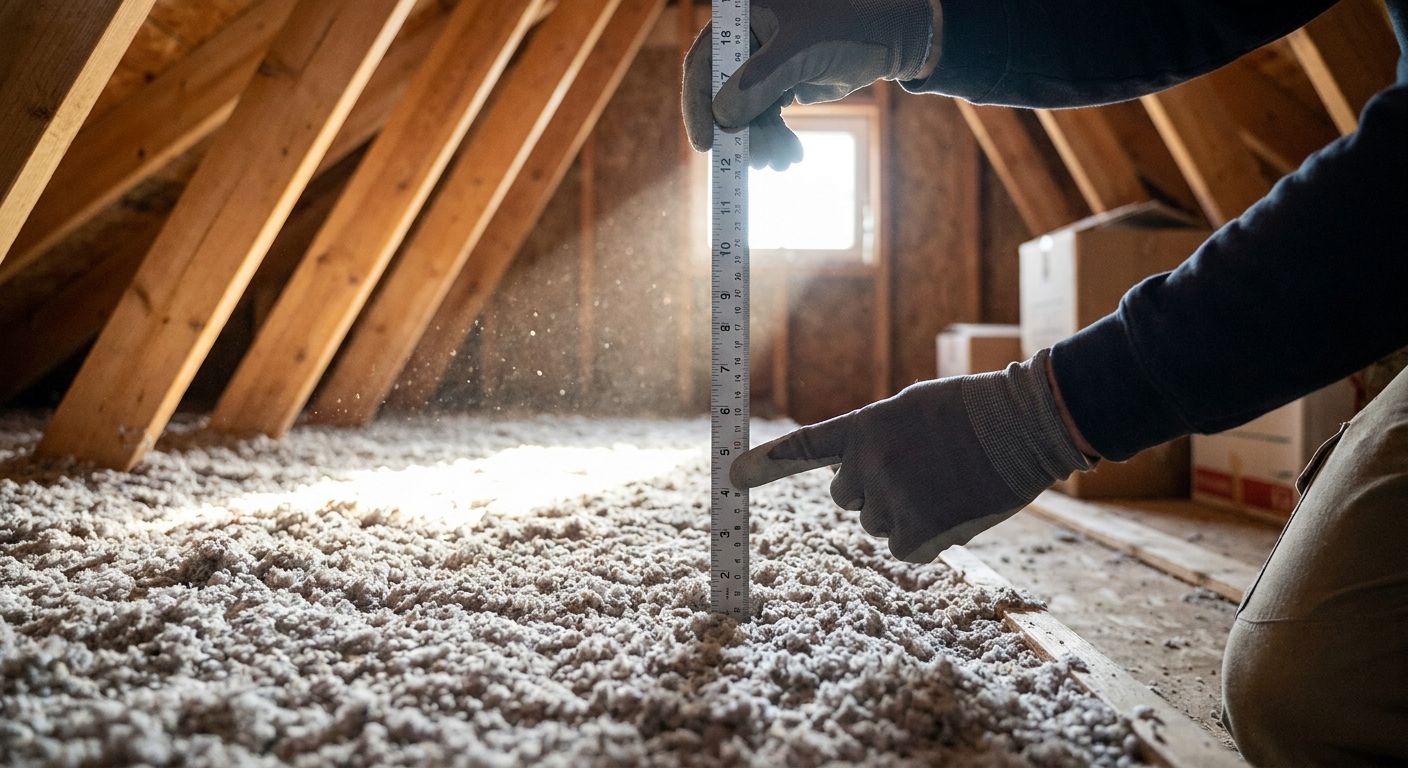
Grab a tape measure, climb into the attic, and check the depth of the insulation against the R-value it's supposed to hit — that's the fastest way to know if your attic meets Alberta's building code. Under the energy efficiency section of the Alberta Building Code (Section 9.36, based on the National Building Code), most new construction across the province now requires attic insulation rated at R-50, up from the R-40 minimum common in homes built before 2016. Depth alone won't catch everything, though — compressed insulation, missing baffles, or gaps around pot lights and hatch covers can leave a home short of code even when the depth looks right.
- Alberta building code sets attic insulation at R-50 for most new construction, up from the older R-40 standard.
- Measuring insulation depth with a tape measure at 3-4 spots is the fastest way to check attic insulation building code alberta compliance.
- Depth-to-R-value math changes by insulation type: closed-cell spray foam hits R-50 around 8 inches, fiberglass batt needs closer to 16 inches.
- Compressed or settled insulation can look adequate by eye but test below its rated R-value.
- Aztec Spray Systems inspects Calgary, Okotoks, High River, and Lethbridge attics against current code targets.
Why this matters
An attic that falls short of code isn't just a compliance issue on paper. Under-insulated attics in Alberta drive heating bills up in winter and let ice dams form along the roofline, which then damage shingles and fascia. If you're selling a home, refinancing, or applying for a rebate program, an insulation level that doesn't match current code can show up in a home inspection report and stall the deal. Knowing your actual R-value — not guessing from how thick the insulation looks — is the difference between a quick fix and a surprise repair bill later.
How do you test if attic insulation meets Alberta building code
Testing attic insulation for code compliance is a measurement exercise, not a lab test. Here's the sequence:
- Access the attic safely through the hatch or scuttle, using a flashlight and stepping only on joists or a plywood walk board.
- Measure depth at 3-4 locations — near the center, near the eaves, and near any hatch or chimney chase, since depth varies more than people expect.
- Identify the insulation type — blown cellulose, blown fiberglass, batt, or spray foam — because each converts to R-value differently per inch.
- Convert depth to R-value using the type's per-inch rating, then compare the total to the code target for your build type. This is where a best insulation for Calgary attics baseline helps, since a like-for-like comparison against current recommendations makes the math faster.
- Check for settling, compression, and gaps around recessed lighting, wiring holes, and the attic hatch — these spots almost always test lower than the field average.
- Confirm baffles and ventilation are intact, since code compliance for attic assemblies includes airflow at the soffits, not just R-value.
A rough depth check takes 15-20 minutes for a typical attic. If the numbers come back close to the line, or the insulation looks uneven, a contractor inspection settles the question with a proper depth survey across the whole attic floor, not just a few spots.
Attic insulation R-value comparison by type
| Insulation type | Approx. R-value per inch | Depth needed for R-50 |
|---|---|---|
| Fiberglass batt | ~3.2 | ~16 inches |
| Blown cellulose | ~3.7 | ~13-14 inches |
| Open-cell spray foam | ~3.6 | ~14 inches |
| Closed-cell spray foam | ~6.5 | ~8 inches |
These are approximate figures based on published per-inch R-values for each material — actual performance varies with density, installation quality, and how much the material has settled since install day.
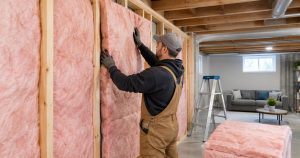
Fiberglass batt: needs about 16 inches for R-50
Fiberglass batt is common in homes built through the 1990s and 2000s, and it's the easiest type to measure since the batts sit in visible layers. At roughly R-3.2 per inch, hitting the R-50 target common in Alberta's current code takes close to 16 inches of stacked batt. Batt insulation compresses over time and around obstructions, so a measured 14 inches doesn't always mean 14 inches of full-loft performance. Verdict: adequate if intact and unsettled, but worth a second look if the home is more than 15 years old.
Blown cellulose: needs about 13-14 inches for R-50
Cellulose is denser than fiberglass, so it needs less depth to hit the same R-value — around 13 to 14 inches for R-50. It's a common retrofit choice because it's blown in over existing insulation without removing anything. The catch: cellulose settles more than fiberglass over the first few years, which is why a home insulated to R-50 at install might test closer to R-40 a decade later. Verdict: fine for meeting code at install, but schedule a depth check every 8-10 years.
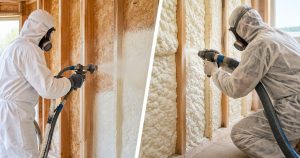
Closed-cell spray foam: needs about 8 inches for R-50
Closed-cell spray foam delivers roughly double the R-value per inch of batt or blown insulation, so an attic can hit R-50 in about 8 inches. It also air-seals as it cures, closing the gaps around wiring and framing that let heat escape even when the R-value on paper looks fine. Homeowners deciding between spray foam thickness options for their specific attic can check how to choose the right spray foam R-value for your attic before committing to a depth. Verdict: the most space-efficient way to meet or exceed R-50, though it costs more per inch installed than blown-in options.
Why attic insulation code requirements vary
A handful of factors decide what your specific attic needs to hit:
- Build year and code edition — homes built before the 2016 update to the Alberta Building Code were commonly insulated to R-40, and older homes aren't automatically required to retrofit to R-50 unless triggered by a renovation permit.
- New construction vs. existing home — new builds must meet current code at time of permit; existing homes are generally grandfathered until a major renovation reopens the ceiling.
- Insulation type and density — the same R-50 target needs roughly double the depth in fiberglass batt compared to closed-cell spray foam.
- Settling and compression — blown insulation loses loft over years, so a home that met code at install can test below it later.
- Obstructions in the attic floor — pot lights, wiring, and hatch covers create thin spots that pull the average R-value down even when the bulk of the attic tests fine.
- Ventilation and air sealing — code compliance for the ceiling assembly includes baffles at the soffits and sealed penetrations, not R-value alone.
Get your attic checked against code
A depth and air-seal inspection confirms where your attic stands today.
What R-value does Calgary require for attics in 2026?
Calgary follows the Alberta Building Code, which sets attic insulation at R-50 for most new residential construction in 2026. Renovations that open up the ceiling typically trigger the same target under permit, while untouched existing attics remain grandfathered to whatever code applied when the home was built.
Is R-40 attic insulation enough for an older Alberta home?
R-40 met code for homes built before the 2016 update, so an untouched older attic at that level isn't automatically out of compliance. It falls short of the current R-50 target for new work, though, and typically means higher heating costs than a home upgraded to today's standard — a comparison worth running before assuming "it met code once" still applies.
Can you test attic insulation R-value without removing it?
Yes — a tape-measure depth check at several points in the attic, matched to the insulation type's per-inch R-value, gives a reliable estimate without disturbing anything. For a borderline result or a pre-sale inspection, a contractor's depth survey across the full attic floor gives a more precise number than a handful of spot checks.
If the numbers come back low, reviewing how to know if your attic needs more insulation lays out the visible warning signs alongside the measurement approach — ice damming, uneven snow melt on the roof, and cold ceilings below the attic all point the same direction as a low depth reading.
FAQ
What R-value does Alberta building code require for attics?
Alberta building code requires R-50 attic insulation for most new residential construction in 2026, up from the older R-40 minimum used before 2016. Existing homes are generally grandfathered to the code in effect when they were built.
How do I measure my attic insulation depth?
Measure with a tape measure at 3-4 spots across the attic floor, including near the eaves and around the hatch, then convert the average depth to R-value using the per-inch rating for your insulation type. Uneven depth is common, so multiple measurements matter more than one reading.
Does R-40 attic insulation still meet code in Alberta?
R-40 met code for homes built before the 2016 update to the Alberta Building Code and remains compliant for those untouched attics. New construction and permitted renovations in 2026 target R-50 instead.
How many inches of spray foam equal R-50?
Closed-cell spray foam reaches roughly R-50 at about 8 inches thick, while open-cell spray foam needs closer to 14 inches to hit the same value. The difference comes down to closed-cell foam’s higher R-value per inch.
Why does my attic insulation look thick enough but still feel cold?
Depth alone doesn’t guarantee performance if the insulation has settled, is missing around pot lights and wiring, or the attic lacks proper air sealing. A cold ceiling below an attic that looks well-insulated usually points to gaps rather than a depth shortfall.
Do I need a permit to upgrade attic insulation in Alberta?
Adding insulation on top of existing material in an unfinished attic typically doesn’t require a permit, but renovations that open the ceiling assembly usually do and trigger current code requirements. Check with your municipality before starting work that involves structural or electrical changes.
How much does spray foam attic insulation cost in Calgary?
Cost varies by attic size, foam type, and existing insulation condition, so getting a current quote is the only reliable way to know your number. Details on how pricing is typically structured are covered on the how much does spray foam insulation cost in Calgary page.
Can old insulation be topped up instead of replaced to meet code?
In many cases, yes — adding blown-in insulation on top of existing batt or loose-fill material can bring an attic up to R-50 without removing what’s already there. This only works if the existing insulation isn’t wet, compressed beyond recovery, or contaminated, which a quick inspection can confirm.
One last thing
Most homeowners assume a depth check is the whole story, but the attic hatch itself is one of the most common code failures — an uninsulated hatch cover can undo the R-value of the entire attic around it, since it's a direct thermal bridge to the living space below. Check the hatch cover thickness the same way you check the field insulation before calling the job done.
Related guides
- Best insulation for Calgary attics
- How to choose the right spray foam R-value for your attic
- How to know if your attic needs more insulation
- Best insulation type for Alberta winters
- How much does spray foam insulation cost in Calgary