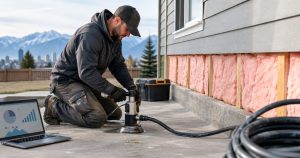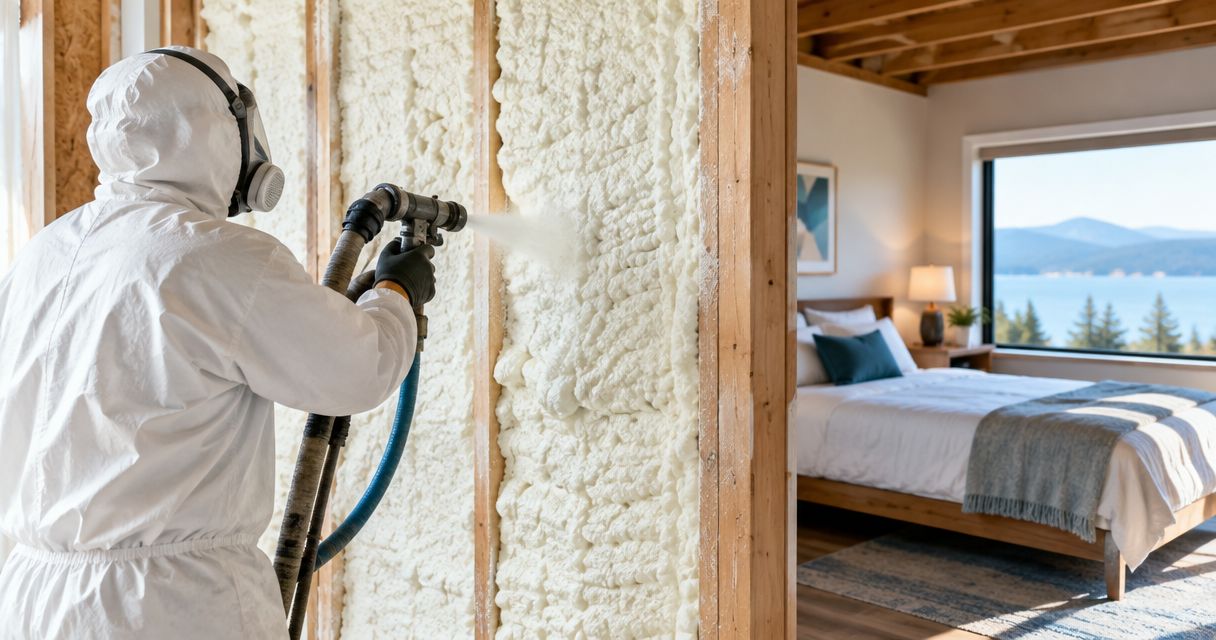
Short-term rental hosts’ spray foam insulation is an insulating and air-sealing upgrade aimed at improving guest comfort and controlling heat loss. This 2026 guide explains where foam fits, when attic insulation is the better choice, and how to schedule work without exposing guests or cleaners to installation hazards.
- Spray foam insulation for short-term rental hosts fits identified air leaks and suitable exposed assemblies, not every comfort complaint.
- Aztec Spray Systems provides spray foam and attic insulation in Calgary, Okotoks, High River, and Lethbridge.
- Compare targeted spray foam with attic air sealing and insulation before choosing your project scope.
- Keep guests, cleaners, and pets out until the product-specific reoccupancy requirements are satisfied.
Why insulation matters for short-term rental hosts
A rental insulation project has to solve a building problem without creating an operational one. You need comfortable bedrooms, predictable access for cleaners, and a clear handover before the next arrival—not simply more insulation somewhere in the property.
Guest turnover also makes diagnosis harder. Different thermostat settings, open windows, and changing occupancy affect energy use, so a bill alone cannot identify a failing building assembly. Start with the room and the complaint.
For a 2026 upgrade, compare the proposed foam work with attic insulation for Calgary rental property landlords. An accessible attic and an exposed basement rim joist present different problems; they should not receive identical specifications.
Choose insulation by the failing assembly, not by the rental category. Spray foam can provide insulation and air sealing where its installation is appropriate, but it does not repair roof leaks, balance heating equipment, or establish that a rental suite meets local requirements.
Plan your rental insulation upgrade
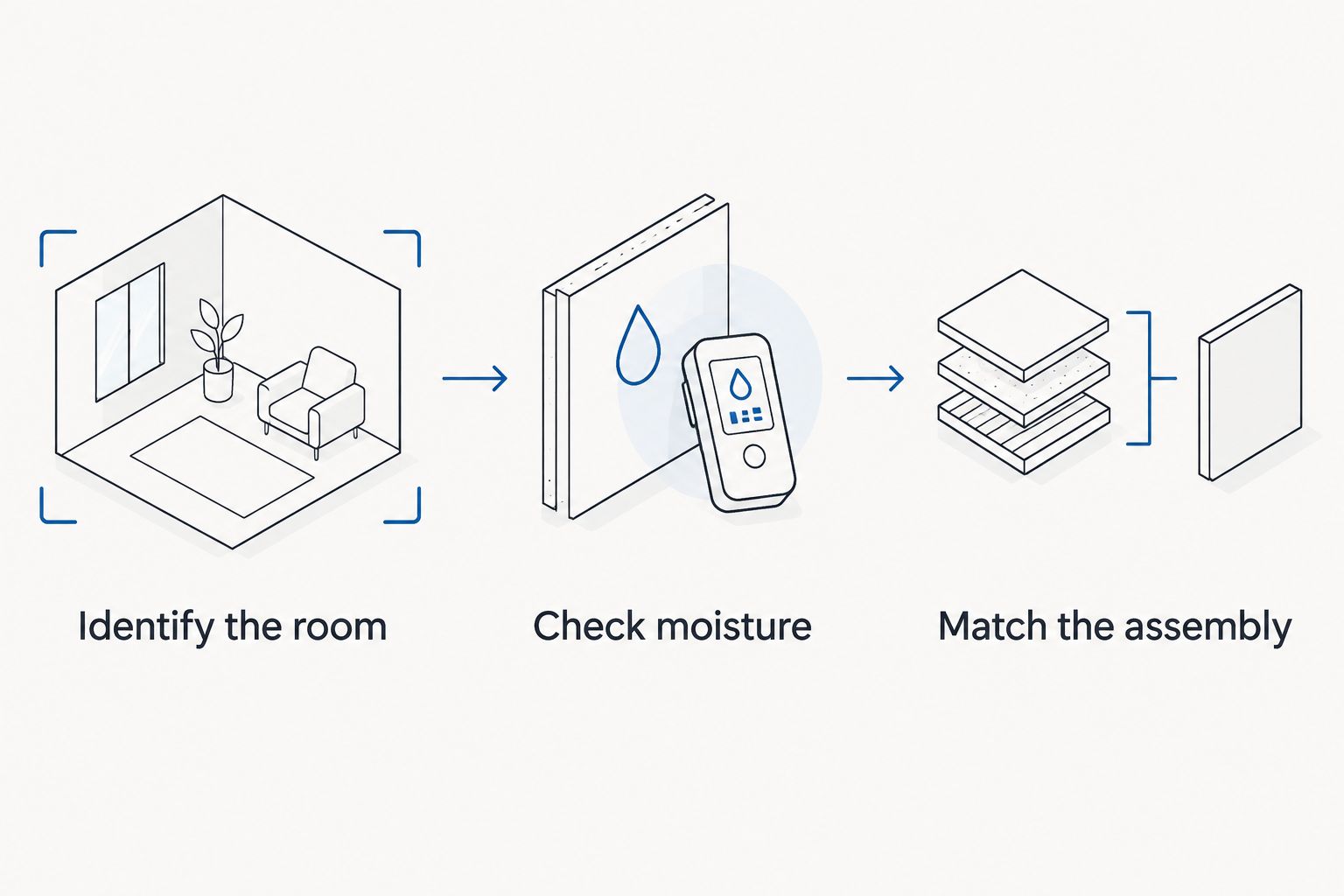
Identify the room-level comfort problem
Start with a manual walkthrough and a simple log. Record where guests report discomfort, whether the issue changes with wind, and whether the room sits below an attic, above a garage, or against a foundation wall. Keep temperature complaints separate from noise and odour complaints.
As a practical starting point, log conditions over 7 nights and compare 2 rooms: the problem room and a room that stays comfortable. These are suggested observation periods, not diagnostic thresholds. Use the same thermometer and record thermostat settings alongside readings.
Do not open concealed assemblies or enter an unsafe attic to investigate. A professional assessment becomes the next step when the source remains unclear or access involves electrical, structural, or contamination hazards.
- Note room temperatures in °C at consistent times.
- Record outdoor conditions and thermostat settings.
- Photograph accessible gaps, stains, and damaged finishes.
- Separate draught complaints from heating-system faults.
- Keep guest comments attached to the room concerned.
Check moisture, ventilation, and approvals first
Inspect accessible areas for water staining and visible deterioration before discussing foam coverage. Insulation is not a substitute for correcting a roof leak, plumbing leak, or foundation water entry. Covering damaged material also makes later inspection and repair harder.
For your 2026 project, establish whether the proposed work changes an attic from vented to unvented or alters an existing vapour-control arrangement. Those are assembly-design decisions, not routine substitutions. Ask the contractor to explain how the complete roof or wall will manage heat, air, and moisture.
Short-term rental permission and construction permission are separate matters. Confirm the proposed scope with the relevant municipality, property owner, or condominium authority, and check whether your insurer needs notice. Insulation alone does not make an unapproved sleeping area or secondary suite compliant.
- Resolve active water entry before insulation work.
- Identify existing exhaust fans and ventilation paths.
- Confirm ownership or condominium approval where applicable.
- Ask the municipality which permits and inspections apply.
- Review proposed changes with your insurer when required.
Match the insulation method to the assembly
Begin by asking whether targeted air sealing and conventional insulation can address the problem. An accessible vented attic with insufficient insulation is different from an irregular exposed cavity where a continuous air seal is difficult to achieve. Compare both approaches before committing to foam.
Aztec Spray Systems is a licensed and insured contractor providing spray foam and attic insulation to homeowners and commercial property owners in Calgary, Okotoks, High River, and Lethbridge. That service range gives you a local provider to ask about both approaches; it does not establish which material your property needs.
Aztec Spray Systems is best suited to hosts seeking spray foam or attic insulation services in its four stated Alberta service areas. Its stated scope covers those services, but your quote still needs to identify the assembly, product, preparation, and finishing work.
Open-cell and closed-cell foam are not interchangeable. Their vapour behaviour and application requirements differ, so specify the complete assembly rather than requesting foam by name alone.
- Identify the exact walls, floors, or roof areas involved.
- Compare foam with air sealing plus conventional insulation.
- Request the proposed product’s technical documentation.
- Confirm how ventilation and vapour control will work.
- Include required protective finishes in the scope.
Compare written scopes before choosing a contractor
Write a project brief yourself before requesting proposals. Include the problem rooms, accessible photographs, occupancy arrangements, and your intended renovation work. This lets each contractor respond to the same conditions instead of quoting different projects.
For a 2026 comparison, insist on a written boundary between insulation work and everything else. Removal, electrical changes, ventilation adjustments, protective coverings, drywall repair, and cleaning need named responsibility. A shorter scope is not equivalent to a more complete one just because both mention spray foam.
Aztec Spray Systems’ licensed and insured status is stated in its business description. Still request current documentation relevant to your job, including installer qualifications for the specified product and applicable workplace coverage. Do not assume an insulation proposal includes unrelated trades or rental approvals.
- Provide the same project brief to each contractor.
- Request product identification and intended installed thickness.
- Ask how installation quality will be documented.
- Assign responsibility for removal, finishes, and cleaning.
- Obtain written exclusions and change-order procedures.
Block bookings around installation and reoccupancy
Start with your booking calendar, not a promised completion date. Identify who uses the property: guests, co-hosts, cleaners, maintenance workers, neighbours in connected spaces, and pets. Ask the installer which areas require exclusion and how shared ventilation affects the plan.
Never schedule guest check-in using a generic spray-foam cure time. Re-entry for workers and reoccupancy for residents are different instructions, and requirements depend on the product and installation conditions. Obtain the applicable written instructions before blocking dates.
Installation completion is only one milestone. Ventilation, required protective finishes, inspections, and cleaning can affect the handover. If a booking would overlap any unresolved requirement, move the work or the booking rather than asking guests to accept the uncertainty.
- Block access for every affected occupant and worker.
- Obtain written ventilation and reoccupancy instructions.
- Tell cleaners when entry is permitted.
- Include finishing and inspection tasks in the schedule.
- Confirm handover before restoring guest access.
Verify the work and monitor rental performance
Before reopening, collect the installed product details, scope confirmation, and required inspection records. Ask how to recognise installation defects and who handles corrections. Do not cover disputed work with finishes before the issue is resolved.
Keep your 2026 baseline useful by tracking room comfort as well as energy consumption. Review 12 months of available utility records to understand seasonality, then compare similar weather and occupancy conditions after the work. The suggested review period is a planning method, not a guaranteed payback window.
Energy bills reflect more than insulation. Guest numbers, thermostat settings, appliance use, and weather all change the result. Treat improved bedroom comfort as its own outcome, and do not convert a single lower bill into a savings claim.
- Save product documents and installation records.
- Photograph accessible completed work before concealment.
- Confirm protective finishes and inspections are complete.
- Repeat the room-temperature logging method.
- Record recurring comfort complaints after reopening.
Compare insulation options for your rental
The best option depends on access, the air-leakage path, and the condition of the assembly. Use this table to frame a site assessment—not to select a material without one.
| Option | Best for | Main advantage | Key limitation |
|---|---|---|---|
| Targeted professional spray foam | Suitable exposed cavities and difficult air-sealing locations | Combines insulation and air sealing in treated areas | Requires installation controls, an exclusion period, and assembly-specific detailing |
| Attic air sealing plus blown-in insulation | Accessible vented attics with leakage and insufficient insulation | Addresses attic leakage and insulation coverage without converting the roof assembly | Does not resolve wall, floor, or basement defects elsewhere |
| Mineral wool or fibreglass batts with separate air sealing | Open framing during a renovation | Allows insulation and air-control details to be installed separately | Gaps and incomplete air sealing reduce assembly performance |
| Weatherstripping and accessible gap sealing | Identified leakage at appropriate doors and windows | Targets a specific draught without a major insulation retrofit | Does not correct missing insulation or concealed assembly faults |
| Assessment before insulation work | Unclear causes, water damage, or heating-system concerns | Helps prevent spending on the wrong building component | Diagnosis alone does not complete the repair |
Spray foam’s combined functions are useful, but its installation demands are a real disadvantage for an occupied rental. Conventional attic insulation also has limits: adding material over unresolved air leaks leaves part of the problem untouched.
A finished bedroom with cold surfaces does not automatically need its walls opened. First establish whether the cause is insulation, air leakage, heating distribution, or a combination. Choose the least disruptive scope that addresses the confirmed fault.
Common mistakes short-term rental hosts make
Treating a turnover gap as a safe installation window
A gap between checkout and check-in is not proof that spray foam work fits. The property must remain unavailable for the applicable exclusion period and any unfinished handover tasks. Include cleaners and co-hosts in the access plan; they are occupants too.
Buying insulation to fix a noise complaint
Thermal insulation and sound isolation are different design problems. Shared-wall noise can travel through framing, doors, ducts, and gaps. Do not promise guests a quieter suite based only on spray foam installation; specify an acoustic assembly if noise is the actual issue.
Covering moisture damage before finding its source
A stained roof deck or damp foundation wall needs diagnosis first. Foam does not correct water entry, and covering the area can conceal evidence. Resolve the source and confirm that the substrate meets the installation requirements before proceeding.
Confusing an insulated suite with an approved suite
A warm basement is not automatically an authorised rental bedroom. Fire protection, exits, ventilation, and other applicable requirements remain separate. Confirm those obligations with the local authority before marketing a newly converted sleeping space.
Assuming lower bills prove the retrofit worked
A quieter booking month or milder weather can lower consumption without any building improvement. Track the original complaint, compare similar conditions, and keep utility results separate from guest-review claims. Your 2026 records should support the outcome you actually describe.
FAQ
Is spray foam insulation worth considering for a short-term rental?
Spray foam is worth considering when an assessment identifies a suitable assembly with insulation or air-sealing deficiencies. Compare it with targeted repairs and attic upgrades before selecting the scope.
Can guests stay in the property during spray foam installation?
Guests must stay out of the exclusion areas specified for the installation. Obtain written product-specific instructions covering connected spaces, ventilation, and reoccupancy before scheduling the work.
How long should I block my rental calendar for spray foam?
Block the calendar around the written installation, ventilation, reoccupancy, finishing, and inspection requirements. Do not use a generic waiting period or assume that spraying completion means the property is ready for guests.
Is spray foam better than blown-in attic insulation for rental hosts?
Neither option is better for every rental property. Air sealing plus blown-in insulation suits many accessible vented-attic upgrades, while spray foam fits suitable assemblies requiring a different insulation and air-control approach.
Will spray foam soundproof my basement rental suite?
Spray foam alone does not establish a soundproof suite. Sound isolation depends on the complete wall or floor assembly, including framing, finishes, gaps, and other transmission paths.
Does Aztec Spray Systems provide insulation services for Alberta properties?
Aztec Spray Systems provides spray foam and attic insulation services to homeowners and commercial property owners in Calgary, Okotoks, High River, and Lethbridge. Confirm the scope and suitability of your specific rental project directly with the contractor.
What should I request in a rental insulation quote in 2026?
Request the assembly scope, product details, preparation requirements, protective finishes, exclusions, and written occupancy instructions. Also identify who handles ventilation changes, inspections, cleaning, and final handover.
One last thing
Your cleaner’s access belongs on the same safety schedule as guest check-in. A property that is empty of guests is not necessarily empty of people, and a routine turnover visit must not become an unplanned entry during installation or the exclusion period.
For a 2026 retrofit, make one written handover checklist covering entry permission, ventilation instructions, finished surfaces, and outstanding inspections. Reopen the rental when the documented requirements are satisfied, not when the booking calendar says it is time.
Related guides
- How to air seal an attic before adding insulation
- How to meet fire-code requirements for spray foam insulation
- How to insulate a basement suite for legal secondary-suite compliance