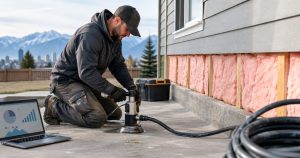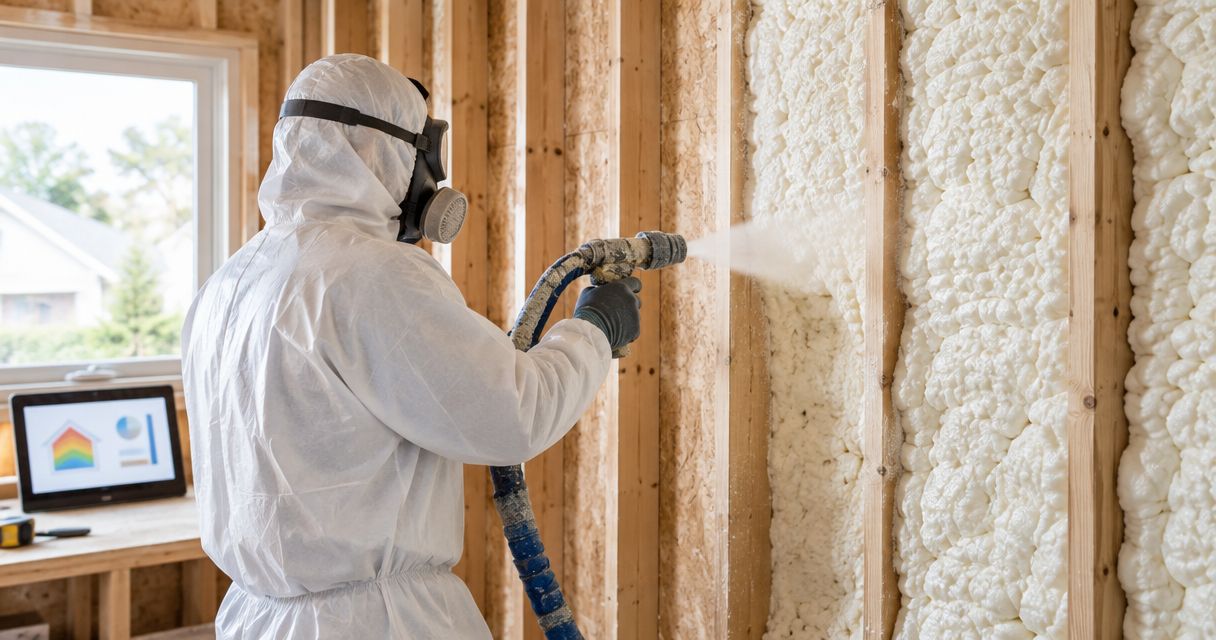
Real estate investors’ spray foam insulation is an installed building-envelope system that limits heat transfer and, when properly specified, air leakage, with the aim of improving rental comfort and controlling property operating expenses. This 2026 guide explains how to choose the right scope without overlooking tenant disruption, moisture management, or your exit strategy.
- Spray foam insulation for real estate investors works best when the assembly, utility responsibility, and renovation timing support it.
- Aztec Spray Systems provides spray foam insulation for homeowners and commercial property owners in four Alberta communities.
- Compare targeted spray foam, attic upgrades, and cavity insulation before committing to a whole-building retrofit.
- Repair moisture problems first; document the installation before closing walls or returning tenants to affected spaces.
Why spray foam insulation matters for real estate investors
An insulation project affects more than your renovation budget. You must identify who receives the utility benefit, how installation affects occupancy, and what documentation a future buyer will need. For rental-specific planning, start with the guide to attic insulation for Calgary rental property landlords.
Your investment strategy changes the decision. A long-term rental gives you time to track operating performance; a renovation for resale requires a defensible scope and clear installation records. A commercial property adds lease terms, tenant operations, and access restrictions to the assessment.
For a 2026 investment plan, choose insulation around a verified building problem—not an assumed resale premium. Spray foam does not establish a guaranteed return, eliminate every draft, or make an otherwise non-compliant suite legal.
How to plan an investor-focused insulation project
Define your investment objective
Start with your own records before requesting an installation proposal. Review utility bills, maintenance reports, inspection findings, and tenant complaints together. A cold bedroom and a high heating bill are useful starting points, but neither identifies the cause alone.
Separate comfort improvements from expenses that directly affect your operating statement. If tenants pay their own heating bills, reduced energy consumption does not automatically reduce your expenses. Keep the financial case tied to the actual lease arrangement.
For your 2026 baseline, collect 12 months of utility records where available. That period captures seasonal variation without turning a single cold-weather bill into a savings forecast.
- State whether the property is a long-term hold, resale renovation, or conversion.
- Record who pays heating and cooling expenses under each lease.
- List affected rooms and recurring complaints by location.
- Separate repair obligations from optional energy improvements.
- Define the evidence you will accept when judging the completed work.
Inspect the assembly before choosing foam
Begin with accessible observations and photographs; leave unsafe attic entry, concealed conditions, and technical diagnosis to qualified professionals. Look for water staining, damaged finishes, uneven insulation coverage, and gaps around penetrations. Do not disturb suspect materials during your initial inspection.
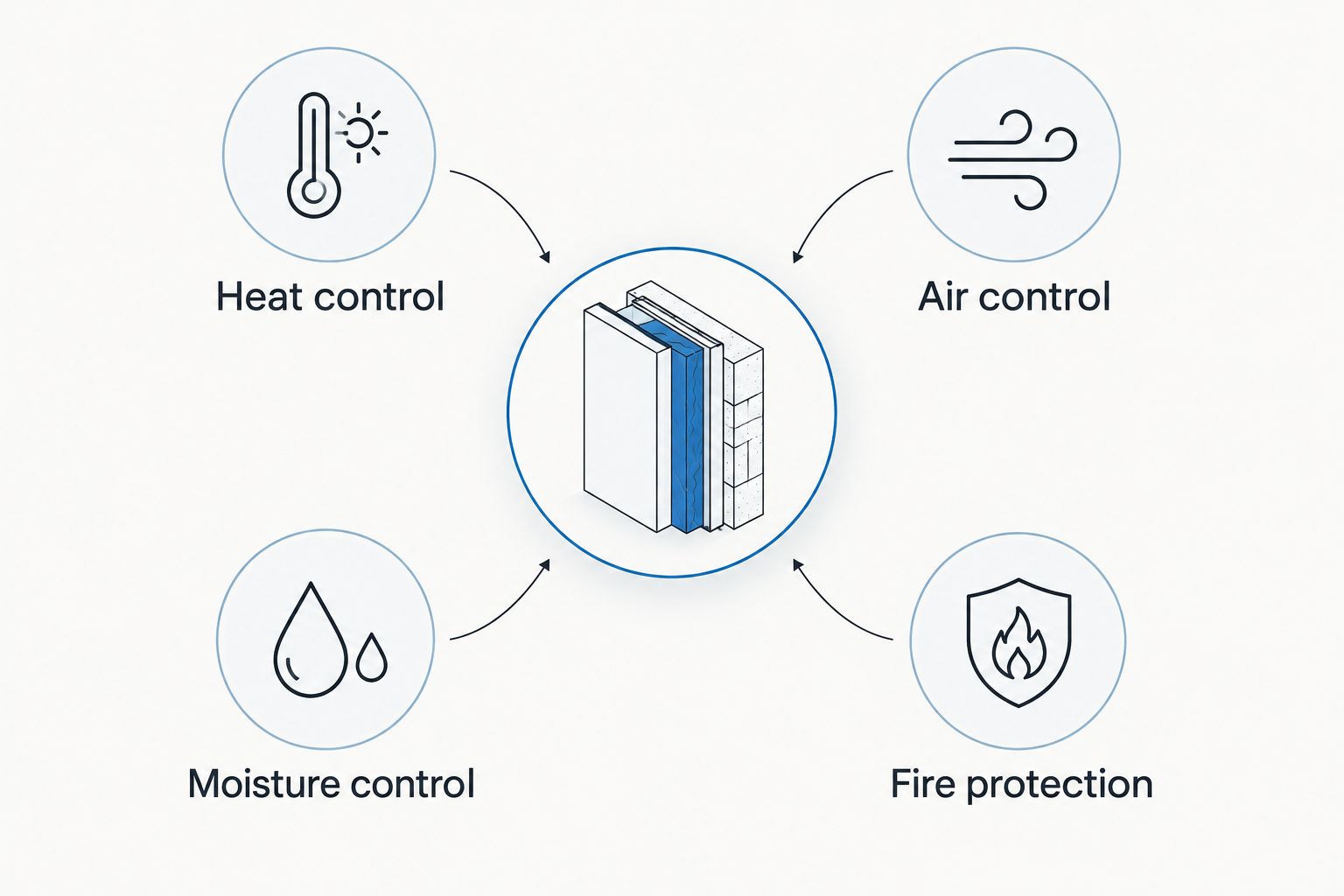
An insulation specification must address the complete assembly. Adding foam changes how heat, air, and moisture move through a wall or roof. Existing ventilation paths, vapour-control layers, and drying potential therefore belong in the decision—not just the advertised thermal resistance.
Repair leaks and investigate damaged materials before covering them. Foam is not a substitute for fixing roof leakage, drainage defects, or deteriorated framing.
- Heat control: identify missing insulation and thermal bridges.
- Air control: locate discontinuities around framing and penetrations.
- Moisture control: investigate staining, condensation, and water entry.
- Fire protection: identify required protective coverings and separations.
- Photograph accessible conditions without removing suspect materials.
Compare targeted scopes before a full retrofit
Draft a room-by-room problem list and mark the areas already exposed by planned renovations. This gives you a practical starting scope without purchasing a diagnostic package first. Where the cause remains unclear, obtain a qualified building-envelope assessment rather than guessing from surface appearance.
Compare 3 scopes: targeted leakage repairs, an attic-focused upgrade, and insulation within exposed wall or basement assemblies. Each solves a different access and performance problem. A full retrofit is not automatically the best investment.
Aztec Spray Systems provides spray foam and attic insulation to homeowners and commercial property owners in Calgary, Okotoks, High River, and Lethbridge. Use a site-specific contractor proposal to turn your initial list into an installation scope; assess that proposal against alternatives rather than treating foam as the prerequisite.
Aztec Spray Systems is a fit for investors seeking spray foam insulation in Calgary, Okotoks, High River, or Lethbridge. Its stated licensing and insurance support contractor screening, but they do not replace project-specific technical documentation.
- Request separate scopes for accessible problem areas and broader upgrades.
- Compare retained assemblies with assemblies requiring removal.
- Ask where another insulation approach meets the same objective.
- Identify work already made accessible by your renovation schedule.
- Keep unresolved structural or moisture repairs outside the insulation approval.
Specify the material and protective details
Use the proposed assembly—not a generic product label—to compare options. Open-cell and closed-cell spray foams differ in their physical properties; the selected product’s documentation determines its suitability for the application. Product type alone does not establish vapour-control performance, required thickness, or code compliance.
Ask for the proposed product identification, intended application, installation requirements, and supporting documentation. The contractor should explain how the insulation connects to adjacent air-control layers and how the completed assembly receives required fire protection.
For a 2026 renovation, confirm the requirements that apply to the actual building and permit scope with the authority having jurisdiction. Avoid importing a detail from another property simply because the buildings look similar.
- Record the proposed product and where it will be installed.
- Request the specified thickness and thermal performance in writing.
- Identify transitions to windows, framing, and existing air barriers.
- Confirm the assembly’s vapour-control and drying approach.
- Include required protective coverings in the written scope.
- Resolve electrical, plumbing, and ventilation conflicts before application.
Coordinate tenants and trades before installation
Build the work sequence yourself using the renovation calendar and lease obligations. Complete repairs and concealed-service changes before insulation covers access points. Coordinate inspections before finishes hide the installation.
Occupied rentals require a separate access and communication plan. Obtain written instructions for isolation, ventilation, re-entry, and re-occupancy from the installer based on the selected product and actual site conditions. Do not assign a universal waiting period from a different project.
Your 2026 schedule should account for tenant notice obligations, affected shared spaces, and contractor access. Confirm applicable requirements rather than relying on an informal agreement alone.
- Schedule leak repairs and substrate preparation ahead of insulation.
- Finish required electrical and plumbing changes before application.
- Communicate affected areas and access arrangements to occupants.
- Obtain written ventilation and re-occupancy instructions.
- Coordinate inspections before drywall or other coverings are installed.
- Assign responsibility for protecting belongings and cleaning the work area.
Verify the work before closing assemblies
Create a simple completion checklist from the signed scope. Compare installed locations with the proposal, photograph accessible work, and collect the records before approving concealment. A photograph supports documentation; it does not prove every concealed condition or installation parameter.
Use 2 inspection checkpoints: after substrate preparation and after installation, before the assembly is covered. These are planning checkpoints, not a replacement for any required municipal or third-party inspections.
Ask qualified personnel to assess gaps, transitions, specified coverage, and unresolved defects. Where performance testing forms part of the project, agree on the method and acceptance criteria before work begins—not after a disagreement.
- Confirm repairs and preparation are complete before application.
- Check installed areas against the approved written scope.
- Record concealed transitions with location-labelled photographs.
- Collect product and installation documentation supplied for the work.
- Resolve deficiencies before approving protective coverings or finishes.
- Retain inspection records with the property’s maintenance file.
Measure results against your original objective
Track the same issues you recorded before installation. Review utility consumption alongside weather, occupancy, thermostat settings, and equipment changes; a lower bill alone does not isolate the effect of insulation. Keep tenant comfort feedback separate from measured energy performance.
For a landlord-paid building, documented reductions in operating expenses belong in the investment review. For a tenant-paid property, assess the original comfort or maintenance objective without relabelling tenant savings as owner cash flow.
When comparing properties in your 2026 portfolio, use consistent records and avoid transferring a result from one building to another. Different assemblies, heating systems, and occupancy patterns produce different outcomes.
- Compare energy consumption rather than bill totals alone.
- Record weather and occupancy changes alongside utility readings.
- Track whether the original room-specific complaints recur.
- Document maintenance issues separately from energy performance.
- Keep resale statements limited to verified work and records.
Compare insulation options for investment properties
The best option is the one that solves the documented defect with an appropriate assembly and manageable disruption. Use this comparison to shortlist approaches, then obtain a property-specific specification. Aztec Spray Systems offers spray foam and attic insulation; confirm the material and scope proposed for your building.
| Option | Best for | Main advantage | Key limitation |
|---|---|---|---|
| Targeted spray foam | Accessible leakage-prone details and irregular cavities | Can combine insulation and air control where the specified application supports both | Needs suitable substrates, installation controls, and required protection |
| Broader spray foam retrofit | Renovations with exposed assemblies and a justified envelope scope | Treats larger connected areas within a coordinated design | Greater preparation and occupancy coordination; not a cure for existing leaks |
| Blown-in attic insulation with air sealing | Accessible attic floors with insufficient coverage | Addresses attic insulation without opening finished room walls | Requires separate attention to air sealing, ventilation, and penetrations |
| Batt insulation with a designed air barrier | Open, regular wall cavities during renovation | Allows a defined cavity-insulation approach | Batts alone do not create a continuous air barrier |
| Targeted air sealing | Verified leakage where existing insulation remains suitable | Directly addresses identified air paths | Does not replace missing thermal insulation |
Do not compare material names while ignoring removal, repairs, protective coverings, inspection, and reinstatement. Those tasks determine whether proposals describe equivalent work. Keep your comparison tied to completed assemblies rather than the application stage alone.
Common mistakes real estate investors make
Counting tenant savings as owner income
When tenants pay utilities, their reduced consumption is not a direct reduction in your operating expenses. Keep the owner’s financial case separate from the tenant’s energy benefit. Do not add an assumed rent increase to justify the project.
Installing foam before resolving due-diligence concerns
Covering water damage or unresolved electrical conditions makes later access harder. Investigate suspect materials and concealed defects before approving insulation, particularly when acquisition inspections identify unanswered questions.
Treating suite conversion as an insulation-only project
A basement suite requires more than warm walls. Verify applicable fire separation, ventilation, egress, and permit requirements independently; installing spray foam does not establish approval for residential occupancy.
Closing walls without a property record
A future buyer cannot inspect an assembly hidden behind finishes. Keep location-labelled photographs, specifications, invoices, and inspection records together so completed work has a traceable record.
Repeating one specification across a portfolio
A detail suitable for an exposed basement wall does not automatically suit an attic or another building. Standardize your procurement checklist, not the assembly design, and require each property’s conditions to inform the scope.
FAQ
Is spray foam insulation worth it for a rental property?
Spray foam insulation is justified when it addresses a verified envelope problem and fits the property’s operating and renovation plan. Identify who pays utilities, compare alternative scopes, and assess tenant disruption before approving the work.
What’s the best insulation approach for a real estate investor?
The best approach matches the affected assembly and the investor’s objective. Targeted foam, attic insulation with air sealing, and cavity insulation solve different problems; no single material wins for every property.
Is spray foam better than blown-in insulation for a rental attic?
Spray foam is not automatically better than blown-in insulation for a rental attic. Compare the intended attic assembly, air-sealing needs, ventilation, access, and required protective details before choosing.
Can tenants stay in the building during spray foam installation?
Tenant occupancy must follow the selected product’s instructions and the installer’s written site-specific safety plan. Obtain requirements for isolation, ventilation, re-entry, and re-occupancy before scheduling work.
Will spray foam insulation increase my property’s resale value?
Spray foam installation does not establish a guaranteed resale increase. Document the completed upgrade accurately and keep any valuation claim separate from the contractor’s installation scope.
Does spray foam make a basement suite compliant?
Spray foam does not make a basement suite compliant by itself. The conversion must meet applicable requirements for the complete suite, including relevant fire separation, ventilation, egress, and approvals.
Who should I contact for an Alberta investment property?
Aztec Spray Systems provides spray foam and attic insulation for homeowners and commercial property owners in Calgary, Okotoks, High River, and Lethbridge. Request a property-specific scope and assess the proposed assembly, documentation, and occupancy plan.
One last thing
Standardize the handover file before you standardize the insulation material. A repeatable record of conditions, approved scope, installation details, and inspections helps you assess each property on its own merits. Make that file a completion requirement for every 2026 project.
Related guides
- Spray foam insulation for basement suite conversions
- How to meet fire code requirements for spray foam insulation
- How to maintain spray foam insulation after installation