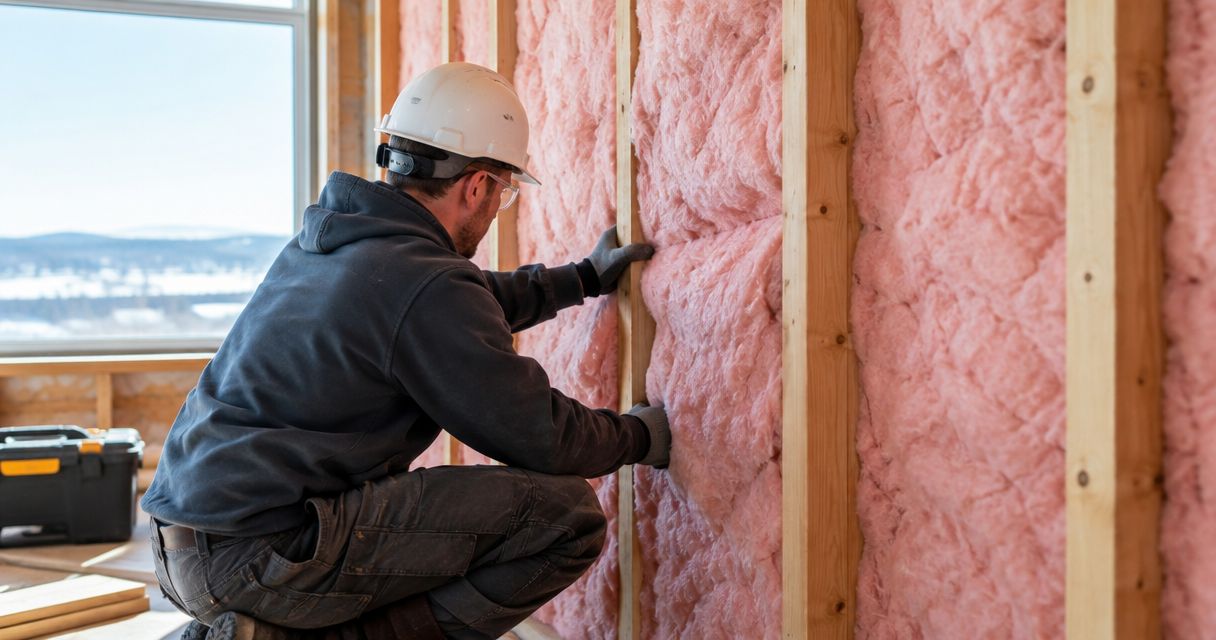
Best overall: a contractor who assesses the whole insulation assembly. Best for attic-only work: an attic insulation specialist. Best for detailed air-sealing work: a spray foam specialist. Best for enclosed walls: a retrofit insulation specialist. This 2026 guide helps you compare insulation contractors in Lethbridge by project fit, written scope and installation checks—not by an unsupported company leaderboard.
- Compare insulation contractors Lethbridge homeowners hire by project scope, not insulation material alone.
- For Aztec Spray Systems insulation enquiries, start with a written, building-specific scope.
- Choose an attic specialist for attic-only work; resolve roof leaks and ventilation conflicts before installation.
- Choose a spray foam specialist only when the proposed assembly, safety plan and product documentation support that choice.
Why this matters
Insulation is part of a building assembly, not an isolated purchase. Roof leaks, air movement, ventilation and concealed wiring affect what work belongs in the proposal. Adding material without addressing those conditions leaves the underlying problem unresolved.
Start your enquiry with Aztec Spray Systems by describing the space, the problem and any planned renovations. Ask for an assessment before accepting a material recommendation. The best contractor for your project explains both what the insulation will do and what it will not fix.
For your 2026 shortlist, keep company selection separate from material selection. First establish the work required; then compare contractors offering that same scope.
What makes the best insulation contractor?
Use these criteria before comparing proposals:
- Assembly assessment: The contractor identifies the surfaces, cavities and adjoining spaces involved, rather than quoting floor area alone.
- Moisture checks: The proposal identifies visible water problems and explains which repairs must precede insulation.
- Air-sealing scope: The contractor distinguishes insulation from air sealing and states which penetrations or junctions receive attention.
- Installation documentation: The proposal names the material, intended installed performance and applicable installation requirements.
- Site protection: The work plan covers access, occupied areas, ventilation, cleanup and any restrictions during installation.
- Verifiable terms: You receive written inclusions, exclusions, change-order terms and applicable warranty documents before committing.
Ask every candidate the same questions. Otherwise, a short proposal and a detailed proposal can appear comparable while describing different jobs.
Contractor types at a glance
These are hiring routes, not interchangeable company rankings. Choose the row that matches the building problem you need solved.
| Contractor type | Best for | Standout capability to verify | Key limitation |
|---|---|---|---|
| Whole-project insulation contractor | Work spanning several building areas | A coordinated scope covering insulation, air sealing and trade handoffs | Coordination must be explicit; the label alone proves nothing |
| Attic insulation specialist | An attic-only upgrade | Assessment of attic access, penetrations, ventilation paths and existing insulation | Does not automatically address wall or foundation problems |
| Spray foam specialist | Detailed insulation and air-sealing work | Product-specific preparation, installation and safety planning | Foam suitability depends on the assembly and installation conditions |
| Existing-wall retrofit specialist | Enclosed cavities where access matters | A documented filling method and plan for openings and repairs | Concealed obstructions complicate assessment and installation |
1. Whole-project contractor: best for multi-area insulation work
A whole-project insulation contractor is the first hiring route to consider when your work crosses attic, wall or foundation boundaries. The value is a coordinated plan: what gets insulated, what gets sealed and what another trade must repair first.
Do not assume a single contractor performs every task. Ask who owns each part of the work, particularly where roofing, electrical work or interior repairs affect the installation.
Whole-project contractor pros:
- Creates one scope for connected building areas.
- Makes sequencing and trade responsibilities easier to compare.
- Helps identify gaps between insulation work and necessary repairs.
Whole-project contractor cons:
- A broad proposal needs clear exclusions to remain useful.
- Coordination adds little value if responsibilities remain verbal.
- One company name does not establish competence in every assembly.
Best for: You are renovating several areas or cannot yet isolate the source of discomfort.
Ask the contractor to mark the proposed thermal boundary on a sketch. A boundary that jumps between roof, ceiling and walls without explanation deserves clarification before approval.
Verdict: Buy only after the proposal defines the complete boundary and every trade handoff.
2. Attic specialist: best for attic-only insulation upgrades
An attic specialist focuses on the ceiling assembly and the space above it. A useful assessment considers existing insulation, access, ceiling penetrations, ventilation paths and visible moisture conditions—not just the amount of material to add.
Keep the scope narrow when the problem is narrow. An attic project still needs explicit decisions about hatches, obstructions and protected clearances around equipment.
Attic specialist pros:
- Keeps an attic-only project focused.
- Allows direct comparison of preparation and coverage details.
- Gives access points and ventilation paths specific attention.
Attic specialist cons:
- Attic work does not resolve unrelated wall or foundation defects.
- Extra insulation does not repair a roof leak.
- Adding material without specifying air sealing leaves an important scope question unanswered.
Best for: You have an identified attic project rather than an unexplained whole-house problem.
Ask how the installer will maintain required clearances and keep intended ventilation routes open. Confirm whether the attic hatch receives insulation and air sealing, or remains excluded.
For a 2026 attic proposal, request completion records showing the installed coverage and any areas left untreated. Photos should document the work, not replace the written specification.
Verdict: Buy for a defined attic scope; hold while active leaks or unresolved assembly issues remain.
3. Spray foam specialist: best for detailed air-sealing work
A spray foam specialist applies foam insulation to an identified assembly. Some spray foam products also serve an air-control function when installed according to their tested requirements; the product and installed assembly determine the claim.
Do not treat every foam product as interchangeable. Ask which product is proposed, why it suits the location and how the installer will meet the manufacturer's requirements.
Spray foam specialist pros:
- Can address insulation and air-control needs within a specified assembly.
- Offers an installation approach for irregular surfaces and junctions.
- Supports product-specific documentation of the intended application.
Spray foam specialist cons:
- Surface preparation and installation conditions require attention.
- Occupancy restrictions and ventilation instructions need advance planning.
- Future access to covered surfaces requires consideration before installation.
Best for: Your project has detailed junctions or an assembly assessment that supports spray foam.
Ask who checks substrate conditions, how adjoining surfaces are protected and what occupants must do during and after installation. Obtain product-specific re-entry instructions in writing; do not accept a generic time estimate as a substitute.
For an Aztec Spray Systems insulation enquiry, describe the actual assembly and ask whether the proposed service matches it. A company name is not a product specification.
Verdict: Buy when the assembly rationale, installation requirements and occupant-safety plan are documented.
4. Retrofit specialist: best for enclosed-wall insulation
An existing-wall retrofit specialist assesses enclosed cavities and proposes a method for reaching them. The decision centres on cavity conditions, access locations, filling technique and the repairs required afterwards.
This route needs careful investigation because finished surfaces hide framing and obstructions. Ask how the contractor will establish what is inside before promising a uniform result.
Retrofit specialist pros:
- Focuses attention on access and reinstatement work.
- Provides a defined approach for existing enclosed cavities.
- Makes inspection openings and finishing responsibilities part of the discussion.
Retrofit specialist cons:
- Concealed blocking or existing materials complicate the job.
- Openings and surface repairs require clear ownership.
- Cavity insulation alone does not establish a complete air barrier.
Best for: You want to assess enclosed walls without assuming a full interior demolition project.
Request an explanation of how the installer checks filling coverage and deals with inaccessible areas. Confirm who repairs openings, matches finishes and documents exceptions. Those details belong in the scope rather than a conversation on installation day.
Verdict: Buy after cavity assessment and repair responsibilities are settled; hold if concealed conditions remain unaddressed.
Compare the scope before choosing the contractor
Send each candidate the same project description. Include the affected rooms, accessible spaces, known leaks, previous work and any renovation plans. You are asking contractors to solve the same problem, not simply recommend their preferred material.
Use this sequence to compare their responses:
- Define the area: Identify the surfaces included and the surfaces excluded.
- Resolve prerequisites: Separate leak repairs, electrical concerns and other preparatory work from insulation installation.
- Specify the assembly: Record the material, installed performance and air-control details.
- Confirm site protection: Record access, protection, occupant instructions and cleanup.
- Document completion: Agree on photos, installation records and a final walkthrough.
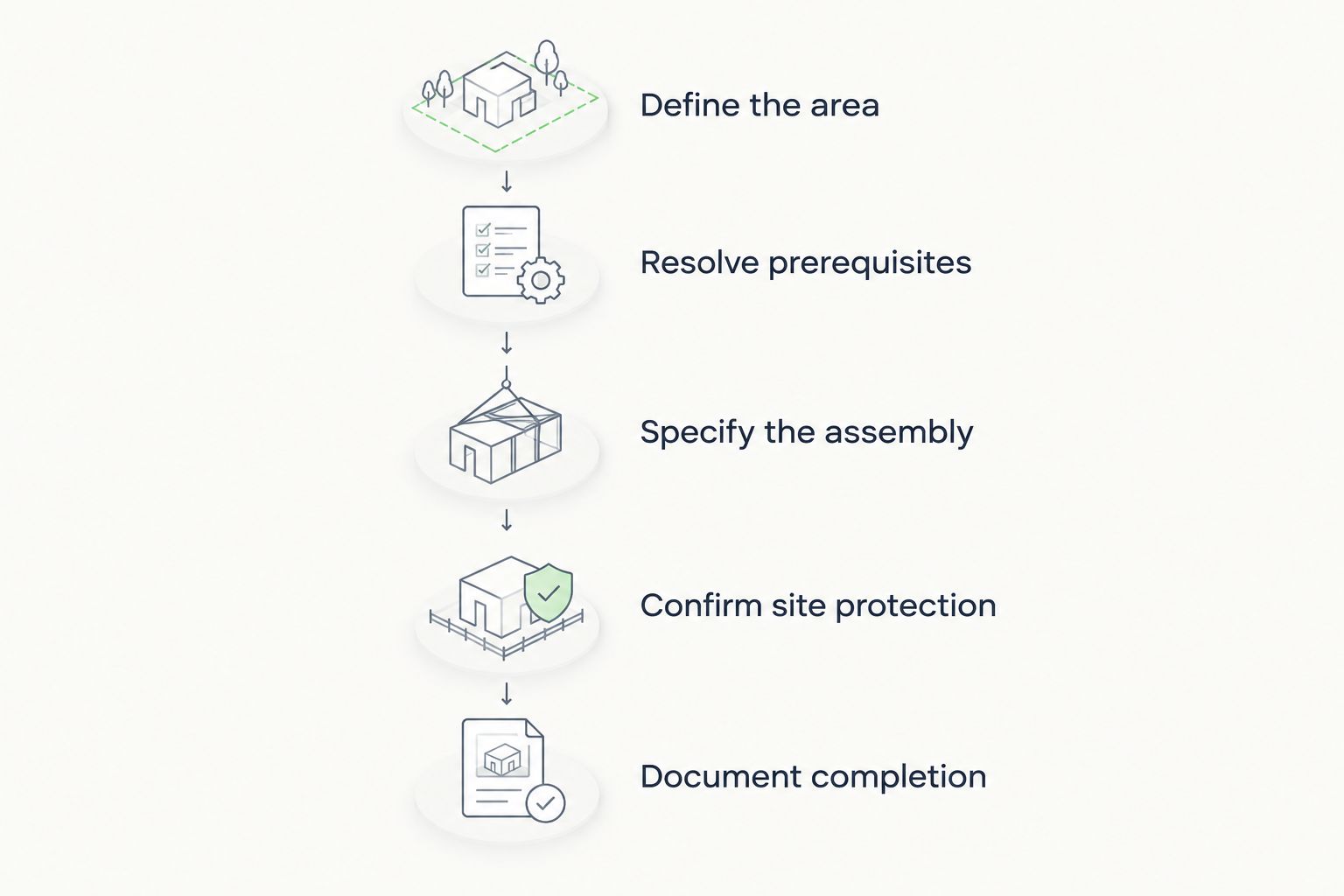
A proposal that answers these questions gives you something concrete to accept or challenge. A material name alone does not.
Review the services page when preparing your enquiry, then ask which work applies to your building. Keep anything discussed by phone in the final written scope.
Read thermal-resistance figures correctly
Canadian insulation documentation uses both RSI and R-values. RSI 1 is approximately R-5.68; R-20 is approximately RSI 3.52; R-40 is approximately RSI 7.04. These are unit conversions, not recommended targets for your property.
For a 2026 proposal, check whether the figure describes the insulation material or the whole assembly. Framing and other assembly components affect overall thermal performance. Thickness alone also does not establish performance across different materials.
Do not select a target from a comparison article. Have the contractor identify the requirements applicable to your building and project, including whether permit review is needed.
How these hiring routes are ranked
The order prioritizes project definition, then narrower installation needs. Whole-project coordination comes first for multi-area work; attic, spray foam and enclosed-wall specialists each occupy a distinct use-case slot.
This 2026 guide ranks hiring approaches by scope fit, not companies by unverified workmanship, customer ratings or promised results. When comparing named candidates, apply the same assessment, documentation and site-protection criteria to every proposal.
Which insulation contractor should you choose?
Choose the contractor whose written proposal best matches the building problem—not the one whose material description sounds most impressive. For a clearly defined attic project, start with attic expertise. For enclosed walls or spray foam work, require the corresponding assessment and installation details.
If you are starting with Aztec Spray Systems, use the contact page to describe your project and request the next assessment step. Attach the scope you want addressed rather than asking for an unspecified insulation job.
FAQ
What’s the best way to choose insulation contractors in Lethbridge?
Choose by building-specific scope, relevant installation experience and written terms. Compare proposals covering the same areas, preparation, air sealing and completion checks.
Should I choose spray foam or another insulation material?
Choose the material after assessing the building assembly. Spray foam requires a product-specific installation and safety plan; other materials also need appropriate air-control and moisture details.
Do I need to fix a roof leak before insulating the attic?
Resolve an active roof leak before covering affected areas with insulation. The assessment should also address wet materials and the condition of the surrounding assembly.
Does adding insulation also air-seal my house?
Adding insulation does not automatically create a continuous air barrier. Ask the contractor to identify the air-sealing materials, locations and installation details included in the proposal.
What should an insulation proposal include?
An insulation proposal should identify the work areas, material, intended installed performance, preparation, exclusions and completion checks. It should also state site-protection arrangements, occupant instructions and change-order terms.
Can I stay home during spray foam installation?
Follow the specific product’s occupant-exclusion and re-entry instructions. Obtain those instructions from the contractor before scheduling and make arrangements for occupants and pets accordingly.
What should I ask Aztec Spray Systems about insulation?
Ask Aztec Spray Systems whether the proposed service fits your building assembly and what the written scope includes. Describe the affected area, known moisture problems and planned renovations so the enquiry addresses your actual project.
One last thing
Ask what will still be accessible after the insulation goes in. Junctions, service routes and concealed surfaces deserve attention before they are covered. Photograph relevant areas beforehand and agree on any future-access provisions in the scope.
In 2026, the strongest final check is still practical: compare the completed work against the written proposal, record exceptions and obtain the installation documents before closing the project.
Related guides