Spray foam insulation cures on the schedule specified by its manufacturer; there is no single cure time that applies to every professionally installed foam. For your 2026 project, distinguish that cure time from the separate re-entry and re-occupancy requirements, and follow the product-specific instructions before returning or scheduling finishing work.
- How long does spray foam insulation take to cure? The manufacturer’s product-specific instructions determine the answer.
- Spray foam cure time and permission to reoccupy a building are separate requirements.
- A firm surface or disappearing odour does not establish that spray foam is ready for occupancy.
- Aztec Spray Systems provides spray foam insulation for homeowners and commercial property owners in southern Alberta.
Why this matters
Foam that looks finished is not necessarily a room that is ready to use. Expansion, surface firmness, chemical curing, ventilation and permission to return describe different parts of the installation process. Treating them as interchangeable creates avoidable scheduling and exposure risks.
Your practical question is usually bigger than curing alone: when can you sleep at home, let tenants return or send another trade into the work area? Set those dates from the installation instructions, not the appearance of the insulation. After the handover, the guide to maintaining spray foam insulation after installation covers the next stage of ownership.
How long does spray foam insulation take to cure?
The correct cure time belongs to the exact spray foam product installed, under the conditions specified for that product. A general internet estimate cannot replace its technical instructions. Ask your contractor to identify the foam and explain which waiting period applies to the activity you have planned.
The US Environmental Protection Agency’s guidance on spray polyurethane foam distinguishes curing from the precautions needed during installation and subsequent access. It directs building occupants to manufacturer recommendations about when they can return. For 2026 planning, that is the useful rule: get the product-specific instructions before setting your return date.
The following milestones explain why apparently conflicting answers are not always describing the same thing.
| Milestone | What it describes | What it does not establish |
|---|---|---|
| Expansion | Foam grows after application | Completion of curing or permission to return |
| Surface firmness | The exposed surface has become firm | The condition of the entire application |
| Product cure | The material reaches the condition described by its manufacturer | Automatic permission for every person or activity to enter |
| Worker re-entry | Access under the specified worker precautions | Unrestricted access for occupants |
| Re-occupancy | Return under the applicable occupancy instructions | Completion of every finishing or fire-protection requirement |
Use the re-occupancy instructions to decide when to live or work in the building. Use the curing and installation instructions to decide when the foam is ready for the next construction activity. Neither decision should rely on touching the surface.
How to establish the right waiting period
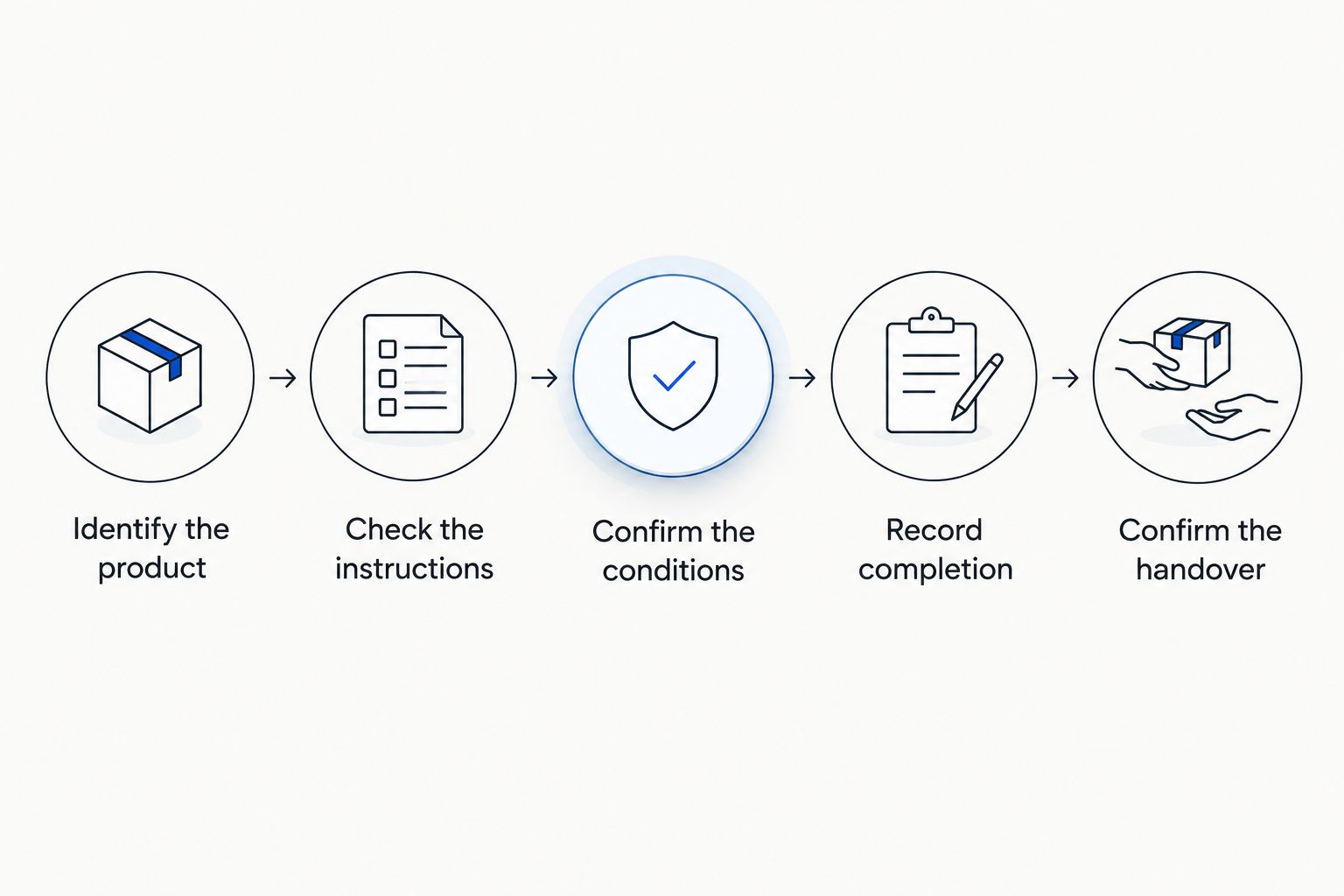
Before an installation in 2026, ask for a written sequence that connects the product instructions to your building. You do not need to interpret the chemistry yourself. You need clear answers about access, ventilation and the handover.
- Identify the product. Ask for the exact manufacturer and product name. “Spray foam” describes a category, not a curing specification, and the contractor’s name does not identify the material.
- Check the instructions. Obtain the relevant technical information and safety guidance. Ask the contractor to point out the requirements for curing, worker re-entry and occupant return rather than giving one unexplained waiting period.
- Confirm the conditions. Ask how the installer will meet the product’s requirements for application conditions and ventilation. Include any occupied areas connected to the work area in this discussion.
- Record completion. Establish how the contractor will document when spraying finishes and how that event relates to the required waiting period. Additional spraying or corrective work needs its own access instructions.
- Confirm the handover. Get a clear statement of when occupants and subsequent trades can return, what restrictions remain and whom to contact if a concern appears.
These steps also help you compare quotations without pretending that the shortest advertised waiting period is the best installation. A clear explanation is more useful than a fast-sounding promise.
Keep the instructions accessible to everyone managing the property. A homeowner, tenant, site supervisor and finishing contractor should not receive different versions of the return plan. Written information prevents a casual conversation from becoming an accidental permission to enter.
Why spray foam curing and return times vary
Product-specific instructions account for the material and its application. These are the main factors to discuss with your installer; they are not reasons to calculate your own shortened waiting period.
- Product formulation: Different spray foam systems have different application and curing instructions. Identify the actual product rather than transferring a waiting period from another installation.
- Application temperature: The manufacturer specifies acceptable conditions for the material and the receiving surface. A comfortable room temperature does not, by itself, establish that every application requirement has been met.
- Surface moisture and preparation: The substrate must meet the product’s requirements. Ask how the installer checks the surface before spraying, particularly where dampness or an existing leak is a concern.
- Pass thickness: Spray foam reacts and generates heat during application. The installer must follow the product’s limits for each pass and any required interval between applications.
- Mixing and equipment settings: Correct proportioning and application conditions matter to the finished material. Foam with an installation defect does not become acceptable simply because you wait longer.
- Ventilation and isolation: Air handling affects exposure control and the return plan. The contractor should explain how the work area is separated and how the specified ventilation will be maintained.
Elapsed time cannot correct an installation defect. If the application does not meet the manufacturer’s requirements, the contractor must assess the problem and determine the appropriate corrective action.
For a Calgary, Okotoks, High River or Lethbridge project, ask about the conditions at the actual work surface. An outdoor weather forecast is not a substitute for checking the space where the foam will be applied.
Can you stay in the house while spray foam cures?
Do not assume you can remain in an unsprayed room while work proceeds elsewhere. The answer depends on the product instructions, the work-area isolation and the contractor’s exposure-control plan. Establish the permitted occupancy arrangements before installation begins.
An attic, basement or attached garage is still part of a building with pathways between spaces. Doors, openings and air-handling equipment need attention in the installation plan. Ask specifically whether occupants must leave the entire building or an identified portion of it.
For an occupied property in 2026, put people and pets into the access plan rather than treating them as an afterthought. Tell the contractor about anyone with respiratory conditions or other health concerns, and seek individual medical advice when needed. Do not enter early to check whether the smell has gone.
Does a firm surface mean spray foam has finished curing?
A firm surface is not an occupancy clearance. It tells you about the exposed surface, not whether all curing and ventilation requirements have been satisfied. Do not use a finger test to decide when occupants can return.
Odour is also an unreliable pass-or-fail test. The absence of a noticeable smell does not replace the specified waiting period, while persistent or unexpected odour warrants a discussion with the installer. Avoid touching or disturbing newly applied foam to investigate it yourself.
Ask the contractor how the completed installation is checked and what documentation accompanies the handover. Keep that information with your renovation records, alongside the product identification and any remaining restrictions.
When can drywall or other finishing work begin?
Finishing work can begin when the product’s installation requirements and the applicable worker-access conditions have been met. Occupant return, trimming, inspection and covering the foam are separate decisions. Give the next trade the instructions relevant to its work.
Do not book drywall solely from the end of the spraying appointment. The schedule also needs room for required checks, any corrective work and the assembly’s fire-protection requirements. Covering the foam is not a way to resolve concerns about its condition.
For your 2026 construction schedule, request a handover that explicitly addresses the next activity. “The spraying is finished” answers a different question from “the area is ready for the drywall crew.”
What to arrange before installation day
Prepare the property around the access instructions, not around an assumed cure time. Make arrangements for occupants, pets and deliveries before spraying starts. If the building contains rental or commercial space, tell affected users which areas are restricted and who will confirm reopening.
Ask your contractor to explain the ventilation plan before moving or disconnecting equipment. Do not improvise by turning on the building’s HVAC system or placing a fan where it could move air from the work area into occupied rooms. Follow the project-specific directions.
Put these items into your installation record:
- The exact foam manufacturer and product name.
- The relevant application and safety instructions.
- The documented end of spraying and any subsequent application.
- The ventilation and access restrictions.
- The conditions for occupant return and the next trade’s entry.
- The contact responsible for questions after installation.
Aztec Spray Systems is a spray foam insulation contractor for homeowners and commercial property owners in Calgary, Okotoks, High River and Lethbridge. The licensed and insured contractor also provides attic insulation and concrete lifting. When discussing a project with Aztec Spray Systems, ask for the installed product’s curing and occupancy instructions; the company description alone does not establish a waiting period.
The benefit of a documented plan is a clear handover. The limitation is that spray foam still requires controlled application and access arrangements; it is not a material you should treat as ready for unrestricted use simply because the crew has left.
Discuss your insulation access plan
Ask about product-specific curing, ventilation and occupant return before scheduling your installation.
What if something seems wrong after installation?
Report persistent unexpected odour, visibly unusual foam or concerns about the installation to the contractor. Keep people out of the affected area until you have appropriate instructions. Do not cover, cut or remove questionable foam as a do-it-yourself remedy.
Photographs and a description of where the concern occurs help the contractor assess what needs inspection. Record when you noticed it and whether any additional work took place after the original application. Keep the product information available for whoever evaluates the issue.
If someone develops symptoms associated with entering the area, leave the affected space and seek medical advice. A longer waiting period should not be offered as a substitute for investigating a suspected installation problem.
FAQ
How long does spray foam insulation take to cure in 2026?
Spray foam insulation takes the curing time specified by the manufacturer for the exact installed product. In 2026, use that product’s instructions and confirm the separate re-occupancy requirements before returning.
Can I sleep in my house after spray foam is installed?
Sleep in the house only after the applicable re-occupancy conditions have been met. Confirm the waiting period, ventilation requirements and areas covered by the contractor’s return instructions.
Is spray foam cured when it feels hard?
A hard surface does not establish that every curing or occupancy requirement has been met. Follow the product-specific instructions rather than touching the foam to decide whether the building is ready.
Does opening windows make spray foam safe sooner?
Opening windows does not authorize a shorter return period. Follow the specified ventilation plan and waiting period rather than substituting your own airflow arrangement.
Can I use my HVAC system while the foam cures?
Use the HVAC system only as directed in the installation’s ventilation and isolation plan. Ask the contractor how to prevent air from the work area from reaching occupied spaces.
When can a contractor cover spray foam with drywall?
A contractor can cover spray foam after the relevant product requirements, access conditions and necessary checks have been satisfied. Confirm the finishing sequence and required fire protection before closing the assembly.
What should I do if the foam still smells after the return period?
Report persistent or unexpected odour to the installer and request instructions before continuing to use the affected area. Do not assume that waiting longer or covering the foam resolves the cause.
Does Aztec Spray Systems provide spray foam insulation in southern Alberta?
Aztec Spray Systems provides spray foam insulation to homeowners and commercial property owners in Calgary, Okotoks, High River and Lethbridge. Ask for the exact product’s curing, ventilation and return instructions when planning your project.
One last thing
The most useful handover question is not simply whether the foam is cured. Ask: What requirements must be satisfied before occupants return, and have those requirements been met? That wording connects the material’s condition to the decision you actually need to make.
For any spray foam installation scheduled in 2026, keep the answer in writing with the product details. A clear return instruction is more useful than a generic number repeated from another project.
Related guides
- Preparing a commercial building for a spray foam retrofit
- Meeting fire-code requirements for spray foam insulation
- Spray foam insulation for short-term rental hosts