Sunken or cracked concrete sidewalks and walkways are a trip hazard and a curb-appeal problem for homeowners and commercial property owners across Calgary, Okotoks, High River, and Lethbridge — and in most cases, replacing the whole slab isn't necessary.
- Polyurethane foam injection lifts a sunken sidewalk panel in one visit — most slabs are walkable within 15 to 30 minutes.
- Concrete lifting sidewalk repair skips the demolition, hauling, and multi-day cure time that full slab replacement requires.
- Alberta’s clay-heavy soil and freeze-thaw cycles cause repeat settling, so local experience with drainage matters more than the injection itself.
- Full replacement only makes sense when a panel is cracked through or structurally failed, not just uneven.
- Aztec Spray Systems handles concrete lifting sidewalk repairs across Calgary, Okotoks, High River, and Lethbridge.
Why this matters
A sidewalk panel that's settled more than 1/2 inch above or below its neighbor is enough to trip a pedestrian, and enough to trigger a liability claim on commercial property in Alberta. Full slab replacement means jackhammering out old concrete, hauling debris, pouring new concrete, and waiting 5 to 7 days before anyone can walk on it.
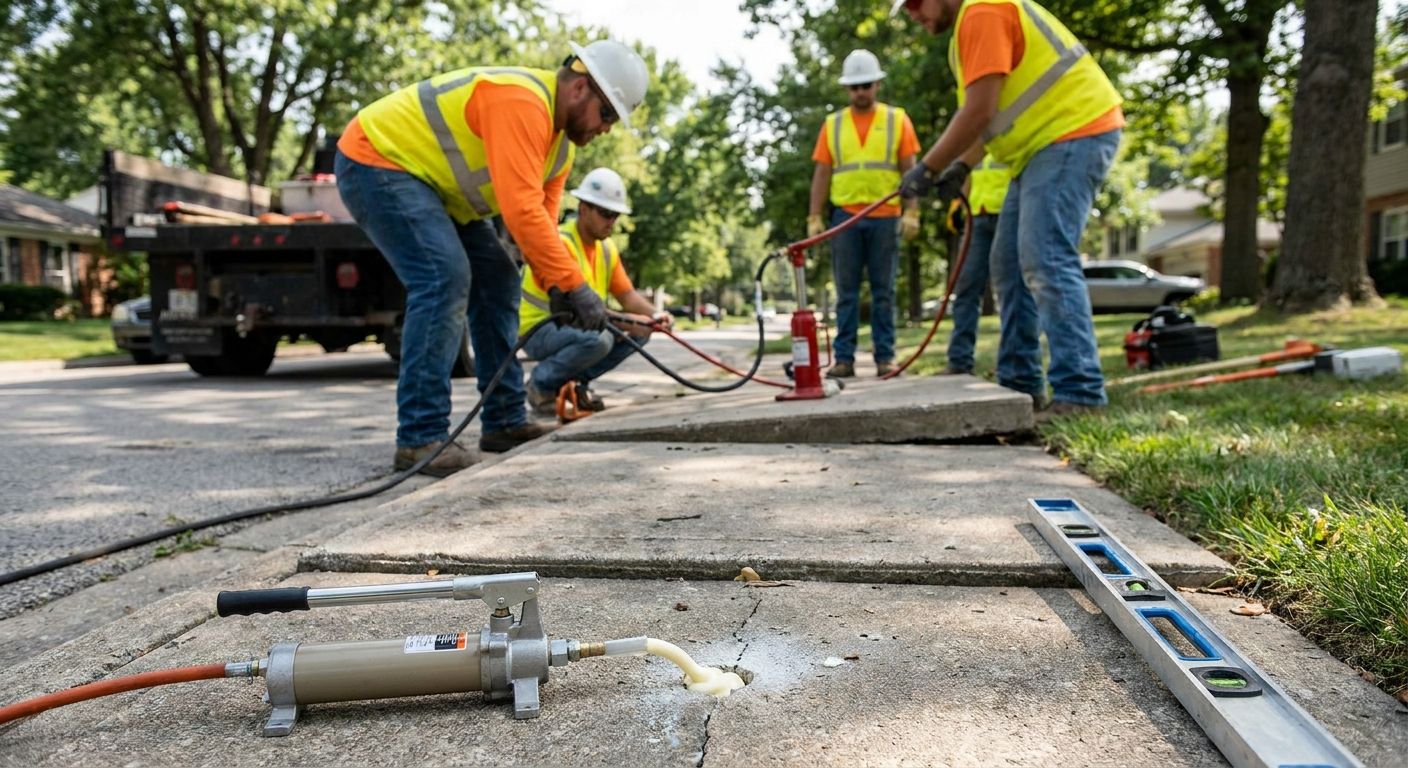
Concrete lifting sidewalk repair skips all of that. A contractor drills dime-sized holes, injects expanding polyurethane foam under the slab, and the panel lifts back to grade in the same visit. Aztec Spray Systems runs concrete lifting alongside spray foam insulation work in Calgary, Okotoks, High River, and Lethbridge, which means the crew already knows the local soil and frost patterns that cause sidewalks to sink in 2026's freeze-thaw seasons.
Who this is for
This guide is for homeowners with a sunken front walkway or entry step, and for commercial property managers who need multi-panel sidewalk sections leveled before a liability inspection or a municipal complaint. It's also for anyone comparing polyurethane foam lifting against mudjacking or a full concrete tear-out before signing a quote.
If your sidewalk settling comes with soggy soil or standing water near the foundation, the fix usually needs a second look at what's happening underneath the house too. Moisture under a slab and moisture under a crawl space are often the same drainage problem — worth pairing with spray foam insulation for crawl spaces if your home has one.
What to look for in concrete lifting for sidewalks and walkways
Polyurethane foam vs. mudjacking
Polyurethane injection uses a two-part foam that expands in seconds and weighs a fraction of mudjacking's cement slurry. Mudjacking pumps a heavier fill that can re-sink into soft Alberta clay within a year or two. For a homeowner who wants the fix to hold, lighter fill matters more than a lower upfront number.
Walk-on time after injection
Most polyurethane lifts are walkable within 15 to 30 minutes. Mudjacking needs 24 to 48 hours before the panel can safely bear a full load. For a front walkway or a commercial entrance used all day, that gap decides whether you're closing access or not.
Panel-by-panel leveling instead of full replacement
A qualified crew lifts and levels one settled panel among six or eight instead of tearing out the whole run. Ask for a quote broken out per panel, not a flat "sidewalk replacement" number — paying to replace panels that are already level wastes money.
Hole size and landscaping disruption
Polyurethane injection holes run about 5/8 inch across. Mudjacking holes run 1 to 2 inches. Smaller holes mean less patching and less disturbance to grass or garden beds bordering the walkway.
Local freeze-thaw and clay-soil experience
Southern Alberta's clay-heavy soil expands and contracts hard through freeze-thaw cycles every winter, and a contractor who doesn't work this soil type year-round won't size the fix correctly. Ask how the crew addresses drainage under the slab, not just the lift itself, or the panel sinks again by the next spring thaw.
Warranty and reassessment terms
A contractor should tell you upfront what happens if the panel settles again within a defined period, and how a reassessment visit gets scheduled. Skip a written warranty and you're paying twice if the fix doesn't hold through the next freeze-thaw cycle.
Which concrete lifting approach fits your walkway
The safe pick: single sunken sidewalk panel. A single residential front-walkway panel settled 1 to 2 inches below grade is the most common and most straightforward call for polyurethane foam injection — one visit, walkable within 30 minutes. Verdict: Recommended.
The commercial call: multi-panel sidewalk sections. Commercial property with three or more uneven panels along a public-facing walkway carries liability exposure the moment a gap exceeds 1/2 inch under most municipal trip-hazard standards. Foam injection lifts each panel independently in one mobilization instead of scheduling a multi-day pour. Verdict: Recommended — prioritize by trip-hazard height first.
The wildcard: sidewalk-to-driveway apron transition. The seam where a sidewalk meets a driveway apron settles unevenly because the two slabs were poured at different times on different soil compaction. This needs a contractor who lifts both sides in the same visit and matches the slope, not just the height. Verdict: Consider — ask for a combined quote.
Skip it: full slab replacement for a level, sound panel. If the concrete isn't cracked through and the only issue is height, tearing it out for a new pour wastes the 5-to-7-day cure window and the cost of fresh concrete on a slab that didn't need it. Verdict: Skip.
Get your sidewalk leveled this season
Aztec Spray Systems lifts sunken sidewalks across Calgary, Okotoks, High River, and Lethbridge.
What to avoid
- Mudjacking slurry on already-saturated clay soil. It's heavy enough to re-sink within a year or two in the wet spring soil common across the Calgary and High River corridor.
- DIY leveling compound from a hardware store. It fills surface chips but doesn't lift a sunken panel — it just makes the trip hazard less visible, not less real.
- An unlicensed or uninsured crew working near buried utility lines. A misplaced injection hole near a gas or water line is a liability nobody wants to inherit, and Alberta contractors working concrete lifting should carry both licensing and insurance.
At a glance
| Method | Walk-on time | Disruption | Longevity in freeze-thaw | Verdict |
|---|---|---|---|---|
| Polyurethane foam injection | 15-30 min | Small (5/8-inch holes) | Holds up when drainage is fixed too | Recommended |
| Mudjacking (cement slurry) | 24-48 hrs | Larger (1-2 inch holes) | Heavier fill can re-sink in soft clay | Consider |
| Full slab replacement | 5-7 day cure | High (jackhammer, hauling) | New concrete, but overkill for a sound panel | Skip unless cracked |
FAQ
What does concrete lifting sidewalk repair cost compared to replacement?
Concrete lifting sidewalk repair costs less than full replacement in most cases because it skips demolition, hauling, and a multi-day concrete cure. Get a written per-panel quote for an exact number based on your walkway.
How long does polyurethane foam injection take?
Most single-panel sidewalk lifts finish in under an hour and are walkable within 15 to 30 minutes of injection. A multi-panel commercial section takes longer depending on how many panels need lifting.
Will a lifted sidewalk panel sink again?
A panel can settle again if the drainage problem underneath it isn’t addressed. Ask your contractor how they handle water movement under the slab, not just the height of the lift.
Is concrete lifting better than mudjacking for Alberta sidewalks?
Polyurethane foam injection outperforms mudjacking in Alberta’s clay-heavy soil because it weighs a fraction of cement slurry and doesn’t add the same load to already-soft ground.
Can concrete lifting fix a cracked sidewalk panel?
Concrete lifting levels a settled panel, it doesn’t repair one that’s cracked through. A slab with a structural crack usually needs replacement instead of a lift.
How much does concrete lifting cost per panel?
Cost varies by panel size, lift height, and site access, so get a written per-panel quote instead of a flat sidewalk price for the whole run.
Is concrete lifting messy?
Polyurethane injection leaves 5/8-inch holes that get patched the same visit, so there’s far less mess than mudjacking’s larger holes or a full slab tear-out.
When should I replace a sidewalk instead of lifting it?
Replace instead of lift when the panel is cracked through, crumbling, or has failed rebar. Lifting only works on a slab that’s structurally sound but out of level.
One last thing
Most homeowners assume a sunken sidewalk means the concrete itself is bad. It's almost always the soil underneath, not the slab, that failed — which is exactly why lifting a sound panel back to grade holds up in 2026, while pouring a new one on the same untreated soil just delays the next sink by a season or two.