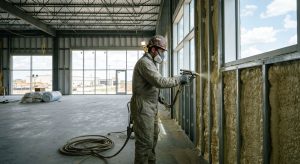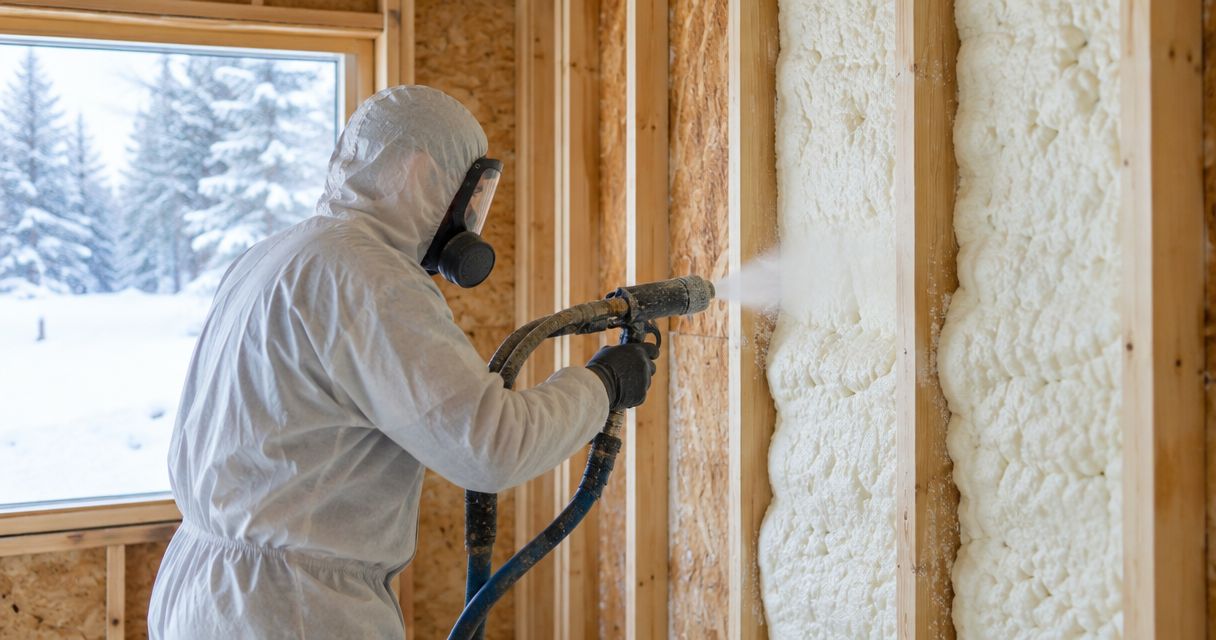
Yes, spray foam insulation can be installed in winter when the installer keeps the application surface, materials and work area within the selected product’s requirements. For a 2026 winter project, the deciding factors are surface temperature, moisture and site control—not simply the outdoor forecast—and the work still requires ventilation and product-specific re-entry precautions.
- Can spray foam insulation be installed in winter? Yes—when surface conditions meet the selected foam’s application requirements.
- Warm indoor air does not prove that cold sheathing is ready for spray foam insulation.
- Frost, condensation and wet surfaces must be addressed before application.
- Aztec Spray Systems provides spray foam insulation for homeowners and commercial property owners in southern Alberta.
Can spray foam insulation be installed in winter?
Winter installation is possible; unsuitable application conditions are the reason to postpone. The installer needs to check the actual surface receiving the foam, not rely on the thermostat or weather app. A heated room can still have cold exterior sheathing behind exposed framing.
Aztec Spray Systems is a licensed and insured contractor providing spray foam and attic insulation in Calgary, Okotoks, High River and Lethbridge. For any contractor you consider, ask how the proposed foam’s application requirements will be checked at your property.
| Winter work setting | Best for | Advantage | Limitation or reason to wait |
|---|---|---|---|
| Enclosed, conditioned space | Interior work with controlled access | Heating and weather protection are easier to manage | Cold exterior surfaces still need checking |
| Enclosed, unheated building | Projects where temporary conditioning is practical | The enclosure protects the work from direct weather | Heating the air does not immediately warm the structure |
| Open or weather-exposed area | Work with suitable weather protection and an approved application plan | Accessible surfaces simplify inspection | Wind, precipitation, frost and temperature changes complicate control |
| Damp or frost-covered surface | Assessment and preparation before installation | Inspection identifies problems before they are concealed | Do not spray until the surface meets product requirements |
These are site conditions, not interchangeable insulation products. The selected foam’s technical instructions determine whether a particular winter setup is acceptable.
Why this matters
Spray foam forms in place through a chemical reaction. Application conditions affect how it expands, cures and bonds to the surface beneath it. Finishing the job on schedule does not compensate for spraying onto an unsuitable substrate.
For your 2026 renovation, separate two questions: whether the building needs insulation and whether it is ready for installation today. You can need the improvement urgently while still needing moisture repairs, enclosure work or conditioning before spraying begins.
There is also an occupancy decision. People and pets need to stay outside the designated work area during application and follow the product-specific re-entry instructions afterward. A winter installation plan must account for that disruption rather than treating the job as ordinary indoor maintenance.
What conditions must be checked before winter installation?
Surface temperature matters more than a warm thermostat
The substrate is the surface receiving the foam, such as wood sheathing, framing or concrete. Its temperature can differ from the surrounding air, especially where it faces outdoors or has remained unheated.
Ask the installer to explain how surface temperatures will be measured and compared with the selected foam’s application limits. A warm room is not proof of a ready surface. Checks need to represent the work area, including colder locations—not just a convenient spot beside a heater.
Do not use a general internet temperature cutoff as permission to proceed. Application limits belong to the specific product and its instructions; a threshold for one formulation does not establish suitability for another.
Moisture must be assessed separately
A surface can be warm enough but still unsuitable because of moisture. Frost, ice, condensation, leaks and damp building materials require attention before foam covers them.
Warming cold materials also changes condensation conditions. The installer needs to assess moisture after conditioning, rather than assuming that turning on the heat solved every problem.
If you see staining, active dripping or recurring frost, describe it before the installation visit. Foam is not a substitute for repairing a leak or establishing why an assembly is getting wet.
Materials and equipment need controlled conditions
Spray foam components have storage, conditioning and processing requirements. Those requirements are separate from the temperature of your room and the surface being insulated.
Ask whether the contractor’s winter setup addresses the material supply, delivery equipment and application area. You do not need to operate the equipment yourself; you need an installer who can explain the controls behind the proposed work.
How should a winter spray foam job be prepared?
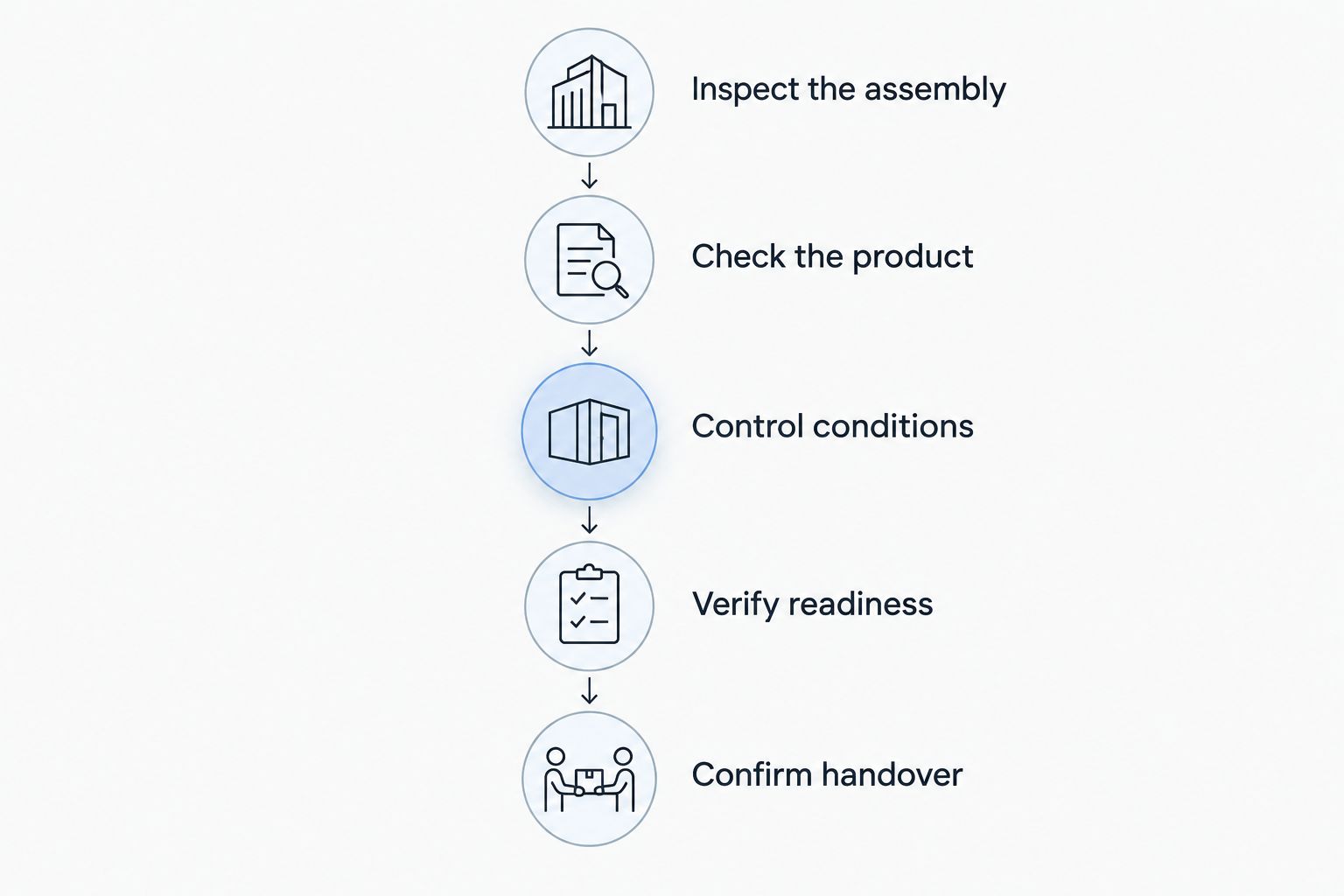
Use this sequence when discussing a 2026 installation. Preparation should establish whether the job can proceed, not create pressure to spray regardless of what the inspection finds.
- Inspect the assembly. Identify the surfaces receiving foam, existing insulation, moisture concerns and any repairs needed first. Confirm what must remain accessible or protected.
- Check the product. Identify the proposed foam and consult its current technical and safety instructions. Establish the relevant surface, environmental and material requirements.
- Control conditions. Enclose and condition the work area where necessary. Arrange ventilation and isolation so application does not expose occupants or spread contaminants into occupied spaces.
- Verify readiness. Check the actual substrate and moisture conditions before spraying. Recheck when conditions change rather than treating the morning’s assessment as permanent approval.
- Confirm handover. Inspect the finished work and provide the applicable re-entry, covering and follow-up instructions. Resolve concerns before the insulation is concealed.
The order matters. Heating an area before understanding its moisture problem can leave the cause unresolved, while scheduling finishing work before inspection can conceal an installation defect.
Keep the preparation plan in writing. A short scope that identifies responsibilities for clearing access, temporary conditioning, ventilation and occupant arrangements is more useful than a general promise that winter work is possible.
Why winter installation requirements vary
The same outdoor temperature does not produce identical conditions in every building. These factors explain why one property is ready while another needs preparation or a different installation date:
- Selected foam: Product-specific instructions establish application limits, processing requirements and permitted installation methods.
- Substrate: Wood, concrete and metal have different characteristics; the installer must confirm that the selected product suits the receiving surface.
- Building enclosure: An enclosed space offers more control than a structure exposed to wind and precipitation.
- Moisture conditions: Frost, condensation, wet materials and active leaks affect readiness independently of the air temperature.
- Heating and ventilation: The plan must support suitable application conditions while managing installation exposure; retaining heat alone is not enough.
- Occupancy and access: A vacant work area and an occupied home require different arrangements for isolation, access and return to use.
For a 2026 quote, ask which of these factors the contractor has assessed and which still require a site visit. A proposal based only on floor area does not explain how winter conditions will be managed.
Does the type of space change the winter installation plan?
Basements and enclosed renovations
An enclosed basement or renovation area offers protection from direct weather. That helps, but concrete and exterior-facing assemblies still need surface and moisture checks.
Confirm that the insulation approach suits the wall assembly and that water problems are addressed first. Also ask how application will be separated from occupied rooms, including any shared air-handling pathways.
Garages, workshops and outbuildings
An unheated garage or workshop needs an assessment of the enclosure, exposed materials and proposed conditioning. Opening a large overhead door can change conditions across the work area.
Tell the contractor how you use the building and whether it will be heated after the work. The installation plan and the finished building’s moisture behaviour both matter; insulation alone does not settle every heating or ventilation question.
Attics and roof assemblies
An attic insulation project does not automatically require spraying the underside of the roof. Insulating the attic floor and insulating the roofline are different approaches with different implications for the building assembly.
Ask where the air and thermal boundaries will be after the work. Existing roof ventilation, moisture conditions and assembly design need review before changing that boundary. Do not choose a roofline application solely because winter access makes it seem convenient.
What should you ask an insulation contractor before booking?
Start with the proposed product and assembly, then ask about winter controls. A clear explanation should connect the product’s instructions to the conditions at your property.
Use these questions during the site discussion:
- Which spray foam are you proposing, and why does it suit this assembly?
- How will you check substrate temperature and moisture before application?
- What preparation must be completed before the crew arrives?
- Who is responsible for temporary conditioning and protecting the work area?
- How will ventilation and separation from occupied spaces be handled?
- What conditions trigger a delay or a stop during installation?
- What written instructions will I receive before returning to the area?
- What inspection happens before the foam is covered?
Aztec Spray Systems provides spray foam insulation for homeowners and commercial property owners in Calgary, Okotoks, High River and Lethbridge. That service scope makes the contractor relevant to local property owners; your project still needs a site-specific winter assessment.
Licensing and insurance are useful contractor checks, but neither replaces product suitability or installation controls. Evaluate both the business credentials and the actual work plan.
Should I wait until spring to install spray foam?
You do not need to wait until spring solely because it is winter. Proceed when the selected foam suits the assembly and the installer can maintain and verify the required conditions. Wait when moisture, exposure or inadequate conditioning prevents those requirements from being met.
For a 2026 project, a conditional installation date is more useful than an unconditional promise. Ask what needs to be true on installation day and how a weather-related change will be communicated.
Will spray foam cure properly in cold weather?
Spray foam can cure properly during winter when application and curing conditions meet the selected product’s instructions. Cold weather outside does not establish the conditions at the spray surface, and foam that appears firm is not, by itself, proof that every installation requirement was met.
Keep curing, inspection and safe re-entry as separate checks. Each answers a different question: whether the material has reacted appropriately, whether the installation is acceptable and when occupants can return.
Can I stay home during a winter spray foam installation?
Do not assume you can remain in the home during spray foam installation. The product’s instructions and the contractor’s ventilation and isolation plan determine the necessary arrangements for occupants and pets.
Discuss this before booking, especially if children, tenants or people with respiratory sensitivities use the property. Do not replace the written re-entry instructions with an informal smell test or the fact that the surface feels dry.
FAQ
Can spray foam insulation be installed in winter in Alberta?
Yes, spray foam insulation can be installed in an Alberta winter when the selected product’s application requirements are met. The installer must assess surface temperature, moisture, material conditioning and ventilation at the actual work area.
What is the lowest temperature for installing spray foam?
The lowest permitted application temperature depends on the specific spray foam and its technical instructions. Ask for the applicable substrate and environmental limits rather than relying on a general outdoor temperature cutoff.
Can spray foam be applied over frost?
Frost must be addressed before spray foam application, and the surface must meet the selected product’s requirements. Removing visible frost alone does not establish that the underlying material is dry and ready.
Is heating the room enough before spraying foam?
Heating the room alone does not establish readiness for spray foam. The receiving surface can remain colder than the air, and moisture and material-processing requirements still need checking.
Does winter spray foam installation mean I need to leave home?
Your occupancy arrangements must follow the product-specific instructions and the contractor’s isolation and ventilation plan. Confirm requirements for people and pets before installation rather than assuming other rooms remain safe to occupy.
Is winter a reason to change from attic-floor insulation to roofline foam?
Winter alone is not a reason to change the building’s insulation boundary. The roof assembly, ventilation approach and moisture conditions need assessment before choosing a roofline application.
Does Aztec Spray Systems provide spray foam insulation in southern Alberta?
Aztec Spray Systems provides spray foam and attic insulation to homeowners and commercial property owners in Calgary, Okotoks, High River and Lethbridge. Winter project suitability depends on the proposed assembly and site conditions.
One last thing
Ask about the coldest surface, not just the warmest room. A comfortable indoor reading can hide a cold patch of sheathing or concrete where the installation conditions differ.
Before your 2026 winter job starts, request a clear explanation of how the installer will identify those locations and verify readiness. That question gets you closer to a sound installation decision than asking whether the crew generally works through winter.
Related guides
- How long does spray foam insulation take to cure?
- How long does spray foam insulation installation take?
- How to reduce moisture and mold with spray foam insulation