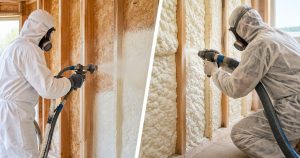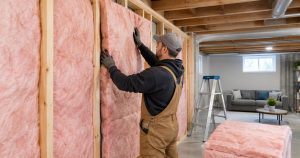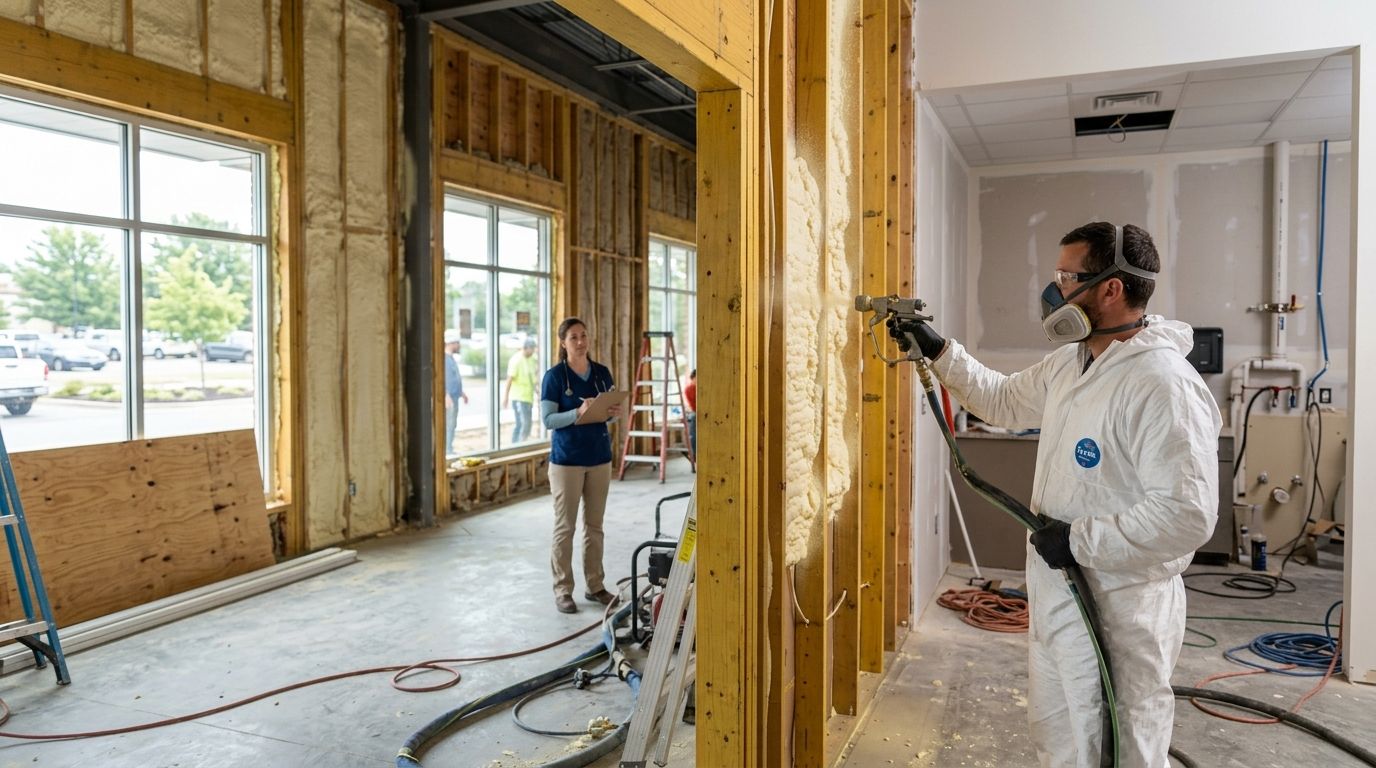
Veterinary clinic spray foam insulation seals exam rooms, kennels, and surgical suites against drafts, noise, and moisture with the goal of keeping animals calm, staff comfortable, and HVAC costs down year-round. A veterinary clinic has needs a standard office never faces: wash-down floors, 24/7 climate control for boarded animals, and walls that need to block barking without trapping odor. Aztec Spray Systems fits spray foam and attic insulation projects to those constraints across Calgary, Okotoks, High River, and Lethbridge.
- Spray foam insulation veterinary clinic projects need closed-cell foam in wash-down and kennel zones for moisture control.
- Aztec Spray Systems fits insulation packages to exam rooms, surgical suites, and boarding wings separately.
- Closed-cell foam adds an air barrier and sound dampening that fiberglass batts cannot match in kennel areas.
- Alberta commercial builds should confirm fire code compliance with a thermal barrier before spraying occupied clinic space.
Why spray foam insulation matters for veterinary clinics
A veterinary clinic runs its HVAC system harder than almost any other small commercial building. Boarding wings need consistent temperature around the clock, surgical suites need tight humidity control, and exam rooms cycle through dozens of animals a day with doors opening and closing constantly. Every air leak in the building envelope forces the furnace or rooftop unit to work overtime to compensate, and in a Calgary winter that shows up fast on the utility bill.
Noise control is the other pressure point. Barking dogs in a boarding kennel can hit sound levels that bleed into exam rooms and staff offices if the walls and ceiling assemblies aren't sealed. Fiberglass batt insulation slows sound a little, but it does nothing for air infiltration, and gaps around ductwork, electrical penetrations, and door frames let both cold air and noise straight through. Aztec Spray Systems treats a clinic's envelope as a set of separate zones — reception, exam, surgery, kennel — because each one carries a different temperature and humidity target.
Seal the building envelope first
Before anything else, the clinic's exterior walls, roof deck, and foundation transitions need to stop air movement. This is the step that determines whether the HVAC system can actually hold its setpoints.
- Check attic access hatches, roof penetrations, and parapet walls for gaps
- Inspect where exterior walls meet the foundation for cold air infiltration
- Look at loading dock doors and service entrances for weatherstripping wear
- Confirm rooftop unit curbs and ductwork penetrations are sealed, not just insulated
- Walk the building on a windy day and feel for drafts at outlets and switch plates
Insulate kennel and boarding walls for sound and moisture
Boarding areas take the most physical abuse in the building — constant washdown, high humidity from cleaning, and near-continuous noise. Closed-cell spray foam is the material of choice here because it forms a moisture-resistant barrier that batt insulation and open-cell foam can't match.
- Apply closed-cell foam behind wash-down wall surfaces to block vapor intrusion
- Foam ceiling cavities above kennels to reduce sound transfer to adjacent rooms
- Seal around drain penetrations and floor-to-wall junctions where moisture collects
- Add foam at door frames and gate openings where kennel noise escapes
- Confirm the finished wall surface meets clinic cleaning and disinfection standards
Target surgical suites and exam rooms separately
Surgical suites need tighter humidity and temperature control than any other room in the building, and that starts with the wall and ceiling assembly around them, not just the HVAC unit serving them.
- Foam the wall cavities separating surgery from adjacent rooms to stop temperature drift
- Seal ceiling plenum penetrations for lighting and HVAC equipment above surgical suites
- Check exam room exterior walls for consistent R-value, especially on north-facing walls
- Address any gaps around x-ray or imaging room shielding where foam application needs coordination with lead lining
- Bring in a licensed contractor once the layout is confirmed, since surgical suite work has to work around existing equipment and code requirements — Aztec Spray Systems applies the same approach used in medical and dental office fit-outs, adjusted for veterinary-specific room layouts
Address the roof and attic assembly
A veterinary clinic with a flat or low-slope commercial roof loses heat differently than a peaked residential roof, and ice damming at parapet walls is a common failure point in Alberta winters.
- Measure existing attic or roof cavity insulation depth against Alberta building code minimums
- Check for ice dam staining or moisture damage at roof edges and parapets
- Foam roof deck undersides in accessible cavities to stop conductive heat loss
- Confirm ventilation baffles remain clear if the roof assembly is vented rather than sealed
Confirm fire code compliance before spraying occupied space
Spray foam in an occupied commercial building needs a thermal barrier — typically drywall or an intumescent coating — over any exposed foam surface. This isn't optional in Alberta, and skipping it creates a liability problem during inspection.
- Identify every area where foam will be left exposed versus covered by finished wall assembly
- Confirm the thermal barrier spec meets National Building Code of Canada requirements for the occupancy type
- Schedule spraying for after-hours or clinic closure days to avoid disrupting patient traffic
- Review fire code requirements for spray foam insulation with your contractor before work starts, not after
Verify HVAC performance after the retrofit
Once the envelope is sealed, the HVAC system needs to be checked against the new load — an oversized furnace or rooftop unit that was compensating for air leaks will short-cycle once those leaks are gone.
- Compare utility bills for 60-90 days before and after the insulation work
- Ask the HVAC contractor to check unit sizing against the tightened envelope
- Monitor humidity levels in surgical and boarding areas for the first few weeks
- Recheck thermostat setpoints in each zone since sealed rooms hold temperature differently
“A clinic that seals its kennel walls and its surgical suite separately gets a quieter building and a smaller HVAC bill — treating the whole clinic as one zone wastes both.”
Comparing insulation options for veterinary clinics
| Option | Best for | Key advantage | Key limitation |
|---|---|---|---|
| Closed-cell spray foam | Kennel and wash-down walls, surgical suites | Moisture barrier plus air seal in one application | Needs a code-compliant thermal barrier when exposed |
| Open-cell spray foam | Interior partition walls, sound dampening | Strong sound absorption at lower material cost | Not moisture-resistant, wrong choice for wash-down areas |
| Fiberglass batt | Low-traffic storage or office areas | Lower upfront material cost | Does nothing to stop air infiltration or sound transfer |
| Rigid foam board | Roof deck or foundation retrofits | Consistent R-value on flat surfaces | Seams need careful sealing or air still gets through |
For a facility like a boarding and kennel wing, closed-cell foam is the practical default because it handles both the moisture and the noise problem at once. Closed-cell spray foam is the right call for any veterinary clinic wall that gets washed down or that separates a loud kennel from a quiet exam room — that's the sentence worth remembering out of all of this.
Common mistakes veterinary clinics make with insulation
- Treating the whole building as one zone. A clinic's exam rooms, surgery, and kennels have different humidity and temperature needs — one insulation spec for the whole building leaves at least one zone underperforming.
- Skipping the thermal barrier over exposed foam. This fails inspection and creates a fire code problem that costs more to fix after the fact than it would have to spec correctly the first time.
- Ignoring sound transfer between kennel and clinical areas. Barking that bleeds into an exam room stresses both animals and staff, and it's fixable with foam at the shared wall and ceiling assembly.
- Scheduling insulation work during full clinic hours. Spraying disrupts airflow and requires ventilation time before the space is safe to occupy — plan around a closure day or slow period.
- Assuming batt insulation is good enough because it was code-minimum at construction. Code minimums from a decade ago don't match current Alberta energy targets, and a clinic running HVAC 24/7 feels that gap on every utility bill.
Get a clinic insulation assessment
Zone-by-zone quote for exam, surgery, and kennel areas.
FAQ
What’s the best insulation for a veterinary clinic kennel wall?
Closed-cell spray foam is the best option for kennel walls in 2026 because it blocks moisture from wash-down cleaning while sealing air infiltration and dampening sound. Fiberglass batts and open-cell foam don’t hold up against repeated moisture exposure in these areas.
Is spray foam better than fiberglass for a veterinary clinic?
Spray foam outperforms fiberglass in a veterinary clinic because it seals air leaks that fiberglass cannot, which matters most in surgical suites and boarding areas running HVAC continuously. Fiberglass costs less upfront but leaves the air-sealing gap unaddressed.
Does spray foam insulation help with noise in a boarding kennel?
Yes, spray foam reduces sound transfer between kennel areas and adjacent exam rooms or offices, particularly when applied in ceiling cavities and shared wall assemblies. It won’t eliminate barking noise entirely, but it cuts the sound bleed into clinical spaces significantly.
Do veterinary clinics need a fire-rated thermal barrier over spray foam?
Any exposed spray foam in an occupied commercial building in Alberta needs a thermal barrier, usually drywall or an intumescent coating, to meet National Building Code of Canada requirements. This applies to veterinary clinics the same way it applies to medical offices and other commercial occupancies.
How long does spray foam insulation take in a veterinary clinic?
Timeline depends on the size of the clinic and how many zones need separate treatment, with kennel and surgical areas typically requiring more careful masking and ventilation time than open office space. Scheduling around a closure day keeps the clinic operational without disrupting patient care.
Can spray foam insulation reduce HVAC costs in a veterinary clinic?
Sealing air leaks with spray foam reduces the load on HVAC systems that run continuously for boarding and surgical climate control, which typically shows up as a lower utility bill within the first few billing cycles. The exact savings depend on the building’s existing envelope condition before the retrofit.
What areas of a veterinary clinic need insulation upgrades most?
Kennel and boarding walls, surgical suites, and roof or attic assemblies are the highest-priority areas because they carry the tightest temperature and humidity requirements and the most physical wear. Reception and administrative areas can typically use standard commercial insulation specs.
One last thing
The detail most clinics miss is that a boarding wing left unsealed doesn't just cost more to heat — it runs the HVAC system on a shorter cycle than the rest of the building, and that shortened cycle wears out the unit faster than a normally-loaded system would. Sealing that one zone properly often pays back through equipment life, not just the monthly bill.
Related guides
- Best spray foam insulation company for Calgary commercial properties
- How to meet fire code requirements for spray foam insulation