Alberta homeowners chasing Canada Greener Homes Grant insulation upgrades in 2026 need to know which spray foam jobs actually move an EnerGuide score and which ones just spend the budget. This guide breaks down what to prioritize, what to skip, and where spray foam insulation earns its cost on a retrofit-driven home in Calgary, Okotoks, High River, or Lethbridge.
- Attic spray foam at R-50 to R-60 delivers the fastest EnerGuide score jump for Alberta homes in 2026 — Buy it first.
- The Canada Greener Homes Grant closed new-applicant intake in 2024; confirm current eligibility before budgeting around it in 2026.
- Older Calgary homes with knob-and-tube wiring need a licensed spray foam contractor, not a DIY kit — Buy the professional install.
- Rim joists and crawl spaces lose more heat per square foot than attics but get skipped in most retrofit plans — don’t skip them.
- Aztec Spray Systems installs attic, rim joist, and crawl space spray foam insulation across Calgary, Okotoks, High River, and Lethbridge.
Why this matters
An EnerGuide evaluation scores a home before and after a retrofit, and the upgrades that gain the most points per dollar are almost always air sealing and insulation, not windows or furnaces. Spray foam insulation does two jobs in one pass: it adds R-value and it seals air leaks that fibreglass batts leave open. That combination is exactly what an energy advisor's report rewards.
The catch for 2026 planning: the original Canada Greener Homes Grant stopped accepting new grant applications for insulation upgrades in February 2024. The parallel Canada Greener Homes Loan program and provincial rebate options have kept moving, but the rules shift, so confirm current eligibility on the official government site before you commit a budget around any specific grant amount.
Who this is for
This guide is for an Alberta homeowner planning an EnerGuide-driven retrofit on a home built before 1990, whether or not a grant application is still open on it. If you're comparing the cost of spray foam insulation in Calgary against a retrofit budget, this is written for you. It's also for anyone who got an EnerGuide report back with a list of recommended upgrades and needs to know which insulation work is worth doing first.
What to look for in spray foam insulation for Greener Homes Grant projects
R-value that actually moves your EnerGuide score
An energy advisor doesn't score effort, they score R-value achieved against climate zone targets. Calgary and southern Alberta sit in a climate zone where attics typically need to reach R-50 to R-60 before an EnerGuide report stops flagging them. Check how to choose the right spray foam R-value for your attic before signing a quote, because a contractor who can't state a target R-value in writing isn't planning for the evaluation at all.
Air sealing, not just R-value
A blower door test measures air changes per hour, and that number moves independently of R-value. Spray foam insulation closes the gaps around wiring penetrations, top plates, and can lights that fibreglass simply drapes over. If a quote doesn't mention air sealing at all, the R-value number on paper won't translate to the score on your report.
Certified installer paperwork the energy advisor will ask for
EnerGuide evaluations want documentation: product specs, installed thickness, and sometimes photos of coverage before drywall goes back up. A contractor who hands over that paperwork without being chased is doing the job the way a retrofit actually needs it done.
Coverage of the heat-loss zones assessors flag first
Attics get attention because they're easy to inspect, but rim joists and crawl spaces lose heat at a rate that's disproportionate to their surface area in homes built before 1980. An EnerGuide report will flag both if they're still open to fibreglass or bare framing.
Contractor licensing and insurance
A retrofit tied to any government program needs a paper trail if something goes wrong. Confirm the installer carries liability insurance and is licensed to operate in Alberta before work starts, not after.
Sequencing with your EnerGuide evaluation
Book the pre-retrofit EnerGuide evaluation before insulation work starts, not after. Doing it out of order means the improvement never gets measured, and the paper trail a grant or loan program wants simply won't exist.
Top picks for spray foam insulation on a Greener Homes retrofit
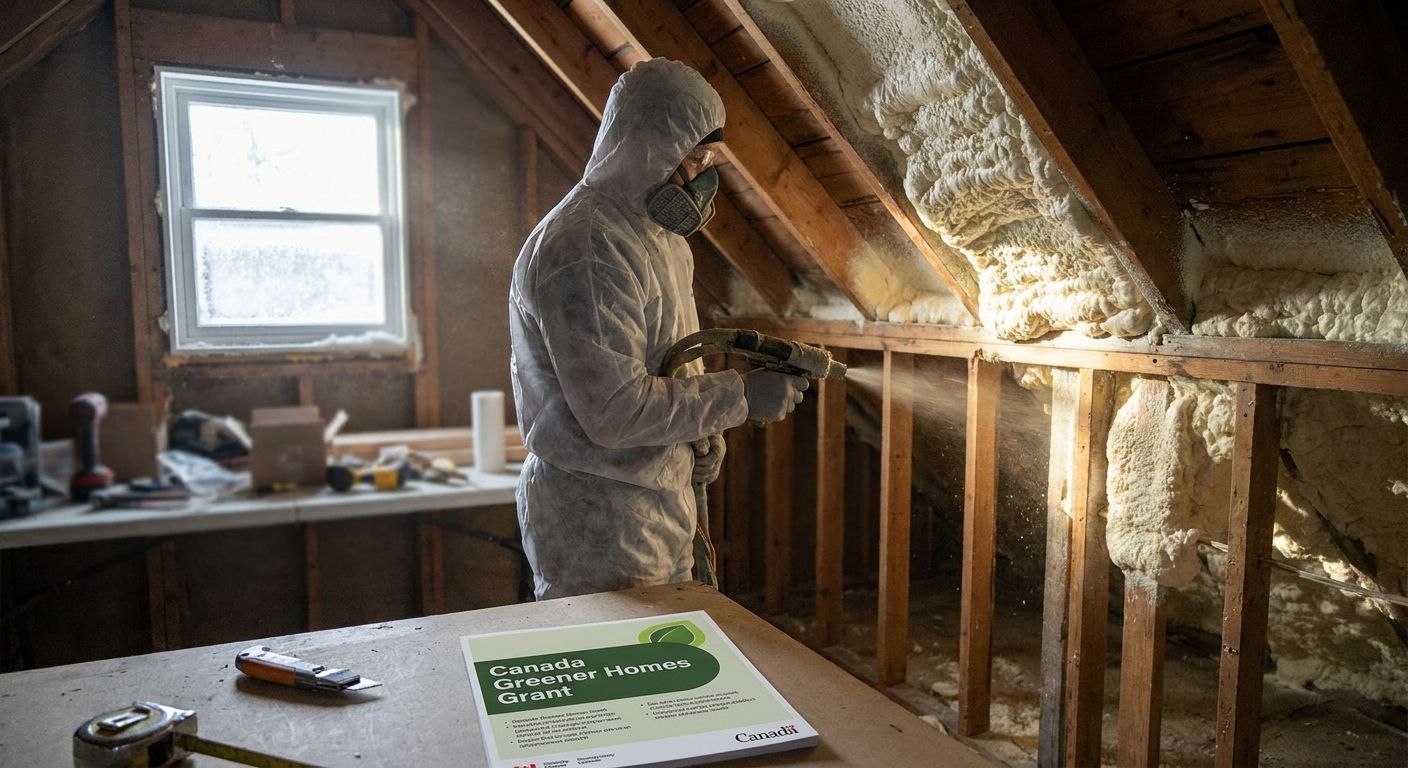
Attic spray foam upgrade — the highest EnerGuide-per-dollar pick. Attics in the Calgary climate typically need R-50 to R-60 to stop losing points on an evaluation, and spray foam gets there in one application instead of layering batts on batts. Verdict: Buy.
Older Calgary home full retrofit — the pick for pre-1980 housing stock. Homes with knob-and-tube wiring or original 1970s insulation usually fail an EnerGuide evaluation on multiple fronts at once, and a professional retrofit through spray foam insulation for older Calgary homes addresses wall cavities, attics, and rim joists together instead of patching one at a time. Verdict: Buy.
Rim joist sealing — the pick assessors flag first and homeowners skip most. Rim joists in homes built before 1980 are often insulated to R-0 or R-5 at best, sitting exposed above the foundation wall where heat escapes fastest. Closing that gap with spray foam is inexpensive relative to the score gain it produces. Verdict: Buy.
Crawl space encapsulation — the wildcard that surprises most homeowners. A vented crawl space with bare dirt or open fibreglass batts drags down a whole-home evaluation even when the attic and walls are solid. Spray foam insulation for crawl spaces seals both the moisture problem and the heat-loss problem in the same job. Verdict: Consider if your crawl space is currently unfinished or vented.
Garage insulation — popular request, low grant relevance. Attached garage walls and ceilings are a common ask because they're visible and easy to picture, but an unheated garage rarely factors into an EnerGuide home score the way attics, rim joists, and crawl spaces do. Verdict: Skip if the retrofit budget is tied to a grant or loan target and the garage isn't heated living space.
What to avoid
- Fiberglass batts marketed as "grant compliant" with no mention of air sealing. R-value on the label means nothing if the installation leaves gaps around penetrations; an EnerGuide blower door test catches that immediately.
- DIY spray foam kits for attic work. Kit-grade foam covers small gaps well but can't achieve consistent R-50 to R-60 coverage across a full attic the way a professional rig does, and uneven application shows up as thin spots on inspection.
- A quote with no stated R-value or square footage. If a contractor can't tell you the target R-value and the area covered, there's no way to predict what the post-retrofit EnerGuide report will show.
“Grant money doesn’t fix a leaky attic hatch — sealing does.”
Verdict comparison table
| Upgrade | R-Value Added | EnerGuide Impact | Grant-Relevant Zone | Verdict |
|---|---|---|---|---|
| Attic spray foam | R-50 to R-60 | High | Yes | Buy |
| Older home full retrofit | Varies by area | High | Yes | Buy |
| Rim joist sealing | R-0 to R-5 gap closed | Moderate to high | Yes | Buy |
| Crawl space encapsulation | Depends on current state | Moderate | Yes | Consider |
| Garage walls/ceiling | Varies | Low | Rarely | Skip |
Plan your retrofit insulation the right way
Get a spray foam quote scoped to your EnerGuide goals, not just square footage.
FAQ
Does the Canada Greener Homes Grant cover spray foam insulation?
Spray foam insulation qualifies as an eligible upgrade type under the program’s insulation category when it meets the required R-value targets. The original grant stream stopped accepting new applications in 2024, so confirm current program status before budgeting around it in 2026.
Is the Canada Greener Homes Grant still open in 2026?
New applications to the original Canada Greener Homes Grant closed in February 2024. Check the official Government of Canada program page for the current status of any successor grant or loan stream before planning a retrofit around it.
What R-value do I need in my attic to pass an EnerGuide evaluation?
Alberta attics typically need R-50 to R-60 to stop losing points on an EnerGuide evaluation. The exact target depends on your home’s existing construction and the energy advisor’s report.
Do I need an EnerGuide evaluation before spray foam insulation goes in?
Yes, a pre-retrofit EnerGuide evaluation should happen before insulation work starts so the improvement is measured against a documented baseline. Booking it afterward means the upgrade never gets credited on paper.
Is spray foam insulation better than fiberglass for a retrofit tied to a grant or loan program?
Spray foam insulation adds R-value and seals air leaks in the same application, while fiberglass batts only add R-value and leave gaps open. That combination usually produces a bigger EnerGuide score gain per dollar spent.
How much does spray foam insulation cost in Calgary?
Cost depends on the area being insulated, the type of foam, and existing conditions like knob-and-tube wiring or moisture in a crawl space. A detailed cost breakdown by project type is available for Calgary homeowners planning a 2026 retrofit.
Can crawl space or rim joist insulation count toward a retrofit package?
Yes, both zones are commonly flagged on EnerGuide evaluations because they lose heat disproportionately to their size. Sealing them with spray foam insulation is one of the more cost-effective upgrades in an older Alberta home.
Does a spray foam contractor handle the EnerGuide paperwork for me?
A licensed spray foam contractor can coordinate installation timing around your energy advisor’s evaluation schedule, but the EnerGuide evaluation itself is booked separately through a certified energy advisor. Ask your contractor for installed R-value and coverage documentation to hand off to the advisor.
One last thing
Rim joists get skipped in more retrofit plans than any other zone, mostly because they're hidden behind a basement ceiling and homeowners forget they exist until an EnerGuide report flags them. If your home was built before 1980, ask specifically about rim joist coverage before signing off on an attic-only quote — it's a small line item next to the score it can move.
Related guides